

EHC - Sahara
Extreme habitat challenge 2019
Overview
Introduction to Extreme Habitat Challenge
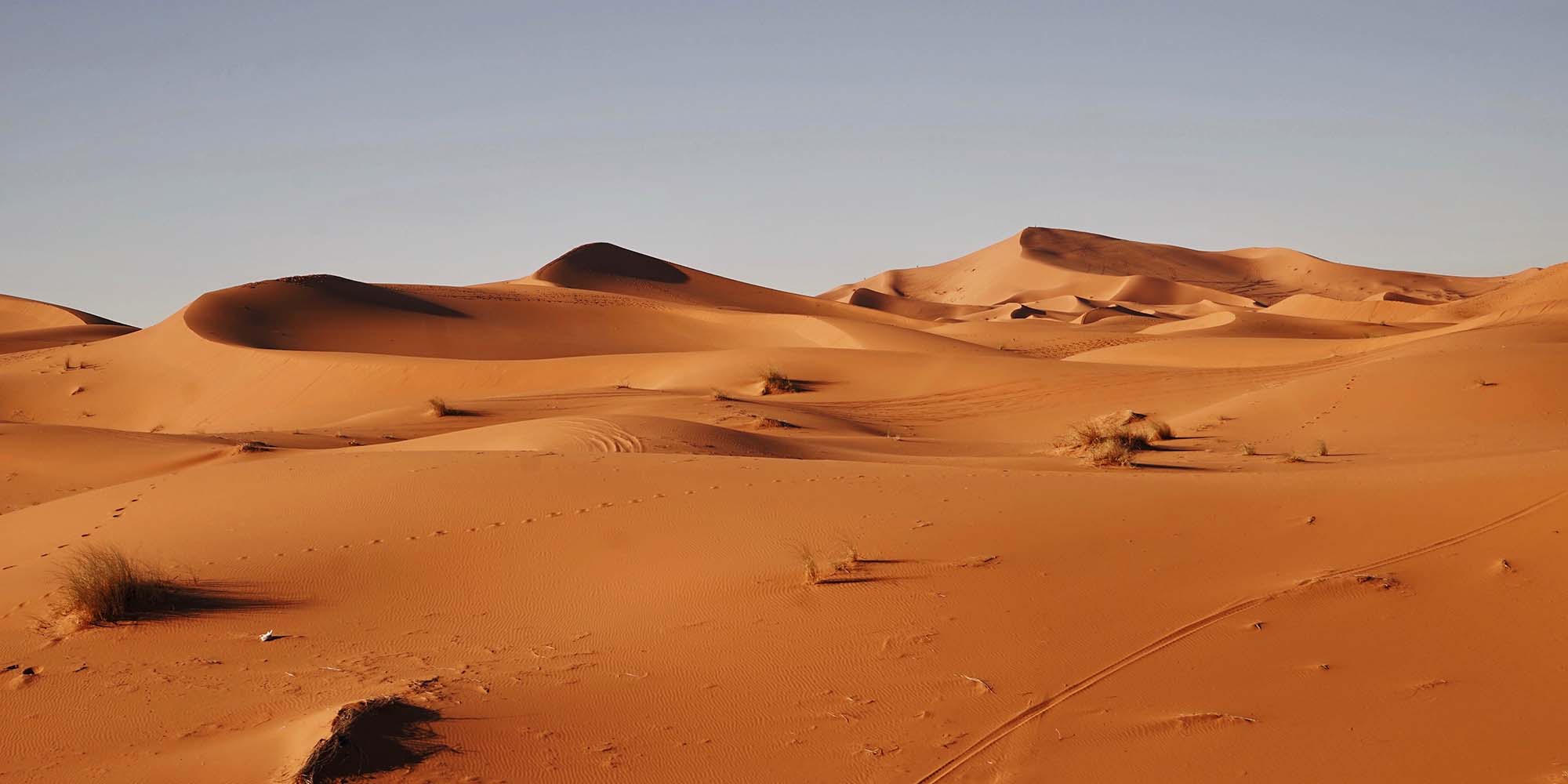 Extreme Habitat Challenge 2019 is pleased to invite architects, designers, engineers, student fraternity, and visualizers from around the globe to take part in the world’s first-ever Sahara Habitat Challenge.
The Extreme Habitat Challenge (EHC) is one of the world’s most coveted competitions for habitat design.
It recognizes exceptional ideas that redefine habitat design through the implementation of innovative ideas, techniques, construction, visual, programmatic and futuristic organizations through architecture as a tool. EHC embarks itself on technological and engineering innovations which are about to go big and sets architecture free to innovate more in these uncharted directions. It is a one of its kind platform that promotes the relationship between the habitat + technology + planet. In its outlook, EHC endorses teams that are multidisciplinary by thought but are aligned to the fact that humans have to grow more, yet responsibly towards the planet.
The EHC- Extreme Habitat Challenge aims at creating ecosystems that are benchmarks of how cities should be in future. With faster transit and a more connected world, the need to stay rooted at one location will go away and futures will be more transit/mobile. However, this power should not be exploited at the cost of the planet. The DHC finds its place in its vision of a more sustainable and responsible future.
Technology - The point of change in cities
As our cities grow with population rampantly, there are severe impacts visible to the quality of life due to overpopulation - poverty - traffic - pollution and the list goes on forever. There is no population limit on cities as such which makes things even more uncontrollable, as the ‘designed for’ population always exceeds its limit. This eventually contradicts the motive of moving to the city, where people instead of experiencing a better quality of life face the contrary throughout.
The capital cities in south Asia are at the brim of this issue, but with a non-stop growth of the human species, we will eventually see more of these issues and vulnerabilities unavoidably in the long run. Cities cannot be overhauled overnight. But our cities changed, with the advent of cars/industrial revolution. They changed when we devised a faster mode of construction.
They changed when we developed the internet. Technology being the fastest agent of change today has almost displaced the need of living in a city - including repercussions like social isolation between people of today. Faster transportation techniques and connectivity + collaboration have made it possible to look beyond the boundaries of cities. We take this opportunity to build a more responsible class of habitats that can be small but can be definitely inspiring for our next change of cities to come. Now is the time to become the citizens of the world.
Design Challenge for EHC: Sahara
Vision: Extreme Habitat Challenge pushes to explore habitat concepts that are responsible, yet brave to grow human civilization in synchronous with nature + technology + planet. Design a concept habitat of 1,000 people within an area of 0.5mi x 0.5mi, which is able to expand itself to 1,000,000 (2.5mi x 2.5mi) as desired by the population moving into the place.
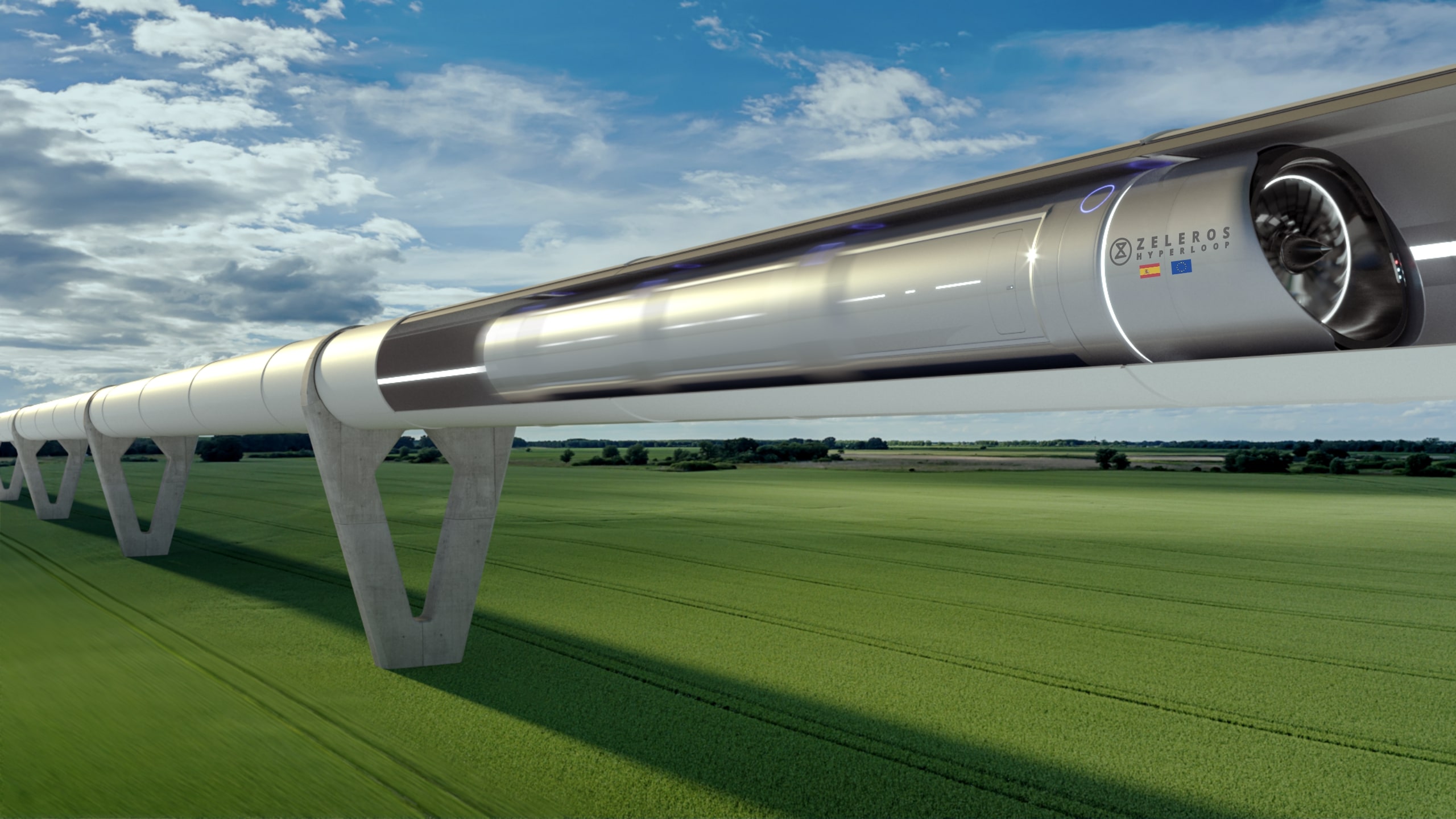
The challenge invites ideas that push the boundaries of design using innovative habitat working models, materials, technology, close to zero land costs, a nomadic yet rooted lifestyle. This design exercise can be considered similar to colonizing the new earth with the technology of today.
The first 1,000 people prototype habitat will house all the three elements of human life in it - Live, Work and Play. The first-ever Extreme Habitat Challenge competition chooses two major cities (New York, USA x Mumbai, India), connected via the fastest mode of land-bound transit (Hyperloop). This site peculiarly with a very less human population density is the test bench for designing a new habitat that will inspire how life should be in similar environments while balancing itself harmoniously between forces of nature.
The Route
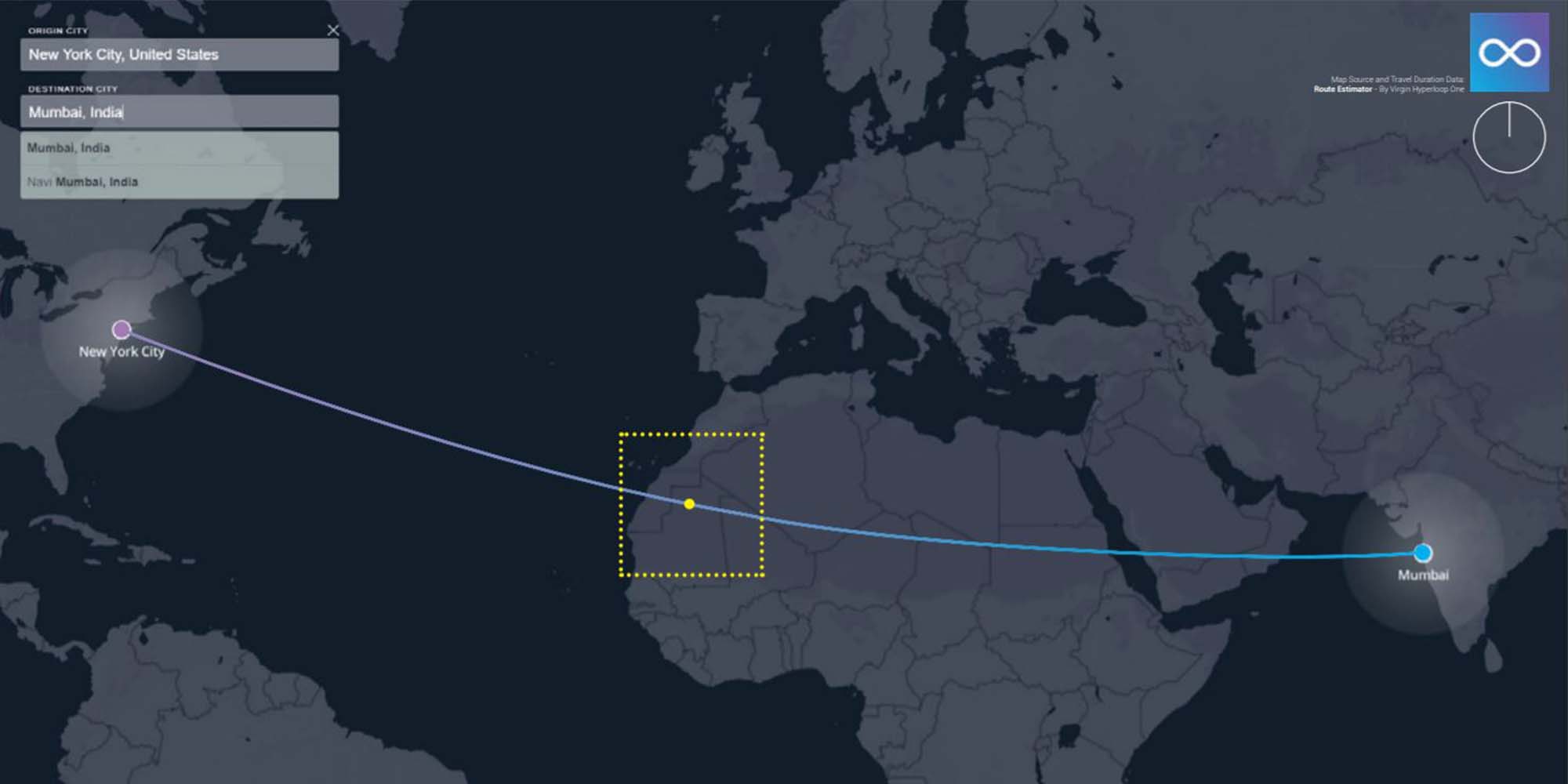
The route with a distance of over 9,500mi is claimed by Virgin Hyperloop One to be covered in less than 15 hours, with minimal emissions and time savings. Lesser; compared to the standard flights we have today. We choose this route as a test case for Extreme Habitat Challenge 2019, which passes through Sahara as the selected extreme environment.
Location: Sahara Desert
Africa Countries in the region: Western Sahara, Mauritania, Mali
Coordinates: 21.128006, -11.398544
The prototype habitat is 0.5 x 0.5mi, which will hold the primary population of 1000 people. After which the development will incrementally house 10 fold growth in every phase till the population cap reaches 1,000,000.
The expansion can be based on either traditional grid iron, radial or any custom made plan. You can change how the auxiliary loop comes into the site selected. The prototype habitat is expected in detail in terms of form, layout, operation, working, commuting, basic programme.
The programme can be schematically derived from functions like housing, workplaces, or commercial districts, public and private areas, community farms etc. The expansion plan (1,000,000 population) can be explained conceptually on-site plan only. You can assume data wherever necessary
Similar Competitions
Discover competitions you might be interested in




Design challenge to reuse E-waste

Illustrate the lost glory of Angkor Wat - Render Challenge

Photograph architecture without architects


Challenge to reimagine the Iron Throne

