Farm to CITY
Challenge to bring food production know-how to urban tables
Overview
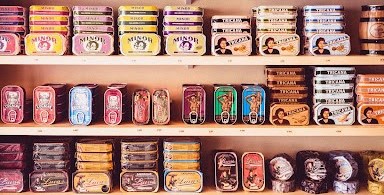 Fig: 1 - The food industry follows an unsustainable path from production to delivery over long distances in packaged conditions.
‘GOOD FOOD’
Today the world is seeing a steadily rising demand for ‘good food’ i.e. food that is healthy, affordable and sustainable. The world has come to see that locally grown produce can be an effective solution for many economic, environmental and health concerns.
Yet this demand for good food is faced by various challenges primarily among which are the concerns regarding the distribution of resources that come from the farms. If we are to create better and more sustainable, locally rooted food opportunities for our urban communities, we must begin to rethink the ways in which the food market exists. It becomes imperative to create opportunities for more direct access between the producer and the consumer.
How might design thus create opportunities that ensure or enable locally grown produce to be accessed and delivered with ease to urban communities as well as inspire urban dwellers to take on small scale urban farming?
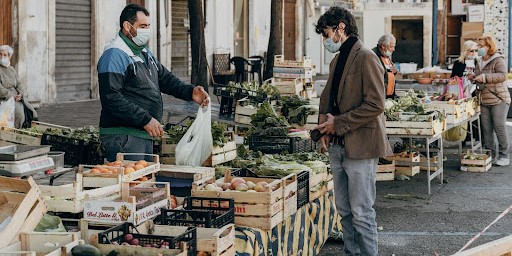 Fig: 2 - The popularity of farmers markets to provide fresh produce proves their credibility to serve urban populations well.
WHY FARMERS' MARKETS?
Farmers’ markets have a large and diverse impact on communities. To begin with, they offer opportunities to rebuild local food economies and encourage local consumption. In turn, consumption is more responsible and sustainable.
Secondly, they create a cost-effective retail opportunity for both producers and consumers. While on one hand, it becomes easier for farmers to economically connect with their consumers on the other, the consumers are offered quality products that are not exorbitantly priced.
Lastly, but equally important, by creating better economic opportunities farmers markets help farmers turnover better profits which in turn encourages the preservation of farmland and new generations continuing in the profession. This further ensures sustained food production for future generations.
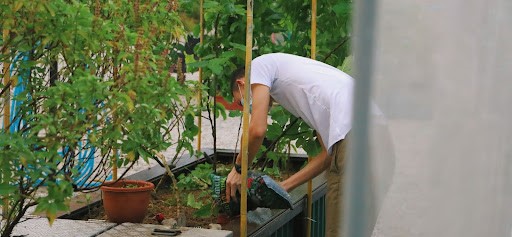 Fig: 3 - The production of food is a complicated process and education of citizens can reduce load on big distribution channels.
BRIEF FOR THE COMPETITION
The benefits of Farmers’ markets are easily evident and as urban cities grow faster resulting in an exponential boom in demand it becomes imperative to design for opportunities where this demand can be met locally.
Furthermore, by designing such opportunities we may also create opportunities to inspire and educate urban dwellers to adapt green urban farming practices (terrace farms for example)
H3: Brief: The challenge here is to design a farmers’ market that will help bring products to urban spheres as well as provide technologies and know-how to adopt small scale urban farming in urban backyards and houses.
The designed outcome must also be an attractive public space, that while permanent in location, must allow modular opportunities within it that can change and grow as the needs of the farmers and their consumers change with time.
It should also allow for spaces and opportunities for urbaner to learn and practice small scale urban farming.
OBJECTIVES
Modular: The design outcome should be able to change and grow with the changing needs of its stakeholders.
Public: The designed outcome must have valuable public opportunities for its users.
Cost-Effective: The designed outcome must be sustainable and cost-effective.
Educate: How does the designed space allow for opportunities for urban dwellers to learn and adopt small urban farm practices.
SITE
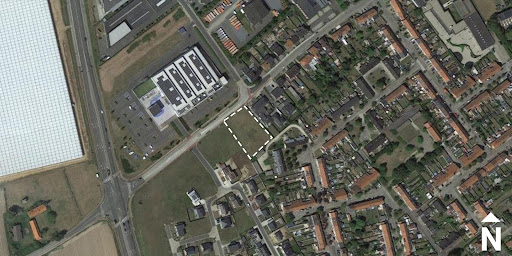
Roeselare, Belgium
Like many other parts of Europe, Belgium has a lively and flourishing farmer’s market culture. Across the nation markets ranging from temporal popups to more permanent spaces that host farmers are a favourite of consumers looking for more conscious, sustainable and healthy produce. These markets offer a range of products including, fresh fruits and vegetables, farm cured cheeses, jams and preserves, wine, flowers and even homemade baked goods.
This particular project is located in Roeselare, Belgium. Roeselare is surrounded by farmlands owned by locally based farmers. Presently these farmers sell their wares every Friday at the Lokaalmarkt Roeselare. A majority of the housing in the city is in the form of individual houses that have some greenspaces around them that can allow for small urban farms.
Site Area: 2154 sq.m
Height Restriction: 6 meters
Ground Coverage: 30%
Maximum FAR: 0.8
Setbacks as per CAD plan
Coordinates: Belgium