
Form Follows Climate
Challenge to design a daycare that follows the local climate
Overview
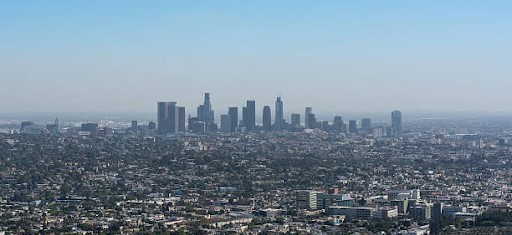 Fig: 1 - Cities facing harsh environments.
IMPACT OF HUMAN ACTIVITY ON THE ENVIRONMENT
The first man-made structure was a basic shelter built for protection, made from materials available in the vicinity. In time, these structures became more refined and humans began constructing a widespread built environment. Its impact on the environment was fairly less due to a limited population, therefore, it did not impact noticeably and was not measured.
After centuries now, humans and their actions have left an irreversible mark on the planet, its resources and its inhabitants. We consume valuable resources at breakneck speed from a skewed perspective of the near future.
Such practices were unleashed in the race of advancement and are now a threat to human existence. It has led to the depletion of resources, irreversible damage to the environment, pollution, waste generation and climate change.
But how do we get rid from these problems for a sustainable environment?
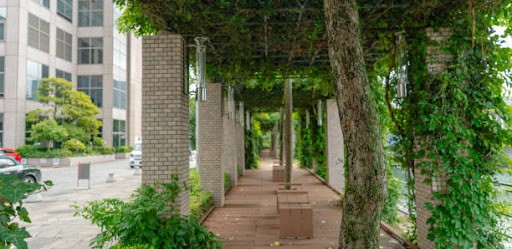 Fig: 2 - Development with green environment - An impression
BUILD A SUSTAINABLE FUTURE
With the development in technology and growth in economies, the standard of living improved, stating more demanding requirements on health and comfort, the urge to control indoor temperatures increased. To resolve this, mechanical control systems were implemented.
The designs for the built environment were hence conceived by providing these “necessary” facilities that eventually set up a convention of standards for all the buildings built henceforth. What we failed to realize is that a structure that is insensitive to the environment costs much more to the planet in the long run than we can imagine. The relevance of such buildings in a sustainable future, constructed without the context of climate and other environmental factors (site, material availability etc.) would become obsolete.
How can we as designers re-think this notion for a sustainable future, to set new standards that create an impact?
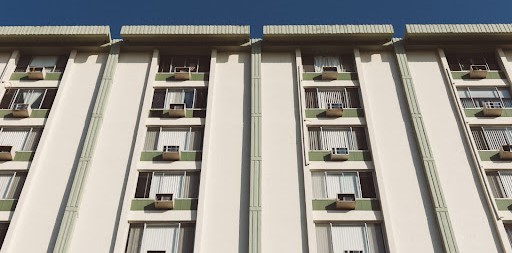 Fig: 3 - People using the external cooling method like air conditioners, coolers
SHIFT TO ALTERNATIVE METHODS
The standards of having a pleasant environment have set a convention for all infrastructures that are being built now. The requirements have reflected on the designs as well, forcing them to resort to mechanical/artificial methods of cooling/heating.
To re-state the rigid grade that has been set to achieve the requirements, we need to explore the design dimensions that play with climate and environment as central facets in design. Such ideas aim at reduced primary energy use in comparison with conventional structures.
It incorporates passive and active techniques in the construction and planning to develop spaces that can inherently keep the surroundings at comfortable temperatures. These can also be a combination of strategies subjective to the type of climate the infrastructure resides in.
A shift to alternative methods for the way our designs are conceived is required. It may be aimed at designing one sustainable infrastructure at a time, aspiring to set new standards altogether.
DESIGN INSPIRED BY GREENERY
Most buildings in an urban scenario take mechanized heating/cooling for granted and do not take into account the actual local climate in the context of today. How can buildings today actually be sustainable and climate-responsive while reducing dependence on these systems which are depleting energy and the planet in the long run?
The challenge here is to design a public use daycare facility-creche for kids for about 100 kids aged 0-7 years. The design strategies adapted for this infrastructure must be complacent the local climate
OBJECTIVES
- Planning: Efficient planning execution.
- Form: Form and orientation of the structure with respect to the climatic data chosen
- Function: Programmes adapted must be reasoned with the urban context of the site.
- Material: Choice of material, and its application for better designs.
The design outcome must respond to not only people and their surroundings but also to the site context.
SITE
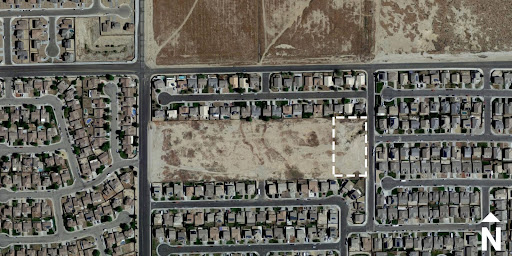
Site for this architecture competition is located at Rosamond, a town inCalifornia. Rosamond is an unincorporated community in Kern County, California, US, near the Los Angeles county line. Rosamond is part of Greater Los Angeles and is located in the Mojave Desert just north of Lancaster and Palmdale, two of the largest cities in Antelope Valley. Surrounded by residential and commercial buildings the site potential to serve as a climate typology.
- Location: Maps
- Site Area: 5002 sqm
- Height limit: 12 m
- Ground Coverage: 25%
- Maximum FAR (Floor Area Ratio): 1
Setbacks (as per CAD plan)
Ground Coverage refers to the ratio of maximum allowed solid/permanent footprint on the site to balance the built and unbuilt spaces. You can utilize the other 75% of the site for any temporary intervention/recreation.
Similar Competitions
Discover competitions you might be interested in




Design challenge to reuse E-waste



Imagining parliament for an unified world.

Design challenge fostering public involvement in wildlife research

Design an urban fitness centre
