
Garth
Contest to design a community farmhouse for the elderly
Overview
 Fig: 1 - Lifespan has extended due to advanced medical facilities (Credits- Katarzyna Grabowska)
SENIOR STATISTICS
By the year 2050, there is an expected 2.1 million rise in the number of the global elderly population above 61-year-olds.
This sudden rise in these numbers is major because of the low mortality rate, better service availability and the development of science and technology. These factors have contributed to the longevity of life of senior citizens.
The numbers of these statistics are not just providing us with an opportunity to serve the elderly but is also making us realise the amount of responsibility it puts forth on us.
It raises the question of whether we are ready to equip this large number of elderly?
How can we provide the elderly with the best of living experiences?
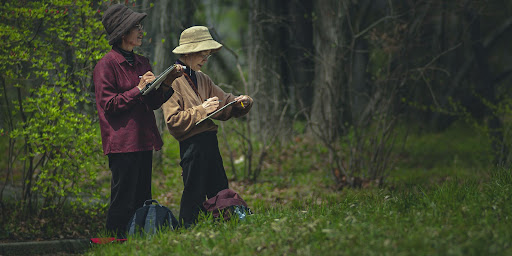 Fig: 2 - Elderly people need hobbies and a connection with people and nature (Credits- Egor Myznik)
WANTS OF ELDERLY PERSONS
A tiny house with a small farm located far from the city with a community, nature is where you share your space and life with; this is the ideal dream home that most of the elderly carry. This image of a dream house isn't fancied by the changing ways of living, but what they rather find comfort in. Most of the time the modern-day design has been more emphasized on providing spaces for the elderly where only basic care and survival needs are kept as a priority. Making those spaces be functional and operational majorly to their needs is the basics, but there are aspects in old age that require more than just functional efficiency.
They crave attention, community and a connection with nature as with old age they spend most of their time inside the house. Introduction of natural landscapes and activities that involve gardening are preferred and cherished by them.
How can architecture emphasise these natural activities like gardening, looking at nature etc in the aspect of the housing design and provide them with an engaging connection?
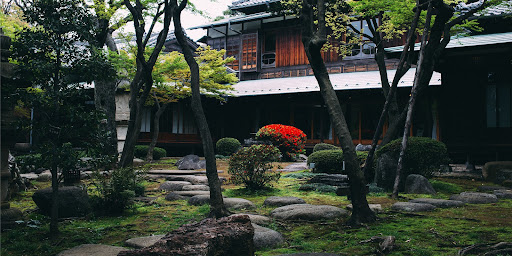 Fig: 3 - A farmhouse with nature and co-living facilities (Credits- Charles Deluvio)
BRIEF OF THE COMPETITION
Can elderly house design be created with ‘Nature connect’ as its primary focus?
How can community gardening practices be introduced into the design?
What architectural solutions can help in exploring the gardening aspect in the design?
Brief: The architecture competition brief calls for a design of an elderly co-living community housing that promotes practices that bring about affinity towards nature; like the process of recreational gardening.
The aim of the competition is to come up with unique design solutions to empower the elderly to live independent and satisfying life.
Can nature induce community living spaces to offer housing solutions for people over the age of 52?
Design a pattern for a communal living space where age is just a mindset and the elderly can live with nature, dignity and independence.
OBJECTIVES
Basic needs: Easy accessibility, comfort and barrier-free design.
Gardening activity engagement: Practicing community gardening.
Safety: Security and healthcare available for emergency and maintenance.
Empathy: Understanding the design from an elderly perspective.
The following objectives are a point of beginning to conceive the design. Participants are free to assume or add to their design.
SITE
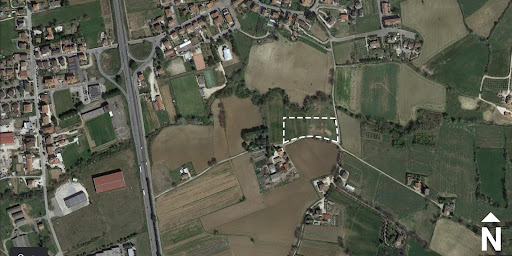
Province of Perugia, Italy
Italy, a country of south-central Europe, occupying a peninsula that juts deep into the Mediterranean Sea. Italy comprises some of the most varied and scenic landscapes on Earth and is often described as a country shaped like a boot. At its broad top stand the Alps, which are among the world’s most rugged mountains.
The site is located a little far from the urban area of the city. At a distance where there are green and open lands available, while still being the accessible distance from the main city. The trees and the vegetation near the site offers a good backdrop for the site design.
- Coordinates: 42°52'10.3"N 12°24'11.1"E
- Area: 9,232 sqm
- Height limit: 10m
- FAR (Floor Area Ratio): 0.8
- Ground coverage: 30%
AREA PROGRAMME
The programmatic outline is intended for the batch capacity of 100 elderly people over the age of 52. The space ideas are as follows:
- Housing spaces: 60%
- Public gathering/engagement spaces: 15%
- Services and ancillary spaces: 10%
- Farming/farm produce storage spaces: 10%
- Landscape/open recreational spaces: 5%
Other additional spaces can be added by the participants as per their design needs.
Similar Competitions
Discover competitions you might be interested in




Challenge to design mud housing for contemporary communities


The Global Benchmark for Architecture Dissertation Awards
