
Gaze
Design Challenge for a Night Sky Pavilion
Overview
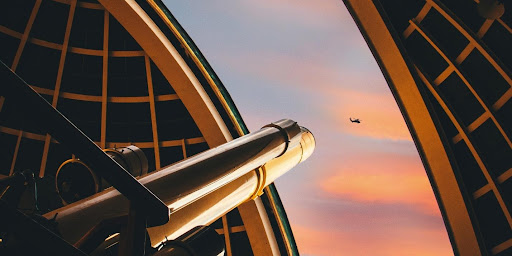 Fig: 1 – Telescope for sky observation (Credits- Jaredd Craig)
Mystery of the skies
We are curious beings; wanting to explore and learn led us to understand the unknown skies. The earliest written records of these observations can be traced to 1600 B.C. The Babylonians studied and created records of star positions, planets, and eclipses.
This study and sense of exploration quickly grew into more practical tools. Monitoring the motion of stars and planets became the primary means of navigation and time tracking. Human history has witnessed major celestial events which even might have changed the course of history.
Cultures throughout time have gazed up, wondering and questioning our place in the universe. This intense fascination resulted in the invention of telescopes to see the unseen.
Since then, the history of astronomical observations has evolved into philosophy, literature, and different branches of science.
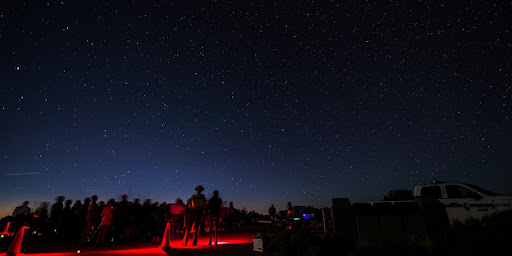 Fig: 2 – A rise in camps and one-day tours for sky/star gazing at Grand Canyon (Credits-National park services )
Astro-tourism
In recent years we have seen celestial events of the transit of Venus and witnessed the supernova 1987A go off in real-time.
Though we are the same beings who chased eclipses and got all romantic over starry skies, today we see the sky differently than it was 10 years ago.
With meteor showers every year and decoding constellations under different skies, the night-sky gazing has taken a turn. A new trend of Astro-tourism is on the rise worldwide. Light and air pollution have caused people to go to remote locations to experience the night sky. Astro-tourism offers people a gateway and the most natural way to reconnect with the outside world, a way to look up and disconnect for a while with technology. Temporary amenities for these activities do give a one-night experience.
How can we enrich this remote experience with facilities that will enrich sky-gazing and provide comfort?
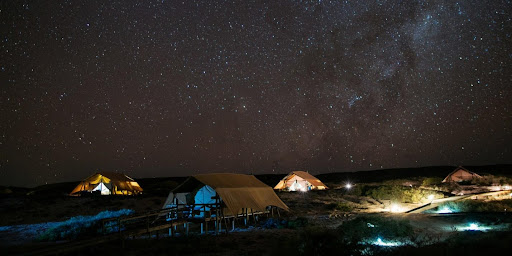 Fig: 3 – Ningaloo Reef Tents for sky gazing (Credits- Ningaloo Reefs)
Brief of the competition
The nocturnal sky is sublime and inaccessible. When looking at it, we experience the most ancient sensation. The increase in public participation to experience this sensation is also a credit to it being a segment of sustainable tourism, as there is no damage to any form of resources.
People travel short or long distances to observe and enjoy the dark sky. Can we provide places of experience to act as a window to the stars?
If yes, then can we make these visits more worthy and comfortable? Can we create observation spaces that act as temporary habitats while maintaining the crux of the activity?
Brief: The aim of the competition is to create an observatory pavilion for night sky seekers.
Design a prototype that can be placed anywhere and replicated all over the site.
Design objectives
Materials: Use of sustainable material and explore its relationship with the site.
Explore: Experiment with spaces of primary functions.
Refuge: Take into account functions required for a temporary stay.
Maintain Services and maintenance after the visit and when not in use.
The above objectives can be a point of beginning to conceive this design. Participants have to design a 20 sq.m. pavilion, modules of the same size and design can be marked and replicated on the site are given below. They are free to assume their contexts and users before initiating the design process.
Site
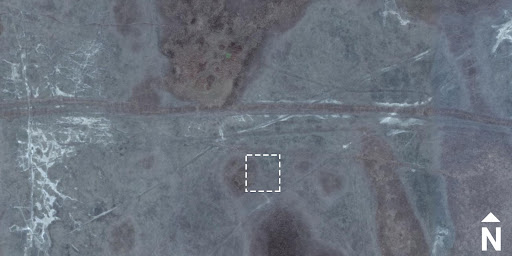
Hortobágyi National Park, Hungary Hortobágy is a national park in eastern Hungary, rich in folklore and cultural history. The Hortobágy is Hungary's largest protected area and the largest semi-natural grassland. It is also one of the biggest unpopulated areas that have a dark and pristine starry sky. The park is listed under Dark Sky Reserve. It offers night walks, programs, and guidelines to reduce light pollution.
Location: Hortobágyi National Park, Hungary
Area: 5090 sq.m.
Height Limitations: 6m
Maximum Built-Up Area: 5090 sq.m.
Ground coverage: 40%
Coordinates: 47°31'21.0"N 21°05'29.0"E
Similar Competitions
Discover competitions you might be interested in



Challenge to design an open learning module for the elderly

Challenge to design a portable music platform

Challenge to design a portable theatre


The Global Benchmark for Architecture Dissertation Awards
