
Haven
Design a Koala Habitat for rehabilitation and raise ecological depletion awareness
OVERVIEW
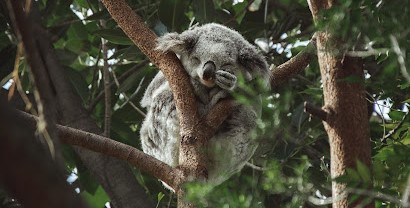 Fig: 1 - Koala, a native animal of Australia, sleeping in its habitat.
EARTH BIODIVERSITY
Earth’s ecosystem, besides resourcing human needs and habituating many cultural ethos, is home to a variety of living beings. Amazon rainforest, lungs of the Earth, itself is home to 10% of the known species in the world. It is the ground for a complex network of interdependence between plants and animals. Plants provide shelter, food and make oxygen for animals to live. Plants, on the other hand, depend on animals for nutrients, pollination and seed dispersal. The mutually beneficial interactions between plants and animals have been paramount in the generation of Earth’s biodiversity.
Network structure has important implications for the coexistence and stability of species as well as for the coevolutionary process. These networks can thus be regarded as the architecture of biodiversity.
But what happens when the foundation of the structure is slowly being ripped off?
According to the UN, 1 million plant and animal species are on the verge of extinction. One of the species being Koala. In 2016, experts estimated that there has been a 24% decline in their population over the past three generations.
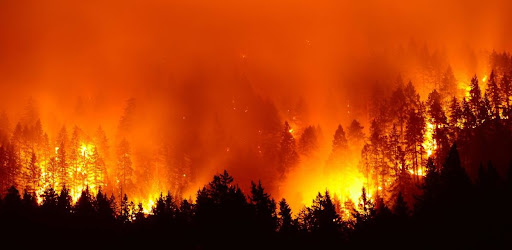 Fig: 2 - A fire in Amazon forest harm animal and trees
FOREST FIRE HISTORY
With economic and infrastructure needs taking precedence, land availability becomes a necessity. Despite the growing need to preserve our habitat, ecosystems are being sacrificed at an increasing rate. Over that the increasing change in temperature, is igniting a series of forest fire all over the world. Slash and Burn agriculture, selective logging in some cultures also contribute to the same.
Our ecosystem is severely fractured. As of August 2019, 30000 fires were burning in the Amazon. Indonesia is planning an ambitious transportation grid in Borneo, the oldest rainforest in the world. Mumbai’s state government is on to cutting 3000 trees for a car shed. While Australia comes to terms with its biggest forest fire, destroying an area seven times the size of Singapore.
The most devastating early fire-season in Australia, is raging up the country’s eastern coast. From Sydney to Byron Bay, bushfires have led to death of 7 and many properties getting incinerated. As a large piece of biosystem degenerates into fragments, the danger it poses to its native ecosystem and animals, especially Koala is severe.
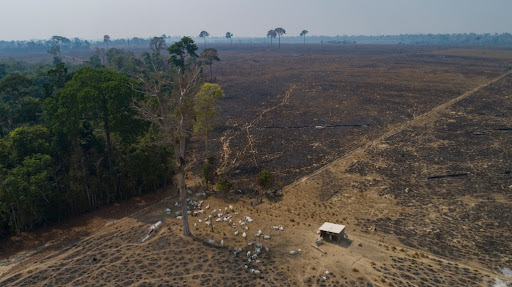 Fig: 3 - Deforestation in Amazon forest
BRIEF OF THE COMPETITION
Our planet is a complex web of interdependent species, each uniquely contributing to the flourishing of others. But as climate change continues to impact the balance of life, modern-day ecosystems are in survival mode.
In Australia - rapid urbanization, agriculture and bushfires have led to catastrophic impact on native species. Koala, a largely adored animal, has seen a devastating impact. The Australian foundation estimates that fewer than 10,000 remain, a sharp decline from the 8 million found in 1990.
In a codependent hemisphere of plants and animals, humans should enact the role of a samaritan rather than that of a disruptor. An element that helps in the ecosystem’s rehabilitation. At a macro level, creating reservoirs that habitat plants and animals.
Brief is to design a Koala habitat, a rescue and rehabilitation centre that raises awareness regarding its ecological depletion and importance
OBJECTIVES
- Balance: The intervention must be responsive to the environment it is being built in.
- Construction: Material usage and construction techniques used must be complacent.
- Sensitivity: Interaction between all kinds of living beings, enabling free movement for Koala.
The following objectives can be a point of beginning to conceive this design.
Design aims to be a rehabilitation center where sick and injured Koalas can be brought in. It also intents to educate locals about the value of conserving and protecting the native animal. It aims to create a sense of awareness among tourists besides being a corridor for Koala migration between habitat areas.
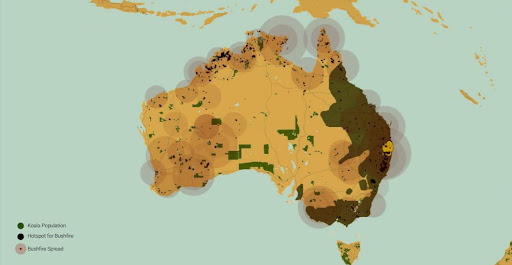 Img 4: Hotspots for Bushfire across Australia as of Friday, Dec. 20, 2019 Source
AUSTRALIA
Australia is raging with its most unprecedented early fire season. Compared to 280,000 hectares burning in past few seasons, this year by December 24’ 2019 around 3.41 million hectares had been burnt. Animals, Plants, Houses, Vineyards - everything coming in it’s way getting destroyed. Amidst this, one of Australia’s most iconic animals has taken center stage in headlines - The Koala.
Koalas are considered ‘vulnerable to extinction’ —and reports indicate that around 30% may have perished, in the fire-devastated zones since November. Situation is said to further become worse come January and February, as temperatures continue to rise and the drought gets aggravated.
HABITAT
It has been estimated that of the decline in Koala population in Australia, 53% of decrease took place in the state of Queensland.
Koalas are threatened by land development, food degradation (increased carbon dioxide in the atmosphere has diminished the nutritional quality of eucalyptus leaves), drought, dog attacks, and chlamydia.
Over that the Koala is dependent on Eucalyptus trees. Eucalyptus itself are some of the most fire-adapted vegetation that can grow anew in the immediate aftermath of fires. In normal fire conditions, the flames wouldn’t typically reach the top of the trees, leaving the koalas relatively unscathed. But the spike in death during the raging forest fire tells another story.
There has been a considerable loss of habitat, and without a suitable habitat Koala’s won’t be able to survive. In lieu, it becomes important to give them access to a protected undisturbed space where they can live together in safety and in case of an emergency can be brought for rehabilitation.
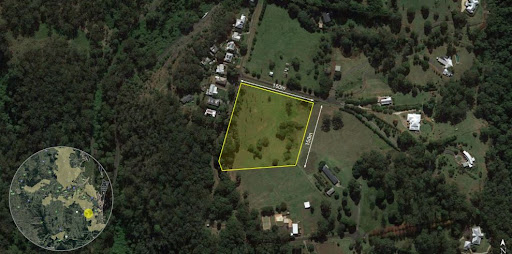 Img 6: Left - Plan of South East Queensland highlighting Koala reserves as proposed. Right - Site at bottleneck of Tamborine Mountain
MOUNT TAMBORINE, QUEENSLAND
570,000 hectares of land was proposed to be conserved in South East Queensland for Koala habitat by the state government. The design will act as a threshold for the existing boundaries of the protected area, beyond which no new development would take place. In Tambourine, the reserve besides rehabilitating koalas will act as a connector between pockets of adjoining reserved spaces. Design can also become a means of creating awareness and a local tourist spot, located on the main road connecting the state to New South Wales. Design can be programmed anywhere within the extent of the site.
- Site Area - 30,000 sqm
- Coordinates - 27°59'41.8"S 153°10'59.8"E
- Maximum Ground coverage - 15%
- Maximum Height - 9.5 m
- Setback - 6m
- Build Up Area - 4000 sqm
