

Hood
Challenge to design a volunteer center
Overview
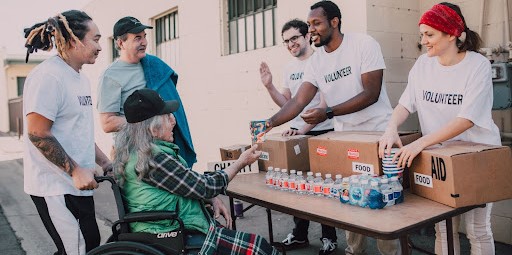 Fig: 1 - Volunteering is described as an unpaid activity where someone gives their time to help a not-for-profit organisation or an individual to whom they are not related.
VOLUNTEERING, A CIVIC ENGAGEMENT
When posed with the question of what volunteering means, one is challenged with various definitions. While most consider it a duty, it is something more than that. It can be defined formally as a responsibility or a service offered with no expectations in return, for the welfare of a person or community.
Volunteering is a way for a community to build their sense of solidarity, trust and optimistic approach towards its growth. Apart from the involvement of people within the community in general, volunteering has proved to improve positive growth among the youth. At an impressionable age, community services and volunteering instils time management skills, dependability and a sense of responsibility.
Being one of the first civic engagements that young people experience, it is important that it is not rendered a useless or worthless one.
Encouraging more youth involvement in such activities considering a majority of the current population consists of youth, would account for a considerable chunk of contribution to society.
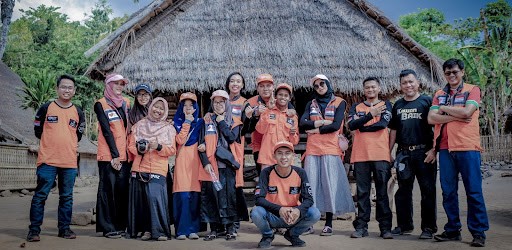 Fig: 2 - Volunteering allows you to connect to your community and make it a better place.
PROVIDING SUPPORT AND INFRASTRUCTURE
Volunteering is shown to have various positive growth in communities adopting them. They have been shown to boost morale among the contributors, build the network within the community, and make sure their efforts are manifested into real changes.
Volunteering as a practice is not just beneficial amongst the youth, but is also known to boost the lives of other people. Older people finding more time in their lives after retirement choose to get casually and sometimes deeply involved in working towards building the community.
In such cases, where the needs and opportunities can be met by youth as the volunteers and the other vulnerable people of the community as contributors or even professional members of the locale as mentors, can we provide infrastructure for these different generations to convene and collaborate in a way that would act as the next essential step in fulfilling the needs of the community?
Can design cater to the needs of a space where people of diverse age groups can gather and work towards the betterment of their community?
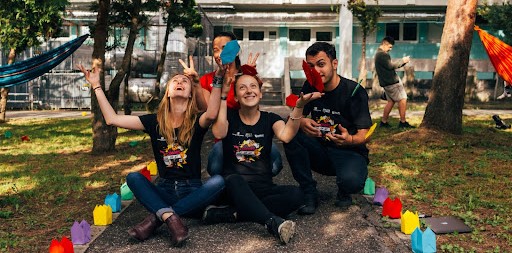 Fig: 3 - Volunteering can not only enrich the community but also help better the social skills and career progression of youth.
A centre to celebrate and provide help
Brief: Design a youth centre for volunteering activities and which also acts as a local community centre for social events.
The centre is to act as a space for all volunteering related activities such as counselling, mentorship, education and engagement based housing and shelters. It will be a local landmark with outstanding features that will create a visual impact as well as foster community cohesion.
The facility is to make it an easy and approachable process. Its spatial programming and allocation must be according to the user group and the contextual data. The aesthetics and functionality must be balanced to create a mix of open, semi-open and closed spaces. The space being utilised by such a wide range of people needs to be accommodative of all of them, in terms of services, spatial organisation and design aspects.
The built form must be able to connect with the people, through its form, layout or spaces. The wider socio-cultural, economic and environmental settings are to be considered in the design approach.
OBJECTIVES
Form - Reinvent the visual form and experience of a conventional service station
Public - Allow an array of activities and functions, thus meeting all the needs of the community
Contact - Respond to buildings, demands and needs of user group present in the context
Incentivise - Encourage young people to take up volunteering.
SITE
South Africa is a populous country that is a biodiversity hotspot. The site is located in Durban, South Africa. The city has a coastline that is overwhelmed with recreational establishments attracting city visitors. The geography of the terrain is undulating and there are many green spaces with rich flora all over the city.
The site is located in the neighbourhood of Bonela characterized by residential settlements. It can be accessed from Wiggins road and this corner plot offers a suitable location for this communal space typology.
Site area - 4655 sqm
Ground coverage - 30%
Maximum FAR: 1
Setbacks as per CAD Plan
Height restrictions - 10 meters
Coordinates - Durban, South Africa
AREA PROGRAMME
The space is to accommodate 100 volunteers with a scope for future expansion. The following programmatic outline is the point to begin your design at. You can add more functions and activities in relevance or modify the below design programme.
- Learning, Training, Counselling centre ~ 30% of built area
- Community hall and gathering spaces ~ 10% of built area
- Shelter units for temporary housing ~ 20% of built area
- Administration ~ 10% of built area
- Recreational spaces ~ 10% of built area
- Circulation and Services ~ 20% of built area
Similar Competitions
Discover competitions you might be interested in




Design challenge to reuse E-waste




Imagining parliament for an unified world.

Design challenge fostering public involvement in wildlife research


Design an urban fitness centre
