
House of Jazz
Jazz performance centre design challenge spaces
Overview
 Fig: 1 - Jazz music, in the beginning, was influenced by rhythm and blues and gospel, played on the saxophone and piano.
ROOTS OF JAZZ
Jazz is an intriguing cultural phenomenon in the world of music. Despite being often relegated to a genre of music, Jazz has throughout its history, challenged any attempts to bind it down to a definition.
From its roots in African-American communities of America at the turn of the 20th century, it has constantly evolved, expanded, changed, and has passed through various distinctive phases of development. Often defined as being improvisational, Jazz disproves this stereotype by ‘swinging’ between, being neither entirely composed nor entirely extemporized.
Yet, despite its constant metamorphosis and hard to pin down definition, Jazz has the quaint quality of being instantly recognized.
What about jazz music that strives to break free from definition makes it so easy to pick out? Can we as designers harness these qualities to imagine a home for this eclectic genre of music?
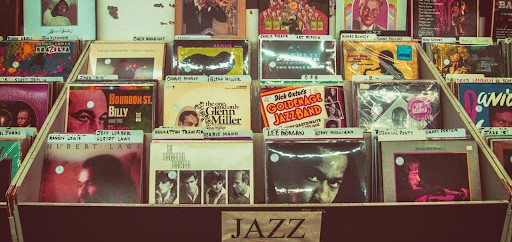 Fig: 2 - The spontaneous nature of Jazz characterised with its chords and rhythm overlaying, gives rise to a wide range of music.
JAZZ ERA
Denied the freedom to play the music that came from their homes, the slaves in America adapted their music preserving it partially and creating a new genre of music - Jazz.
Since the Africans who were brought to America came from across the African continent, they brought with them their own local musical practices and as they adapted it, Jazz emerged as an assembly of varied African musical sensibilities combined with European musical elements that already existed in the American continent.
Between 1905 to 1915, denied employment and opportunities, African-American musicians took to Jazz since it could be at least played in honky-tonks, bordellos, and clubs, and thus emerged the performative origins of Jazz.
Today, Jazz is often deemed a musical genre that is reserved for the more seasoned connoisseurs of music, but the reality of the music is far from conservative and more closer to the ground than we know.
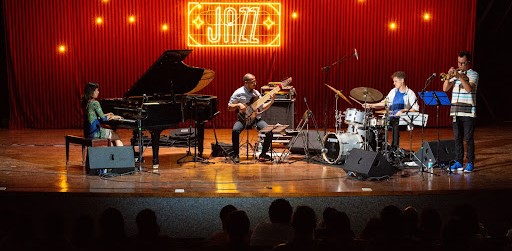 Fig: 3 - Today, all forms of jazz from traditional to contemporary mainstream are being presented and experimented with, by artists.
JAZZ CULTURE TODAY
With time Jazz quickly spread throughout America, and eventually, New York City came to become the Jazz capital of both America and the world. The music evolved to embrace popular music standards, modal music, pop, rock, funk, and even true avant-garde compositions.
Quite simply put, Jazz is a free-spirited form of music that despite its changing forms and tones is undeniably felt. So can we as designers draw inspiration from this eclectic musical culture that continues to change, and design a performative space for it?
Brief: Draw inspiration from Jazz’s history and nature and design a performance space for Jazz music and musicians.
You may wish to draw inspiration from the images of the spaces that the music originated from and was performed in but attempt to integrate it with the ever-changing nature of the musical genre. The aim of this competition is to push oneself to design spaces in a specific theme.
OBJECTIVES
Identity: Structure must be an icon for Jazz, its nature and its history.
Functional: How does the design function successfully as a valuable performative space?
Public: How does the space create public engagement for visitors beyond performances?
Future: How do the space and its design translate even as the music constantly changes through time?
SITE
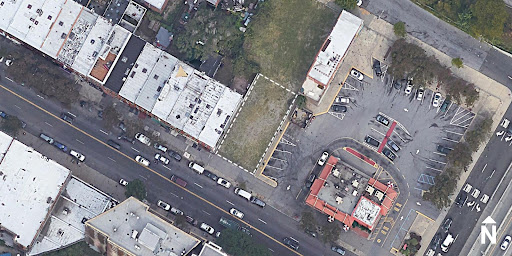
The site for this project is located in the Bronx, United States. The Bronx is a borough of New York City and has played a major role in American musical history. After the Second World War Bronx saw a large influx of African American people and subsequently the rise of Jazz music.
The site is surrounded by commercial establishments and recreation spots like parks and eateries which makes it lucrative for large groups of people to visit.
- Site Area: 438 sq.m
- Height Restriction: 10 meters
- Maximum Built Up Area: 438 sq.m
- Ground Coverage: 30%
- Coordinates: 40°48'23.5"N 73°55'33.8"W
PROGRAMME OUTLINE
The designed outcome is intended to be a new age performance space for jazz music that celebrates its past while nurturing its future.
The design must contain the following elements:
1. 05% Administrative spaces: Must include Manager’s Office and other staff offices
2. 50% Performance spaces:
- Stage
- Seating space for an audience of 30-40 people.
- Backstage support spaces such as green rooms, storage, etc for performers
3. 30% Exhibition space to showcase the history of the music
4. 15% Hospitality and services:
- A small bar and/or food service space.
- Essential services such as restrooms.
Similar Competitions
Discover competitions you might be interested in


Design challenge to reuse E-waste

Designing a staircase for a client

Bring back Drive In's

VR headsets Storefront design competition