
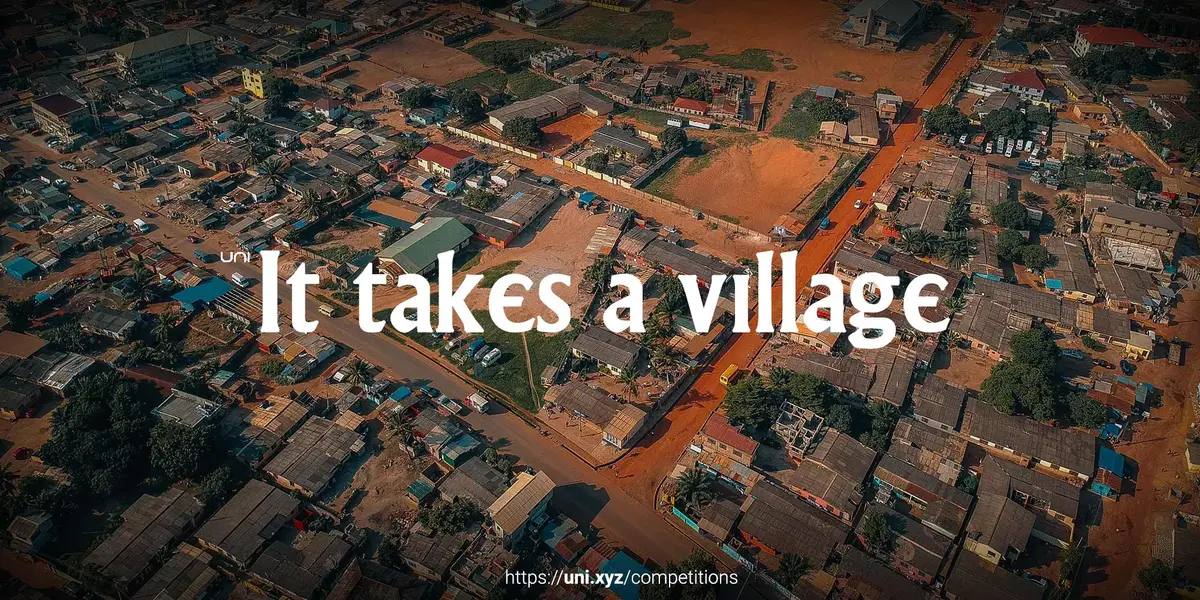
It takes a village
Challenge to reintroduce ‘community’ to urban housing
Overview
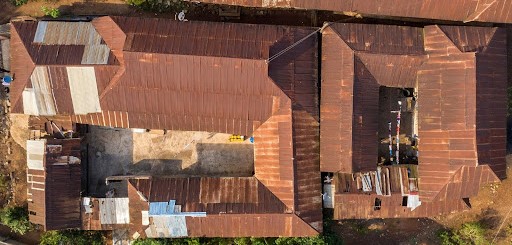 Fig: 1 - Typical compound houses have 3-4 blockwork bungalows framing a courtyard - A birds eye view (Credits: Nipah Dennis/Bloomberg)
GROUP HOUSING IN ACCRA
Migrants to Ghana’s capital, Accra, for decades, have been building themselves compound houses to dwell in their new city. These houses are characterised by grouped housing built around shaded courtyards meant to bring together large, extended families that had collectively migrated from their rural roots. These spaces offered their residents an air of familial kinship even in the impersonal sprawl of a city.
Today, these complexes are slowly being abandoned for the more universal housing typology familiar to big cities- villas and apartments for nuclear families.
Those that exist are being fragmented into smaller units with space-crunched rooms, inhabited by a mix of strangers who have fewer options in the city due to economic constraints.
Yet the values of community housing maybe even be more pertinent to a growing city. Thus how can we adapt the values of Accra’s compound houses as it grows and changes?
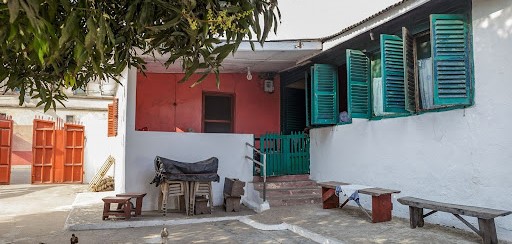 Fig: 2 - Courtyard interior view - a place to foster community relations. (Credits: Nipah Dennis/Bloomberg)
HOUSING IN ACCRA
As a consequence of urbanization in the 1900s Accra saw steady growth in population, a lot of which was composed of individuals moving to the city from the countryside.
In new, unfamiliar territory, the rural migrants began constructing houses that were similar to their homes in the villages. (Village houses in Ghana exhibited an age-old building practice that can be traced back to structures built under the Ashanti Empire).
With time these structures in the city began to change with urban influences. European influences, a shift in materiality and the creation of two-storey structures were all part of this transformation.
Nevertheless, these houses held at their core the values of the community. Often built by wealthier family members these joint houses were characterised by their compounds that became a centre for family, community organization, identity, and even spirituality.
How can we make the spatial values of traditional houses accessible to all?
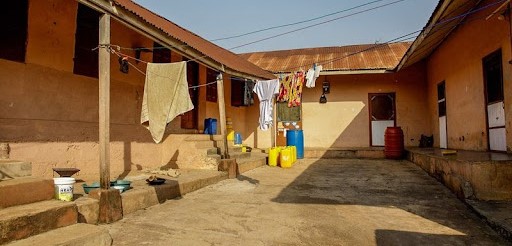 Fig: 3 - Nowadays, the houses that remain are being used to rent to students and individuals creating segregated ownership. (Credits: Nipah Dennis/Bloomberg)
DESIGN FOR TRADITIONAL LIVING
As cities are growing faster than ever, our community ties are being increasingly strained. Urban aspirations and globalisation combined with the urban need to maximise available resources means that traditional compound houses are slowly being replaced by internationally modelled apartments and villa complexes. However, these places are often fragmented spaces with little or weak community bonds.
Brief: The challenge here is to attempt to create modern community housing that borrows references from traditional Accra compound housing and reinforces those values in a space for modern residents and families.
The design must inspire community interaction and social bonds however keep in mind that the familial structure of Accra itself has changed and thus in adapting old values one must be sensitive to new practices.
OBJECTIVES
Form: experiment with form and typologies to arrive at your novel vision for housing in accra inspired by its past.
Modular: The housing should be able to adapt to the changing needs of its inhabitants over time.
Community: How does the design help support community interaction and cultural amalgamation.
Privacy: How does the design allow privacy for the new introverted nuclear populations of Accra.
SITE
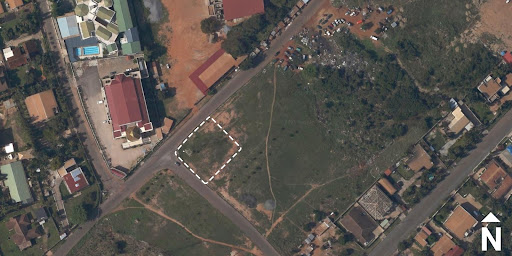
The site for this project is located in Ayawaso, Accra, Ghana. Ayawaso is a sprawling residential and commercial district as well as a home to the presidential palace, Flagstaff House, and numerous foreign embassies.
The site is close to a residential settlement with religious land use to its North but is itself located on an undeveloped parcel of land.
Site Area: 1,518 sq.m
Height Restriction: 10 meters
Ground Coverage: 50%
Maximum FAR: 1
Setbacks as per CAD plan
Coordinates: Accra, Ghana
DESIGN REQUIREMENTS
The designed outcome must be in the form of a community-centric housing building with the following housing requirements:
User Groups:
- Couples: Various Age groups with no children.
- Small nuclear families of 3-4 members: Varied Age groups composed of both adults and children.
- Larger Joint Families comprising of up to 5-8 members: Varied Age groups composed of both adults and children.
Housing Modules: Total Number of housing units must not be any more than 50.
- Single Bedroom Houses: 25 - 30 sq.m
- Two Bedroom Houses: 65 - 70 sq.m
- Three Bedroom Houses: 100 - 150 sq.m
Public Facilities:
- Recreation spaces: courtyards, multi-purpose hall for events ~ 100 sq.m
- Commercial Spaces: shops, market ~ 80 sq.m
- Landscaping areas like terrace gardens, green roofs, community gardens with vegetation and so on.

