
Legacy
Designing a Swahili heritage hub in Lamu
OVERVIEW
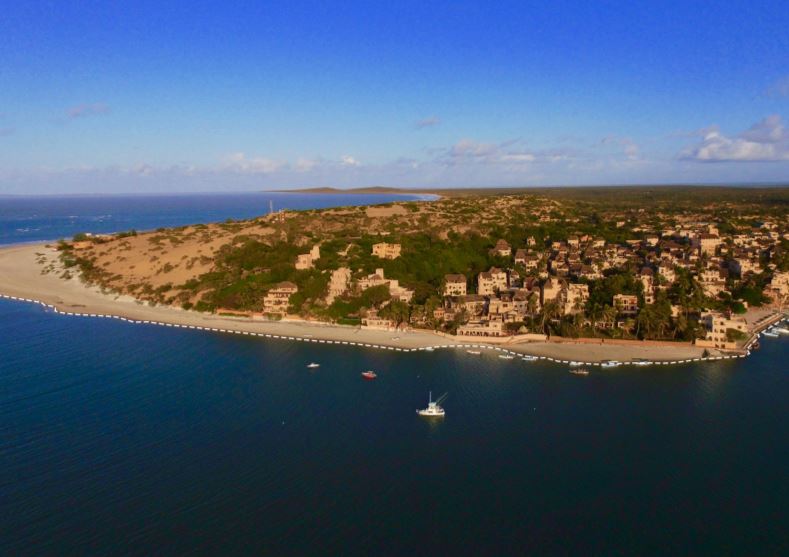
Img 1: Aerial view of the town of Lamu
Premise
A city consists far more than its buildings and its people. It is constantly evolving and undergoing diverse mutations of natural and cultural changes. It moves to the rhythm of the people.
But have you ever heard of the island with borrowed culture? Lamu is a place like no other located in Lamu Archipelago, housing the oldest known Swahili settlement. The Swahili people living in Lamu have a peculiarity about them, they share a unique relation with numerous provinces. The island has seen multiple visitors from all of the world, contributing to the refashioned Swahili culture that we see today. The diverse identity can be seen in it’s language, arts, clothing, food and architecture.
Lamu grew with a force to be reckoned with and the world saw its potential, but then what changed? What is the secret behind this island’s rich and colourful culture?
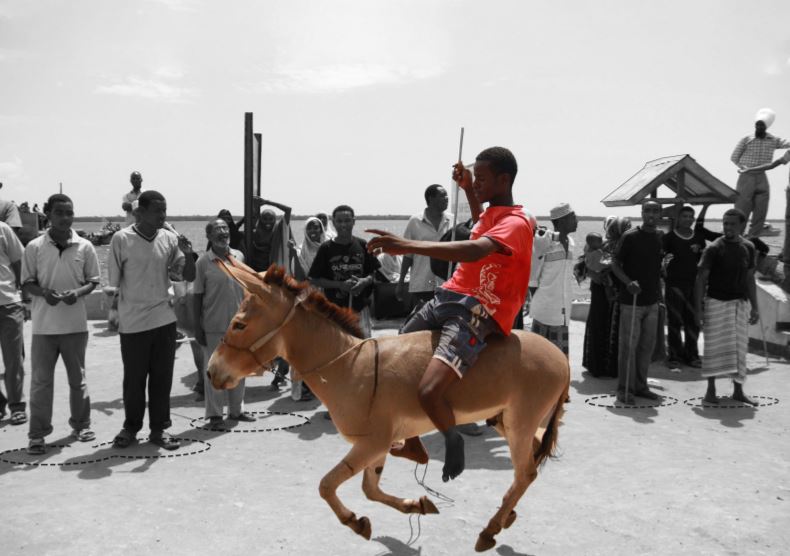
Img 2: Annual donkey race conducted on the island
Culture
Chinese burial ritual, Indian motifs used on the traditional kanga, portuguese textiles have all made their perpetual place in Swahili culture. It started back in 14th century, when Arab traders established a seaport on the island to trade ivory, timber and mangroves. They began to settle among the Africans of the coast, resulting in the emergence of a people and culture known as Swahili. By 17th century, the region was dominated by slave trade, during which it saw the most economy boom. Following the scramble for east africa of late 19th century, until most countries abolished slavery as a result the trading activities declined.
Drawing influences from the Chinese, Portuguese, German, Indian and Arabian visitors, Lamu created a unique amalgamation of its own over the centuries. Today, the locals cherish and preserve their new and evolved identity.
Though, now, Lamu island faces a wave of change that threatens to alter the isle and its unique culture forever.
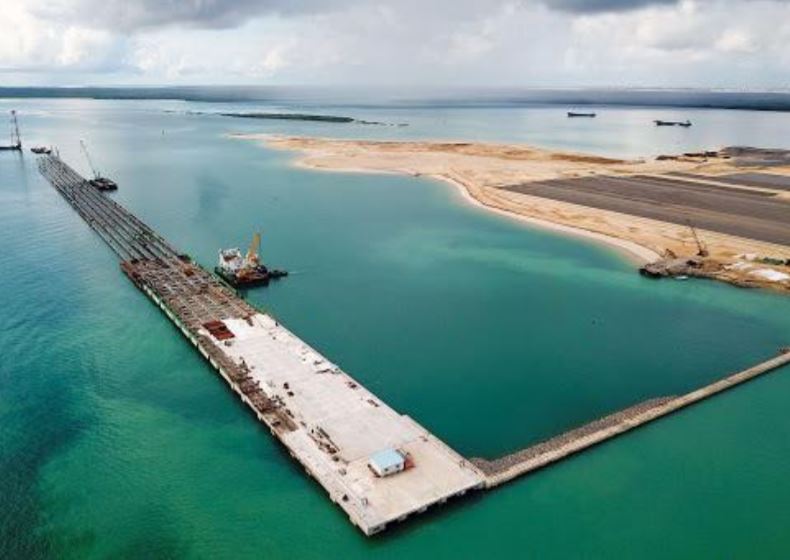
Img 3: LAPSSET project under progress
Issue
What does development actually look like? In case of Lamu, a massive seven part development infrastructure project called LAPSSET threatens to alter the lives of the locals forever. The ambitious undertaking aims to link will link Kenya, Ethiopia and South Sudan through railways, highways, pipelines and a 32-berth deep-sea port in Lamu.
Although the project intends to boost trade and secure Kenya’s position as regional harbourmaster, many residents view it with grave misgivings. They fear that the development might destroy their historic town and their culture. The port would be located within few kilometres of the town, and the traffic and construction could cause Environmental and heritage issues. [1]
How can we ensure to preserve Lamu’s unique heritage that has been developed over the years?
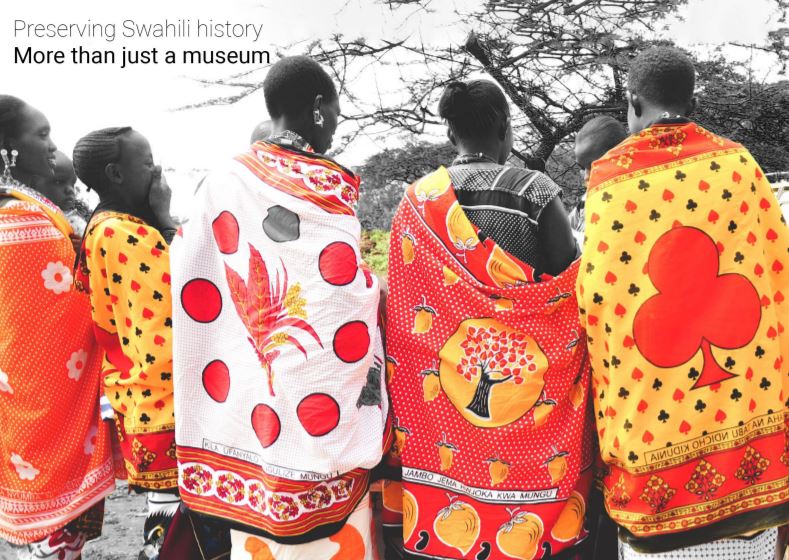
Img 4: Locals in their traditional kanga clothing
Brief of the competition
The rich and multilayered culture of the swahili people is what makes the island of Lamu distinctive.
The design proposes to create a cultural hub that promotes swahili heritage by providing a holistic architectural experience. It should aim to showcase the art forms and customs of the island’s distinctive culture.
The designed complex should be able to host events and annual ceremonies to promote the beauty of island’s landscape and the uniqueness of its people. It should act as the destination where one can get a taste of Lamu’s history as soon as they step in.
Objectives


Context: Considers local context in terms of the community, user needs and materiality.
Passive: Incorporation of natural light and ventilation techniques.
Interpretation: Embodying all these into an architectural outcome which connects - Place - Country - World.
Commerce: Modes of revenue generation & exchange of local commodities.
The following objectives can be a point of beginning to conceive this design. The designed cultural hub should be able to cater to 800-1000 people at once.
Programmatic Outline
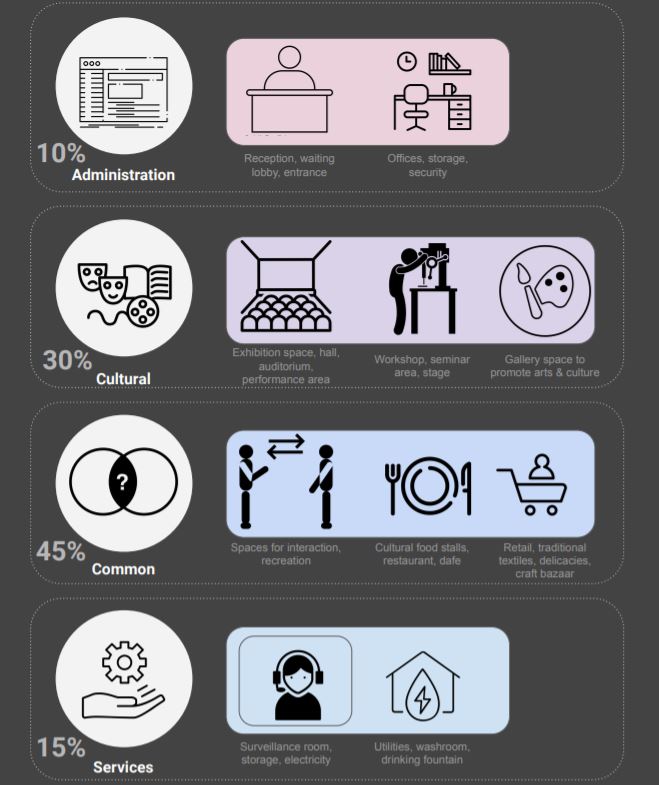
The above can be used as a point of reference to bifurcate different functions of the complex. However, new functions and categories can be added as per design requirements.
Lamu, Kenya
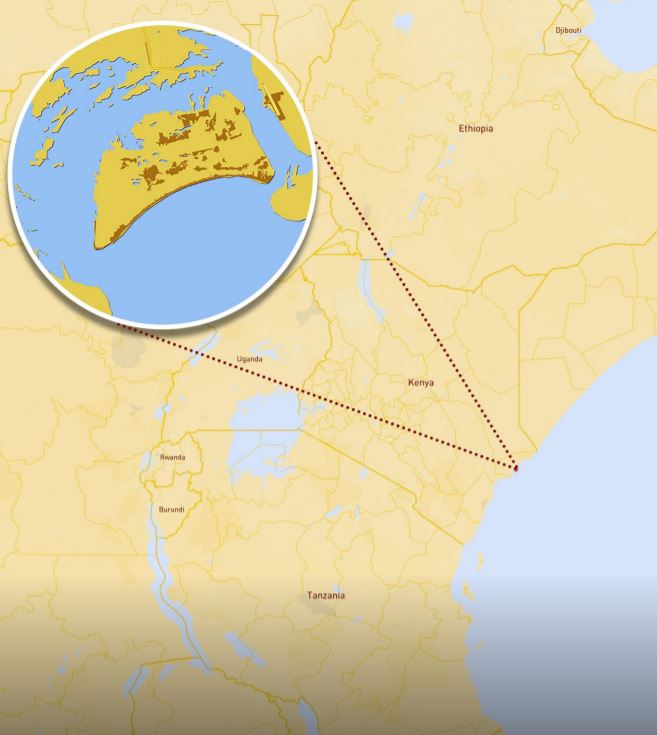
Lamu Town is a small town on Lamu Island, which in turn is a part of the Lamu Archipelago in Kenya. Lamu Island has been continuously inhabited for over 700 years since Arab traders established a port there. Being a small island, everything is located in a close proximity making walking the most preferable option.
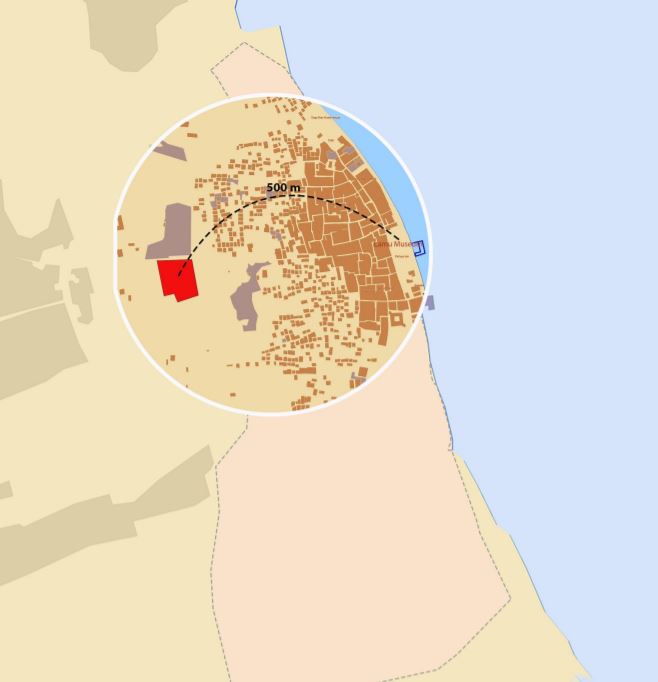
Img 6: Site location
Site Plan
The site is located on the outskirts of lamu town. Most of the hotels are located within 1km radius enabling easy accessibility. A local museum is located within 500m reach of the site. Therefore, the designed cultural hub may not hold relics or artifacts.
Ground coverage: 30% | height restriction: 16m I Site Area 8 acres | 2°16'06.2"S 40°53'47.7"E
Only regulations to be followed: Height restrictions - 60m , Set backs of 10m on all 4 sides,

Similar Competitions
Discover competitions you might be interested in




Bring back Drive In's

Challenge to design an urban locus of culture and heritage


The Global Benchmark for Graduation Excellence


The Global Benchmark for Architecture Dissertation Awards

