

Lost glory
Challenge to illustrate the ruins of Petra
Register by: Dec 30, 2026
Submit by: Jan 1, 2027
Registration starts: 50 USD
Exclusive pass with UNI Membership
Overview
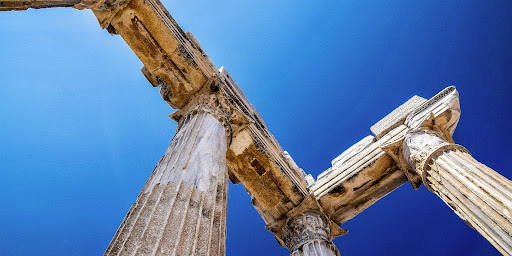 Fig: 1 - Architecture remains evident in the ruins of lost cities and cultures (Credits-Tom Podmore)
PREMISE
History is inherent to the evolution of humanity. We as humans have evolved across centuries, from the establishment of civilization to building architectural marvels. Our past has been defining our capacity for innovation and societal change.
Ancient times have been well known for their architectural creations, which have been regarded as marvels that shaped our perception in future. Comprising mainly the religious, public gathering, and administrative buildings; creations that were made hundreds of years back, are studied and researched today as they offer a variety of insights into today's architecture.
Existent as palaces, halls, temples and memorials, these spaces have withered with time. Architectural features, scales and materials have remained that narrate the story of the past. Spread across countries worldwide, these ancient wonders are today preserved and studied, as their architectural grandiosity has remained intact in spite of becoming ruins. Still today, the ruins of these buildings don't fail to awe us, as their geometry and architectural character are still an unachievable feat for us in the modern age.
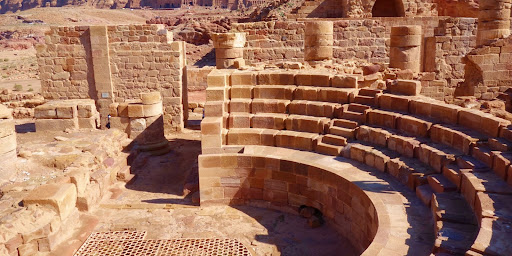 Fig: 2 - Excavated mausoleum in petra (Credits-from Firebird007/Shutterstock)
RUINS
One such marvel is Petra. Inhabited since prehistoric times, this Nabatean caravan city is situated between the red and the dead sea. Petra is half-built and half-carved in the rock. Regarded as one of the major archaeological sites, for the blend of its eastern and Hellenistic architecture.
Petra possesses an outstanding universal value in the vast extent of the tomb and temple architecture, religious high places and the remnants of channels, and tunnels. The fusion of Hellenistic architecture and rock-cut tombs represents the unique artistic and architectural achievement of the first centuries BC to AD.
The remains of Petra demonstrate a variety of monuments that bear exceptional testimony to how the lost civilisations lived. Rock cut façade is the most iconic monument of Petra. The prominence of tombs has led many scholars to see Petra as a necropolis (cemetery).
With the variety of sculptural decoration to Corinthian features, Petra is regarded as a chest of treasures.
How can we picture this enchanting city in a frame?
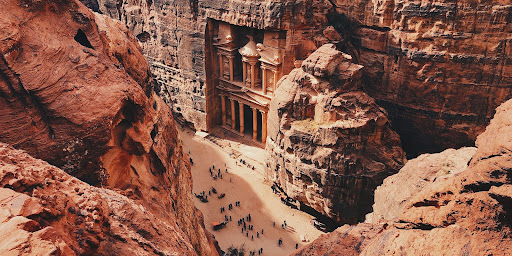 Fig: 3 - Treasury of Petra (Credits-Alex Vasey)
BRIEF OF COMPETITION
The treasury in Petra is exceptional for its figurative detail and ornate Hellenistic architectural orders. Embracing a detailed and decorative architectural character, the place of Petra has amused generations. Every observer, researcher, scholar and tourist have observed a different Petra from their own perceptions.
Much like a hidden treasure, for some, it's the large cultic podium at the back or the 3000 tombs to the rock-cut façades; each observer has defined Petra through one's personal lens of perception making it a unique masterpiece even as a ruin.
How can the details and multitude of facets of Petra be captured in a single frame?
How can one illustrate the depth and history of Petra on paper?
Brief: The brief of the competition calls for an illustration of the city of Petra, its characteristics from your own perspective in a single frame by creating an architectural illustration that focuses on its architectural character and detailing.
OBJECTIVES
Architectural character: How does the design capture the essence of Hellenistic architectural character?
Colour/texture palette: How is the illustration representing the connection to the heritage site?
Attention to detail: How effectively is the illustration demonstrating the fine architectural details?
Coherence: How is the illustration balancing creativity and retaining heritage character?
Use any mediums, video, images, drawings, sketches, models, paintings - and communicate your design.
DELIVERABLES
You have to deliver a graphic design outcome in the form of an architectural illustration. Where the outcome represents the given aim. Only one final illustration needs to be submitted. The image should be of the size of [2800px × 3200px] in portrait or landscape digital format (JPEG only)
The graphic is to be entirely rendered and digitally created. The usage of photographs, stylised/credited or otherwise, directly is strictly not allowed.
The use of lassoed graphics lifted from an existing image is limited to half of the total graphic content. ( The guidelines are indicative and are placed only to reduce plagiarized artworks - any infringement detected or reported will be notified, and may be removed from competition if found guilty)
The list of deliverables are:
- Title
- Subtitle
- Illustration
- A few process images
- A statement in about 100 words supporting the illustration - you can attach this as an additional image below the illustration.
