
Moontrip
Design a space center to explore outer space
OVERVIEW
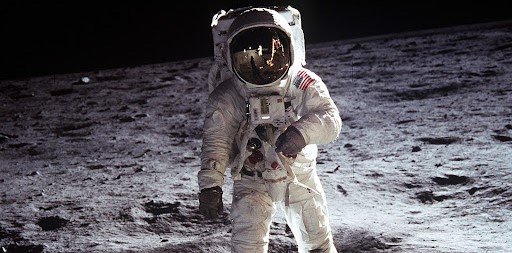 Fig: 1 - First step on the moon - Universal picture
FIRST STEP IN OUTER SPACE
50 years ago, on July 20, 1969, Neil Armstrong became the first man to step on the moon. Upon landing, the first words that he quoted were “That's one small step for man, one giant leap for mankind.” True to his words, the world has never seen back since and new dimensions of space explorations were open following that day.
Science has moved miles ahead exploring unheard domains and understanding the mysteries of the universe. Every space mission has always inspired humanity to think beyond and, this marvelous feat has been the pinnacle of those.
New technologies are being introduced every day, paving the ways for humans to get insights into space travel. In the past few decades, space travel and exploration had lost a significant public interest till 2011, however, recent innovations have again sparked curiosity in this domain.
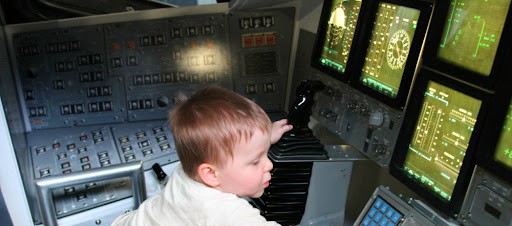 Fig: 2 - A space center complex to experience - An impression
SPACE MISSION APOLLO
The Apollo 11 mission wasn’t just a leap in scientific achievement, it was a source of inspiration and motivation for generations to come. Becoming an astronaut became one of the most sought-after career choices for kids in the USA and worldwide.
The moontrip dream has only escalated over time with more than 18,300 people applying for fewer than 14 spots in NASA's astronaut class in 2016, which is nearly triple of applications in 2012. However, a lot goes behind a space mission to make it happen apart from the astronauts. Several engineers, technicians, trained professionals, specialists, scientists and designers make these missions possible while being behind the lines.
Space missions like Apollo 11 were possible because so many skilled people joined hands to make the first moon landing possible. Yet these thin layers usually do not meet the eye when speaking of the mission itself.
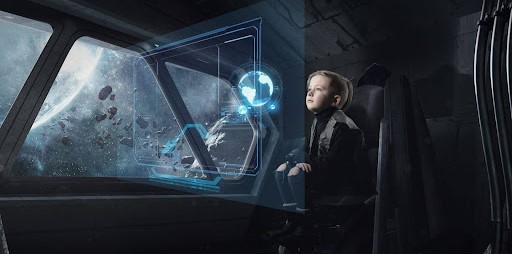 Fig: 3 - A child in space explorer’s costume - Credits: Popstudios
SPACE CENTER
To mark the completion of 50 years of this milestone, and all the contributions in the field of space exploration in the last half-century.
H3: The challenge is to design a space center to enlighten the young generation about the moontrip, the role of different people and other advancements in space explorations.
The space center should have a comprehensive set of provisions for giving a holistic experience of how space travel works, encouraging new participants and attracting a new generation to consider this field as a career. Space can be seen as one of the most remarkable inventions of the century and we expect to see a lot of it in the coming centuries.
How can we breed more interest within our younger generation to make this dream come to true realistically quicker?
OBJECTIVES
- Symbol: Marker of 50th anniversary of a major leap in scientific achievement
- Learning: Experiment with alternate typologies to make learning fun.
- Child friendly: Should be designed with the young generation in mind.
- Interactive: Using technologies to make experiences fun
The challenge is to design a space exploration center primarily for kids and teenagers to ignite the spark for learning about outer space.
The center for space is not a space history museum. It is a place where the young generation can learn and be a part of activities about outer space, experience the life of an astronaut through simulation and could engage themselves in other fun learning activities. The center must reflect upon the values of a never-ending quest for knowledge and will to explore beyond bounds. It should be a manifestation of human achievement and a symbol of hope for the future.
SITE
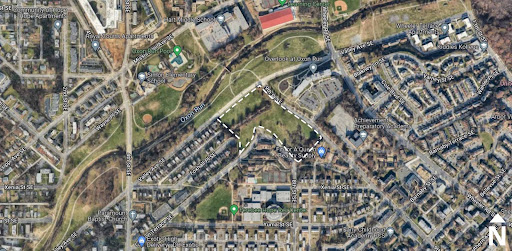
The site chosen for the challenge is situated beside oxon run, near washington highlight recreation center and united medical center, Washington DC.
We give this opportunity to participants to build this science center commemorating the first moon landing that ever took place. The challenge seeks to give various opportunities to the designers to build activities such as the series of moon landing sets or related activities in indoor as well as pleasant outdoor conditions.
- Site Coordinates: 38°50'06.0"N 76°59'44.8"W
- Site Area: 38402.91 sqm
- Height Limit: 20m
- Maximum FAR: 1
- Ground Coverage: 20%
Setbacks (as per CAD plan)
Ground Coverage refers to the ratio of maximum allowed solid/permanent footprint on the site to balance the built and unbuilt spaces. You can utilize the other 80% of the site for any temporary intervention/recreation.
