
On Rail
Challenge to design luxury tourism on rails
Overview
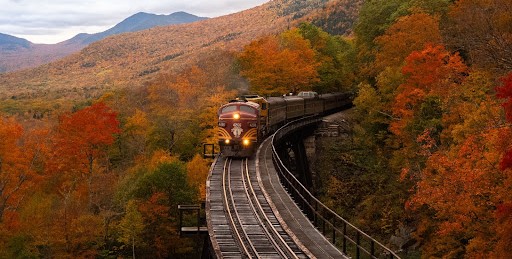 Fig: 1 - Train journeys are not just about the destination but the travel time itself is part of the experience.
THE TALE OF TRAINS
Trains were once a fascinating transport technology. First introduced in 1804, trains allowed people to experience travel in comparative comfort at speeds previously unthinkable. They became imperative vehicles not just for people but also for important cargo that enabled the boom in trade. They also became new ways of experiencing changing landscapes as one travelled.
Nevertheless, human nature is intrinsically inclined to build better technology and therefore the popularity of trains was gradually replaced by planes. Not only did these airborne modes of transport tickle the flying fantasy in humans but they also allowed for faster and more efficient transportation.
Today, however, railways are a considerable investment that still has certain merits compared to planes primarily in cost-effectiveness and cargo transportation.
Thus to repopularise railways for better revenue, many countries around the world are reimagining and recontextualising these modes of transport.
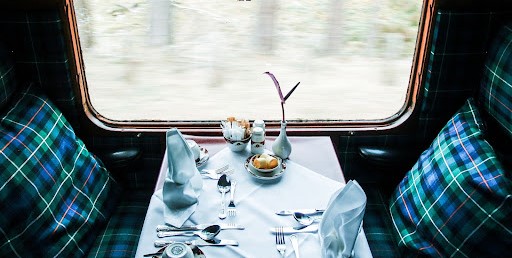 Fig: 2 - The rail transport has improved significantly over the years with the experience being catered to be more exclusive.
RAIL OF LUXURY
A new and slowly growing approach around the world in reimagining trains is creating luxury trains. These moving hotels are often inspired by the place they transverse. The primary intent is to create comfortable and premium travel experiences that evoke the country’s history and heritage. By being inherently land-bound they also have the advantage of being able to promote tourism across destinations in a continent.
One particular qualm with train travel is that the journeys may be longer and take more time, however, trains also have several advantages in their favour. For example, passengers can experience the local environment, social and economic conditions, and a kaleidoscope of colours during their travels more intimately.
Another significant virtue is that luxury trains have the liberty to be more spacious, unlike places. They can have restaurants, bars, lounges, comfortable sleeping and seating areas and bathrooms.
DESIGN A LUXURY TRAVEL EXPERIENCE
Trains are a significant investment to a nation owing to their need for infrastructure and continuous land use through the nation to its various destinations. However, trains also pose equally significant benefits. Particularly in terms of economic feasibility and the ease of transportation of cargo. As a result, it may be valuable to consider ways to repopularise trains for tourists.
Brief: For this challenge, you must reimagine and redesign a coach of a luxury train.
The design of the interiors will include planning, lighting, material details and mechanisms inspired by the location theme. Privacy and interaction must be moderated to ensure convenience in travel, for passengers as well as the crew.
The experience should be able to celebrate and promote the cultural and historical heritage of the chosen region but must allow for modern comforts and technology in the journey. The aim is to imagine novel tourism opportunities on movable transportation.
OBJECTIVES
Redesign: How does your outcome exhibit your novel approach to creating luxury coach designs in the given context
Heritage: How does your design outcome celebrate the artistic and cultural heritage of the given context
Comfort: The design must be comfortable and welcoming to individuals who intend to spend long hours in the space during their travel
Upgrade: How does the design allow for opportunities to upgrade with time.
LOCATION - CHINA
This design outcome is intended to be located on the Urumqi-Kashgar, Xinjiang-Uyghur Autonomous Region train line in China.
- China has the second-largest rail network in the world spanning over 100,000km. It is owned and operated by the state-owned China Railway Corporation. In 2013 it was estimated that the rail lines carried about 2.08 billion passengers (the second highest after Indian Railways) and 3.22 billion tonnes of freight (the second highest after the US railway network).
- The chosen train line is China’s most westerly train route and allows passengers to glimpse into China’s medieval past. The train route that runs 1,588 kilometres and takes between 25-32 hours (depending on train speed) travels to the western desert of China and runs through Uyghur towns that emerged from the ancient silk route.
- Geographically the train transverses through remote desert country with breathtaking views of the snow-capped Tian Shan mountain range as well as the red-sandstone Flaming Mountains in Turpan. On the way, travellers can encounter vibrant culture in a kaleidoscope of colours that characterise the Uyghur towns.
Thus travellers can witness and encounter people, bazaars, curling Uyghur script, minarets and food that seem to belong more to Istanbul than Beijing.
AREA PROGRAMME
The train total passenger count is estimated to be 100 passengers. The average coach length on the train is 25 meters. For this challenge you must design:
1. A tier is 1 coach that will contain 3 cabins measuring approximately 7sqm each. These cabins must include:
- One double bed
- An ensuite bathroom, with toilet, shower and sink.
2. A Lounge Coach that contains seating and dining spaces as well as a small bar.
