
Peak
Challenge to visualize an ideal neighbourhood
Overview
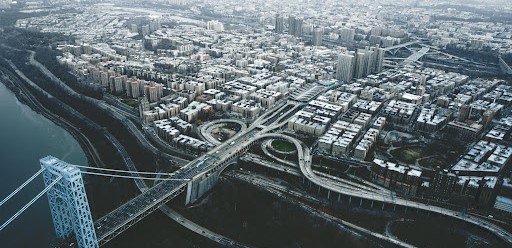 Fig: 1 - Small cities have turned into metropolitans with agglomeration and expansion, towns into cities with urbanisation.
THE STATE OF CITIES TODAY
The building of cities has been a grand task for the past century. The formation of cities has been a delicate task of moulding an environment to fulfil human aspirations, civil economy and political capability of balancing the diverse desires of all to generate a pattern of living.
The turn of the 21st century has been plagued by political conflicts, social inequality and instability in civil institutions, against the backdrop of environmental threats. Cities are constantly retrofitted to manage the concerns of all factions of the population. Alteration of functioning modules and upgrading them to the advanced standards of technology and living is now made possible.
Cities have existed for many years, built as rigid functioning systems, and the flexibility of their palette has its limits. Some systems embedded in cities are unworkable and rendering these features anew is superficial and often impractical.
 Fig: 2 - The overhaul of cities can bear the potential of generating harmful effects on the environment and its people.
CONCEPT
Cities are a collection of local communities and neighbourhoods, functioning with a set of social networks. The idea is to imagine a new type of city block, designed from scratch, enabling us to incorporate progressive systems in its inception.
As much as the ideal city is built with infrastructure at the centre of attention, the goal is to create a better living environment for humans, holistically. So, the social, cultural and psychological aspects of a human’s well-being must also be explored.
Social interaction must be a key element in the design of new neighbourhoods. A strong sense of community is to be fostered.
The design of the unit will look forward to integrating communities with universal design solutions.
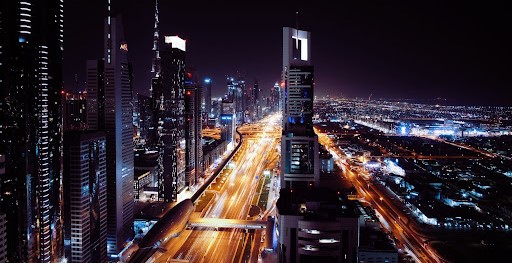 Fig: 3 - Smart cities and responsive cities are the way into the future serviced by digital infrastructure.
IDEALS OF AN ADVANCED CITY
The greatest innovations of this century can be integrated into the design of new types of neighbourhoods, to create an ultra-modern line of design for living cities.
- Artificial intelligence and Robotics (data, sensor, identification, automation)
- Sustainable energy (environmental technologies, zero emissions, renewable)
- Mobility (local transit, personal mobility, automation, electrification)
- Material sciences (bio-technologies, recycle, no waste)
- Circular Economy
Incorporation of natural habitats as part of the new city design can be done to strengthen the connection between humans and nature. The idea of sustainability is to be embraced and a future city with a liveable environment is to be rendered.
 Fig: 4 - What would the fictional rendering of cities look like by the end of the century?
ENVISIONING AN IDEAL NEIGHBOURHOOD
Cities are grounds for people to live, work and play. This fundamental ideology is to be incorporated into the design of a hypothetical, ideal neighbourhood of the future.
The challenge is to generate renders for an ideal living neighbourhood that will focus on connectivity, transportability, self-sufficiency and sustainability.
The task gives the freedom to imagine a controllable environment. We can learn from the inadequacies and issues faced by the existing cities, and resolve to tackle them in the conception of this new site. The virtually rendered city will be a fictional one, set in a real-world location context. Elaborate your idea as a fictional narrative, rather than a proposal.
Since the challenge is an opportunity to reimagine a district from the ground up, various aspects of the neighbourhood can be worked on such as shared mobility, circular systems, waste management, mixed construction, climate design and so on.
OBJECTIVES
- Inclusivity: The design must be built in a way that it offers safe access to all types of users including women, the LGBTQ community, disabled persons and so on.
- Accessibility: The navigation and layout of movement and buildings must be specified in the proposal to create an engaging neighbourhood.
- Harmony: The built form must be able to connect with the people, through its form, layout or spaces. The relationship of the building with the context, both in physical and mental terms must be explored.
- Balance: Privacy and interaction must be guided in the layout as per the nature of the activity. The aesthetics and functionality must be balanced to create a mix of open, semi-open and closed spaces.
- Sustainable: Reduce the negative impact of design on the environment, by improving building performance, reducing waste and ensuring comfort for occupants.
SCALE
The site for the neighbourhood must be restricted to 12,000 sq.m The participants are not expected to design the entire neighbourhood but rather focus on developing a module of 3000 sq.m in detail. The network and systems designed for this challenge can be represented on a larger scale.
The renders must be realistic with logical systems in place and justification for each intervention. The three-dimensional renders must be assisted by written concept notes of not more than 1000 words.
The competition will work on levels:
-
Participants must design a living block of the future in detail complete with residential, and social spaces (plaza, courtyards, gardens etc.)
-
Design the service and infrastructure systems that would be implemented at the city level. Solutions for anyone system of the city can be proposed from waste management and drainage, water, energy and gas supply, or transport networks.
Both of these interventions must be adequately represented in the design proposal.
DELIVERABLES
Theoretical explanation of concept along with renders.
Similar Competitions
Discover competitions you might be interested in



Illustrate the lost glory of Angkor Wat - Render Challenge

Challenge to illustrate a Contemporary Castle

Architecture Illustration Competition

Deconstructivism - Illustration Design Challenge
