Pura
Observation Center design challenge: A safe interface between humans and nature
OVERVIEW
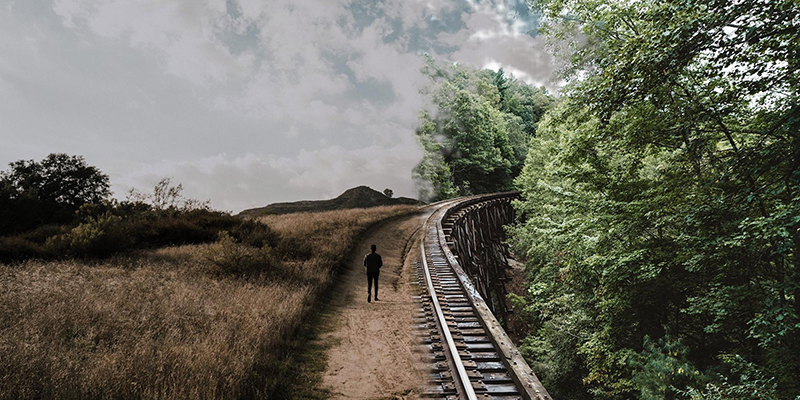
Fig: 1 – Transition of natural spaces by human intervention - A concept.
Relationship with nature
The evolution and origination of humankind have been cradled by planet earth and its range of living species. We formed a part of the ecosystem which coexisted with all other forms of fauna that had emanated from the same. Since the period of evolution began, humans attained complete consciousness in a shorter span. With this emerged an inevitable era of development, changing the scenario of the natural environment and humans that had been prevailing for centuries.
Gradually the changing relationships of the elements, namely ecosphere and humans reiterated their composition in the environment. There was a detachment established in the wake of development. The alliance we shared was not symbiotic anymore, creating invisible barriers that had never existed previously. The distance that grew with the thriving urban domain has now asymmetrically depleted the wildlife and its diversity.
The virtual walls that built two different environments have in a way protected and preserved the wildlife. Should the disassociation that has been built parallelly be existing as well?
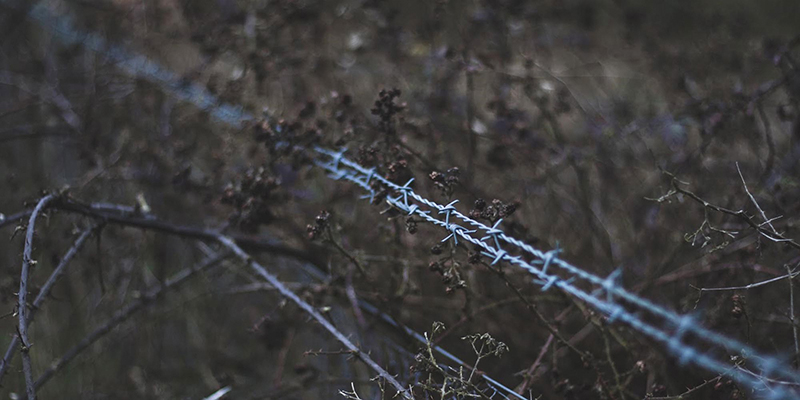
Fig: 2 – Barriers created by humans to prevent animals and humans to trespass
Disconnect
The subconscious learning that takes place due to an interaction with nature and its components is essentially invaluable. When we started building civilizations and began living in clusters, their contact with nature remained closely knit, until the past five decades. The encroachments of land for food and living became indispensable.
Eventually, the unprecedented growth leads to the creation of a barrier that protected them from their depleting habitat. It was necessary to maintain limits to prevent a complete override by humans. The growth trajectory of humankind that we see today is inevitable which initiated this shift in the ecosystem.
National Parks, Wildlife sanctuaries are refuges created for preserving the Fauna and Flora where the Animal diversity thrives. Such regions also house unplanned interfaces to allow us to percolate which are commonly human-centric that needs to change.
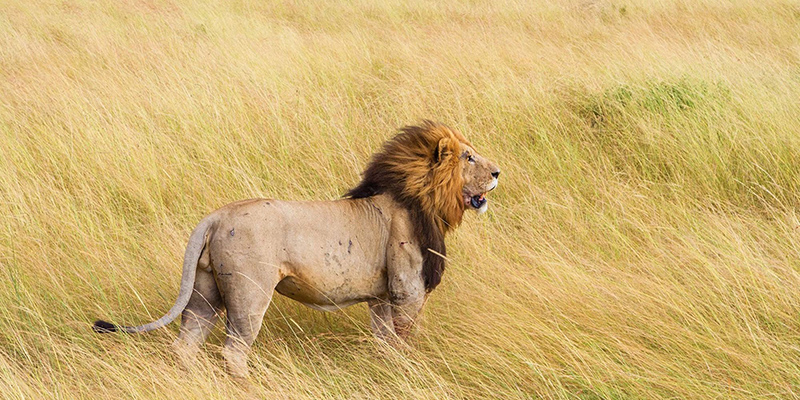
Fig: 3 – A lion in its natural habitat. Untamed and Untouched.
Brief of the competition
A permanent solution to balance nature and mankind needs to be re-established without keeping a man as the centre of the design intervention. Instead, we need to suggest a common ground for all i.e. an-Architecture and Nature. an this be a converging point between the two acting as a virtual podium for them to blend in the environment while they interact silently?
The intervention is expected to be sensitive to the environment it has been placed in. It must ensure an open dialogue without disturbing the reserved area. Space can be an open deck, viewing centre, pavilion, or observation centre where the visitors can absorb the constituents of the natural habitat and its residents.
The things that are now being built in the consciousness of the situation can be a balance of both? The participants are free to add any programmatic function to their design idea that resonates with the narrative.
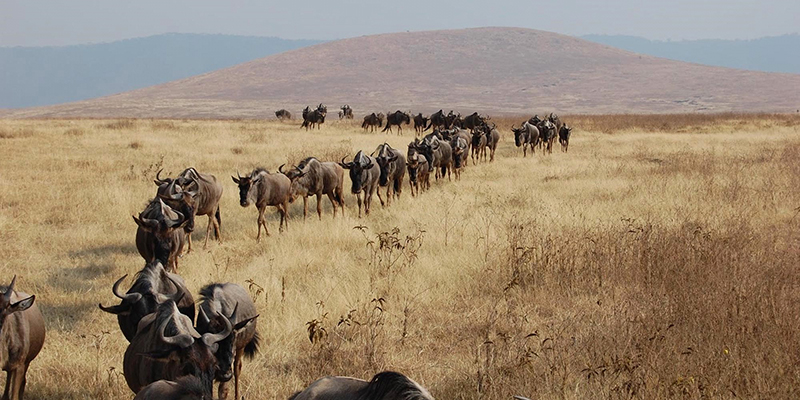
Fig: 4 – A view of migrating wildebeests in Serengeti National Park.
Objectives
- Balance: Balance between nature and mankind.
- Construction: Material usage and construction techniques used must be complacent n with the local context.
- Sensitivity: The intervention must be sensitive to the environment it is being built in.
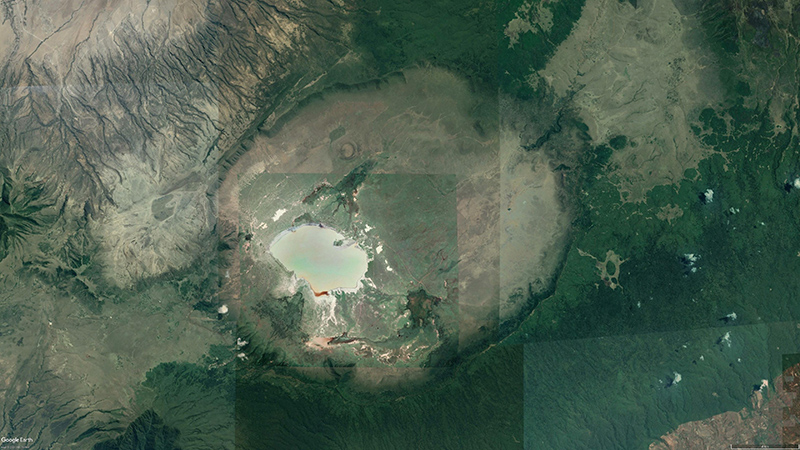
Fig: 5 – Ngorongoro Crater in Tanzania - Aerial View - Source: Google Earth
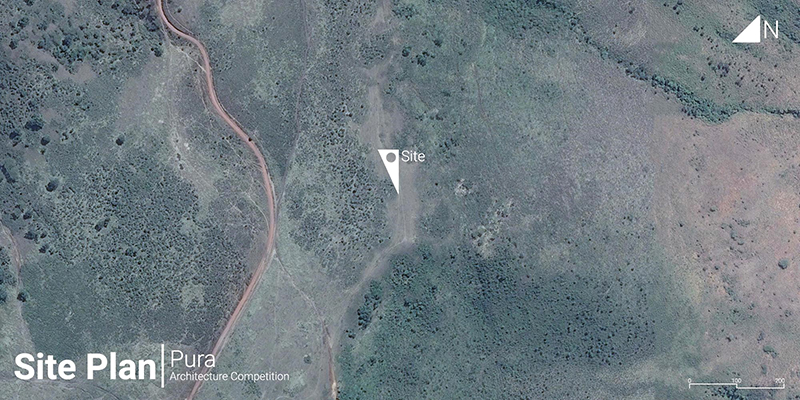
Fig: 6 – Site - Source: Google Earth
Serengeti National Park, Tanzania
Serengeti national park is located in the Maya and Simiyu regions of Tanzania and is famous for its annual migration of white-bearded wildebeest, zebras, Nile crocodiles and has the largest concentration of lions. Spread over an area of 14750 km2, it is one of the most diverse national parks of the world and has a variety of geographical terrains including grasslands, riverine forests and woodlands.
Situated at one of the corners of the Ngorongoro Crater, the site is near an already existing eco-tourism centre and has a rich green cover around the area.
The topographic level of the site gives a scenic view of Lake Magadi, which is situated at the base of the crater and a road running nearby. The participants can select an area of 1000 m2 within the region to design their project.
Area Programme
- Reception: 10 sqm.
- Parking: 40 sqm.
- Briefing Area: 20 sqm.
- Viewing Deck: 100sqm.
- Watch Tower: 20sqm. (Effective)
- Refreshment Area: 10 sqm.
- Equipment Store: 10sqm.
- Housekeeping: 6sqm.
Programmatic elements can be modified in this area programme by participants.
Similar Competitions
Discover competitions you might be interested in



Challenge to design an open learning module for the elderly

Challenge to design a portable music platform

Challenge to design a portable theatre


The Global Benchmark for Architecture Dissertation Awards