Reborn
Plan for Survival
OVERVIEW
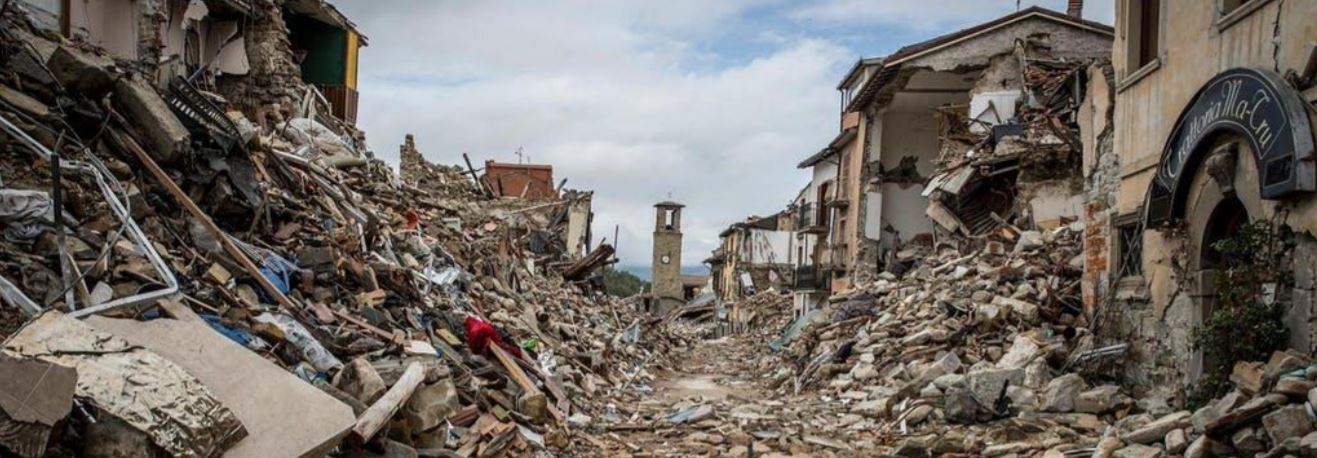
Img 1: Devastation Aftermath after a Earthquake
Premise
For centuries, earthquakes have been an inevitable phenomenon that brings destruction and devastation all around the world and we aren’t any more prepared or equipped to deal with them than we used to be. This is a worldwide issue and although some countries like Japan are better prepared with the proper infrastructure to deal with these disasters, still many countries remain that are powerless in the face of these disasters. Countries like Iran, Indonesia and Turkey which are some of the countries that are most prone to earthquakes but don’t have the necessary infrastructure to minimize the damages.
According to the IRIS (Incorporated Research Institutions for seismology) several hundred earthquakes happen all around the world each day but, major earthquakes (magnitude 7) happen more than once per month and great earthquakes, magnitude 8 and higher, occur almost more than once per year which is enough to bring irreversible destruction.
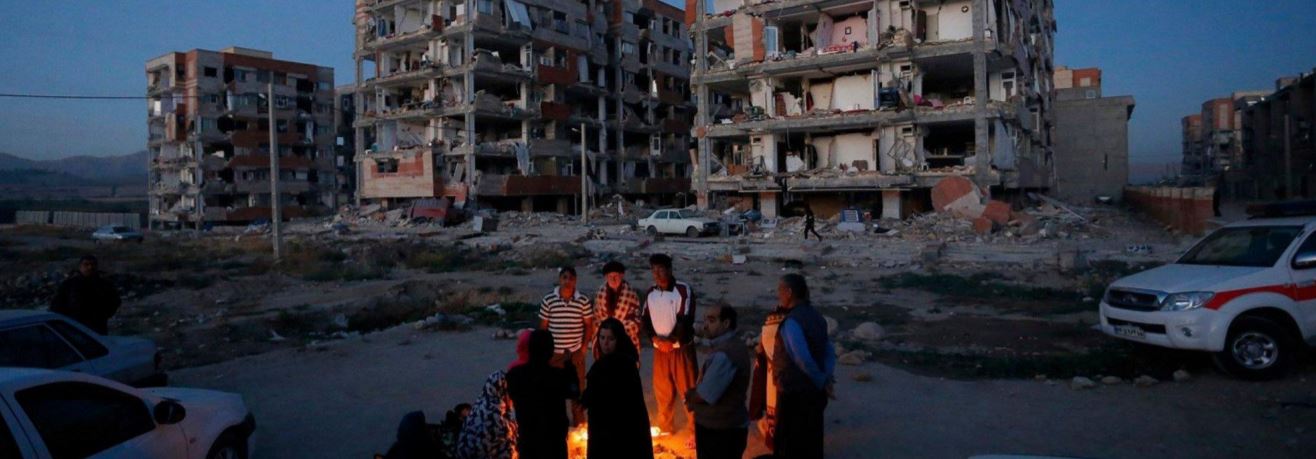
Img 2: A group of people gathering at the end of the day after earthquake (Source)
Earthquake scenarios
One of the most recent examples of these catastrophic earthquakes is the one that happened in Kermanshah, Iran and another one of the most destructive ones was the 2003 Bam earthquake both of which resulted in severe loss of life and devastation during and after they happened. Calamities like these happen all around the world frequently and cost the lives and livelihoods of thousands of people, yet no major solutions have been put forward. This can be a reflection of how powerless each individual person feels in the face of these large scale natural disasters but humanities strength has always been the power of collective thinking and cooperation in the face of challenges.
By reaching a solution on how to manage these disasters and deal with their destruction and damages, we could potentially save many lives and prevent the loss of a notable sum of resources.
But the question still remains, how do we approach this issue that not only provides a solution for immediate relief after disaster strikes, but also foresees steps and precautions that can be taken beforehand to lessen the damages and ease the process of rebuilding.
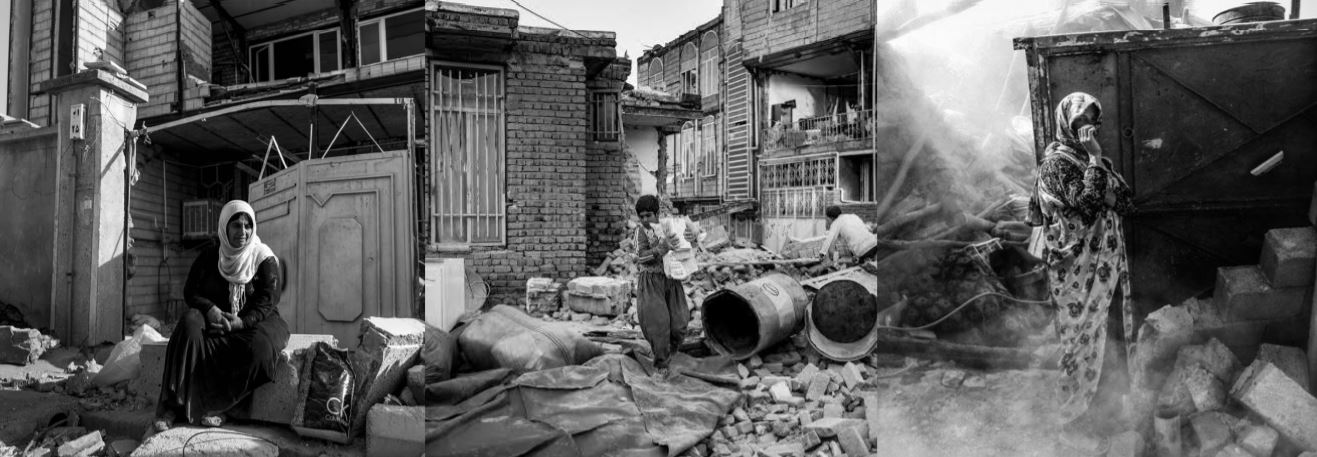
Img 3: Pictures Clicked by Mahdi Barchian in the Iran Kermanshah Earthquake
Widespread panic
The problem of disaster management and providing shelter and basic needs after a natural disaster has been a long-lasting issue that hasn’t had any significant progression. Today, 2 years after the earthquake in Kermanshah many people are still living in temporary containers and haven’t been able to resume their ordinary day to day lives.
After all, how do we provide a large number of spaces for injured and traumatized people in a short amount of time? How much can we plan ahead? Or maybe find a way around this issue because for as far as we know earthquakes are bound to happen whether we are prepared or not.
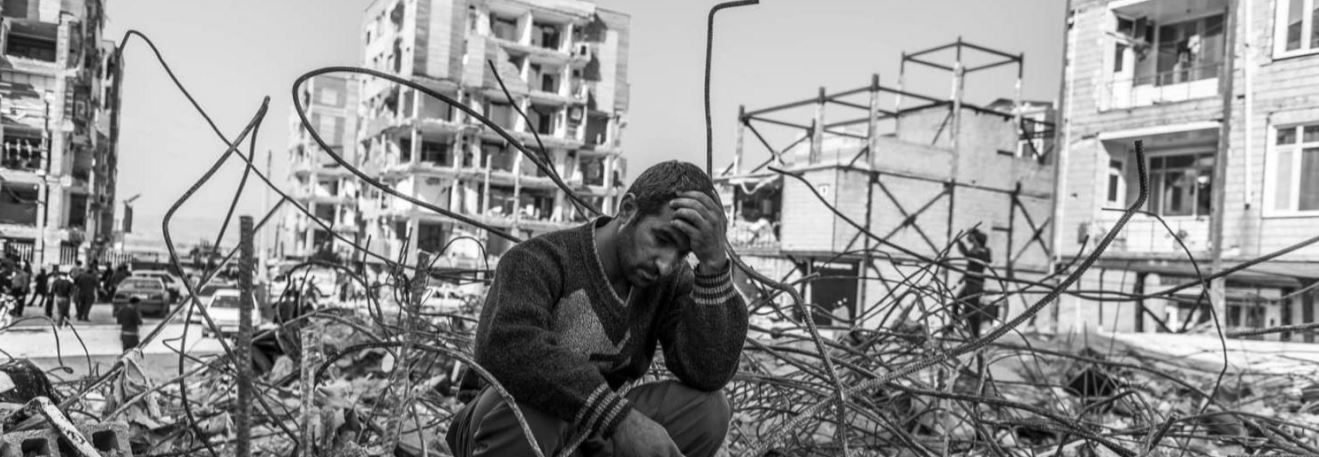
Img 4: Picture Clicked by Mahdi Barchian in the Iran Kermanshah Earthquake
Brief of the competition
We have witnessed time and again cities, towns and communities left in ruins after an earthquake has struck. Different approaches to reverse the devastation and help people get back up on their feet have proven to be ineffective or at the very least insufficient. Basic temporary housing strategies are simply not adequate to deal with the environmental, social, psychological and financial havoc that earthquakes bring about.
Brief: The brief does not stop at only temporary housing solutions or ready-made objects or products that could be utilized after an earthquake, rather, we’re asking for a broader solution and an approach to prepare a city and provide accommodation for the survivors of an earthquake.
The competition aims for realistic results that can be used on Site in Tabriz.
Objectives
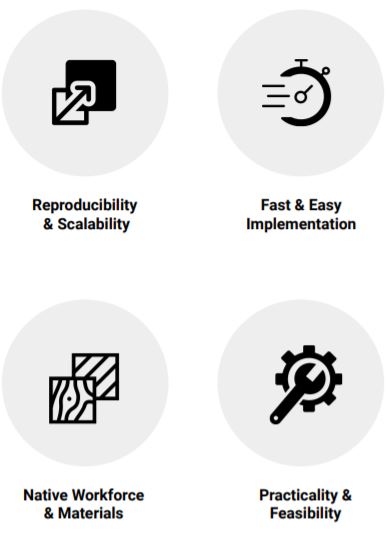
The following objectives can be a point of beginning to conceive this design. Participants can assume their own contexts and users before initiating their design process.
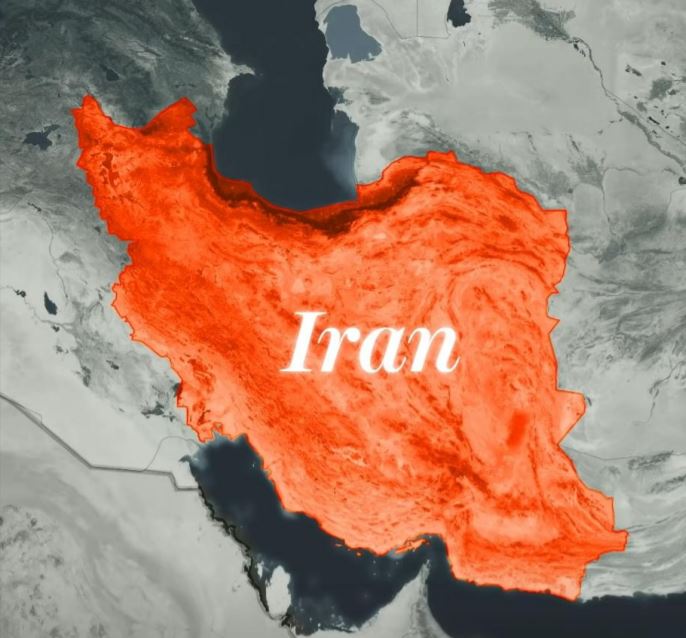
Introduction to Iran
Iran is a country at the heart of the middle east and is one of the oldest countries in the world with a rich history proceeding 2500 years. Previously now as Persia, the country as undergone many changes and has many different rulers and conquerors from Cyrus the great and Darius to Alexander the great, Genghis Khan, the Arabs and the Ottomans. An eclectic cultural elasticity has been said to be one of the key defining characteristics of the Iranian identity and a clue to its historical longevity. The Iranian people are some of the most hospitable and most resilient people, enduring many wars, revolutions and natural disasters over the years.
Iran is one of the most seismically active countries in the world, being crossed by several major faults that cover at least 90% of the country. As a result, earthquakes in Iran occur often and are destructive. Since 1900, at least 126,000 fatalities have resulted from earthquakes in Iran and several cities have been completely leveled and rebuilt.
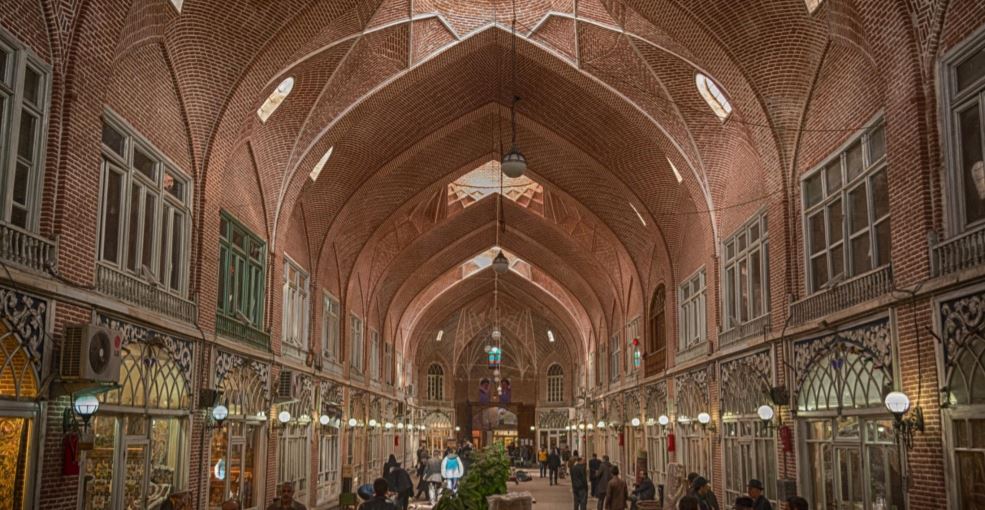
Img 5: Tabriz Bazaar, Iran
Tabriz, Iran
Tabriz is the capital city of East Azerbaijan Province, in northwestern Iran. Tabriz Bazaar, once a major Silk Road market, is a sprawling brick-vaulted complex selling carpets, spices and jewelry. ِDue to its convenient location and it’s proximity to Europe it has been a business hub in the region and today it’s one of Iran’s most important industrial centers. In the last two centuries it has been the origin of many cultural, social and industrial movements in the country. The climate is continental: hot and dry in summer and severely cold in winter. The city lies in a valley surrounded by hills on three sides. It is in an earthquake zone that is liable to frequent and severe shocks.
- Area - 240 km2 (90 sq mi)
- Site Coordinates - 8°03'28.6"N 46°18'02.7"E
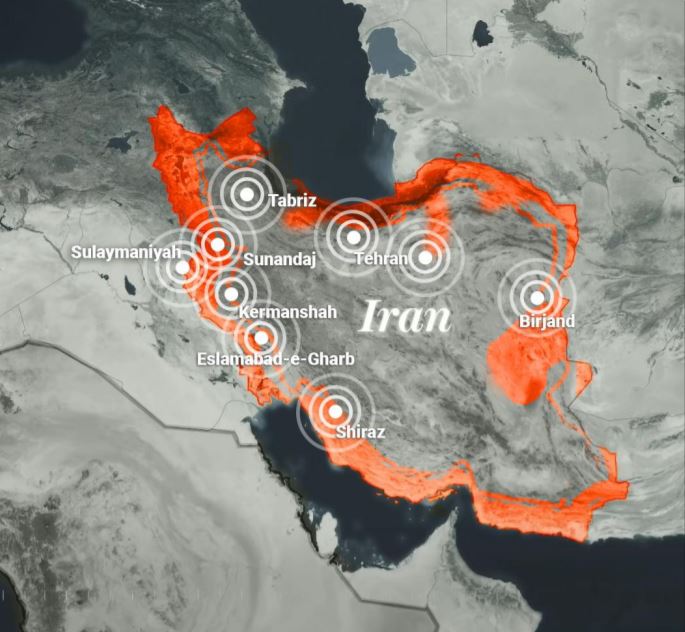
Infographic - Seismic Hotspots
Tabriz has had 119 recorded major earthquakes and 8 great earthquakes where the city was completely ruined and rebuilt each time. Starting from 858 AD these quakes have devastated cities and killed thousands time and again. With the last one happening in 1780 these earthquakes seem to have a period of 200 years and even though it’s been almost 300 years since the last one many still believe that it could happen any day and bring catastrophic results, yet we aren’t any more prepared than we were when the last one happened. There have still been many significant earthquakes around the world and in Iran with the last one happening about 2 years ago in the winter in a rural area in Kermanshah with an extremely cold climate which had about 700 casualties and 12000 injuries. The immediate relief efforts and accommodation for the survivors was nowhere near enough what was needed and many more lost their lives because of this and had it not been for volunteers and private citizens help and donations, hundreds more would have lost their lives.
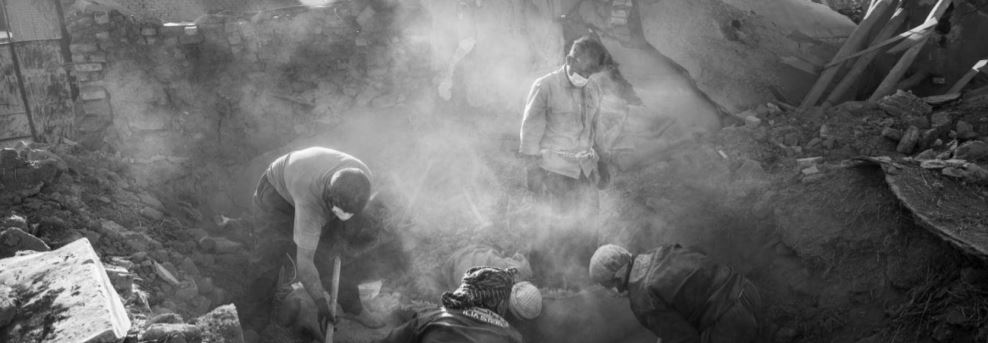
Img 6: Picture Clicked by Mahdi Barchian in the Iran Kermanshah Earthquake
Crisis
Tabriz has had 119 recorded major earthquakes and 8 great earthquakes where the city was completely leveled and rebuilt each time. Starting from 858 AD these quakes have devastated cities and killed thousands time and again. With the last one happening in 1780 these earthquakes seem to have cycle a period of 200 years and even though it’s been almost 300 years since the last one many still believe that it could happen any day and bring catastrophic results, yet we aren’t any more prepared than we were when the last one happened.
There have still been many significant earthquakes around the world and in Iran with the last one happening about 2 years ago in the winter in a rural area in Kermanshah with an extremely cold climate which had about 700 casualties and 12000 injuries. The immediate relief efforts and accommodation for the survivors was nowhere near enough what was needed. Many more lost their lives because of this and had it not been for volunteers and private citizens help and donations, hundreds more would have lost their lives.
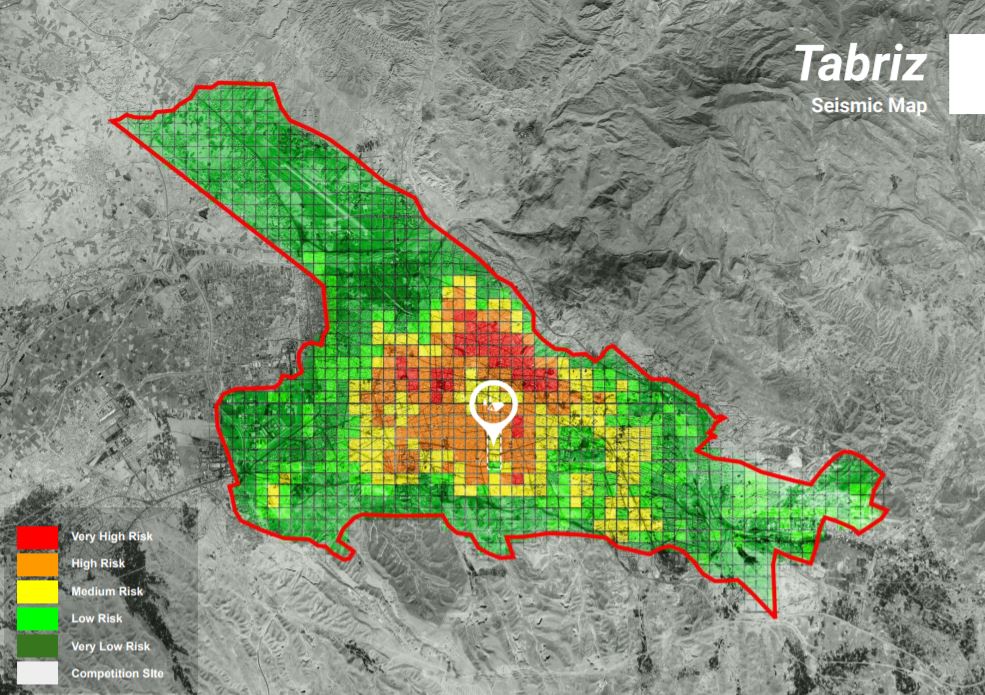
Baghe-Shomal
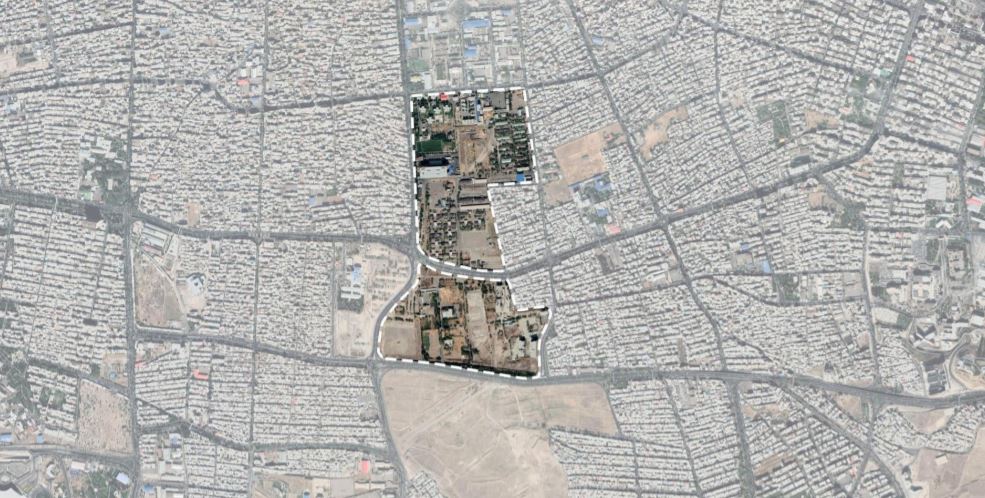
This historical piece of land, located on the southern part of Tabriz, has had many different functions over the course of time. It used to be one of the most important and largest gardens in Tabriz called Baghe Shomal (Northern Garden). In the early 1900s the government of the time took control of this land and turned it into military site where they placed several industrial sheds that remain to this day. In recent years the military base has moved to another location, leaving this land empty and without use. This space is one of many locations in Tabriz that could be used for pre-earthquake preparations and post-earthquake accommodation.
Tabriz East Azerbaijan Province, Iran
Competition Outcomes
The competition aims for realistic results that can be used on Site in Tabriz. These results can be in either the form of innovative housing ideas (not necessarily temporary containers or tents that are already being used), preparation plans and arrangements, combination of both or something entirely new.
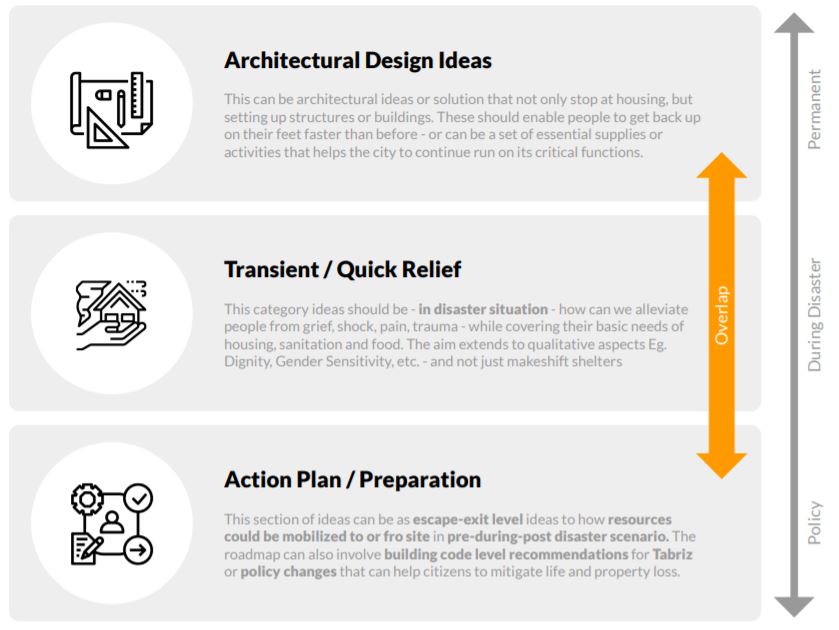
The vision should be conceive ways to reduce the damages and effects of an earthquake or accelerate and optimize the recovery process. The brief expects a broad range of single or overlapping results between the above three major domains - while blending a broad sense of rationality and practical thinking.