
Reforming minds
Challenge to design a juvenile reformation center
Overview
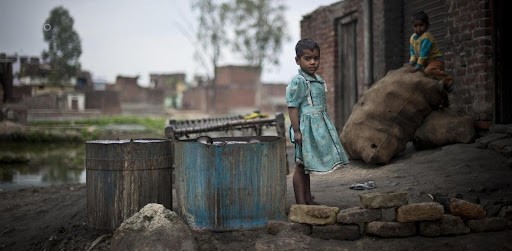 Fig: 1 - Child poverty, social disadvantage, and the pitfalls inherent to adolescent decision making contribute to youth crime. (Credits: UNICEF)
PERIOD OF TRANSFORMATION - JUVENILE CORRECTION
Adolescence is a transitional period in people’s lives that induces growth in every facet of their lives. Everything changes, physically, mentally and emotionally. During this time, one often learns lessons and that in turn moulds them into the person they are.
Very often these lessons are a result of poor choices that lead to young adults ending up committing crimes and acts of delinquency. The acts, although of a wide range, according to research are not to last past their adolescent stages of life in most cases and are the result of irrational experimentation that one is naturally led to throughout their lives.
The juvenile justice system is the one that decides and judges the acts committed by these young adults below the age of 18, and assigns sentences for their crimes. Most of these times, these kids end up in juvenile detention or reformation centres, where they are held as punishment like any other criminal would be.
But for years, the functioning of these juvenile systems have been criticised for their inefficient ways of correction.
 Fig: 2 - The majority of children convicted by the court have committed petty crimes such as theft, rather than crimes of violence, and they end up in detention or reform centres. (Credits: WordPress)
CURRENT SCENARIO OF THE JUVENILE CORRECTION SYSTEMS
In recent times, juvenile detention systems have become places that are gradually turning into warehouses for young delinquents who are forced to live under strict regimens and protocols that focus on restructuring their behavioural patterns.
Some of these juvenile homes also come with poor living conditions and mental surroundings that do more harm than good. While such neglected facilities are a result of lack of budget or lack of skilled personnel, it is a facet of the system that requires updating and restructuring in order for it to serve the purpose it is intended for, reforming the minds of these kids.
Juvenile centres need to be made more sensitive towards helping these young adults better, both psychologically and emotionally. While not all developmental immaturity should be excused from criminal responsibilities, it might be a mitigating condition, as studies show.
How can the physical surroundings and environment act as a catalyst in providing a better reforming process to these kids?
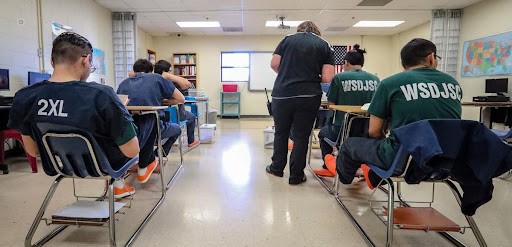 Fig: 3 - Reform centres can do more than confinement, they can provide access to education and other services to change the future path of the young delinquents. (Credits: Adam Fondren, Journal)
BUILT ENVIRONMENT, A CATALYST
Brief: Design a juvenile reform centre that focuses on the mental and emotional well-being and growth of the delinquents.
The center will focus on providing access to services such as education, community-based programs and training so that the youth are steered towards being responsible adults in the future.
The psychology behind how the minds of adolescent kids work, why they end up there is research that must be done to find out the key to reversing this effect. Elements that aid in moderating this process between the various age groups and spectrum of people admitted in the facility is key to the success of the project.
The facility must also keep in mind that this facility is also a prison for these kids and it must focus on its protection and safety measures too, without making it feel constricted from the inside. The materials used to build these facilities and the various amenities provided should be conscious and in a way that they cannot be used to induce any harm to the inmates.
OBJECTIVES
Concept - The design must be introspective that makes the inmates reflect on their lives as well as hone their skills and passion.
Secure - Interaction must be guided in safe settings protective of the inmates and staff.
Layout - The navigation and access must be simple, functional and inclusive.
Connect - The built form must be able to connect with users through its form, layout or spaces.
SITE
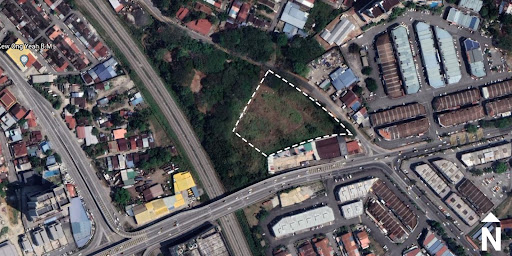
Penang, Malaysia
Malaysia has a fairly young population, with 60% of its population below 30 years of age. The general perception is that child offending has increased in recent years and that the types of crimes that children are committing have become more serious. The site for this project is located in Penang, Malaysia. The population density in the state is the highest in the nation with a diverse demographic.
The economy is progressive with high income and literacy rates, especially among the youth. The site is in the neighbourhood of Bukit Mertajam which is the administrative center of the city of Seberang Perai. It is backed by the railway track on one side while surrounded by an equal number of residences, and industries.
Site area - 10,000 sqm
Ground coverage - 50%
Height restrictions - 15 meters
Maximum FAR: 1
Setbacks (as per CAD plan)
Coordinates - 5°21'09.9"N 100°28'04.3"E
AREA PROGRAMME
The focus of the facility is to reform the young delinquents who are admitted there. Security of these spaces must be prioritised as well as the quality of the spatial design. Any creative additions to the programme may be done within the provided constraints. The design has to be conceived for 30 juvenile residents.
Administration and staff 20%
Director’s office, Administrator’s office, Personnel’s Office, Staff Lounge, Meeting Room, Police guard’s office, Security and CCTV control room, Conference Room, Restrooms, Visiting rooms.
- Academic Block 25%
Classrooms, Workshops/Studios, Computer Lab, Library, Seminar/Conference hall, Activity area (Tailoring/reading/painting)
- Juvenile justice board 5%
Judgement hall, Judge’s office, Toilets/washroom
- Juvenile Housing 30%
Dormitories for 30 members, Recreation room, Toilets, Warden rooms (2)
- Recreation and services 20%
Dining Hall, Cafeteria, Kitchen/storage & pantry, Playground/Sports pitches, Gathering spaces, Meditation hall, Emergency medical room and Counsellors room(2)/Therapy corner
Apart from the above program participants are free to add areas according to their design and the brief statement.
Similar Competitions
Discover competitions you might be interested in




Design challenge to reuse E-waste




Imagining parliament for an unified world.


Design challenge fostering public involvement in wildlife research


Design an urban fitness centre
