
Regen Dining
Restaurant design challenge: How do we get going when we get back?
OVERVIEW
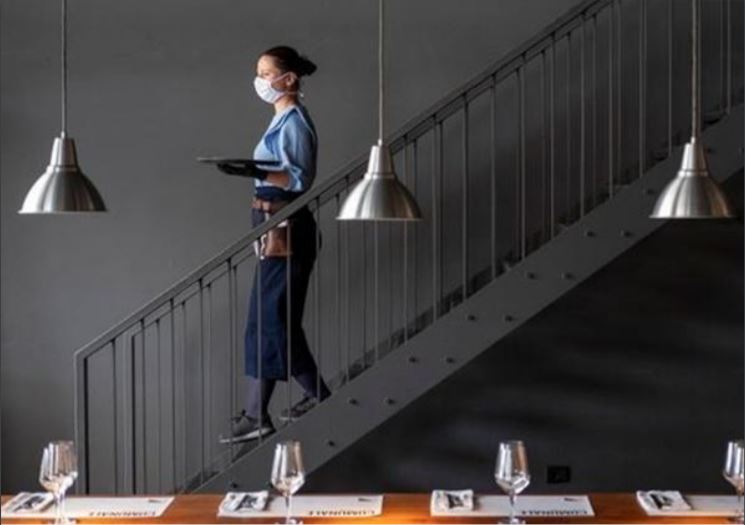
Img 1 : How will restaurants look in the post-COVID era? (Source: Reuters)
Premise
After spending a considerable amount of time under the shroud of the COVID-19 outbreak, humanity is gearing up to enter the new-normal. Governments around the world are now exercising relaxation to the physical distancing measures to regain economic stability.
However, studies have shown that mitigation attempts that are inadequate in strictness or duration—such as premature relaxation of distancing rules or stay-at-home orders—can allow a resurgence after the initial surge and mitigation. In other words, the second wave is inevitable if conscious measures are not taken now.
Apart from implementing strict regulations for socio-economic interaction, urban infrastructure and architecture need to be transformed in order to accommodate mitigation measures.
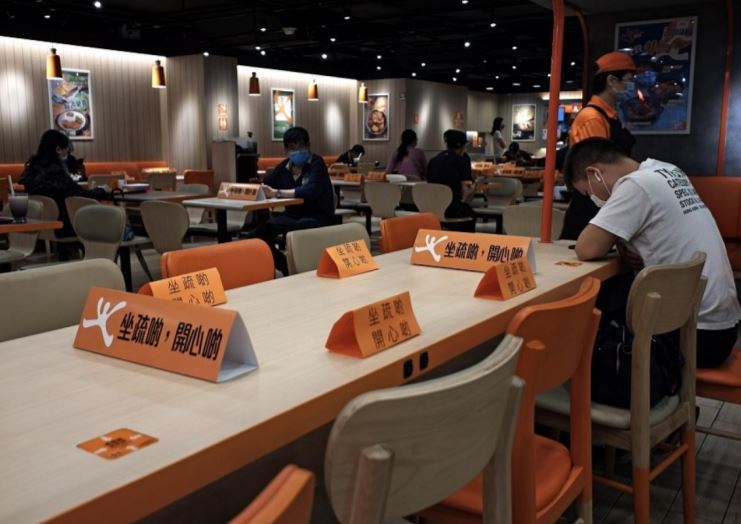
Img 2 : Will social distancing in restaurants become common? (Source: AP)
Introduction
Focusing on the effect of the COVID-19 outbreak on the economy, the food service sector has suffered the most.
Although food delivery services have been functional, restaurants, cafes and bars across the world have suffered brutally.
With the relaxation strategies in place, and the food retail sector planning to reopen, the onus is on the architect to reform architecture. Most existing design setups are rendered useless or are demanding urgent overhauls to ensure that we are reopen safe.
Can we devise an architecture that prevents contact transmission while preserving social interaction? Can we ensure design is an enabler of economy again through inventive strategies that find ways normal people can’t see?
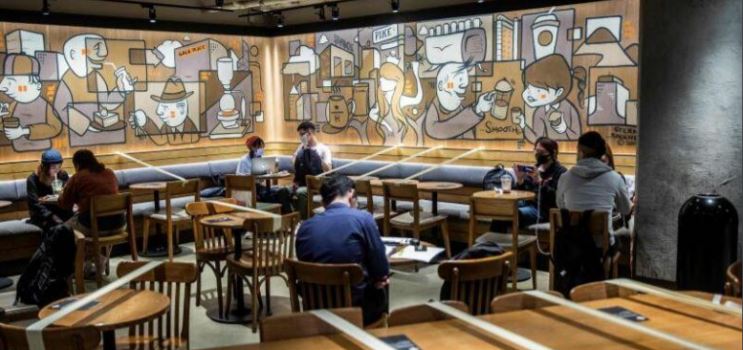
Img 3: Restaurants Reinforcing social distancing on customers.
Context
As the proposals demand a redesign, restructuring, reforming, or reorganization of existing architecture, the choice of site becomes absolutely essential.
Focussing on the food service sector, the project must propose to transform existing restaurants, café, food outlets, food courts, bars, pubs, or fast food restaurants to accommodate post-COVID regulations.
The redesign could incorporate structural changes to the existing architecture, but it shouldn’t increase the overall area of the existing space in any way. The key is to try and maintain the pre-COVID performance of the architecture in terms of the social relevance and the ease of operation of the space.
The redesign must follow the key post-COVID regulations mentioned here. Additionally any other regulations relevant to the country, state, zone or city must be taken into consideration while proposing a solution. As this exercise emphasizes on improving the practical impact of the outbreak on people’s lives, selecting the site and the attached function, becomes a key aspect of the proposal.
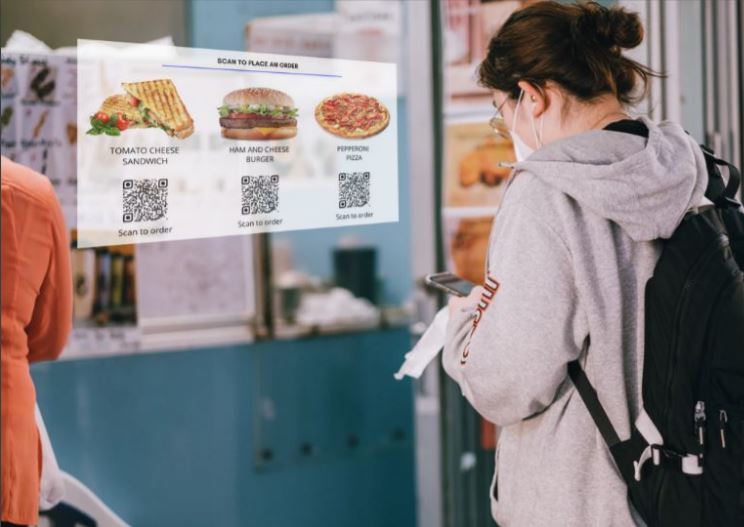
Img 4 : Consumer picking the dish from a virtual menu, scanning the QR Code and order
Inquiry
The design process begins at a fundamental inquiry before beginning to design. As part of post COVID resilience, how would food-service architecture:
- Help re-establish social interactions that have been lost during these testing times?
- Regulate people into following the outbreak mitigation guidelines?
- Safeguard the resurgence of the economy by ensuring that the function is not disturbed?
Can you think of architectural ways that can weave through above questions on our existing societies and buildings.
What?
The design brief calls for:
- Redesign, restructure, or reorganize existing architecture that provides food-service (restaurants, cafè, street eateries, etc.)
- To accommodate post-COVID regulations based on various state / country norms.
- While encouraging social interactions to reinstate to the pre-COVID society.
How?
The redesign could:
- Incorporate the regulations by reinventing the existing space planning.
- Conform to the Dos and Don'ts by designing specific preventive solutions for individuals and clusters.
- Rethink the very idea of serving food commercially and having a meal socially.
Where?
The solutions can be:
Applicable to restaurants, small eateries or even roadside vendors. This can be either general restaurant designs OR specific case in a chosen cultural setting. Eg. USA, Japan, etc.
Can be interior design, Architectural scale, Systems or even Product Design scale.
Retrofitting existing food courts or food carnivals as well where mass gathering happens.
Who?
The potential people
- Are not limited to customers and visitors, whom we are designing for.
- Can be other contributors of restaurants/eateries like chefs, waiters, etc.
- Can be applicable to wide range of restaurants or region who can benefit from such solutions.
Deliverables
The outcome of this competition is more open in form design representation through smaller ideas.
The concepts can be represented through sketches, part plans, visuals, renderings and even line diagrams.
As mentioned earlier, the solution is not looking at a typical design of restaurants but open ideas for dining at large. You can propose a range of ideas that in a way solve either one problem occuring across alot of similar situations OR or a series of solutions applicable to multiple setting with vast applicablity regardless of similarness of situation.
Objectives


Inventiveness: Find new means or ideas how people can dine together.
Ease of Maintenance: How can interiors be cleaned with ease and effectiveness.
Frugality: Using cheap and effective ways how existing setups are repurposed.
Scalable: How can we scalably increase these systems to other restaurants likewise?
The following objectives can be a place to begin your design processes. You can assume your contexts or restaurant types or sizes to begin this challenge. The design can be from typical public diners to fine dining to any type of restaurant based on your choice.
Curator | Angad Warang
Designer | Researcher | Design Researcher
Universitat Internacional de Catalunya Barcelona, Spain
Based in Spain and shuttling between India and the Netherlands, Angad Warang specialises in Computational Design and Digital Fabrication. He graduated with BArch from VNIT, Nagpur, India in 2012 and completed MS Arch in Biodigital Architecture from UIC, Barcelona, Spain. He is currently pursuing a PhD in Computational Design titled ‘Architecture of Computational Ecosystems’. He also works as a Research Assistant in the Institute for Biodigital Architecture and Genetics, ESARQ, UIC, Barcelona. Angad teaches Computational Design and Digital Fabrication as an Associate Professor at the Biodigital Architecture Master in UIC, Barcelona. He also teaches in several Architecture and Design institutes in India as a visiting faculty. He is constantly conducting workshops in India, Spain and the Netherlands as a contribution to his research. He is also the co-founder and co-owner of UnDesignLabs -, a research, design and education consultancy that specialises in digital fabrication.
Visit on LinkedIn - https://www.linkedin.com/in/angad-warang-7658b1117/
Similar Competitions
Discover competitions you might be interested in


Designing a staircase for a client

VR headsets Storefront design competition

Challenge to design luxury tourism on rails


A Global Graduation Competition for Architecture, Urban Design & Interior Design
