
RehabEd
Design a reformation and learning centre for juvenile delinquents
Overview
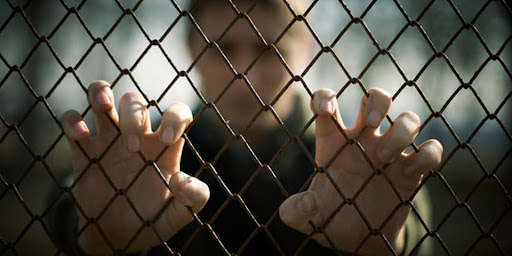 Fig: 1 -Juvenile Delinquency is due to numerous factors and if not handled with care, children repeat behaviours.
CONDITION OF DELINQUENTS
Juvenile delinquency refers to a large variety of disapproved behaviour of children, which are against the laws and for its prevention, a corrective measure is applied. Perception towards juvenile delinquency is getting sharper considering the amount and severity of crime being committed today by the juvenile population. There are extensive sets of reasons for the rebellious and hostile behaviour of children which can be easily found in the various aspects of society like poverty, lack of support and unavailability of basic necessities.
Inferring that a juvenile delinquent is an adolescent that is vulnerable to indulge in some kind of anti-social behaviour and can be motivated towards crime if they are not checked and corrected in time.
Thus it is necessary for their welfare there is a need to engage them in reformative activities.
How can reformation and rehabilitation be carried out in these delinquents?
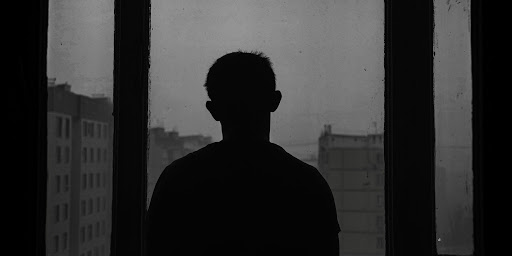 Fig: 2 - The conditions and treatment in the juvenile homes leads to repetitive behaviour (Credits-Damir Samatkulov)
REFORMATION OF YOUNG MINDS
After the identification of young people's deviant behaviour, efforts have been made to put measures through community prevention and rehabilitation programs. Institutions focus on corrective measures as per the law, while post-correction the adolescents are again exposed to the same situational choices. As a result, making it harder for juveniles to choose the right choice without proper employment or promised livelihood; which in time causes them to relapse back into crime.
Through the reduction of the gap created due to lack of education and monetizable skills; they require transitional spaces that provide community rehabilitation and education. Integration of community and educational activities prepares the adolescents for a smooth transition into the normal lives ahead. For that, can architecture and spatial qualities explore the rehabilitation process through the introduction of centres that allow them to access education and community activities? What architectural intervention aids such an issue?
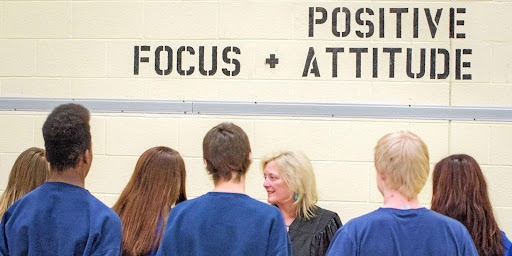 Fig: 3 -Juveniles are transformed through understanding and learning (Credits-https://bit.ly/2XrrHYl)
BRIEF OF THE COMPETITION
Brief: The architecture competition brief calls for a design of a reformation centre for juveniles that has provisions that also look after their education, future and well-being.
A space that provides better living conditions, opportunities and security for the juveniles building an environment that motivates them to develop their rudimentary skills and personality.
The aim of the competition is to come up with unique design solutions to innovate a space that is specifically designed for the transition phase of the juveniles where they are relieved from the correctional facilities and are yet to enter back into society.
Designing for this transitional phase demands a space that's inclusive of the needs of the inhabitants, where each space should provide positive interference and environment for the juveniles which can help them access counselling and support.
OBJECTIVES
Empathy and inclusion: To create a design that is designed considering the needs of the juveniles, providing access, learning and recovery for them.
Care spaces: To create spaces that facilitate and aid the process of reformation through comfortable spaces.
Community inclusion: To create a space that removes the barriers of isolation and promotes public spaces that may facilitate engagement and connection.
Character: How is the design changing the imageability of the space?
SITE
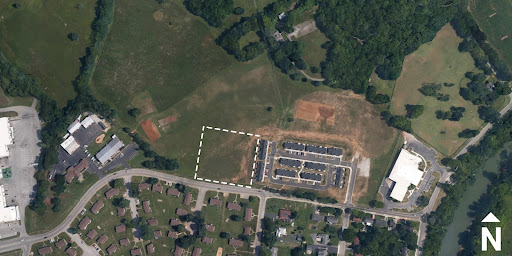
Kentucky, USA
The site for this challenge is located in the United States. It is probably known for its great variety. Its physical environment ranges from the Arctic to the subtropical, from the moist rainforest to the arid desert, from the rugged mountain peak to the flat prairie. Although the total population of the United States is large by world standards, its overall population density is relatively low. The country embraces some of the world’s largest urban concentrations as well as some of the most extensive areas that are almost devoid of habitation.
The site is located in an urban neighbourhood. Nestled by the residential and commercial neighbourhood. The site is directly connected by the main road and is situated adjacent to the open green patch of land.
- Coordinates: 37°00'35.6"N 86°26'13.2"W
- Area: 8015 sqm
- Height limit: 9m
- FAR (Floor Area Ratio): 1
- Ground coverage: 50%
AREA PROGRAMME
The programmatic outline is intended for the capacity of 50 people. This is recommended for this challenge.
The space ideas are as follows:
- Administrative and management spaces: 5%
- Counselling and therapy open/closed spaces: 10%
- Workshops/training/learning spaces: 40%
- Housing spaces: 30%
- Medical and ancillary spaces: 5%
- Recreational and meeting spaces: 10%
Other additional spaces can be added by the participants as per their design needs.
Similar Competitions
Discover competitions you might be interested in




Design challenge to reuse E-waste



Imagining parliament for an unified world.


Design challenge fostering public involvement in wildlife research


Design an urban fitness centre
