
Sculpt|r|
Challenge to design an architectural sculpture to enliven a public space
OVERVIEW
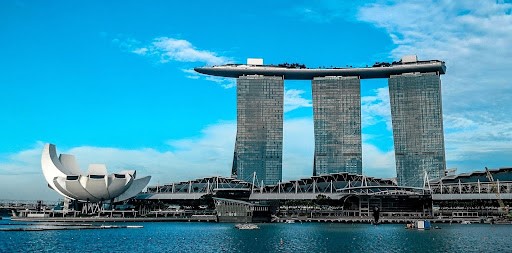 Fig: 1 - An architectural design on marina bay sands
ARCHITECTURAL INFLUENCE ON URBAN SPACES
In a number of major cities across the world, public squares, parks, and plazas have been important urban vehicles in defining their morphology and even their culture, while at the same time being reflective of them.
Throughout history, they have long been places where much architectural intelligence and public resources have been expended. When done right, these spaces act as a focal point for the civic and social life of a city. When designed poorly, though, they can act as a black hole, sucking the life out of a city center.
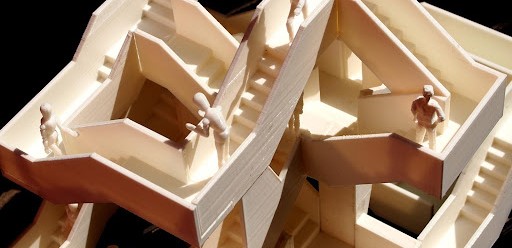 Fig: 2 - The 10 Cal Tower by Supermachine Studio in Bangkok
URBAN SPACES
For a long now, public art and sculpture have been gainfully employed and commissioned to infuse life into dead/abandoned urban public spaces. Similarly, there exist hundreds of examples of such successful sculptural works of art that have become the very identity of successful urban squares across the world: squares that would have been but unadorned city blocks in their absence.
Not only do they eliminate “barrenness” that often leads to the demise of such squares, they create an engagement with the public that is hard to achieve for either squares or the buildings circumscribing them, simply by means of being increasingly accessible to the general public.
All of this while also primarily fulfilling the most basic purpose of art: to express something, in the process imparting new meaning and purpose, especially to places with a robust history.
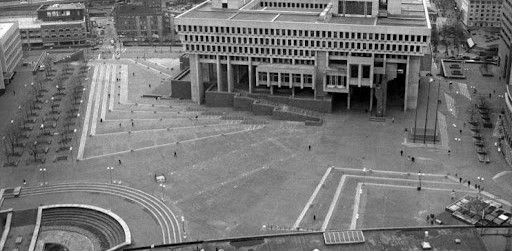 Img 3: The Boston City Hall Plaza in need of improvement.
AGORAPHOBIA
Agoraphobia has been a common phenomenon that has been identified to be associated with a number of large squares. That coupled with the increasingly large amount of traffic that has been funneled through these squares since their inception leads to the public feeling somewhat disconnected from such squares and spaces.
Additionally, squares in many major cities have prominent histories, cultures, or events associated with them. A number of these squares, however, have over the years transformed into large stretches of asphalt allowing people to simply gather or pass through sans any engagement.
Public spaces that speak to the people about their culture or history or something that people can personally engage with have indubitably seen more interaction.
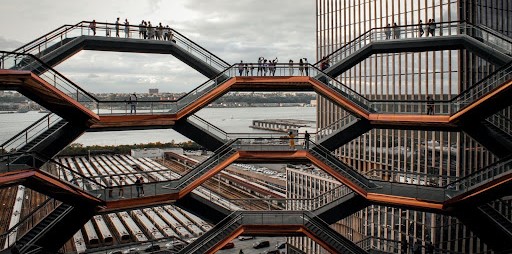 Fig: 4 - The Vessel in Hudson Yards, New York by Thomas Heatherwick.
ARCHITECTURE AND SCULPTURE
Architecture and the Fine Arts have had several intersections in the past, with each discipline mutually benefitting from the other. In the modern age of parametric modelling, material innovation, malleability, and newfound technologies of production, the intersection is broader than ever, particularly in the case of Architecture.
Several buildings, habitable or otherwise, have sculptural qualities infused in their form and have led to striking interventions that find common ground with each of these disciplines. Eschewing the ordinary, these interventions have proven to be fertile ground for architects to flex their creativity and bring some interesting colours and proportions to their settings.
Can Architecture and Sculpture somehow combine to create something iconic, something that enlivens these public squares?
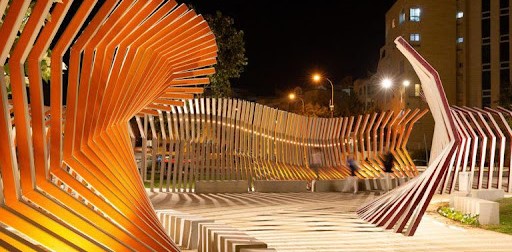 Fig: 5 - Light sculpture plaza in Israel
BRIEF OF THE COMPETITION
The challenge is to design an architectural sculpture with an intention to enliven a public square in the city of New York.
The intent of the intervention would be to combine the functional qualities of architecture with the artful qualities of a sculpture. The final outcome is to be a built form that can act as an activator of the identified urban square in Paris: the Place de la Concorde.
The designed structure may not be fit for habitation on a prolonged basis for people, but it should be able to house them, in an attempt to let them experience its sculptural qualities, as if magnified to the size of an actual building.
Simply stated, it should be an intervention that is built to architectural construction drawings, yet is sculptural in the way it looks and is conceived
OBJECTIVES
- Form/ Structure: The intervention should strive for iconicity through form.
- Functional: An aspect of architectural functionality must be infused, more than plan variety.
- Contextual: Care must be taken to either respond to or reflect the sensitive context of the site.
- Accessible: Complete accessibility to be ensured for the end user the public.
The above objectives can be a point of beginning to conceive this design. Participants can assume a mixed demographic including tourists before initiating their design process. The context must be thoroughly respected in all cases.
SITE
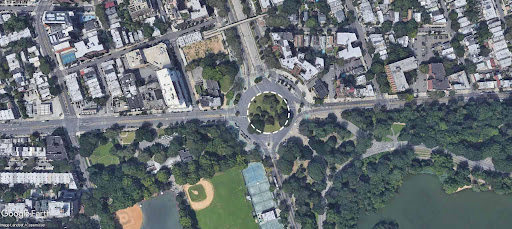
Park Cir, Brooklyn, New York
Site Coordinates: Maps
Within the zones marked in White have been identified as potential areas for intervention. Participants may choose to design the architecture sculpture within the boundary. The structure could be singular, multiple, integrated, contiguous or isolated.
To inspire the most creative solutions, there are no restrictions on shape, form or size, but the height of the intervention needs to be restricted to 15m, in order to protect the vantage of the Obelisk, standing 22.5m high.
Similar Competitions
Discover competitions you might be interested in



Challenge to design an open learning module for the elderly

Challenge to design a portable music platform

Challenge to design a portable theatre


The Global Benchmark for Architecture Dissertation Awards
