Community and Social Impact Design Competitions: For Architects Who Believe Buildings Belong to People (Updated April 2026)
This is the UNI editorial home for community and social impact design — the competitions and briefs for architects who believe architecture's highest purpose is to serve the people most often excluded from the profession's benefits. It is where humanitarian architecture, participatory design, public interest practice, design justice, indigenous architecture, disaster response, and community-led development all meet. It is the tradition of Samuel Mockbee's Rural Studio, Shigeru Ban's paper tube shelters, Francis Kéré's Gando school, Alejandro Aravena's half-a-good-house, Yasmeen Lari's bamboo zero-carbon homes, and MASS Design Group's healthcare architecture in Rwanda. If you became an architect because you believed buildings could heal, protect, and dignify — this section is for you.
The Founding Critique: Whitney Young Jr. and Architecture's Reckoning
In 1968, at the American Institute of Architects national convention, civil rights leader Whitney Young Jr. delivered what remains the most important outside critique architecture has ever received. He called the profession "thunderously silent and complete irrelevant" on the issues that were tearing American cities apart: racism, poverty, urban decay, and the housing crisis. "You are not a profession," he said, "that has distinguished itself by its social and civic contributions."
Fifty-eight years later, the speech still lands because architecture still has not fully answered it. The AIA Whitney M. Young Jr. Award, given annually to an architect demonstrating commitment to social responsibility, exists because of that speech. The public interest design movement exists because of it. Samuel Mockbee's Rural Studio exists in its shadow. And this section of UNI exists in the same lineage — as a place where architects who take Young's challenge seriously find work worth doing.
What Community and Social Impact Design Actually Means
Social impact design is not pro bono work. It is not charity architecture. It is not a style or an aesthetic. It is a design methodology that treats communities as partners, not clients, and that measures success by outcomes for the people the building serves — not by the architect's portfolio. A working definition has four parts:
- Community as author: the brief is developed with residents, not imposed on them. Participation is not decoration; it is the method.
- Local knowledge respected: vernacular traditions, local materials, cultural practices, and indigenous wisdom are treated as technical input, not sentimental framing.
- Outcome accountability: the project is measured by what it does for the community — health outcomes, educational outcomes, housing security, social connection — not just by how it photographs.
- Long-term relationship: the architect does not parachute in. The practice commits to the community over years or decades, not a single commission cycle.
Projects that tick one or two of these boxes are on the right path. Projects that tick all four are the ones the Pritzker Prize increasingly recognizes.
The Humanitarian Architecture Lineage
Social impact architecture has a deeper lineage than most architecture history textbooks acknowledge. The ancestors worth knowing:
- Jane Addams and Hull House (Chicago, 1889): the settlement house movement treated architecture as social infrastructure a century before the phrase existed. Addams and her collaborators designed spaces for immigrant education, childcare, arts, political organizing, and community meals — all under one roof.
- Hassan Fathy (1900-1989): the Egyptian architect whose Architecture for the Poor: An Experiment in Rural Egypt (1973) documented his attempt to build New Gourna village with local mud brick traditions and participatory methods. A foundational text in vernacular humanitarian architecture.
- Christopher Alexander — A Pattern Language (1977) and The Oregon Experiment (1975): the most influential theoretical argument for participatory design. Alexander's pattern language was radical in its proposition that non-architects could help shape their own built environment using a shared vocabulary.
- Samuel Mockbee and Rural Studio (Auburn University, 1993 onward): the studio Mockbee founded in Hale County, Alabama, to teach architecture students by building for rural poor families. Mockbee's phrase — "a warm meal, a dry bed, and a sense of dignity" — became the moral anchor of American public interest design. Rural Studio has built over 200 projects since 1993.
- Architecture for Humanity (1999-2015, closed): founded by Cameron Sinclair and Kate Stohr. The first large-scale networked humanitarian architecture organization. Closed in 2015 but its legacy shaped every subsequent practice.
- Shigeru Ban (Pritzker 2014): the Japanese architect whose paper tube structures have sheltered refugees and disaster survivors from Kobe (1995) to Rwanda to Turkey to Ukraine. Ban is the moral center of contemporary disaster response architecture. His Voluntary Architects' Network organized decades of field deployments.
- Balkrishna Doshi (Pritzker 2018): the Indian architect whose Aranya Low-Cost Housing project in Indore (1989) housed over 80,000 residents through participatory, phased construction. The single largest built example of participatory housing in the world.
- Alejandro Aravena and ELEMENTAL (Pritzker 2016): the Chilean practice behind Quinta Monroy and the half-a-good-house model. Gave families the half of the house that is hardest to self-build, left the other half for residents to finish over time. The most influential affordable housing model of the 21st century.
- Francis Kéré (Pritzker 2022): the Burkinabé architect who returned to his home village of Gando to build a primary school using local clay bricks and community labour. Kéré's practice proved that world-class architecture could emerge from and serve a village of 3,000 people.
- Yasmeen Lari (Lisbon Triennale Lifetime Achievement 2025): the Pakistani architect who has built over 60,000 zero-carbon bamboo homes since 2010 in response to Pakistan's recurring flood disasters. Lari's Heritage Foundation model combines disaster response, traditional craft, and zero-carbon construction at unprecedented scale.
- Michael Murphy and MASS Design Group (founded 2008): the Boston-based practice behind the Butaro District Hospital in Rwanda, the Memorial to Peace and Justice in Montgomery Alabama, and healthcare, cultural, and educational buildings across Africa, Haiti, and the United States. "Model of Architecture Serving Society" is what MASS stands for.
- Anna Heringer: the German architect whose earth and bamboo buildings in Bangladesh, Zimbabwe, and Ghana (notably the METI School in Rudrapur) prove that local materials and community labour can produce world-class architecture.
- Kunlé Adeyemi and NLÉ: the Nigerian architect behind Makoko Floating School in Lagos. A modular A-frame structure floating on plastic barrels, designed for a community built on water.
- Tatiana Bilbao: the Mexican architect whose low-cost housing work in Mexico treats affordability as an opportunity for cultural specificity rather than a constraint to minimize.
- Teddy Cruz and Fonna Forman: the San Diego-based practice whose work at the Tijuana-San Diego border has reframed informal urbanism as a design intelligence, not a problem to solve.
- Urban-Think Tank (ETH Zurich / Caracas): the practice whose work in Torre David (an unfinished Caracas skyscraper occupied by thousands of informal residents) made visible the design intelligence of informal urbanism.
The Public Interest Design Movement
Beyond individual practitioners, a broader institutional movement has formed around social impact architecture. The organizations and frameworks worth knowing:
- The SEED Network (Social Economic Environmental Design): the professional network and certification framework for public interest design. SEED's principles and evaluation metrics give practitioners a shared vocabulary for measuring social impact.
- Design Corps: the nonprofit behind the Public Interest Design Institute and the SEED Network. Bryan Bell's writing and teaching anchor the academic side of the movement.
- Design Justice Network: a newer, more radical framework grounded in Sasha Costanza-Chock's Design Justice (MIT Press, 2020). The central principle: "Nothing about us without us." Design justice treats communities as co-authors, not informants.
- Architecture Sans Frontières: the international network of humanitarian architecture organizations. Inspired by Médecins Sans Frontières, focused on architects working across borders in crisis contexts.
- The 1% Pro Bono Movement: pledges by architecture firms to dedicate at least 1% of billable hours to pro bono community work. Criticized as too modest by the design justice movement, but meaningful as an institutional shift.
- The Whitney M. Young Jr. Award (AIA): presented annually since 1972 to architects demonstrating significant contributions to social responsibility. The profession's highest recognition for social impact practice.
- Kaira Looro (Senegal): the annual humanitarian architecture competition that builds real community structures in rural Senegal each year. One of the most consequential small-budget competitions in contemporary architecture.
Participatory Design: When the Community Is the Brief
The single most important methodological distinction in social impact architecture is participatory vs extractive practice. An extractive practice studies a community, designs for it, publishes the project, and leaves. A participatory practice begins with the community, co-designs with it, and maintains relationships over time. The difference is not cosmetic — it produces different buildings.
What participatory design actually looks like in practice:
- Listening workshops before any design proposal. Who lives here? What do they need? What have they already tried? What do they distrust about architects?
- Shared vocabulary development. Visual and spatial tools — Alexander's pattern language, Aravena's comparative housing diagrams, community mapping exercises — that let non-architects contribute meaningfully to design decisions.
- Iterative feedback cycles. The design evolves through multiple rounds of community review, not a single "consultation" event at the end.
- Community labour integration. Where appropriate, residents contribute labour to the build itself — as in Kéré's Gando school and Rural Studio's Alabama projects. This transfers skills and deepens ownership.
- Post-occupancy commitment. The practice stays involved after handover, learns from use, and carries those lessons into future work.
The test: if the community disappeared from the process, would the design still be the same? If yes, the design was never participatory.
Indigenous Architecture and the Right to Self-Determination
A parallel and equally important movement is the assertion of indigenous architectural sovereignty. Indigenous architects in Canada, New Zealand, Australia, the United States, Latin America, and across the Pacific are rejecting the framing of "designing for" indigenous communities in favour of "indigenous communities designing for themselves." The principle: architecture that affects indigenous land, life, and culture must be led by indigenous practitioners.
Key organizations and touchstones:
- Indigenous Society of Architecture, Planning, and Design (ISAPD): the professional network for indigenous architects and planners.
- First Nations housing movements (Australia, Canada, New Zealand): housing programs designed and delivered by indigenous architects for indigenous communities, often rejecting the standardized public housing models imposed from colonial governments.
- Diébédo Francis Kéré's work in Burkina Faso: not strictly indigenous in the decolonial sense, but a model of practice rooted in community origin and local knowledge that has influenced indigenous architects worldwide.
- The CAA 2026 "Sovereignty and the Built Environment" session (Chicago, February 2026): a landmark gathering of indigenous architectural scholars and practitioners.
Disaster Response and Refugee Architecture
The world has 123 million forcibly displaced people as of 2024, plus an unknown but rapidly growing number of climate migrants. Disasters, conflict, and climate displacement are creating housing need at a scale architecture has never before had to answer. The subfield has three phases:
- Emergency phase (hours to days): immediate shelter. Tents, tarpaulins, basic kits. UNHCR's emergency shelter specifications. Speed and dignity are the competing constraints.
- Transitional phase (weeks to months): more durable shelters that can last a year or two. Paper log houses, IKEA Better Shelter units, modular kits. This is where most architectural innovation happens — Shigeru Ban's entire disaster practice is in this phase.
- Permanent phase (years to decades): resettlement housing for populations who cannot return. Often the most neglected phase, where displaced people end up in long-term "temporary" camps for generations. This is where the real design challenge lives.
Canonical practitioners: Shigeru Ban (Kobe, Rwanda, Haiti, Turkey, Ukraine, L'Aquila). Yasmeen Lari (60,000+ zero-carbon bamboo homes in post-flood Pakistan). Architecture Sans Frontières (global network). NLÉ (Makoko floating school). MASS Design Group (Rwanda healthcare after genocide). IKEA Foundation's Better Shelter (flat-pack refugee housing deployed globally via UNHCR).
Open Community and Social Impact Briefs on UNI Right Now
The competitions currently curated in the community and social impact design section:
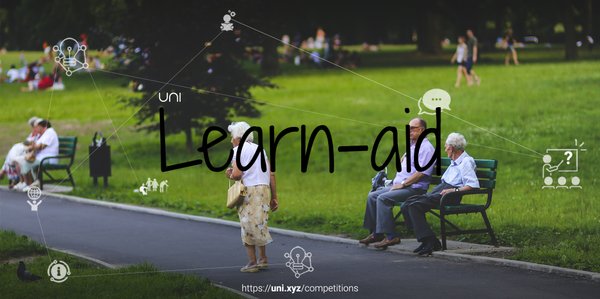
- Learn-aid — Challenge to design an open learning module for the elderly
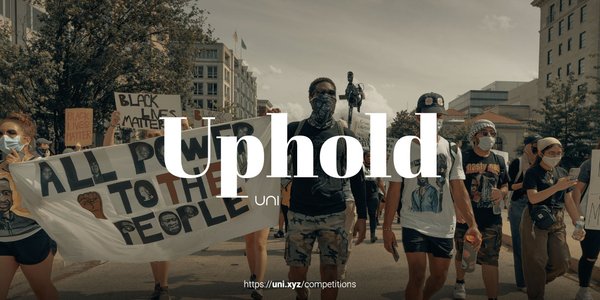
- Uphold — Challenge to design locus for the upliftment of human rights
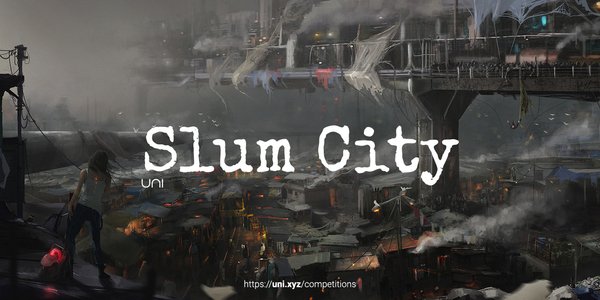
- Slum City — Challenge to visualize slums of 2080
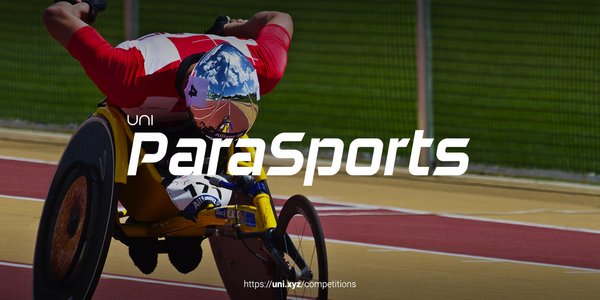
- ParaSports — Challenge to design a barrier free sports center
For more socially-engaged briefs across the platform, browse all ongoing competitions.
Community Typologies: The Buildings That Hold Society Together
Social impact architecture shows up across many building types. The most common competition categories:
- Community centres: civic, multicultural, recreation, diaspora-specific. The physical space where community happens. Kéré's Gando community centre, the Makoko Floating School, and countless neighbourhood-scale projects worldwide.
- Public libraries: increasingly reimagined as community social infrastructure — maker spaces, childcare, teen zones, workshops, public computers. The Oodi Library in Helsinki is the canonical 21st-century public library.
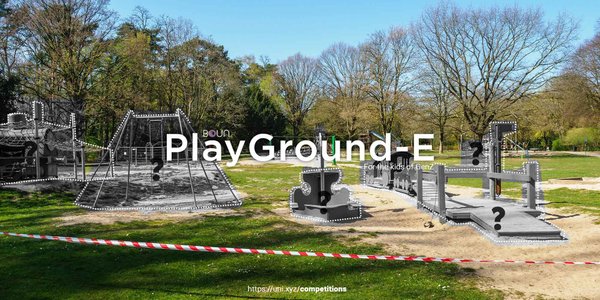
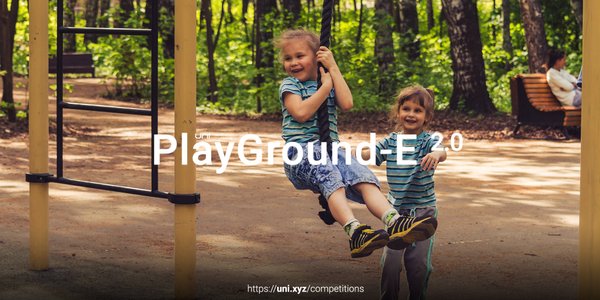
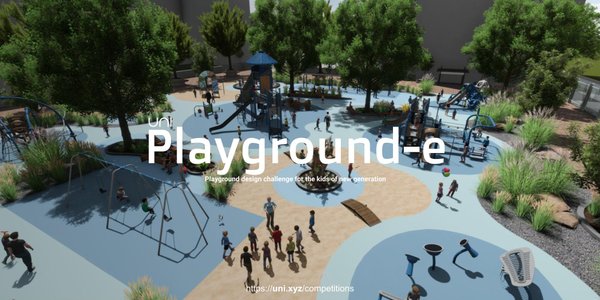
- Playgrounds and inclusive play: barrier-free play spaces for children of all abilities. The UIA Friendly and Inclusive Spaces Awards specifically recognize this typology.
- Youth centres: safe spaces for adolescents, especially in neighborhoods where options are limited. Often combined with educational or arts programming.
- Maker spaces and community fab labs: community-accessible workshops with tools (3D printers, laser cutters, CNC machines, sewing). The Fab Lab network is a global reference.
- Domestic violence shelters: a neglected typology with specialized security, privacy, and trauma-informed design requirements.
- Homeless shelters and supportive housing: moving beyond warehouse-style shelters toward dignified, rights-respecting accommodation with wraparound services.
- Community gardens and food justice infrastructure: shared growing spaces, teaching kitchens, farmers markets rooted in underserved neighborhoods. See our sister section on food and agricultural design.
- Water and sanitation architecture (WASH): public toilets, water points, handwashing stations, community laundries — the unglamorous infrastructure that actually moves the health needle in underserved communities.
- Community health clinics: primary care, maternal health, mental health. MASS Design Group's work in Rwanda is the contemporary reference.
The Design Justice Framework
The most important contemporary theoretical development in social impact architecture is design justice, framed most clearly in Sasha Costanza-Chock's Design Justice: Community-Led Practices to Build the Worlds We Need (MIT Press, 2020). The core principle — often quoted as "nothing about us without us" — asserts that communities most affected by a design decision should have the greatest power over it.
The design justice principles (summarized):
- Centre the voices of those most directly impacted by the outcomes of the design process.
- Prioritize design's impact on the community over the intentions of the designer.
- View change as emergent from accountable, accessible, and collaborative process, rather than as a point at the end of a process.
- See the role of the designer as a facilitator rather than an expert.
- Believe that everyone is an expert based on their own lived experience, and that we all have unique and brilliant contributions to bring to a design process.
- Share design knowledge and tools with your community.
- Work toward sustainable, community-led, and controlled outcomes.
- Work toward non-exploitative solutions that reconnect us to the earth and to each other.
- Before seeking new design solutions, look for what is already working at the community level. Honour and uplift traditional, indigenous, and local knowledge and practices.
Design justice is not identical to public interest design — it is more radical, more explicitly political, and more sceptical of the architect's default role as expert. Both frameworks are welcome on UNI.
The Ethics: Extractive vs Regenerative Practice
The single greatest risk in social impact architecture is extractive practice — work that uses a community's needs as raw material for the architect's career without actually benefiting the community. The signs of extractive practice:
- Project published before built, or built as a photographic set piece with no post-occupancy follow-up.
- Community involvement as decoration — a few workshop photos in the submission, but no actual design decisions shaped by residents.
- Credit taken entirely by the architect, with residents, collaborators, and community organizations uncredited or invisible.
- Materials and forms imposed rather than negotiated, usually to produce a more photogenic result.
- Short-term commitment. The architect arrives, builds, photographs, publishes, and leaves.
- Savior narrative. The project is framed as an act of heroism rather than collaboration.
The alternative — regenerative practice — is harder, slower, and less photogenic. It is also the only kind of social impact architecture that actually deserves the name. Juries in serious community architecture competitions increasingly refuse work that smells extractive.
How to Prepare a Strong Community and Social Impact Entry
- Lead with the community. Who are they? How were they involved in the design? What did they want that was not obvious to you? If you cannot answer these, your entry is incomplete.
- Show the process, not just the product. Workshop photos, community sketches, iteration cycles, and stakeholder diagrams are evidence. A beautiful render without process documentation reads as extractive.
- Credit your collaborators honestly. Name residents, community organizations, local builders, and indigenous consultants where relevant. Juries reward this. Reviewers notice its absence.
- Use local materials and labour realistically. Not as an aesthetic choice — as a commitment to local economy and sustainability. Cite your material sources.
- Quantify outcomes. Who benefits? How many? What changes for them? "Improves community wellbeing" is vague. "Provides childcare for 40 children, reduces diarrheal disease by 30% through improved sanitation, creates 12 local construction jobs" is credible.
- Cite your lineage. Reference Mockbee, Ban, Kéré, Aravena, Doshi, Lari, or MASS Design Group where relevant. Scholarly honesty strengthens the argument.
- Engage the ethics directly. Whose land is this? Whose labour? Whose story? Juries reward entries that engage these questions rather than avoiding them.
- Think about maintenance and handover. Who owns the building in five years? Who fixes it? Who decides how it's used? A project without a plan for the long term is a project without a future.
- Atmospheric render of a resident, not a monument. The human in the image matters more than the building.
April 2026 Platform Snapshot
- 4 open briefs currently curated in the community and social impact design section
- 57 competitions currently open across all themes on the platform
- 767 total competitions hosted on UNI since 2017
- 7189 total entries submitted across all competitions
- 895 jurors have evaluated work on the platform
- 260K+ architects and designers in the global UNI community
- 68 disciplines spanning architecture, landscape, urban planning, product, and allied social practice fields
Frequently Asked Questions About Community and Social Impact Design
What is the difference between humanitarian architecture and community architecture?
Humanitarian architecture typically refers to emergency and post-disaster response — refugee shelters, conflict zone reconstruction, rapid-deployment structures. Community architecture is broader: any architecture that centres community needs as the primary design problem, including schools, clinics, community centres, and affordable housing. All humanitarian architecture is community architecture, but not all community architecture is humanitarian.
What is public interest design?
Public interest design (PID) is a movement and methodology for architecture practice that treats underserved communities as the primary audience and measures success by social outcomes. The SEED Network maintains the most widely used framework. PID is less radical than design justice but represents a significant institutional shift from client-driven practice.
What is design justice?
Design justice is a framework developed most clearly in Sasha Costanza-Chock's Design Justice (MIT Press, 2020). Its core principle — "nothing about us without us" — asserts that communities most affected by a design decision should have the greatest power over it. Design justice treats communities as co-authors, not informants, and is more radical than traditional public interest design.
Do I need professional experience to enter social impact competitions?
No. Most community and social impact competitions explicitly welcome students and emerging architects. Some of the most celebrated social impact architects (Samuel Mockbee's Rural Studio students, Aravena early in his career) built their reputations through exactly these kinds of competitions. UNI's social impact briefs are open to architects at every career stage.
Can I submit a project designed with a community rather than for one?
Absolutely — that's typically the expectation. Co-designed and participatory projects are strongly preferred in this category. Juries look for evidence that the community was actively involved in the design process, not just consulted after the architect finished.
What is the Whitney M. Young Jr. Award?
The Whitney M. Young Jr. Award is presented annually by the American Institute of Architects to an architect or organization demonstrating significant contributions to social responsibility. It was established in response to Whitney Young Jr.'s 1968 AIA speech in which he called the profession "thunderously silent and completely irrelevant" on racial justice and urban poverty. The award is considered the profession's highest recognition for social impact practice.
Who are the best-known social impact architects working today?
Francis Kéré (Pritzker 2022), Alejandro Aravena / ELEMENTAL (Pritzker 2016), Shigeru Ban (Pritzker 2014), Balkrishna Doshi (Pritzker 2018), Yasmeen Lari (Lisbon Triennale Lifetime Achievement 2025), Michael Murphy / MASS Design Group, Anna Heringer, Kunlé Adeyemi / NLÉ, Tatiana Bilbao, Teddy Cruz and Fonna Forman, and the Rural Studio tradition at Auburn University.
What is Kaira Looro?
Kaira Looro is an annual humanitarian architecture competition run by the Balouo Salo NGO to build real community structures — schools, clinics, community centres — in rural southern Senegal. Launched in 2015, Kaira Looro has become the most prestigious humanitarian architecture competition in the world. The 2026 edition is the Community Center brief, with jury including Kengo Kuma, David Adjaye, and Benedetta Tagliabue.
How does UNI approach community and social impact competitions?
UNI curates briefs where community outcomes are the primary success metric. Every brief in this section is selected for its potential to produce meaningful social impact. We welcome student entries, emerging architects, multidisciplinary teams, and cross-cultural collaborations. A UNI Membership gives unlimited access to every competition on the platform.
What makes a strong social impact entry to a competition?
Evidence of community participation, honest credit to collaborators, realistic use of local materials and labour, quantified social outcomes, engagement with the ethics of the work, a plan for long-term handover and maintenance, and intellectual honesty about who benefits and who doesn't. Juries reward projects that treat social impact as a methodology, not a marketing angle.
Recommended Reading for Social Impact Architects
Start your library with: Samuel Mockbee and Timothy Hursley Rural Studio: Samuel Mockbee and an Architecture of Decency; Shigeru Ban Voluntary Architects' Network; Francis Kéré Francis Kéré: Radically Simple; Alejandro Aravena ELEMENTAL: Incremental Housing and Participatory Design Manual; Bryan Bell Good Deeds, Good Design: Community Service Through Architecture; Sasha Costanza-Chock Design Justice; Christopher Alexander A Pattern Language; Hassan Fathy Architecture for the Poor; Jane Addams Twenty Years at Hull-House; Yasmeen Lari's Heritage Foundation publications. For the theoretical history, read Whitney Young Jr.'s 1968 AIA address in full — it is still the most important outside critique the profession has ever received.
Explore More on UNI
Beyond community and social impact design, browse all ongoing competitions, see what's trending, preview upcoming launches, or study the past competitions archive. Related sections include residential and housing innovations, temporary and modular architecture (disaster response), food and agricultural design, cultural and museum architecture, and free architecture competitions. Want unlimited access to every brief on UNI? Explore UNI Membership.