

Live Laugh Love
Design challenge - A community space for healing
Overview
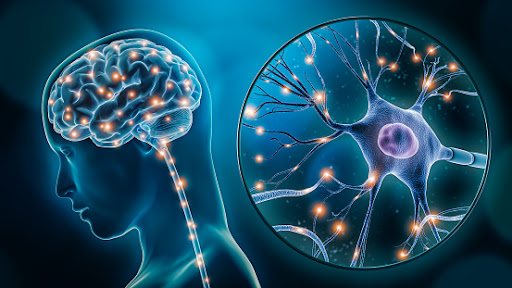 Fig: 1 - Brain working on millions of neurons and biochemicals faster than lightning speed. - A conceptual Photograph
HUMAN BRAIN FUNCTION
The human brain is the command center for the nervous system, working on millions of neurons that continuously transmit signals to control our body and also our behavior. Our personality that is driven by emotions is a mixture of these neurons in combination with other biochemicals functioning differently for each person on the planet.
The overall outcome of these brain cells working in a continuum is exhibited in our surroundings. It slowly builds a connection with the society, environment and its entities. This connection forms the basis of relationships that defines our “happiness quotient”. It is a mixture of real-life events and human emotions working together 24/7.
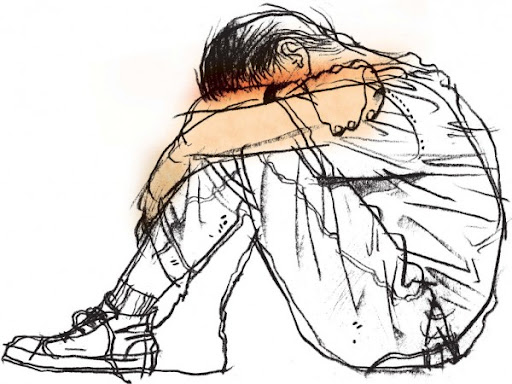 Fig: 2 - An image of social isolation - An impression
THE SOCIAL STIGMA SURROUNDING MENTAL HEALTH
Our social behaviour is a direct projection of our mental and physical well-being. It goes without saying that it directly impacts lifestyle, livelihood, and eventually the prosperity of an individual. A deterioration in mental health adversely affects all the above and is, therefore, an element to ensure a healthy life.
The social stigma that exists with mental disorders has led us to a scenario where there are 300 million people estimated to be affected by depression, which is curable if identified at early stages. It is now a common mental disorder and one of the main causes of disease worldwide.
Social Isolation and loneliness in a fast-paced urban lifestyle are a few reasons that have made depression a prevalent disease, especially among the youth. The onset of digital ease and the presence of social media in the past decade has helped connect people in the virtual realm.
How do we move ahead to a more physical solution and use design/infrastructure as strong tools for the same?
 Fig: 3 - Social Anxiety, depression leads to social isolation.
SERIOUSNESS OF MENTAL DISORDERS
The staggering numbers themselves are proof that mental health disorders have become a common health issue. Even though the numbers here are so alarming there is a lack of knowledge and awareness of mental health diseases. As a result, it has still not categorized mild mental disorders (Depression, Anxiety, Obsessive-Compulsive Disorder, Bipolar Disorder, Social Anxiety, etc.) as serious health issues. This is because the repercussions of such ailments on individuals is not seen immediately and can be observed over a period of time.
It affects personal as well as professional lives gravely and, in some cases, has led to substance abuse and eventually death. People affected by depression or any other disorders tend to isolate themselves from the real world and get trapped in a quicksand of negative thoughts.
Can a community-based architectural intervention provide a space for having an open dialogue among the people?
How can design integrate spaces for therapy and counseling on a larger scale that breaks the social stigma against mental disorders?
 Fig: 4 - Offering a hand of help, to grow together. - A concept
BRIEF OF THE COMPETITION
To break the social barriers associated with any mental health disorder an infrastructure needs to be built. It would encourage the patients to come out of their shells and interact with others going through a similar scenario in an open platform. This would allow them to seek help from trained professionals and undergo treatments and therapy. Such interventions would also enable a cohesive surrounding to reduce social isolation and loneliness faced by many (age disparity, population scarcity, fast-paced urban life, etc).
How will architecture act as a medium to connect people and build a safe environment for open conversations and solutions around mental health and its cure?
Design a small-scale community therapy center exclusively for people suffering and coping with deteriorating mental health.
The programmatic outline can be flexible and may include functions like spaces for one on one counseling, art/music/dance therapy studios, spaces for open dialogues, etc. The participants may identify one or many kinds of users for this center depending on their design vision. This is not meant to have a residential facility.
OBJECTIVES
Public: The facility is expected to be open for community purposes as a public space.
Inclusive: People from all age groups must be able to use the facility.
Therapy: Spaces for activity or therapy (art/music/dance etc) for the visitors.
Nature: Must encourage more open and natural spaces in the campus of the facility.
These objectives can be a point of beginning to conceive this design. Participants can assume their own contexts and users before initiating their design process.
SITE
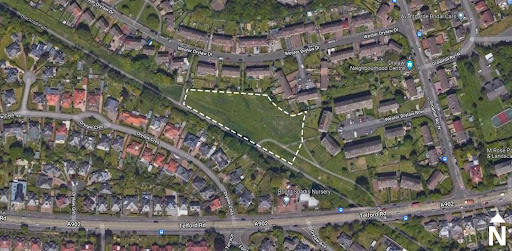
Edinburgh, Scotland
Mental illness is one of Scotland’s major public health challenges and, around one in three people are estimated to be affected by mental illness in any one year. Hence, providing solutions to improve mental health has now become a priority for the Scottish government.
The site of this facility is located along Telford road in the Western Drylaw place district of western Edinburgh. It lies amidst Parks, a general hospital and a Primary School in its vicinity making it an appropriate avenue to encourage a public space for dialogues and interaction.
- Site coordinates: 55°57'41.8"N 3°15'02.8"W
- Site Area: 5929.17 sqm
- Height limit: 10m
- Ground Coverage: 50%
Setbacks (as per CAD plan)
Ground Coverage refers to the ratio of maximum allowed solid/permanent footprint on the site to balance the built and unbuilt spaces. You can utilize the other 50% of the site for any temporary intervention/recreation.
