
Sensorial
Challenge to design a learning center for the blind
Overview
 Fig: 1 - All senses play a vital role in our daily functioning
PREMISE
One of the most important senses of the body is visual perception. Globally there are about 285 visually impaired people out of which 39 million are blind. There are a variety of causes for this form of impairment, many of them are curable while some severe forms of blindness aren’t.
People who suffer from a severe reduction in vision cannot be corrected through conventional means or corrective methods. Loss of sight creates a lack of visual perception that can considerably hamper day to day functioning and working. In order to balance this loss of sight, there is a need for this void to be filled by the remaining senses, which can fulfil and help in navigation and understanding of spaces in the person.
How can the use of other senses be heightened, in order to aid the visually impaired?
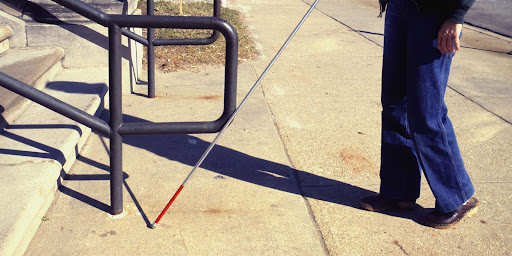 Fig: 2 - Spaces for the visually impaired need to follow special guidelines and design
SENSORY
The major sensations that a human body can experience are major: vision, touch, smell, taste and hearing. We all use the majority of all these senses for different uses. The level of sensitivity of each sense varies in person, but the sensitivity can be increased or decreased by simulated environments.
When designing a space, visual perception plays a key role in understanding the depth, size, and sense of space. In cases of visual impairment, this sense is replaced by other senses, which help people get the perception of the space without visuals. Thus, heightening the other senses through innovative sense specific space design can aid the visually impaired in built spaces. Although proven, the application of these principles is scarce due to lesser facilities for the blind.
Can we challenge people from the design field to implement, understand and make design for visual impairment more accessible? and how can architectural space design help in creating easily navigable spaces for the blind?
What specific architectural interventions can help create a sensory space design for the blind?
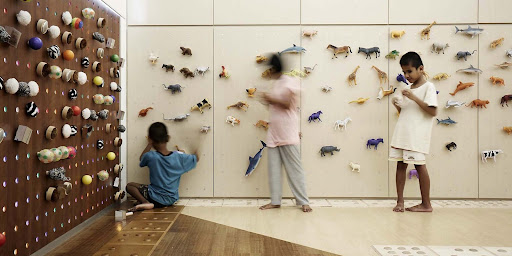 Fig: 3 - Classroom makeover for the blind by creative crews (Credits: Mana and friends)
BRIEF OF THE COMPETITION
How can other senses be heightened through the inclusion of design elements?
The aim of this challenge is to generate spaces that concentrate on other major senses that will help the visually impaired students in understanding the built spaces, their scale, texture, expanse, and environment.
Brief: The architecture competition brief calls for a design of a mixed-use learning center for the visually impaired, by increasing the contribution of other senses through design, thus aiding their process of learning.
This design competition aims to create a design that has a main focus on planning spaces and functions that help the visually impaired students navigate and perform their tasks throughout the day at the learning center.
OBJECTIVES
Material: To use materials that promote tactile senses and navigation.
Planning: How does this design provide ease of access and navigation through spaces?
Sensory design: What strategies are applied for heightening different senses?
Empathy: How well is this design able to respond with respect to the user's needs?
SITE
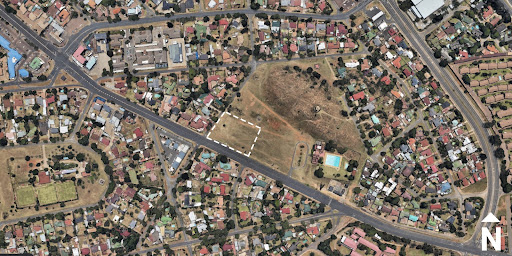
Gauteng, South Africa
The site for this challenge is located in southern Africa, known as the southernmost region of the African region. It has been marked by several distinct ecosystems. South Africa has a vast coastline of two thousand kilometres, bordered by the Indian Ocean to the east and the Atlantic Ocean to the west.
The topography of the South African region mostly consists of high and flat areas called plateaus. Major portions of land are covered in grasslands and bushes. Mountainous regions to vast plain lands add to the variety and context of these lands. This site is located in the central South African region.
The surrounding region of the site consists of houses and commercial areas. This site offers access to the major areas of the city. The site has access from a major road, while open space is available for its expansion in the nearby areas.
- Coordinates: 26°10'12.7"S 27°56'05.4"E
- Site Area: 7,888 sqm
- Height limit: 9 m
- Maximum FAR (Floor Area Ratio): 1
- Ground Coverage: 50%
Setbacks (as per CAD plan)
Ground Coverage refers to the ratio of maximum allowed solid/permanent footprint on the site to balance the built and unbuilt spaces. You can utilize the other 50% of the site for any temporary intervention/recreation.
PROGRAMMATIC OUTLINE
The intervention has to be designed for students of age 18 - 25 years and above. Participants are free to select any three subjects of choice for their learning center and design spaces accordingly. The programmatic outline is intended for a capacity of 200 people users including the staff. The space ideas are as follows:
- Spaces to study, read and discuss: 40%
- Spaces to collaborate working: 15%
- Spaces for recreation: 15%
- Spaces for movement/navigation: 20%
- Ancillary spaces: 10%
Other additional spaces can be added by the participants as per their design needs.

