
SheWork
Competition to design a common workspace for rural women
Overview
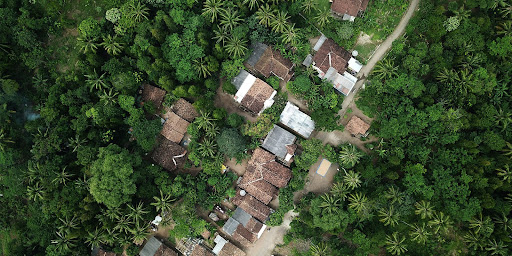 Fig: 1 - Village community (Credits-Tom Fisk)
PREMISE
Villages are closely knit communities, where every other house is connected with each other. The majority of villages live as a community and their activities are performed together. The major income source of rural people is generally through agricultural production and other business activities. The women are involved in various different local businesses that are related to food processing and other crafts.
Local small-scale business to large scale ones is one of the only and major sources of income for the women of rural areas. Major emphasis is on creating, learning and teaching skill-oriented products that generate revenues. A varied number of products are created in different areas, ranging from arts and crafts to food production and sale.
The revenue created not only offers these women an opportunity to use their skills but also makes them financially independent.
How can architecture aid the working processes of these women and make their life much better?
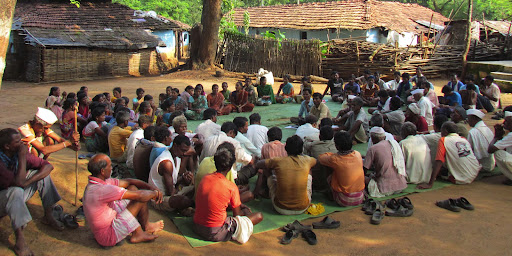 Fig: 2 - Village communities gather around a panchayat or village council to solve various issues (Credits-Subodhkiran / CC BY-SA)
.JPG)
WORKSPACE
Gathering and performing activities not only is a part of a rural lifestyle, but it also ensures a joint effort and community engagement on a larger level.
The majority of work carried out by women in rural areas is generally done in their households, individually or in a group. Most of the time there is no particular space provided especially for the household business or other monetising activities performed by these women.
Providing women with a space that is entirely dedicated to their activities like small scale business; ensures them with capacity and tools to perform better and also gives them a place for gathering as a community. Thus bringing about the empowerment of women.
The combined symbiosis of occupation - recreation and community engagement, becomes a major platform for women empowerment, through financial and social standpoint.
How can one aid such a multidimensional process through architectural interventions?
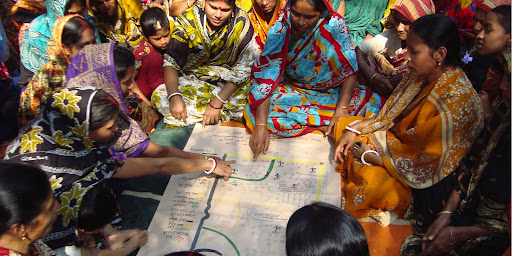 Fig: 3 - Women can gather together to not only work but also can help solve social/infrastructural issues (Credits-Naimul Haq/IPS)
BRIEF OF THE COMPETITION
How can we provide the platform for these women to work on?
What architectural design factors will aid their process of working?
The architecture competition brief calls for a design of a common workspace for rural women to work together and empower them by providing a platform that can help them perform their local business activities and generate revenue.
The aim of the competition is to come up with unique design solutions to create a working centre for rural women to strengthen and empower their efforts towards work and economical independence.
The challenge aims at enabling them with adequate activity spaces and common areas, where they can gather and perform their activities, as an active platform for their social and financial development.
OBJECTIVES
Empathy: To understand the design through the perspective of a rural woman.
Child care: To provide child care/daycare spaces in the design.
Adaptability: Providing a variety of spaces for multifunctional space use.
Transitional spaces: To provide spaces that can help perform recreational activities.
SITE
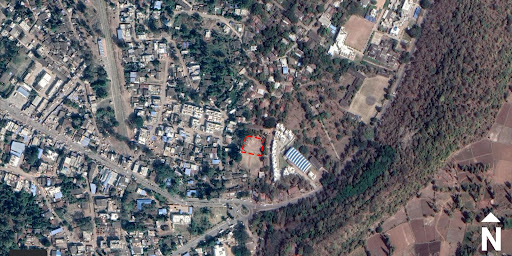
Waghai, Gujarat
India is a country that occupies the greater part of South Asia. It's a constitutional republic that represents a highly diverse population consisting of thousands of ethnic groups and likely hundreds of languages. With roughly one-sixth of the world’s total population, India is the second-most populous country, after China.
The site is located in Waghai Gujarat. Situated in the middle of the rural neighbourhood. The site offers a close connection with the context as it is surrounded by major green patches of land, residential neighbourhoods and commercial activities.
- Coordinates: 20°46'15.3"N 73°30'12.0"E
- Area: 1,461 sqm
- Height limit: 9m
- FAR (Floor Area Ratio): 0.8
- Ground coverage- 30%
AREA PROGRAMME
The programmatic outline is intended for one module capacity of 30 women. This is recommended for this challenge.
The space ideas are as follows:
- Group/Individual workshop/workspaces: 50%
- Childcare spaces: 10%
- Recreational, display and gathering areas: 20%
- Ancillary and service spaces: 20%
Other additional spaces can be added by the participants as per their design needs.
Similar Competitions
Discover competitions you might be interested in




Design challenge to reuse E-waste



Imagining parliament for an unified world.


Design challenge fostering public involvement in wildlife research

Design an urban fitness centre
