
Strays
Challenge to design a modern day animal foster house
OVERVIEW
 Fig: 1 - A bond between human and animal
HUMAN-ANIMAL INTERACTION
‘A man’s best friend’, ‘a furry companion’. These are the few terms that come to our mind when we think of animals. They have been an integral part of our lives since their existence. They have helped and companioned humans when needed. The human-animal bond is the key to a healthier lifestyle. Researchers have examined how animal interaction can affect depression, anxiety, and mental and physical well-being.
The domestication of animals has been practised for centuries. Archaeological evidence states that humans have lived with domestic wolves since 14000 years ago. Over time, these domestic animals became loyal companions to human beings. Today they are known as ‘urban animals’ or ‘pets’.
Over the years, the human population has increased drastically. To meet their demands, cities have expanded beyond their limits, consequently destroying the animal habitat. Humans have constantly exploited resources and continue to do so.
The world is being created for humans, keeping their foremost surroundings in mind, neglecting the major part that encircles them, ‘other beings’.
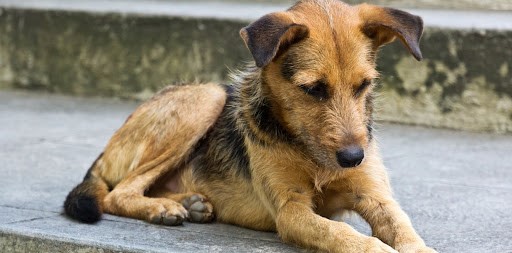 Fig: 2 - Abandoned and injured animal in street
ANIMAL SHELTERS
Habitation was supposed to be a mutual thing. However, humans stand out in the food chain dominating every other organism on the planet. Human hegemony of food chain shouldn't give them the right to take advantage of the ones beneath them.
Over the years animal habitat was taken over by urban settlements resulting in “pet overpopulation”. In the United States, six to eight million animals are brought to shelters each year, of which an estimated three to four million are subsequently euthanized because there are more urban animals than there are responsible homes.
The abandoned animals on the streets tend to cause motor accidents, carry diseases, and not to say anything about the suffering that they have endured. Most of these stray animals have been brutally injured, abused, and abandoned on the streets by their previous owners. The few lucky ones are taken to the shelter where they live in a confined and unkept place until adopted or they are euthanized due to limited space and low funding.
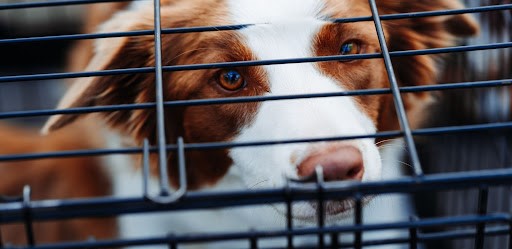 Fig: 3 - A shelter dog in cage
BRIEF OF THE COMPETITION
Is it possible to build a facility where animals can be housed in a shelter and yet run free? Can animals and humans bond in a man-made or natural environment? How can architecture instigate building a safe and comfortable environment for animals? Can architecture for animals be re-designed for the physical and mental well-being of animals?
Challenge: Building a no-kill shelter/health sanctuary for animals where they can interact in man-made or natural surroundings. The proposed shelter will not only provide the animal with the basic necessities needed for welfare but it will also promote human-animal and animal-animal interaction
A modern-day animal foster house that breaks away from the current norms of confinement and gives them the life that they deserve.
OBJECTIVES
- Positive Containment: The animals have to be contained in a careful way.
- Management: With so many animals in one place architecture should assist in managing them easily.
- Overlap: Finding places of overlap between Humans and Animals in the facility.
- Openness: While embracing confinement openness of the facility should also be focused on.
The objectives can be a point of beginning to conceive this design. Participants can assume their own contexts and users before initiating their design process. The aim of the competition is to design an animal welfare center that works on three principles:
- Welfare: Works for the physical and mental well-being of animals
- Training: animals will be trained to interact with each other, their surroundings, and humans
- Interaction: interactional areas for animal-human, human-human, animal-animal interaction.
SITE
Bucharest, in southern Romania, is the country's capital and commercial center. Its iconic landmark is the massive, communist-era Palatul Parlamentului government building, which has 1,100 rooms. Nearby, the historic Lipscani district is home to an energetic nightlife scene as well as tiny Eastern Orthodox Stavropoleos Church and 15th-century Curtea Veche Palace, where Prince Vlad III (“The Impaler”) once ruled.
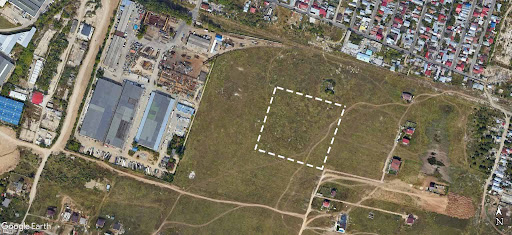
- Coordinates: 44.420606, 26.199045
- Site Area: 25.244 sqm
- Height limit: 8 m
- Ground Coverage: 10%
- Maximum FAR (Floor Area Ratio): 1
The site for the animal shelter is proposed in Bucharest, Romania. The area is located in the proximity of residential area as well as farmlands; providing easy accessibility for visitors and volunteers. Plot hasn’t been divided yet and therefore participants can add more road access points if the design requires but the current laid out road plan cannot be changed.
