
Street Play
Design contest for deconstructable street theatre
Overview
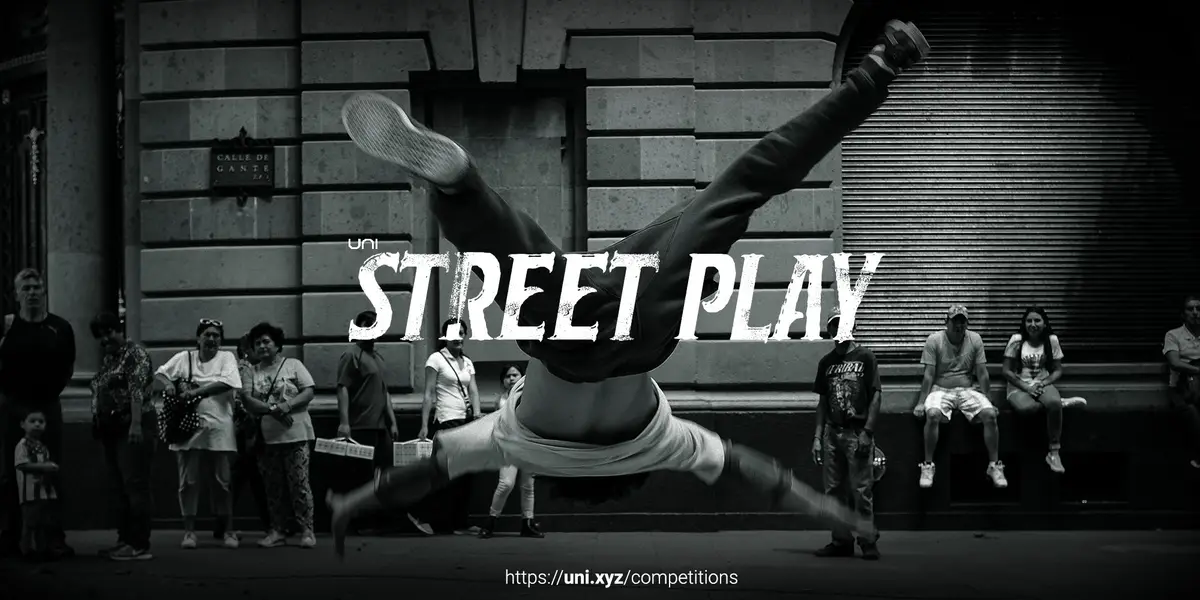
 Fig: 1 - Art in any form must be accessible to all people and street artists play an important role in that.
STREET THEATRE
Street theatre is a common cultural practice around the world.
Quite simply put, street theatre is merely an outdoor performance, more often than not in the public realm, that does not have a specific paying audience. What is interesting about a street performance is the transformation of the public urban space it occupies.
As a consequence of being part of the public realm, street performances and their performers are pushed to embrace the uncontrolled and natural public environment and attempt to integrate it into their performance, making the performance alive and unpredictable, much like the city.
Furthermore, as performers are surrounded by eager audiences looking to observe, engage and enjoy the performance, the specific geolocation transforms from an otherwise mundane urban space to an ethereal space of art, music, and storytelling.
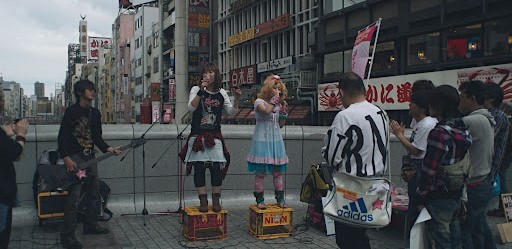 Fig: 2 - Street theatre and entertainment makes the streets lively.
WHY IN THE STREET
Performance and art have often been heralded, as was articulated by Jon McKenzie, “as a mode of embodied activity that transgresses, resists, or challenges social structures.”
While closed theatres are just as valuable, they are shrouded in the sanctity of a walled space that has dedicated, paying audiences. As a result, theatre in these spaces is often coloured in class privileges that are unlocked by virtue of higher economic abilities.
Street performances, on the other hand, are closer to the people. They occupy the space that people frequently visit instead of drawing them out to sheltered environments. They are not gated by an individual's economic means. And they are accessible to all those that dwell in the city as long as the city itself incorporates accessibility in its policy.
As a result, street performances can be a valuable voice of political change close to the people.
 Fig: 3 - Providing a suitable platform to artists can empower the community as a whole.
PUBLIC PLACE TRANSFORMATION
Street theatre (and performance in general) has the incomparable virtue of being an art form that reaches out to people in their own environments. It harnesses the existing and transforms the public realm into eclectic environments ripe with art, ideas and people.
Yet, these performances face considerable adversities primarily from the urban environment that is not built for these momentary transformations. Can architecture and technology then step in to imagine spaces that can bridge this gap?
Brief: The architecture competition brief calls for a design of a transportable and deconstructable truck that enables street performers to momentarily transform public spaces for their performances.
The aim of the competition is to come up with unique design solutions so that the truck is able to adapt to various public environments and create modular, temporary and attractive opportunities for both artists and audiences.
OBJECTIVES
Mobile: Design should follow principles of portability, ergonomics and mobility.
Flexible & Expandable: The device must be expandable enough to be placed in any public plaza across the city
Technology: Integrate new mediums of technology and visualization in your design to support the performers and their audiences.
Adaptive: The design should be flexible enough to accommodate the changing needs of the theatre.
SITE AND SCALE
The project is intended to be located in Paris, France but should have the ability to be scaled to other parts of the country and the world.
France has an illustrious street theatre history that even today involves various theatre festivals that are centred around street performances.
Paris in particular has a host of public spaces that the design outcome can occupy momentarily, including plazas, gardens and avenues. Your design outcome should be able to translate between the varied spatial typologies that the city can offer.
- The design site is conceived as a volume, which measures no more than 6m x 3m x 5m (l x b x h) when mobile.
- When in a static state, the design may have deconstructable elements that together occupy a space no larger than 36 sq.m, including the truck.
Participants may consider a variety of uses when put in different locations, and device multiple configurations. Participants can begin from a single plaza of Paris or a generic urban space to kickstart the design process and take inspiration in design through the context of this city. The design outcome can communicate to the urban scenarios of the world as well.
Similar Competitions
Discover competitions you might be interested in


Packaging challenge - Design meets sustainability

Design challenge to equip cities with modern furniture