

The Artisans Crossing
Challenge to design a bridge for artists
Overview
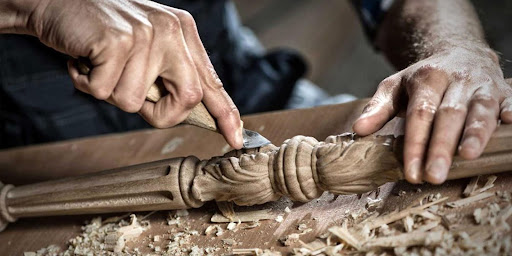 Fig: 1 – Traditional Craftsmanship from Italy (Credits-Interior decoration.eu)
PREMISE
Art forms have sprung from the needs, demands and then the very depths of human creativity. Traditional arts have been with us for centuries. Everything from the plates we eat, the sheets we sleep on and the cultural activities we enjoy had origins and products in the traditional world. Each of these curated products by hand has evolved into much more or of very little quality in the past decades.
In a growing industrialised and technological world where mass production is of utmost importance, people are forgetting or aren't even aware of traditional art forms. There is a gradual movement towards the decline of these heritages, which might only be museum pieces shortly.
The current development of our society can't be helped, but then how can we make an effort to preserve these arts? Is displaying and putting it up in shops the only means to pass the skill down? Or can we be more open-minded and try to promote these arts in the urban hotspots, where they can be seen, informed and even taught?
What kind of space in cities can hold these arts and artisans and also bring in social relevance to space and in turn to the region itself?
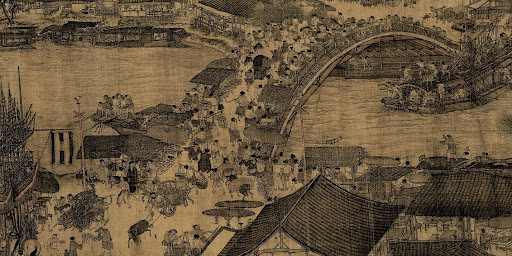 Fig: 2 – A part of “Along the River During the Qingming Festival” Scroll painting of a social bridge in the Song Dynasty showing city elements merging and forming an urban fabric (Credits- Zhang Zeduan)
SOCIAL BRIDGE
Cities are the biggest and greatest invention of the human species. They are ever-changing and act like an organism sustaining and changing through the people in them. Groups flourished at the bank of rivers because of agriculture and the availability of resources.
The landscape of a river in most cities today remains the same, except for the adaptation to the existing landscape, for ease of movement and transportation. By building bridges across rivers we have not only fulfilled our need to expand and move but have also brought in connection and culture of the communities on the other side.
One of the earliest known bridges from China was the very fabric of the cities. Depicted in the masterpiece by Chinese painter Zhang Zeduan, we see a bridge in the Song dynasty acting as the social condenser of the region at both ends.
This makes us question the bridges of today which are built for one primary function and forms a desolate structure when it's deprived of it. It's evident to say that the social relevance of what bridges were has been lost in the coming decades.
How can we revive them? Can we retrofit it with activities that bring people on the bridge for more than just crossing it?
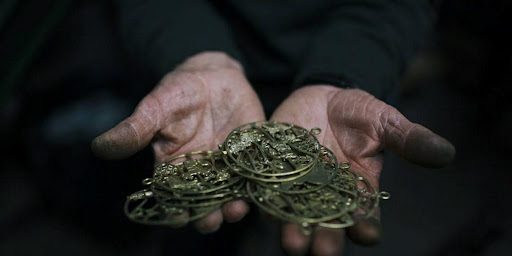 Fig: 3 - Metal handicrafts in an Oltrarno-Florence workshop
ITALY
Italy has long been revered for its art and beauty – They create unique masterpieces by hand, even in an age in which most products are mass-produced. The country is filled with cultural heritage and boasts some of the world’s most skilled artisans that have honed their craft for centuries.
Families have at least one artisan's skills attached to their surnames and background, both from the past and present. But these artisans and their work are at risk of dying. Some do have successors for their art, other arts are dying due to lack of participation and neglect of the associations in control. Italian artisans, including ceramists, sculptors, goldsmiths and art restorers, can be found in small towns and big cities, carrying forward their ancient traditions in their workshops. Although they’re usually hidden away from public view.
Can we help these businesses by offering them a public platform? Can an existing topology be used for this collaboration?
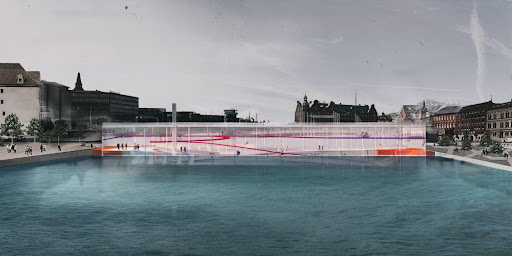 Fig: 4 – BridgeMarine-Conceptual floating bridge as an urban plaza (Credits-The City Link-Alon)
BRIEF OF THE COMPETITION
Italy is the fourth most visited country in international tourism. People mainly visit it for its rich culture, cuisine, art, history and fashion.
Can we design a space that enriches the existing typology of a bridge by providing a platform for artisans and thereby encouraging direct learning/seeing/buying engagement with the existing tourists? Can this be an opportunity for the tourism industry to support the local businesses and thereby increase slow tourism and more cultural involvement?
The challenge here is to design a bridge for artisans and pedestrians that is not limited in its absolute function.
The design must utilize the bridge as a powerful space that has provision for local artists to set up their workshops and artworks. A bridge that usually serves a single purpose of cutting the travel time between two destinations can be explored for more.
OBJECTIVES
- Functional: Project must be functional as a bridge to be used for artist workshops, pedestrians and cyclists.
- Blend: Programmatic requirements and the purpose of engagement and mobility must be fulfilled.
- Iconic and Identity: The structure must be iconic and monumental for the residents of Florence and its rich culture and history.
- Public Space: The Structure must act as a vibrant public space for the commuters and visitors
The objectives can be a point of beginning to conceive this design. The idea of this challenge rests on discovering breakthrough design concepts for a “functional bridge” that accommodates artists working/displaying spaces and public spaces within it.
This also includes finding innovative forms and structural concepts that can furnish such a design programme. This design challenge does not require technical/structural detailing or calculations of the bridge.
SITE
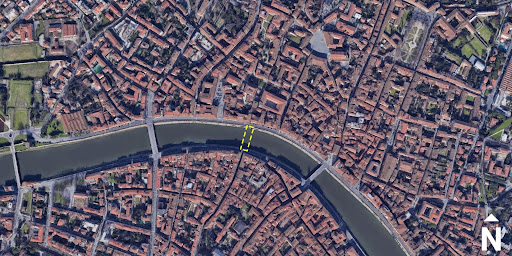
Pisa, Italy
The bridge constructed will connect the Sant'Antonio and Santa Maria neighbourhoods of Pisa. Pisa is a bustling city and tourist spot, while Pisa has numerous monuments, it also has diverse art and artisans. The bridge selected for this competition thus gives a perfect location and platform for artisans to display their art and a chance for the tourists to explore hidden facets of Italy and Pisa.
In urban areas that are already condensed with built structures, a functional bridge can be a turning point for local artisans and for shaping architectural experiments.
- Coordinates: 43°42'58.1"N 10°23'55.7"E
- Site Area: 1369.44 sq.m
- Height Limit: 15m
PROGRAMMATIC OUTLINE
- Spaces for artisans 55%
Working areas, retail stores, workshops,
- Community and Tourist 20%
Gathering spaces, Cafes, and Information center for traditional art forms.
- Services and circulation 25%
Administration, Cycling and pedestrian movement, Public washrooms.
The area programme of the Artisans crossing includes the above. However, the participants are free to add other programmatic facilities depending on their design.
