
Thermal Blue
Designing a Thermal Bath
OVERVIEW
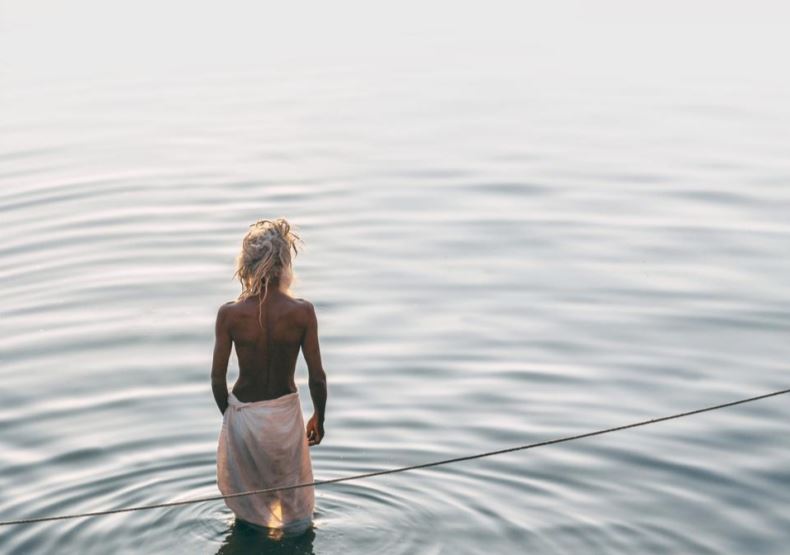
Img 1: Hindu Saint taking dip in the holy river of Ganga, India.
History
Ever since the Romans, people around the world have been using the therapeutic qualities of water to cleanse, heal and relax the body. Baths constructed around hot springs were used for centuries by emperors and became a widely accepted natural treatment options for various common ailments.
These hot springs essentially are springs, that get produced when groundwater gets heated geothermally from the Earth’s crust. While some contain water that is safe for bathing, others are so hot it can result in death. Due to supernatural power attributed to warm waters, the first Thermal arose near temples and natural hot spring. Religion and spiritual connotation has long been associated in different cultures (Hindus take bath in Ganga river, Egyptians plunge themselves in the water of Nile).
But with time it’s spatial functionality has changed.
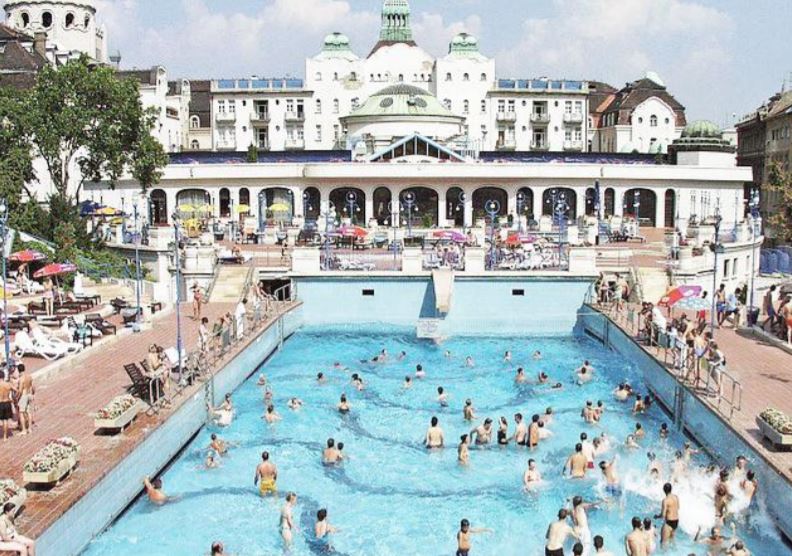
Img 2: Changing definition of bath - Gellert SPA
Today
The definition of Thermal Bath has changed. From a place to heal and recover from diseases, it has become a destination for social integration. They are now a local catchment for tourists, contributing significantly to the economy and contextual rejuvenation of cities. Be it baths of Budapest, lagoons of Iceland or springs of Japan - they are popular tourist destinations. An avenue for people to maneuver and in the process redefine what thermal bath has meant in historic times.
For instance, Gellert Spa is one of the most famous thermal baths in Budapest. From a place for emperors to therapeutically heal themselves, to an event place where contemporary fashion shows and wine festivals are held. The potential of a thermal bath has expanded to become a major tourist and cultural destination.
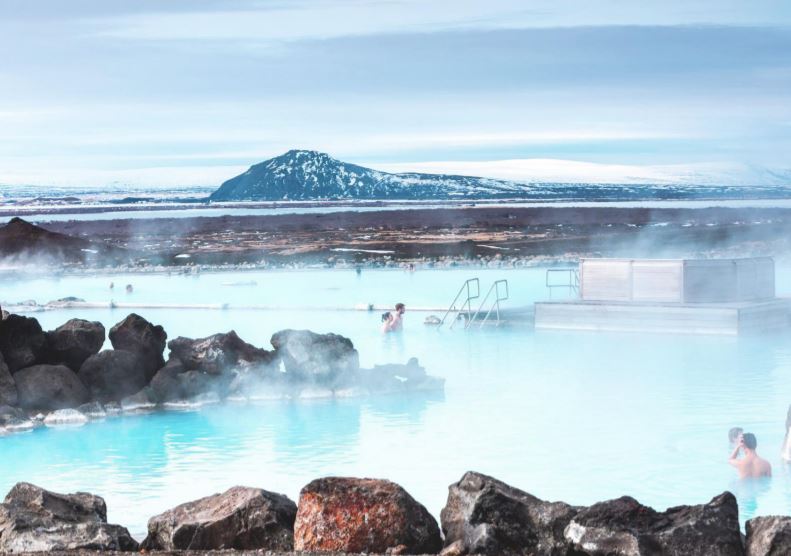
Img 3: One of the most popular tourist destination in Iceland, Blue Lagoon
Brief of the competition
Thermal Bath traditionally has been an architecture typology, built around a hot spring to relieve people from stress and avail benefits of hydrotherapy. So even though it’s spatial definition has changed, the ideology of being a place to heal remains the same. Beyond that, it has also now enabled itself to become a tourist destination that brings in economic and social value to a city.
Brief: Aim of the challenge is to design a thermal bath that expands beyond its function of being a place to heal. A place to gather and socialize, that adds value to the local context.
Objectives
The aim is to create a thermal bath around an existent hot spring. It is already a destination for locals, but there is a potential for it to be a major catchment area for tourists. The challenge here is to design a bath that capitalizes hot spring as a place to heal, relax and socialize.
Landmark: Intent is to design a macro level go-to-destination for toursits and locals. Should be reflected in its physical form.
Public: Allow an array of activities and functions, enabling integration of tourists and locals alike.
Sustainable: Design, Material and Techniques used should be sustainable in nature.
Views: To create views that enable people to be in touch with the surrounding nature.
Programmatic Outline
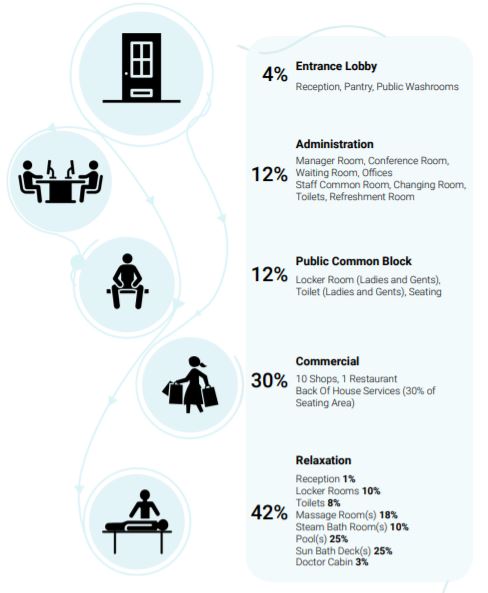
The given percentage and function chart are outlined for the ease of designing. Participants are encouraged to change functions according to their own design requirements.
Iceland
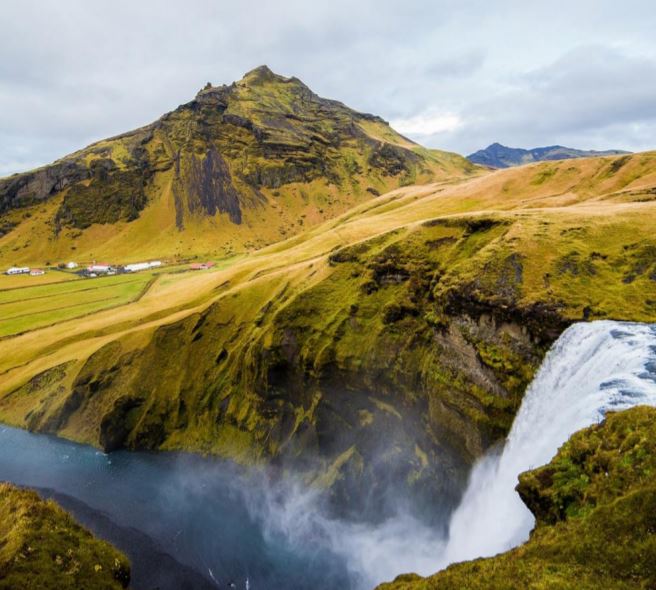
Set against geographical landscape of lava rocks, birch trees and northern lights - geothermal hot springs defines Ireland’s culture. Since settlement era, bathing and swimming in natural hot spring has been a favourite pastime activity. With a population of 250,000, Iceland has more than 120 public pools, meaning just about every village or neighbourhood has one. Almost all Icelandic swimming pools are geothermally heated, so the warm mineral water helps in de-stressing and relaxing every muscle in the body. Icelanders consider a public pool nearly a civil right. Presence of hot tub a need in vicinity, to extent that it’s considered a classic second-date location.
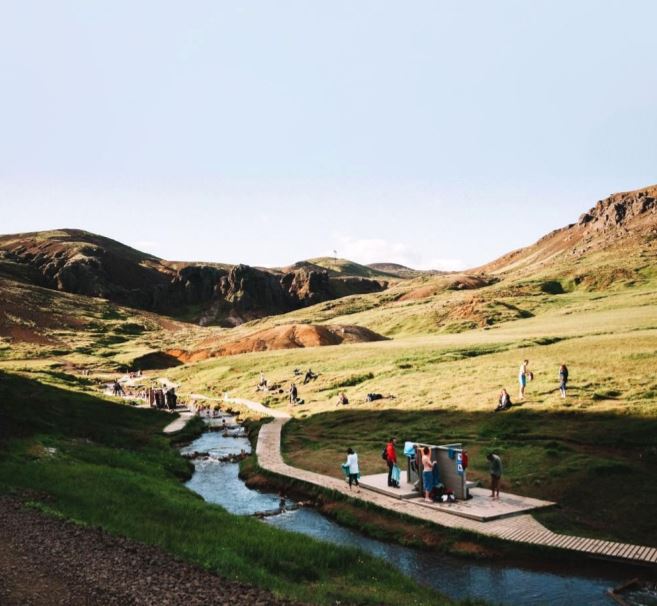
Img 5: Reykjadalur Hot Spring Thermal River
Hveragerði
Hveragerði is a 9 sq.km town in south of Iceland located 45 km away from Reykjavik. The town is an area known for hot springs from which community derives its name (hver = hot spring). The hot springs are among the natural tourist attractions of South Iceland and are one of the economic assets for the town of 2.657.
Hveragerði sits on a highly geothermal area, which is a blessing and curse. The area is northernmost producer of bananas and the water also allows food to be cooked simply by burying it for a few hours. Curse is that it is situated in earthquake prone zone. Building construction is done accordingly.
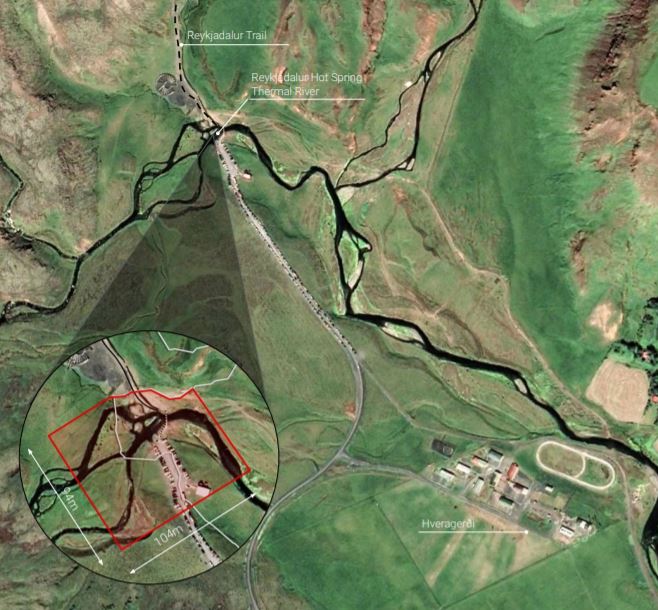
Img 6. Site for design intervention
Site Plan
Reykjadalur Hot Spring Thermal River is a popular destination due to the hot spring stream that locals and tourists use as a relaxation retreat. There is a cafe, toilet and open to sky changing rooms made of partition walls to assist people. People often leave their clothes on the boardwalk while they plunge into the 1 m deep stream. It is also the start pointing for 45-minute long Reykjadalur hike, the trail starts once the bridge is crossed. The intent is to formalize the hot spring stream as a social and tourist destination that accommodates the hiking trail.
- Site Area: 8800 sqm
- Coordinates: 64°01'20.7"N 21°12'40.1"W
- Ground Coverage - 10%
- Built Area: 4800 sqm
- Maximum Height - 15m
About Experia
Experia serves as a part of UNI in the realm of experience based architecture and tourism. As worlds becomes a place of experiences than belonging, experia envisions a future where tourism is designed more intentionally and architecture becomes a part in shaping it. It intends to break the fusion of traditional design barriers and methodologies by making it a platform for experimentation. It embarks on mobilizing ideas where creators can elementally question the buildings we create. It is a research initiative dedicated to providing opportunities for designers from all domains to explore ideas that go beyond the restrictions of usual architectural discourse.
Queries: support@uni.xyz
Discover other competitions: https://uni.xyz/competitions
Facebook: https://www.facebook.com/unixyzglobal/
Instagram: https://www.instagram.com/uni.xyz/
Discover FAQ’s about this competition on our help forum here: http://help.uni.xyz/
Similar Competitions
Discover competitions you might be interested in



Healing places through music.


The Global Benchmark for Architecture Dissertation Awards

