Tinker Project
Designing a waste recycle facility
OVERVIEW
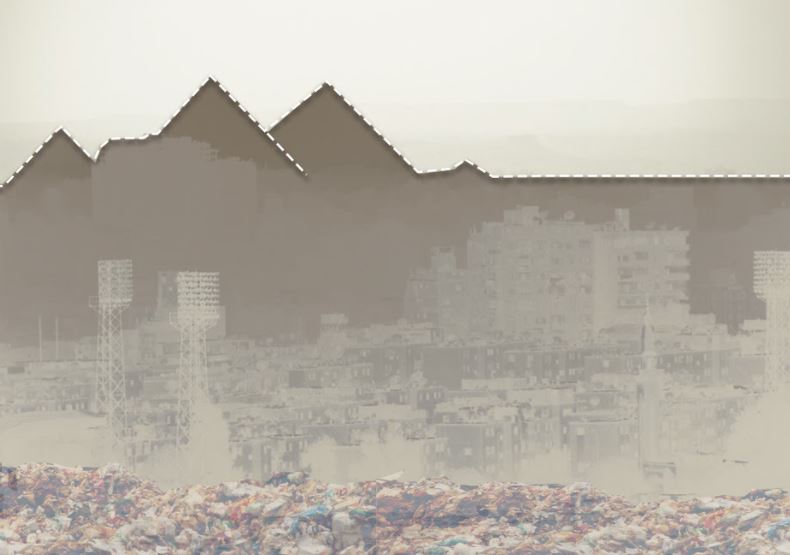
Img 1: Cairo city stuck in the amount of waste it produces
Premise
It is difficult to find a more fundamental issue than solid waste management. It is a critical matter of public health, environmental quality and economic development.
As the world urbanizes, the challenge becomes more acute, as more people means more garbage. Cities all over generate roughly 1.3 billion tons of solid waste per year which is expected to increase by 70% in 2025.
While large metropolitan cities are trying to figure out strategies to manage their garbage production, people of Manshiyat Naser, have been mastering the ‘resist throwaway culture’ for decades. Zabaleen -a derogatory term for garbage pickers, collect waste from the Egyptian capital, Cairo and carry it back to the neighborhood. Contrary to the usual stigma, their belief is that they are serving a higher purpose by helping others and making the world a better place for all.
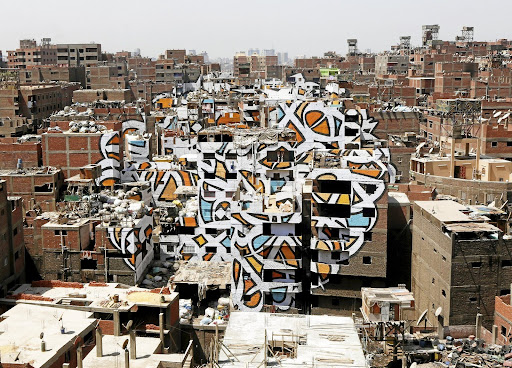
Img 2: Almost every roof and street of Manshiyat Naser filled with refuse of Cairo
Garbage City
Manshiyat Naser or famously known as ‘garbage city’, is notable for having nearly every space covered in garbage including streets and rooftops of the settlement. Zabaleen have been bridging the gap for the lack of efficient waste collection system in Cairo for almost 70 years.
The origin of Zabaleen can be traced back to 1940, in which farmers from north Egypt migrated due to poverty and crop failures. They later turned into waste collector and recyclers of Cairo, which turned out to be more profitable.
Zabaleen go door to door for a small fees to collect waste from the city which is transported via trucks or donkey carts. The collected refuse is sort manually by the entire family into recyclables/ non recyclables.
Although the process is antiquated on its face, the efficiency of the Zabaleen is remarkable: Almost 90% of the garbage is recycled which is four times of most western recycling companies.
The Zabaleen might be fuelled by necessity, but they possess valuable lessons to teach those of privilege.
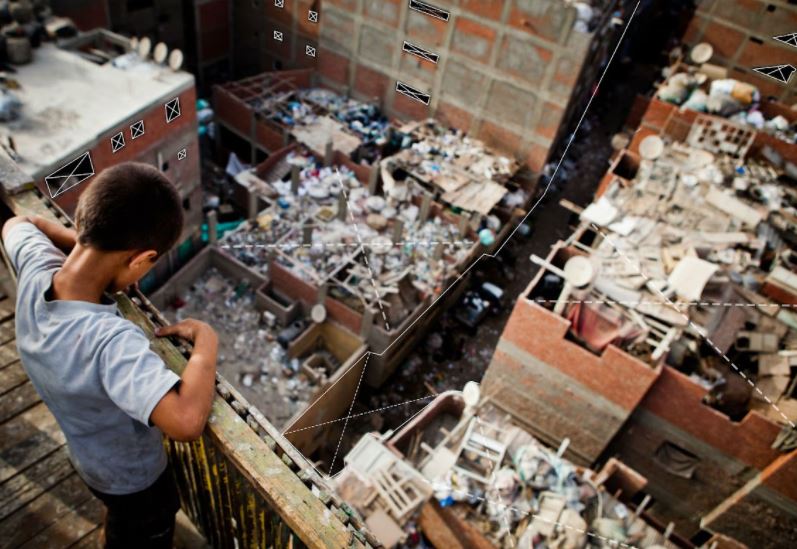
Img 3: Garbage covered city leaving no space for light to penetrate or provision of fresh air
Issue
Manshiyat Naser is the sight of the city that nobody wants to acknowledge. The slum has been lost in the turmoil of refuse of the entire city.
The living condition of the Zabaleen is far from ideal: Poor air quality, trash scattered throughout the city, on the streets, in city’s corner, and even on roofs and high-rise buildings. The pyramids built with the refuse of the city, blocks the natural light and ventilation.
Moreover, the zabaleen are often treated with disgust and discrimination because of the poor kept condition of their ward.
Why is that the people who are responsible for keeping our cities clean are themselves living in the worst possible conditions?
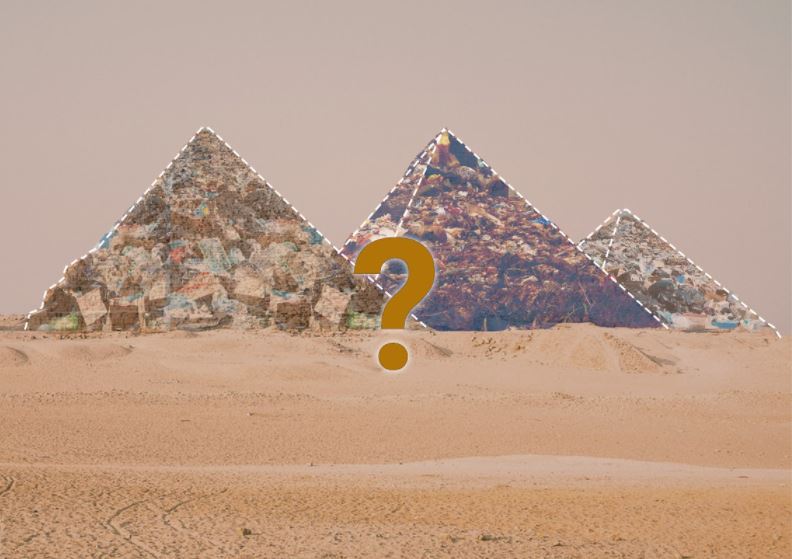
Img 4: organic waste wrapped together to be disposed to landfill or for compost
Brief of the competition
The slum dwellers of Manshiyat Naser have been neglected and disappointed by the policy makers and are in desperate need for agencies to make a notable change.
Challenge: Design a waste management- recycle- facility, which provides the provision of reselling and bartering the recycled and reinvented products.
The designed structure should act as a source of interface between the scavengers living in Manshiyat Naser and city dwellers living in close proximity. Establishing a positive reinforcement to sensitise people about the amount of waste generated in cities and how recycling is the solution.
Objectives
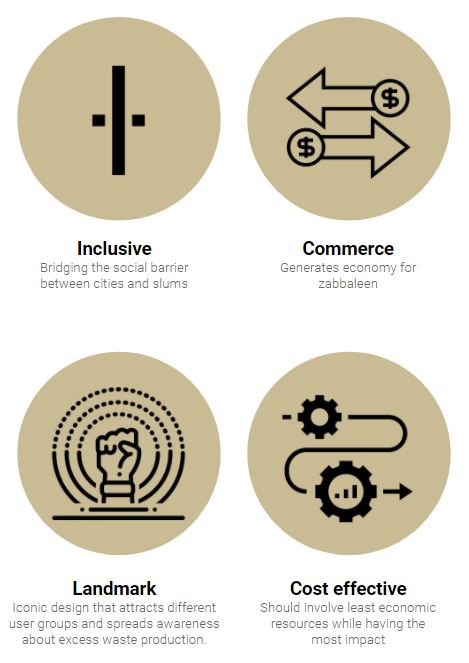
Building a structure that helps the people of Manshiyat Naser improve the standard of living and gain social equality. Since the entire slum works in garbage collection/sorting/recycle, the designed structure should have provision to house atleast 7000- 7500 vendors.
Programmatic Outline
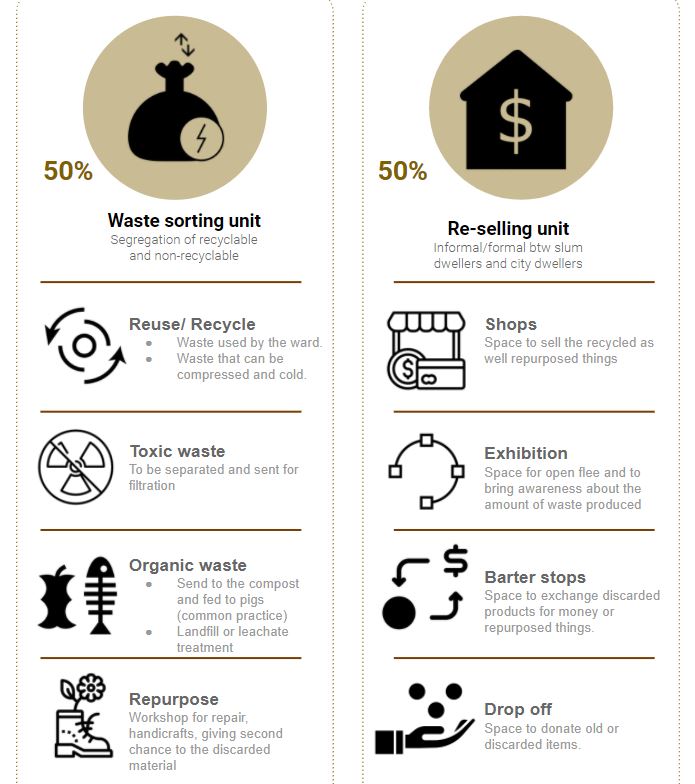
Following departments can be considered as a base to develop the waste management facility. The programmatic features are in no way exhaustive; participants are encouraged to add as many functions as the design requires.
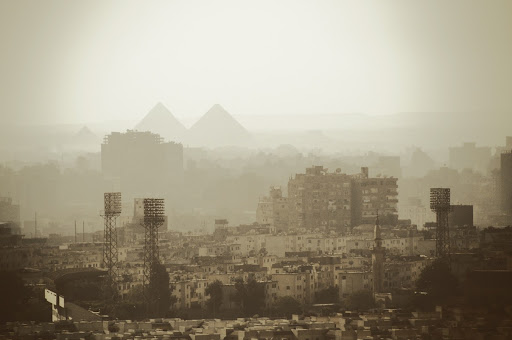
Manshiyat Naser, Egypt
Egypt is place known for its rich history, colossal monuments, landscaped garden and for its extreme poverty stricken areas- like Manshiyat Naser.
It is a slum sandwiched between garden city and uptown Cairo, covering 5.54 square kilometre area with a population of 262,000 of egypts poorest inhabitants (mostly Coptic christians).
Img 5: World in conflict - 18th and 19th Century
Site Plan
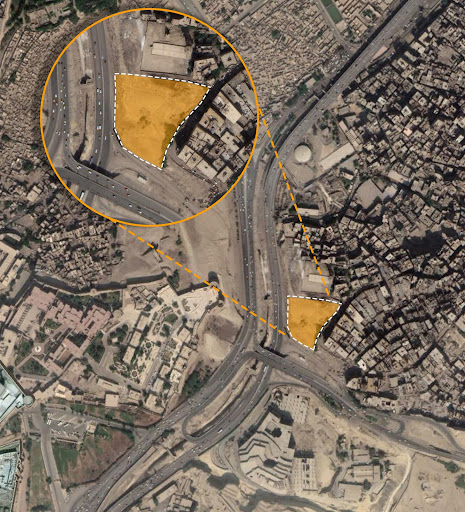
The site is located between the city and slum area for easy accessibility of different user groups. The close proximity to primary as well as secondary and tertiary roads adds to the approachability. The site is located in a horizontally densified area leaving very little area for green spaces. To tackle this issue the the permissible ground cover has been kept low.
FAR 4.8 | Site Area: 11,220 sqm | Ground cover 30%
Coordinates: 30°01'51.3"N 31°16'05.5"E