
Tree House
Challenge to design an arboreal hospitality space
Overview
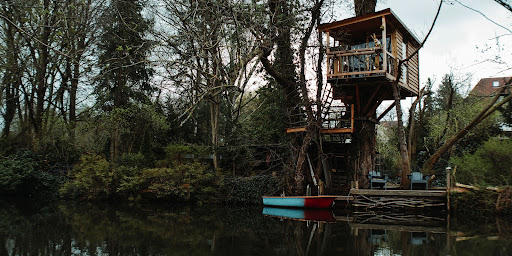 Fig: 1- Tree houses or playing on trees were common aspects of childhood for many.
CONNECTIONS
Treehouses are an exciting part of childhood. These arboreal spaces allow children autonomy and spaces for their imaginations. They also inadvertently create spaces tied to natural elements. By virtue of their proximity to trees, children tend to experience their little hideouts in parallel to experiences tied to the tree itself.
This close interaction with nature is often lost in the world of adults, where dwelling becomes a more serious proposition. Adults seek out practicality and efficiency more often than not in the spaces where they dwell. Since nature is often whimsical and unruly it becomes easier to create housing by taking down trees instead of incorporating them into designs.
To be fair, there are few architects and designers who work around trees and nature. But for most people, these spaces are difficult to afford.
Arguably there is value in establishing such biophilic connections and thus it may be valuable to consider how we can create such opportunities.
 Fig: 2 - Our interaction with nature has grown in limited surroundings due to our relationship with fast life/work
HOSPITALITY AND NATURE
To escape their serious work lives, adults often seek out opportunities for vacations. Most tourists tend to seek out novel experiences that are not present in their daily lives. While tourism manifests in various ways and tourist spaces increasingly develop new ways of engaging their guests an often sought after experiences by these tourists are retreated.
Individuals seek out spaces to relax where they can unwind and escape their busy lives. Perhaps owing to human’s biophilic tendencies, these retreats often employ nature and natural elements to immerse their visitors. These natural retreats not only offer their visitors opportunities to relax but are also potential spaces to reconnect with nature and strengthen our biophilic connections.
What if we could combine childhood experiences of tree houses with these vacation spaces to allow more immersive experiences?
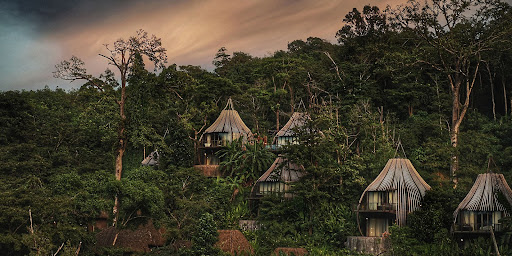 Fig: 3 - How can we restore the lost connection with trees through hospitality?
BRIEF OF THE COMPETITION
As our lives get busier and more stressful it becomes essential for our own well-being to seek out experiences that help us relax and unwind.
The challenge here is to create an arboreal housing outcome, such as a homestay, for tourists looking to reconnect with nature.
The designed space must borrow or be inspired by the whimsical childhood experiences around treehouses and attempt to incorporate the same for experiences designed for adults. The outcome must be designed around the trees and exist symbiotically with them.
You may choose to make your outcome completely above ground, on the tree or partially on the ground. However, you must respect the arboreal element and in your design must not create hindrances to the future growth of the living being.
The aim here is to attempt to envision hospitality typologies closely connected to nature.
OBJECTIVES
Design: The designed outcome must incite memories but also offer opportunities to relax and unwind
Materiality: The materials, interiors and furniture employed must blend together with the natural element that is central to it.
Consideration towards nature: The basic requirement is to create a ‘Context Conscious design’ as the main purpose of this competition is to experience nature through close proximity, but without harming/modifying/degrading the forest in any manner.
Understand the context including the types of trees grown, their size, height, width, span, which can help in estimating the scale of the design. Find out other general but not specific details about flora and fauna that need to be thought of when building it inside them.
CONDITIONS
Design 25 housing units. The size of one unit must not be any larger than 60 sqm (i.e. the size of a double bed hotel room). The designed solution must have:
- Space for bedding
- Space for storage
- A bathroom
- A small kitchen space for quick meals
Since the use of the designed space is temporal, ensure that maintenance and care are easily possible during the off-seasons.
SITE
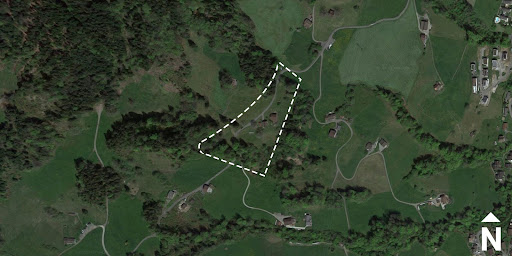
The site for this project is located in Hergiswil, a municipality in Nidwalden, Switzerland. Nidwalden lies in Central Switzerland which is bounded by Lake Lucerne (Vierwaldstättersee)to the North and in all other directions by mountain chains (Urner Alps).
Most of Switzerland’s arboreal species can be categorised under two broad umbrellas- Broadleaf and coniferous. Although the country hosts about 7 conifer species and 40 broadleaf species, a majority of the forest landscape is dominated by only a handful of species - at lower altitudes Beech is dominant and at higher altitudes Spruce, Larch and Swiss Stone Pine are abundant. Unfortunately, like much of the world, despite abundant vegetation, Switzerland’s forests are also feeling the consequences of human actions. The chosen region falls in a mixed arboreal region with both broadleaf and coniferous vegetation. There are small housing structures on the site whereas the main city district is only a short distance away.
Participants can design in an area of 8000 sqm anywhere within the given site (excluding the housing structures). The aim is to explore and innovate the concept of a treehouse by understanding not just the human requirements of space but also of the site context/vegetation.
- Site Coordinates: Maps
- Total Site Area: 24,491 sqm
- Site Area: 8000 sqm
- Maximum FAR: 1
- Ground coverage: 60%
- Height restrictions: 6m
The total height of the built structure on the highest contour and the total structure height from the lowest contour, should be 6 meters respectively. The goal is to limit the structure to a total of 6 meters in height, irrespective of site levels.
