
We Australia
Evolution through Architecture
OVERVIEW
Human evolution
The evolution and history of civilization have come a really long way beyond consciousness as they have moulded the identity of humans as a species. We have built more on innovation and assumed control of various aspects of our planet eventually classifying ourselves as a separate entity and not a part of nature. A term like ‘manmade’ holds a different meaning today even though a man was made by nature and we see a distinct ideological gap between the two.
One of the evidence places where we saw these two ideologies go against each other was the continent of Australia which was one of the last countries to be colonized by the Britain Empire. It is a country that stands today as a crucible of globalization in the face of the modern world. It’s perceived as one of the youngest countries which came into existence in 1901.
But the history of Australia goes way beyond this perception.
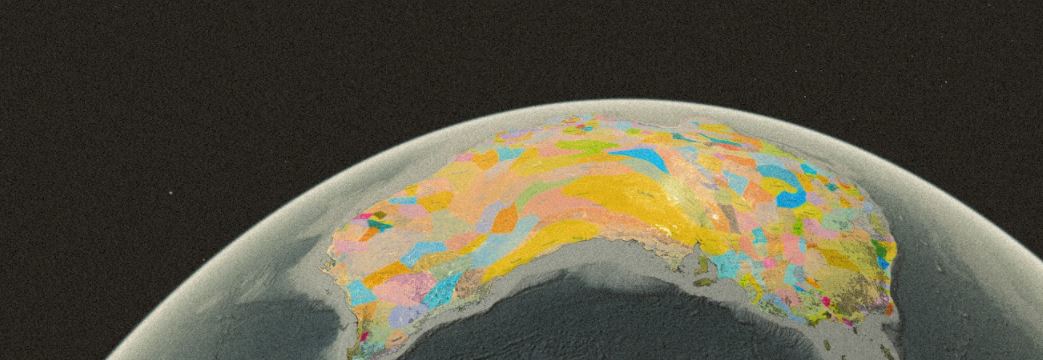
Img 2: Australia - A planet within - in 40,000BC
A world within existing Australia
Australia is a huge continent of ever-changing landscapes, where one end doesn’t even look remotely close to another. Even today it has a vast number of forests, national parks and desert landscapes that are very unique. But the most special thing about this continent goes back to almost 60,000 years. Australia may have become a country in the last century, but humans have inhabited this place since ages ago.
The history of Indigenous Australians began at least 65,000 BC years ago when humans first populated Australia, which is familiarly known as aboriginals. They have been living here away from the knowledge of the outer world since the ice age (predicted). About 500 of these miniature countries, were traditionally organized in semi-nomadic small tribes each with its own language, land and varied culture originating from a common spiritual belief - “Alcheringa” or Dreamtime. This philosophy considered nature as the reason for all existence and every element has its role in shaping the destiny of the world.
But where are they now? How is human evolution affected by this? and why did this dissociation with nature happen?
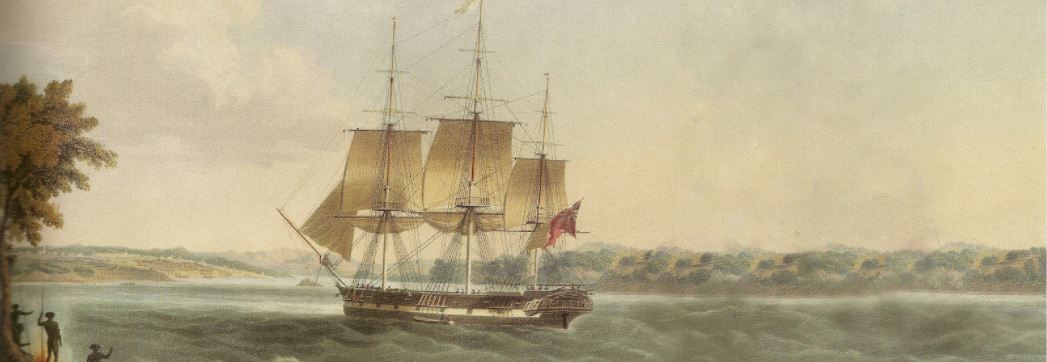
Img 3: The arrival of colonial fleets.
Overturn
In the early 18th century the conquest of Terra Australis Incognita had begun with the intention of establishing a new colony of Great Britain. As the sailors arrived and started setting up colonies, the indigenous people did not retaliate at first. The colonists eventually forced a lot of Aborigines off their land and many were killed. The contagious diseases that arrived with the colonies were alien to aborigines - causing a huge epidemic and spiked death rates.
This was the very moment where two paths of evolution merged at a certain point in time, which tipped the balance between land, nature, and man. There have been serious environmental degradations and loss of various cultural knowledge systems after this flashpoint of ideologies took place.
And this is where Australia was born as we see it today. But as times have passed the new Australia and its population has acknowledged this loss by bringing in reforms that give the remaining aboriginal people their rightful place in the continent as well.
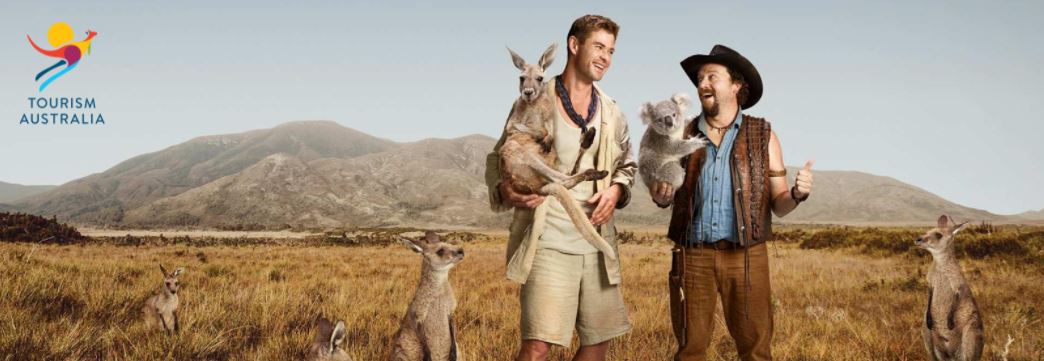
Img 4: A popular ad campaign by Tourism Australia - Credits
Plan of Action
As new Australia inclusively moves ahead in time with a more unified approach of development, there’s a fresh wave of hope that embarks on equality. This includes landmark judgements like transferring the ownership of sacred lands back to these communities again under a legal framework. Several educational and employment initiatives by the Government to build access to equal opportunity in almost every field. This began a series of initiatives where aborigine origin people have access to good urban education and equal opportunity in urban areas.
However, the problem with these initiatives is that they break their already dwindling chain of knowledge that is transferred to the coming generations. This brings a new awareness of approaching aborigines and their role in the economy. There are various ways the government plans to do this - but the most evident one in recent years has been an evolution of cultural tourism.
Img 5: A concept of aboriginal art and Australia today.
Brief of the competition
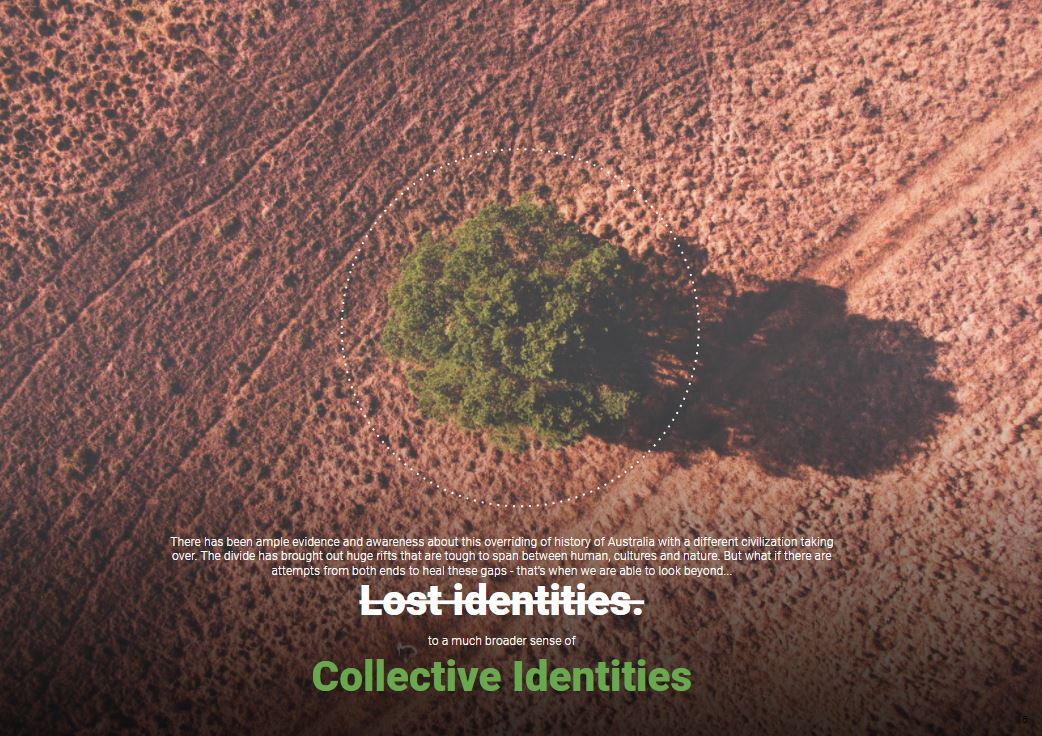
If we see Australia from the perspective and evolution of the last few centuries only, what meets the eye are a series of events that led to clashes between humans from different backgrounds. This perspective is just a small fragment of what actually shaped Australia as a continent - and the role of nature in it.
With the canvas here being this huge (around 500 indigenous countries and countless species), Australia attempting to find its real identity between its origins and present is a place of opportunity. A chance to speak for all the sprouting cultures that existed, species that walked this continent, landscapes that are constantly changing, the technology that has evolved and the global impression as a country. The thread that really brings all these entities in one single frame is the path evolution that has brought all of us here, today.
Brief: To build a tourist village that helps visitors to learn about the history of human evolution which not only sensitizes but spreads awareness about the changing relationship between nature, natives and the country of Australia.
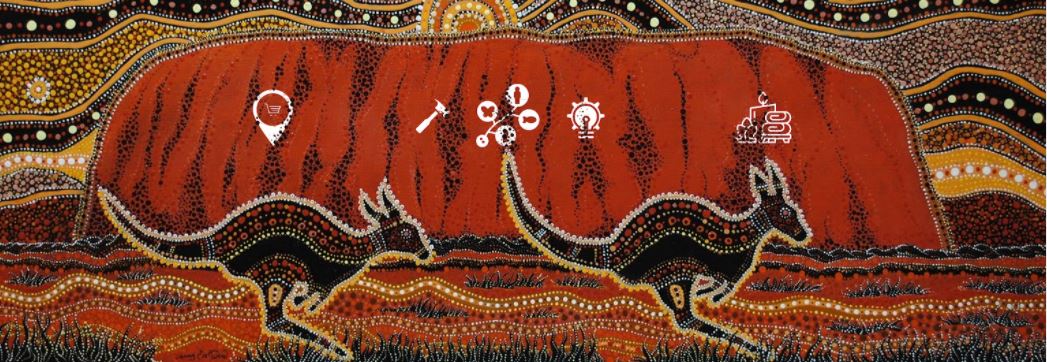
Img 6: Ayers Rock artwork by Danny Eastwood
Design Objectives
History of human evolution may be universal to the world, but what makes it unique for this place is the chronology of the same event and these diverse branches of history that merged to make the place as we see today. The objectives to create a showcase of human history- We Australia -Tourism village is:
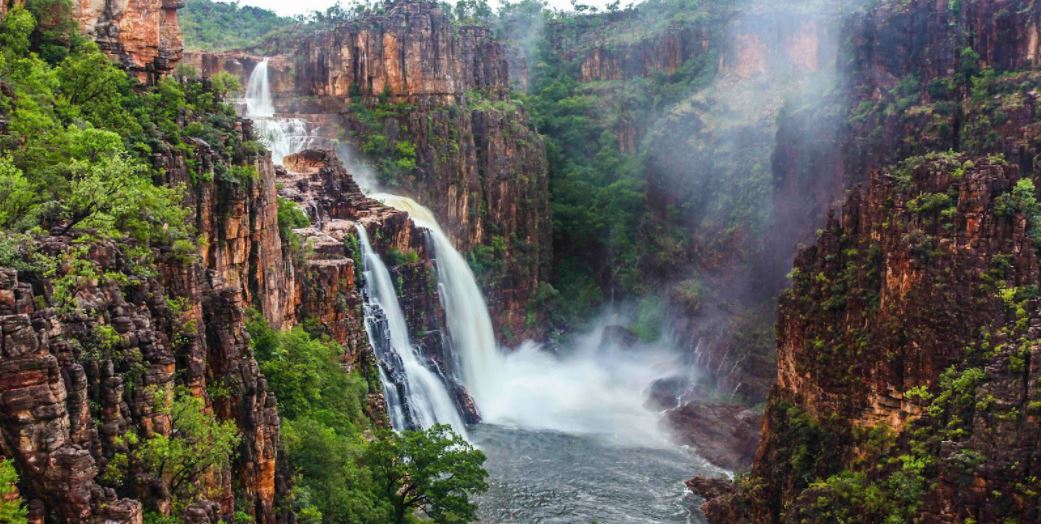
Img 7: A view of Kakadu National Park waterfall -
Kakadu National Park, NT, Australia
This unique archaeological and ethnological reserve, located in the Northern Territory, has been inhabited continuously for more than 40,000 years. The cave paintings, rock carvings and archaeological sites record the skills and way of life of the region’s inhabitants, from the hunter-gatherers of prehistoric times to the Aboriginal people still living there. It is a unique example of a complex of ecosystems, including tidal flats, floodplains, lowlands and plateaux, and provides a habitat for a wide range of rare or endemic species of plants and animals. The central government is now proposing new investments into the forest to develop more tourism activities and a better road network into the national park. There are several places in the national park receiving facelifts. This national park is renowned around the world for its aboriginal cultures and history.
Design Programme
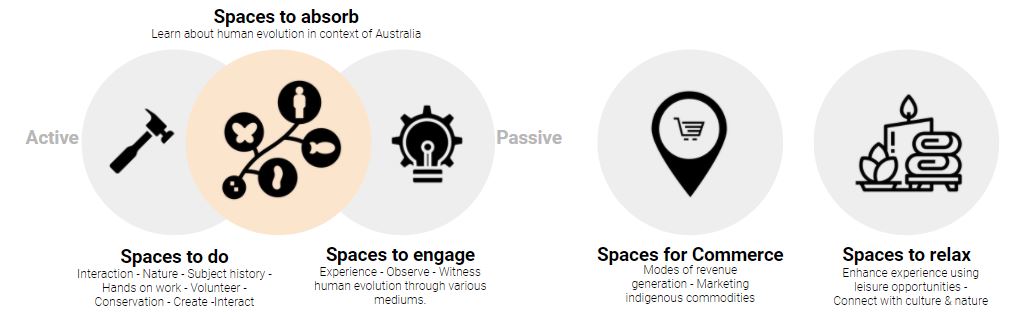
The participants have to depict the evolution of humans in the context of Australia - broadly based on the following sections. Participants may increase or decrease the prominence of sections shown below based on their narrative to tie these phases of evolution.
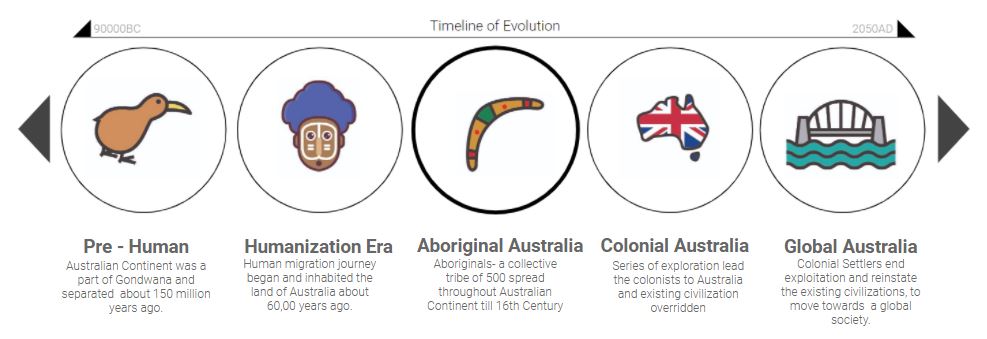
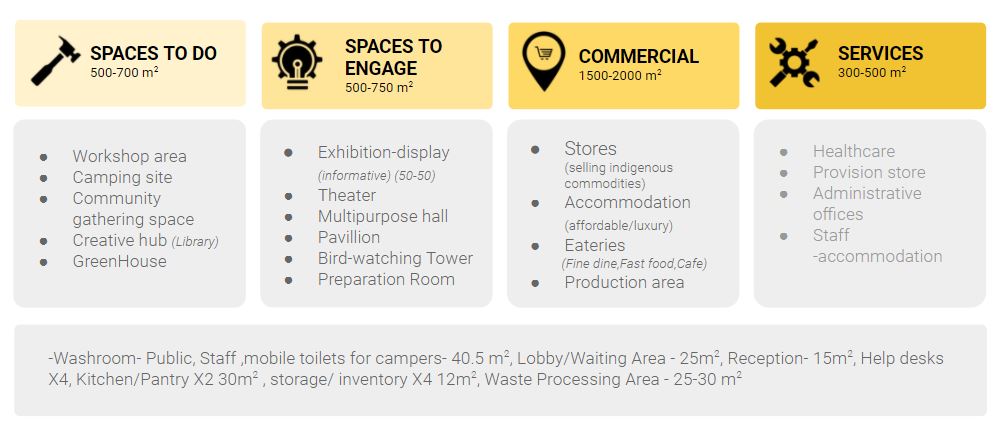
The area programme is completely suggestive and can be modified by participants either partly or completely, based on their research. The eventual goal is to convey human evolution in the context of Australia as given in the timeline.
Site - Cooinda
Located at the brink of Kakadu National Park, the site is one of the many unheeded venues of this UNESCO World Heritage site. It is adorned with a number of visitable destinations in its vicinity like Yellow water, Jims Creek and the Animal Safari to name a few. The national Park has been a one of the top visited place by tourists over decades and continues to attract the same. It is mildly inhabited with built forms for the Animal Safari on one side and a Cultural Center of Warradjan tribe on the other. An underdeveloped airstrip acts as one of the modes for transport to reach the place.
Flanked by various tourist activities the We Australia Tourism Village as a concept aims to sensitize the tourists before they begin exploring Kakadu National Park.
- Area: 12774m2
- Height limit: 9 m (29.52ft)
- Site coordinates: 12°54'01.1"S 132°31'18.3"E
- Ground Coverage : 25%
Maximum Height condition excludes the bird watching tower Participants can assume tree diameters as 4m - 6m. The heights of the trees can be assumed between 8m to 10m.
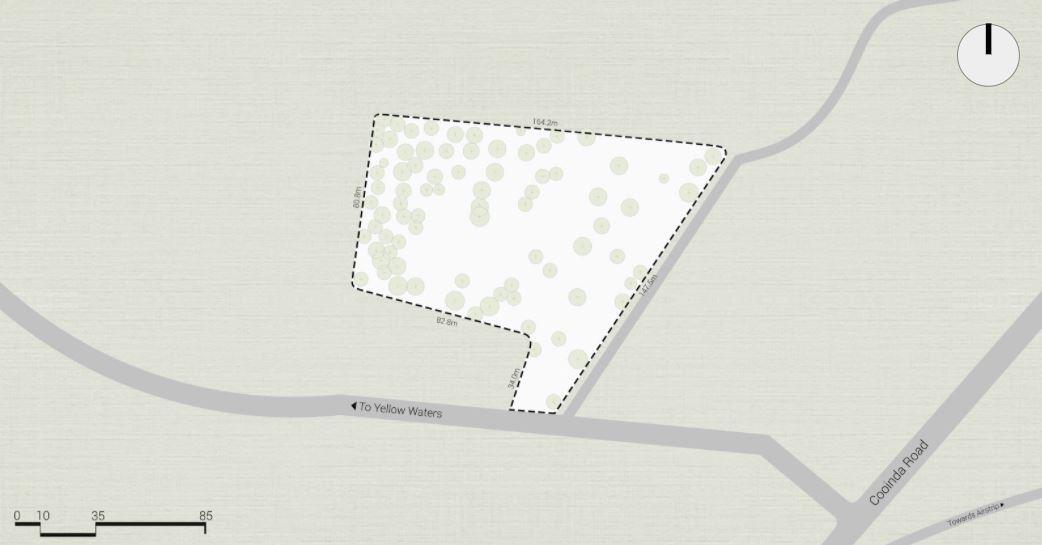
Site - Plan
Judging Criteria
The entries will be judged by an international jury of the competition - To be announced:
The entries will be judged by an international jury of the competition on the following criteria:
- Presentation: The fundamental to a good entry is a visual delivery of ideas.
- Concept/Idea: Quality of thought and intent in the pre-design phase.
- Programme/Spaces: How the spaces are conceived along with the programme.
- Design Outcome: The final architectural outcome of the solution.
The judging panel can also add other criteria based on their internal discussions - which will be in line with the problem statement. Participants are advised to fulfil above given criteria first in their design. Names of the jury panel will be announced soon. The decision of the Judges Panel is final, no appeals will be entertained and no further correspondence shall be entered into.
Please note that the jury scores are NOT affected by the number of likes on a project. Every submission is evaluated based on the judging criteria. However, ‘Likes’ play a role in determining the People’s Choice Awards.
Results for this competition
Winner
KULTURA VILLAGE
Emphasizing the importance of rebuilding broken links between food, culture, and land to create sustainable societies.
Runner ups
1. Oasis of the Kakadu
we are trying to define a space in which people can feel like real aboriginals and learn about their ways of living and their unique attitude towards life and nature.
2. CONSTELLATION - A link between Human, Nature and Culture
The sky and the stars are a common denominator of all civilization, the link that unite man to nature, to dream. Conceived symbolically as a constellation, the project is a sequence of invisible links between the pavilions, a program of concentric clusters that allows the visitor to freely explore the site and by peregrinations encourage discoveries.
