
Woven
Design competition for slow tourism in weaving communities
Overview
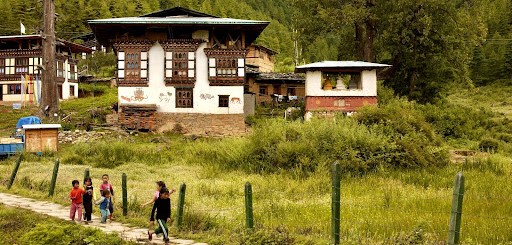 Fig: 1 - Oftentimes, taking an off route from the most visited spots can help discover small culture rich destinations.
SLOW TOURISM AND OTHER TRENDS IN TRAVEL
In order to escape the daily bustle of our lives and stresses of the work world, humans time and again embrace opportunities to travel. Fascinatingly, instead of slowing down in our travel breaks, many of us bring this hustle culture and our intrinsic fear of missing out, with us on the journey.
As a result, a majority of the tourism industry around the world exhibits fast-paced itineraries stuffed with commercial opportunities for the local tourism economy.
Unfortunately, as we rush from site to site in the itinerary with barely a moment to rest and take in the destination, we lose out on valuable insights into the lifestyle, culture and traditions of the local communities. In recent years slow tourism has emerged as a sustainable tourism practice that attempts to counteract this fast-paced tourism industry.
H3: Can we as architects and designers attempt to imagine such slow tourism opportunities in specific cultural communities?
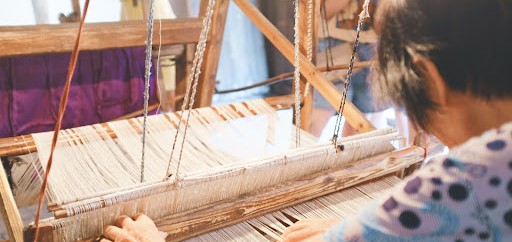 Fig: 2 - Weaving is part of tradition in many cultural hotspots and not just a local source of income but offers attractive tourism opportunities as well.
WEAVING STORIES
Slow tourism is characterised by tourists inhabiting spaces that are locally rooted for longer periods of time and interacting closely with the community, sometimes even participating in local activities. As a result, slow tourism is often intrinsically tied to local cultural practices that allow visitors to garner a deep insight into the destination’s traditional practices.
This project intends to look at weaving communities as potential tourism destinations.
Nearly every community of the world has a traditional weaving practise that has been a significant part of the region's cultural history. The articles produced by various weaving practices have often been a popular souvenir for tourists.
What if we could imagine slow tourism opportunities where individuals could not just purchase woven articles, but participate more deliberately and actively with the local community?
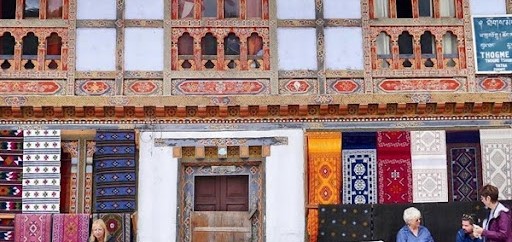 Fig: 3 - The cultural stature of weaving skills and local products can be restored and strengthened by diverting tourism towards their way. (Credits: Daily Bhutan)
DESIGN FOR THE WEAVER COMMUNITY
Brief: The challenge here is to design a slow tourism village in a traditional weaver community.
The design must include dwelling as well as recreational activities that are closely tied to the chosen region's culture and practices. The foremost intention of the challenge is to safeguard the local community, traditions and heritage with sustainable practices.
To support the local community and encourage the preservation of traditional weaving practices, the design must be able to help bolster the production of the woven articles, thereby supporting the economic growth of the community.
Furthermore, the designed experience should allow interested visitors to actively immerse themselves in the culture of the space and have opportunities to learn, participate and contribute. Most importantly though, the outcome must be able to allow individuals to unwind, slow down and embrace the foreign culture of the destination and forge valuable cultural experiences.
OBJECTIVES
Hospitality: The design outcome must create valuable hospitality opportunities that will draw and engage tourists.
Experiential: The design outcome must allow one to intimately engage and experience the cultural practices and weaving traditions of the region
Culture: The design outcome must borrow and be inspired by the cultural traditions and location
Educate: The space must be able to educate individuals about the weaving practices as well as raise awareness about any potential future concerns surrounding the culture.
SITE
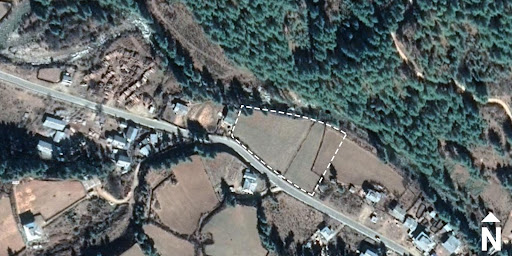
The site for this project is located in the Bumthang district in Bhutan. The district is well known for its sacred temples and ancient architecture but it is also home to the Chumey community. The women of the community weave Yathra throughout the year, as it is a primary source of income for the community, and typically learn the weaving style by the time they are 8 years old.
The site is located in the Chumey district, along the Trongsa-Chumey Highway. It has small settlements located close by that include housing, commercial activity and educational institutions which proves easy access to all communities around.
Site Area: 7254 sq.m
Height Restriction: 10 meters
Ground Coverage: 40%
Maximum FAR: 1
Setbacks as per CAD Plan
Coordinates: 27°29'32.0"N 90°40'30.1"E
YATHRA WEAVING CONTEXT
Yathra is characterised by thick woven fabrics, sometimes sporting intricate designs that are particularly woven in the Bumthang region of Bhutan. These thick woolen articles are different from other Bhutanese weaving practices such as the Kushuthara practice that is characterised by intricate and exquisite fabrics. Instead, Yathra weaving produces hardy but beautiful fabrics that protect its wearers in harsh winter climates and can be used in daily rugged lifestyles.
The weaving of the fabric itself is a community activity, where a group of women come together to weave while socialising. As a consequence of this collaboration, each piece exhibits unique and diverse patterns and designs that collate in a single piece.
AREA PROGRAMME
In the designated buildable area the outcome must contain the following:
1. Tourist facilitation centre and Administration
- Reception, Information kiosk ~ 30 sq.m
- Management + Administrative Offices ~ 180 sq.m
2. Accommodation facilities for tourists
- Dorms: Option fit for solo travellers and long stay on budget ~ 20 single sharing (20 sq.m each) + 10 double sharing (30 sq.m each) i.e 700 sq.m
- Common Room and canteen facility with kitchen ~ 100 sq.m
- Laundry and maintenance Rooms ~ 40 sq.m
- Villas ~ 20 units of 40-80 sq.m each.
- Homestays ~ 30 rooms of 50 sq.m each
3. Cultural Spaces
- Open-air theatre/amphitheatre: for exhibitions, events and performances ~ 200 sq.m
- Workshops: Weaving rooms for visitors to learn and practice ~ 180 sq.m
- Museum/Exhibition Gallery: curation of weaving history in the district ~ 150 sq.m
- Restaurant/Cafe ~100 sq.m
4. Commercial spaces
- Marketspace for selling and trade ~ 150 sq.m
- Fixed shops ~ 200 sq.m
5. Parking: for cars, mopeds, cycles ~ 300 sq.m
The participant is free to modify or add to the above-mentioned area programme.

