
Yo Parking
Challenge to evolutionize public parking
OVERVIEW
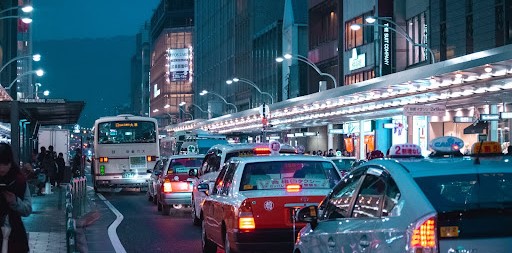 Fig: 1 - Maintaining a good life schedule, time managing is most important - An impression
SHAPING CITIES
Progressing at a light speed our megacities don’t look anywhere close to what they are today. Be it the kind of structures that we see, or they feel that they used to have. While cities grow bigger - mobility has to keep up and it has been quite a journey to where we are today. Cities might have shaped mobility in the past, but today mobility is now shaping cities.
In a time so fast, the most dominant of these in the last century undoubtedly are Cars. Growing more and more as a society, the relevance of a car has changed rapidly. These compact comfort boxes have come a long way since the 18th century where they went from being a luxury to a statement to finally a necessity. More cars - demand more space - which needs more parking.
A necessity that has become a part of us is hard to leave.
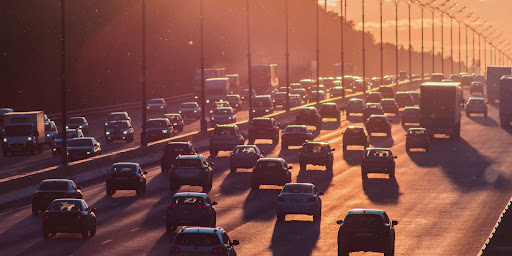 Fig: 2 - Irrespective of infrastructure development, private transport is increasing day by day
NO WAY OUT
While transport has evolved - the presence of cars as a mode of transit has survived unusually long with almost zero competition. It’s when cities started experiencing the repercussions of too many cars - things have started to change. Innovations in electric vehicles, mass transit like metro rails, and bicycles have made an unusual return in popularity. Alternative transit might have gained a reputation battling through problems, but the number of cars hasn’t budged and there is no sign of slowdown either.
Cars were made to make our lives easier and are slowly bleeding out the public life of the city. Air quality, global warming, dust pollution, unsafe streets, parking woes, and traffic are now poison to not only public spaces but human life at large.
With so many cars what follows a need of a lot of parking - which is primarily putting a void space in an already aggravating dense urban area. This, unfortunately, has moved the whole urban life into a nasty deadlock that is hard to escape.
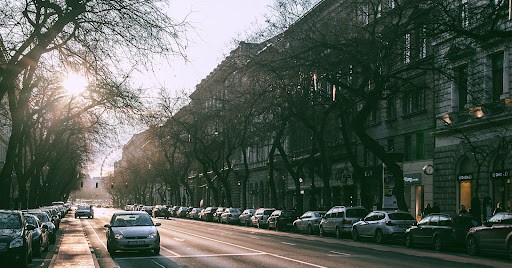 Fig: 3 - A parking space beside the roads in Urban cities
CAN WE BREAK THIS DEADLOCK?
As this deadlock is getting worse, cities are still submissive to development led by cars. With no real alternative insight, there is an inextinguishable need for empty spaces which is paradoxical in an immense space crunch. In a tug of war, the go-to solutions are parking towers that we see today. These skeletons are highly functional, cost-optimized with their top priority as cars and cars only. Automobile shaping cities get the most figuratively accurate in these buildings which take shape by a car’s turning radius and not the city it inhabits.
As the mobility problem is so universal - individuals and collectives around the world are fighting back really hard to find a workaround. Hyperloop, The Boring Company, Uber, Google and many more are attempting to alleviate humanity out of this manmade crisis. But despite so many attempts - these endeavours face huge challenges to finding grip because our cities have grown severely gas car leaning.
We can safely say today that it is impossible to imagine a city without cars. These small machines are the blood that runs through the veins of the city. But the same machines are not giving a single chance to find a solution that may fix these problems or our places. What if….
Cars are actually holding back the city?
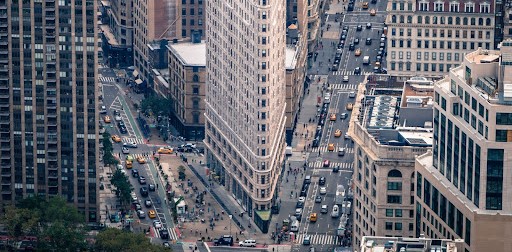 Fig: 4 - Availability of parking space in urban areas
BRIEF OF THE COMPETITION
As the transportation industry today is becoming way too uncertain, it is logical to ask should we still follow cars to define future cities? There is a tremendous motion to fix this massive problem but no single point where to begin.
What separates us from the rest, architecture has the biggest design opportunity in this uncertainty. In spite of so many unsolvable problems about parking and traffic, what really works in favor of a designer is the average age of the buildings they create.
With a lifespan of 60-70 years, architecture can outlive these uncertainties of transportation and make a powerful negotiation in paving a better future of transportation and our public spaces.
Can we build an intervention that functionally serves its purpose, yet advocates for better public spaces while embodying evolutionary qualities promoting a positive transportation shift?
Design a parking tower that accounts the needs today’s parking space as well as extends to activities/function of the general public.
OBJECTIVES
- Functional use: How can we deliver an effective and operational parking tower of the given capacity.
- Public function: How can a parking tower be more conducive and friendly for the city it inhabits.
- Evolutionary: How can an evolving parking tower make our cities better? Better transport? Lower transport, etc.
- X300 units: The total number of parking units to be considered in the design is 300.
SITE
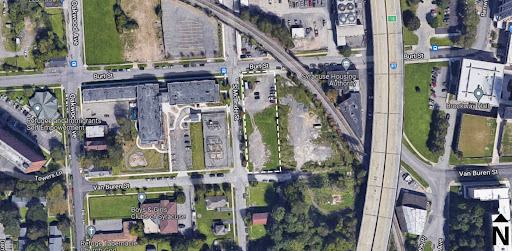
The site selected for this project is located in the Syracuse district of New York City. Currently, the site predominantly contains parking lots.. It is surrounded by similar parking facilities, a dense urban environments with structures.
While solving the immense parking demand through an evolutionary parking tower, designers can question how we can make a functional typology of a parking tower contribute more than just parking to Manhattan.
- Site coordinates: 43°02'16.6"N 76°08'36.9"W
- Site Area: 2583. 29 sqm
- Ground Coverage : 40%
- Maximum FAR: 10
- Height restrictions: 120 m
SHIFT
Especially in the last 50 years and in the coming 50 years there has been a very divided view on how we perceive parking as a problem and its solutions. The agenda of the last century was to provide adequate parking spaces in conjunction with the rising sales of cars with growing congestion. However, there has been a gradual shift in this thinking because the cause and solution have been cyclic-ly growing.
Today, urban researchers and thinkers argue that creating more parking will cause more issues related to parking. Instead, it should be avoided by building high-density built environments that do not require cars at all. This direction of thought, also calls for siphoning the funds gathered by parking to be invested in generating public-friendly spaces.
Alternative transportation endeavors demand different kinds of parking configurations and our current parking spaces have almost no budget for innovation. But we are slowly observing car lifts and stack parking as a viable solution in controlled environments.
Elements like superchargers or battery stations have made it possible to refuel our cars while they wait. A different breed of parking is required for underground tunnel stations that might appear in the future. The challenge hence extends to these changing trends that have to be considered in the larger realm of parking design.
Similar Competitions
Discover competitions you might be interested in




Design challenge to reuse E-waste




Imagining parliament for an unified world.


Illustrate the lost glory of Angkor Wat - Render Challenge


Photograph architecture without architects
