

Youth House
Co-living for the youth design challenge
Overview
 Fig: 1 - Responsibilities of young adults has risen over the world due to various factors (Credits-Luis Villasmil)
LIFE IN THE CITY
Cities have been an ecosystem for people from varied backgrounds, acting as their economic, social and cultural powerhouse. There is a large number of people residing in the city who consider this city majorly from an economic and social standpoint. This category of people is mainly focused on the 'work - home' equation of life. This working population today has a majority of young people. They are mainly focused on acquiring basic security of livelihood and making a living in the city.
There is a constant race against time and the maintenance of an economic balance in this population. The rising rent rates and economic price rise has put the working youth of the cities under pressure. Affording a large amount of rent payment living alone in large cities has led to hefty living costs which put a toll on their living experience in the city.
Can this issue be addressed in an effective way to establish a social connection and economic issues?
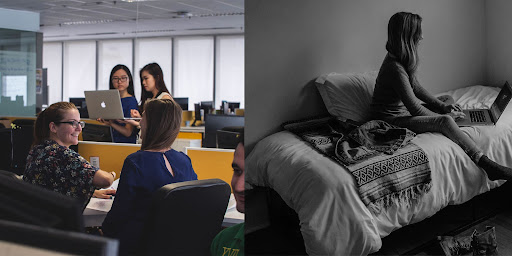 Fig: 2 - Co-working/office interactions are the only social interaction most working young adults face, and with remote working, even those interactions have been reduced (Credits- Mimi Thian/Andrew Neel)
CO-LIFE
Today our generations are experiencing radical changes in our idea of being 'social'. The way of engagement and public contact has changed considerably to affect our perception towards both work and home. The need for interaction and community support is undeniable and has introduced itself in our workplaces through 'coworking'.
But this social connection is often limited to the office space. Moreover, the high rent prices hinder them from enjoying existing social connections due to livelihood burdens.
Every city has a large number of these kinds of youths who are undergoing similar issues. Encouraging a similar concept like coworking - is co-living, which can offer these individuals to share their living space; that not only offers them a social connection with their peers but also reduces the economic burden considerably.
How can architectural intervention aid the process of co-living?
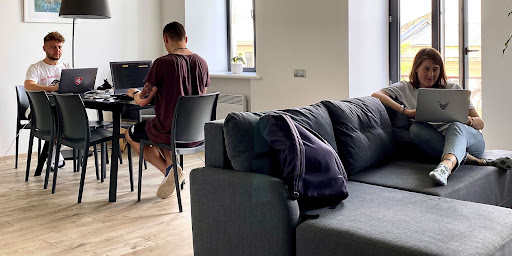 Fig: 3 - Can the concept of co-working develop into co-living? (Credits-Elena Rabkina)
BRIEF OF THE COMPETITION
Co-living and co-working are similar terms that stand on a foundation of collaboration. Coliving is mainly about living with a group of people by sharing a space together to live in. It is like having a small community living space while still being part of a large one.
Brief: The architecture competition brief calls for a design of a co-living space for the youth in the urban cities which will function for social connection and will also be economically beneficial to the individuals.
The design outcome aims to challenge the way we perceive community living spaces and how they can be made more collaborative and unified. This design has to prove itself as a solution to the many problems that the youth face in a city while balancing the work-life paradigm.
What can this design offer that can actually reduce the social engagement deficit and economical pressure that a youth experiences while living in the city?
OBJECTIVES
Concept/model: How effectively will your design model function with the young population?
Flexibility/choice: How does this design provide individual freedom and flexibility?
Interactive overlap: To design spaces that are created out of overlap of common activities of the group of users.
Architectural unity: To provide spaces that aim to unify and help the users collaborate.
SITE
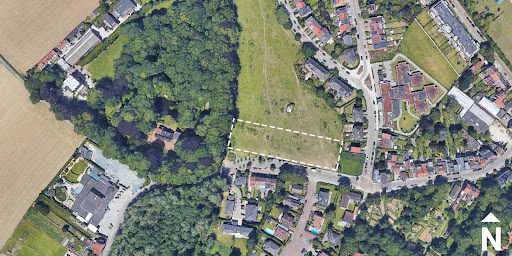
Potaarde, Brussels, Belgium
Belgium is a country in northwestern Europe. It is one of the smallest and most densely populated European countries. There’s plenty for young people to do in the Brussels-Capital Region. Every commune has its own youth service and youth advisers, who organise a wide range of activities. The majority of the young population is either working or are students. Belgium is a low-lying country, with a broad coastal plain extending in a southeasterly direction from the North Sea and the Netherlands and rising gradually into the Ardennes hills and forests of the southeast
The site is located in an urban neighbourhood in Belgium. Housed by a variety of buildings this site offers a direct connection with the main roads while has a large green patch of land in its adjacency. The distance of the site from the inner city is less, as it provides access to the main services of the city while also offering a good natural backdrop.
- Coordinates: 50°51'39.6"N 4°16'55.1"E
- Area: 4,530 sqm
- Height limit: 14m
- FAR (Floor Area Ratio): 0.8
- Ground coverage: 30%
PROGRAMMATIC OUTLINE
The programmatic outline is intended for one module capacity of 20. This is recommended for this challenge. Participants are to assume that the module will be replicated on the site in the future. They can simply mark the positions/design of the replicated modules, they don't have to be detailed. The number of modules is up to the participants.
The space ideas are as follows:
- Spaces to live: 50%
- Spaces to collaborate: 10%
- Spaces for solo productivity: 20%
- Spaces for leisure: 10%
- Ancillary spaces: 10%
Other additional spaces can be added by the participants as per their design needs.

