
Allesamt Familycenter: Christian Schmoelz Architekt's Integrated Approach to Family Support in Nenzing
Christian Schmoelz Architekt designs timber-clad family center combining childcare, nursery, and counseling services with innovative multi-level learning spaces in Austria.


A New Model for Family Support: Architecture as Social Infrastructure
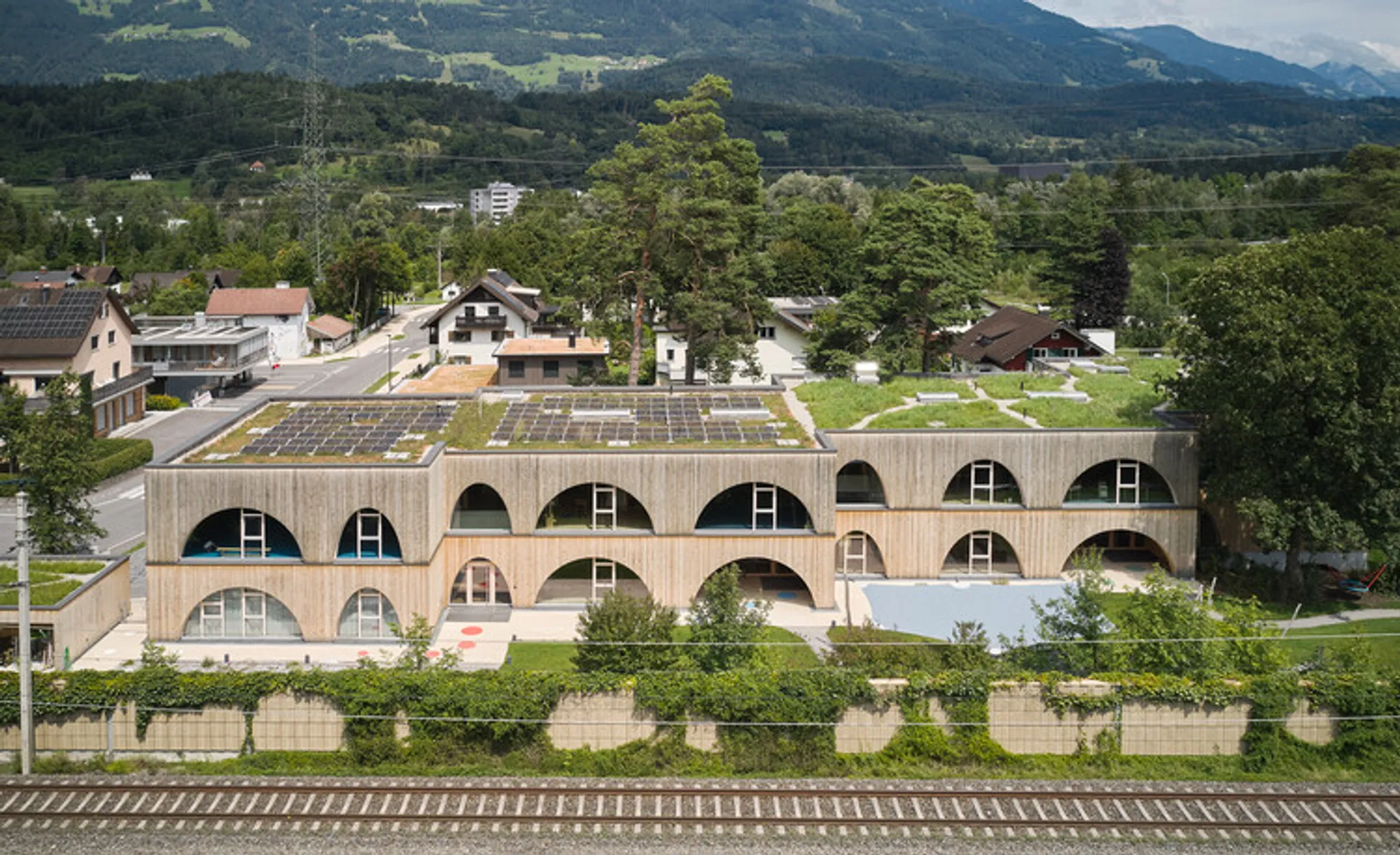
In the market town of Nenzing, Austria, a striking wooden structure catches the eye of train passengers traveling through the Walgau valley. The Allesamt Familycenter, designed by Christian Schmoelz Architekt and completed in 2024, represents a progressive approach to social infrastructure—combining childcare, nursery facilities, and family counseling services under one roof. This 2,492-square-meter building challenges conventional typologies for children's facilities while responding sensitively to its residential context and natural surroundings.
The project addresses a growing need throughout Austria and beyond: the demand for comprehensive family support services that extend beyond basic childcare. By integrating multiple functions—infant care, preschool education, and professional family counseling—the Allesamt Familycenter creates synergies that benefit both service providers and the families they serve. The name "Allesamt," which translates roughly as "all together," perfectly captures this inclusive, holistic vision.
Site and Context: Building Between Town and Railway
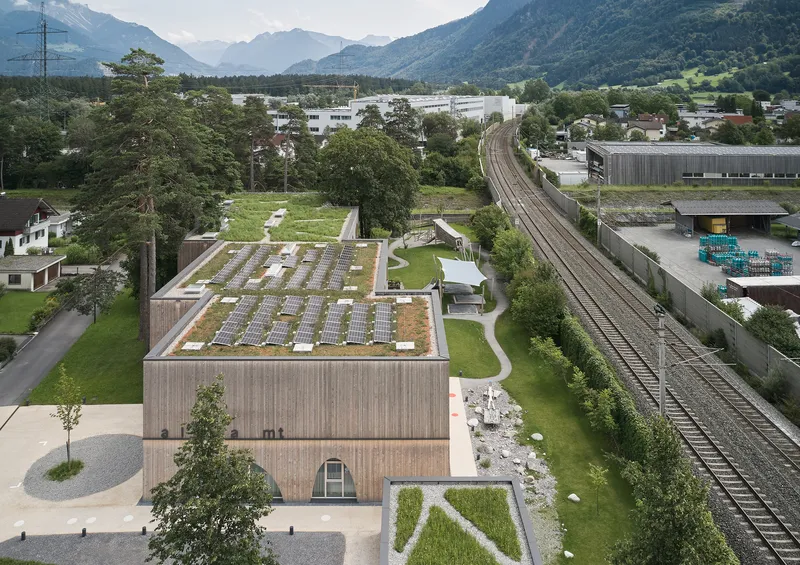
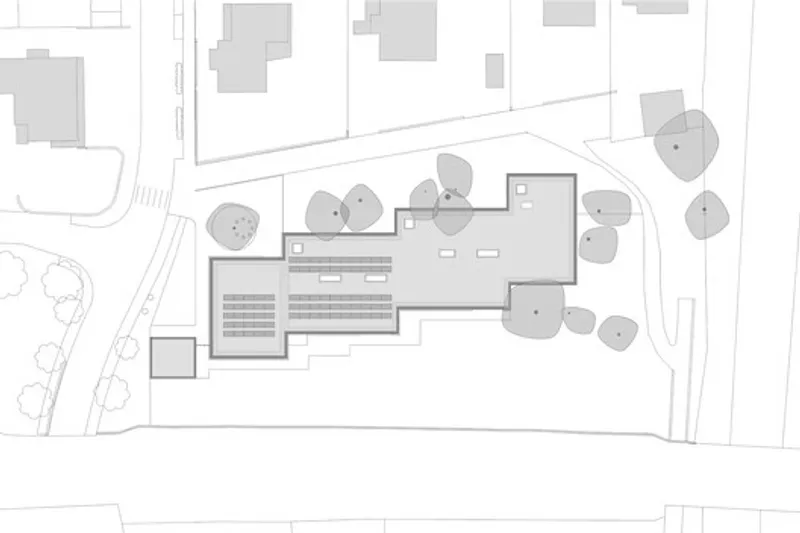
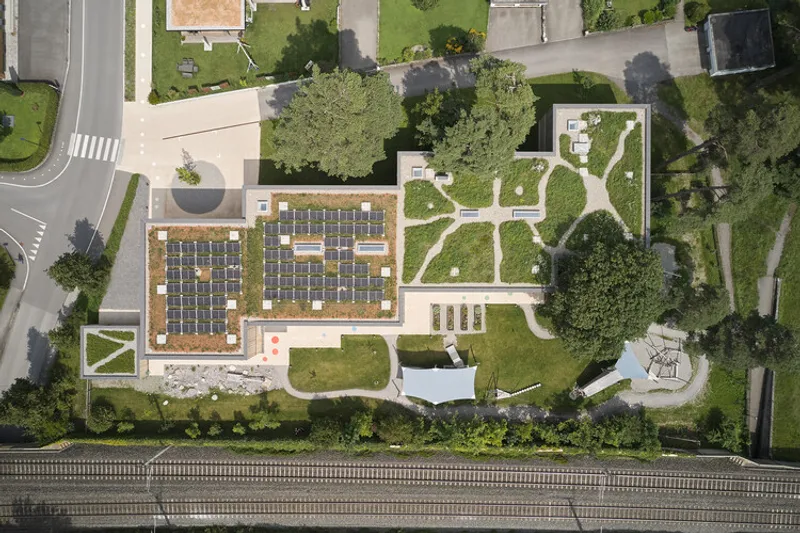
The Allesamt Familycenter occupies a prominent site adjacent to Nenzing railway station, positioned directly alongside the railway line. This location, while perhaps unconventional for a children's facility, offers excellent accessibility for families arriving by public transport—a critical consideration in contemporary urban planning that prioritizes sustainable mobility.
The surrounding context is predominantly residential, characterized by single-family homes typical of Austrian market towns. This presented both a challenge and an opportunity: how could a building of this scale (substantially larger than neighboring houses) integrate harmoniously into the existing urban fabric? How could institutional architecture speak the same language as domestic architecture?
The site also features significant existing vegetation—mature maples and pines particularly to the north and east. These trees represent decades of growth and contribute substantially to the character and microclimate of the area. Their preservation became a key design driver rather than an obstacle to overcome.
Design Strategy: Breaking Down Scale Through Articulation
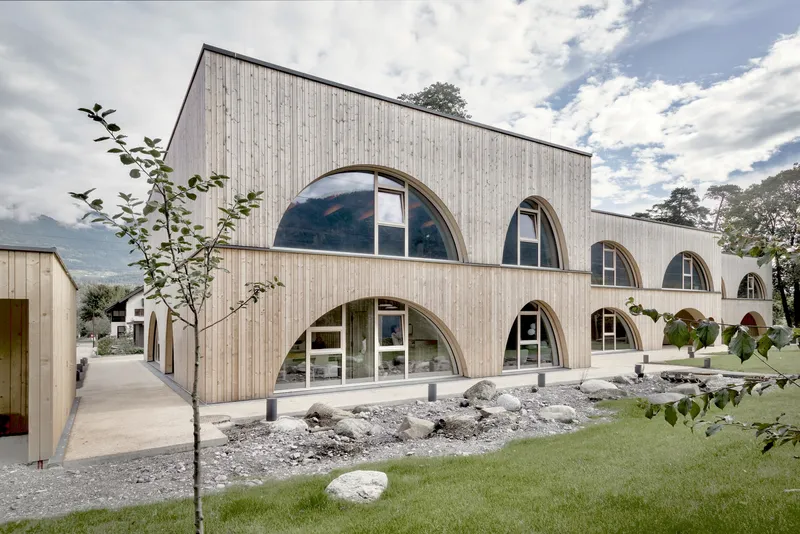
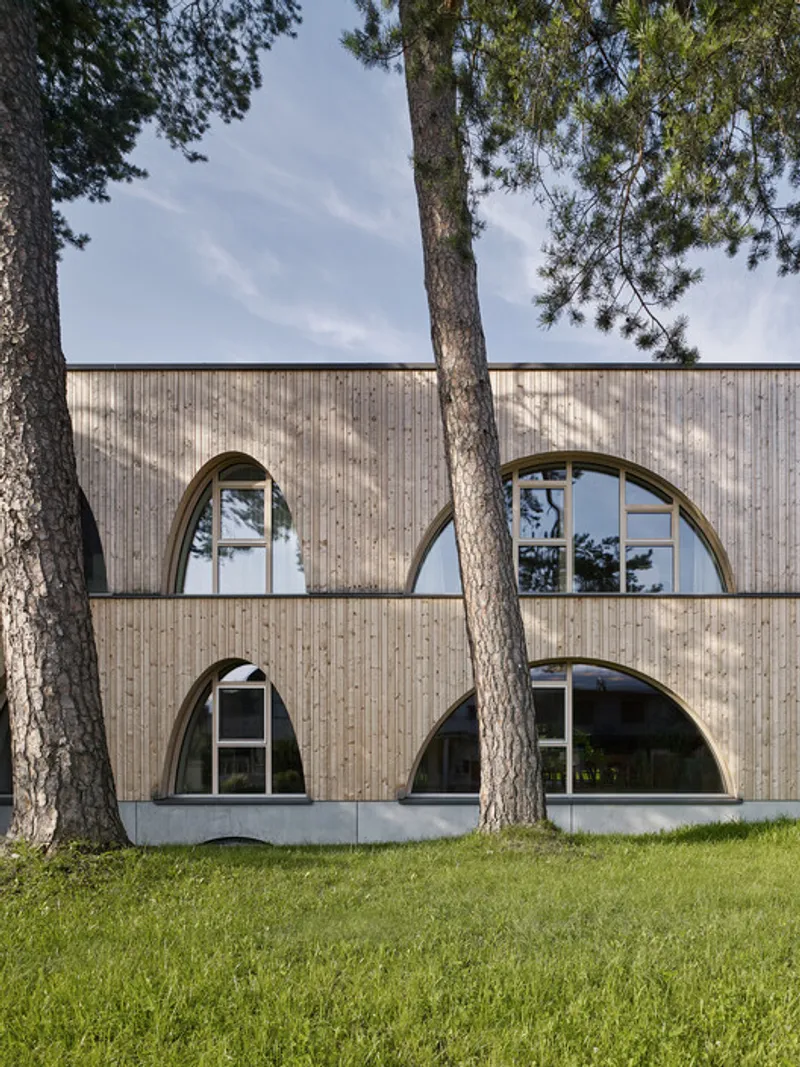
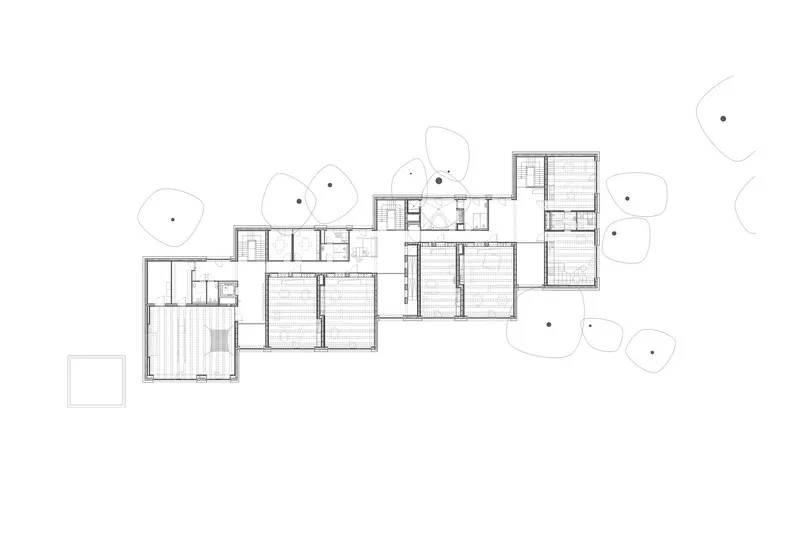
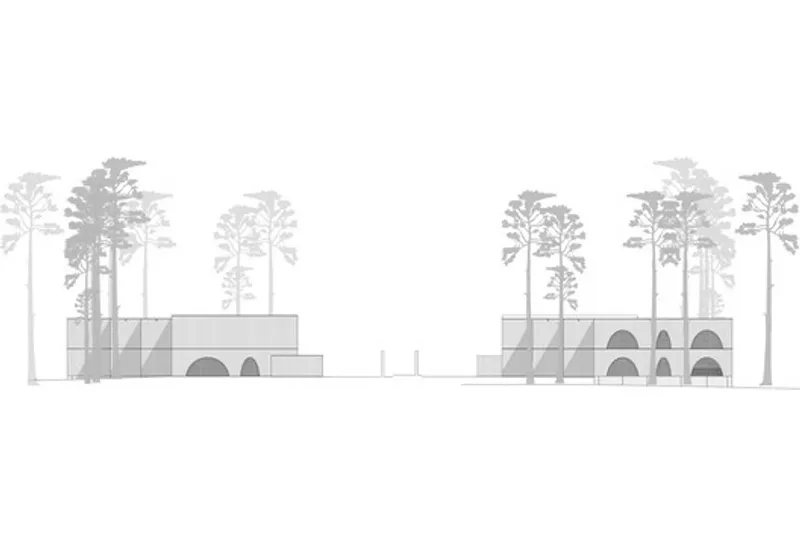
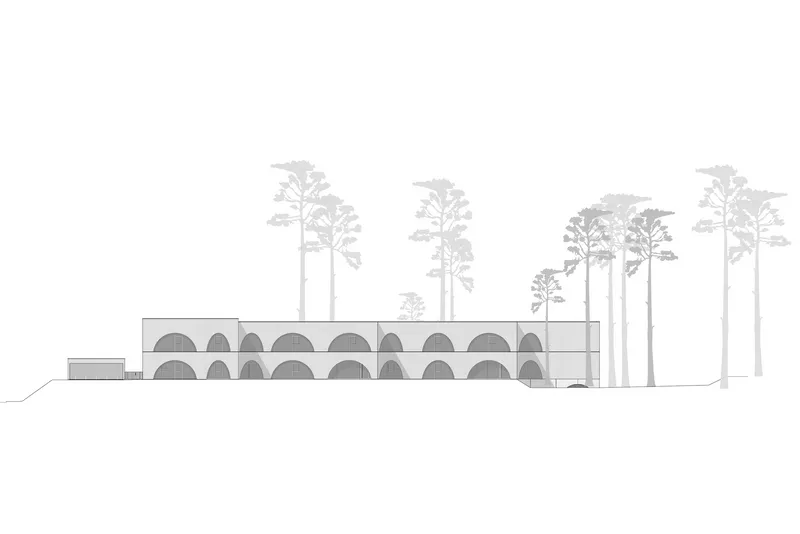
Christian Schmoelz Architekt's response to the scale challenge was elegant in its simplicity: visually divide the elongated structure into four smaller volumes. This articulation creates a rhythm along the building's length, breaking down what could have been a monolithic form into a composition of related but distinct parts.
This strategy serves multiple purposes simultaneously:
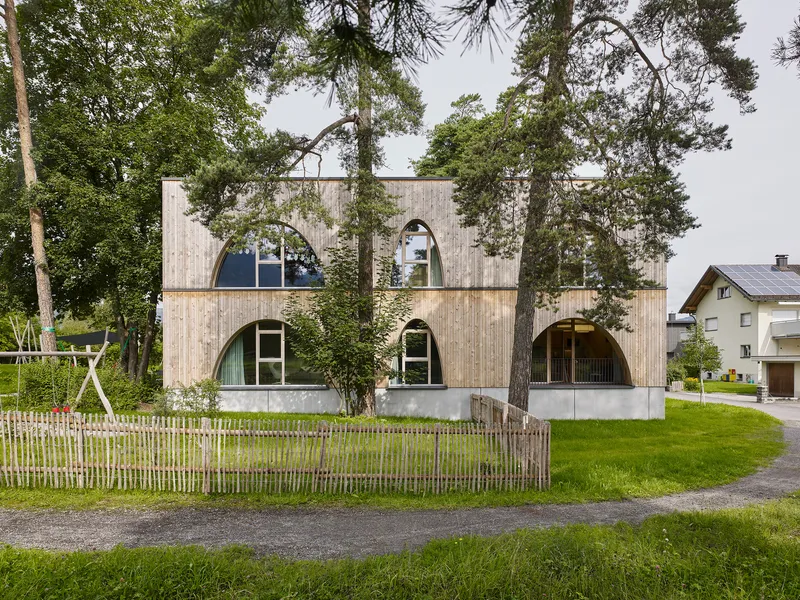
Contextual Integration: The four-part division allows the large structure to read as a collection of house-like volumes, creating visual continuity with the surrounding single-family homes. From certain angles, the building could almost be mistaken for a row of residential structures, softening its institutional character.
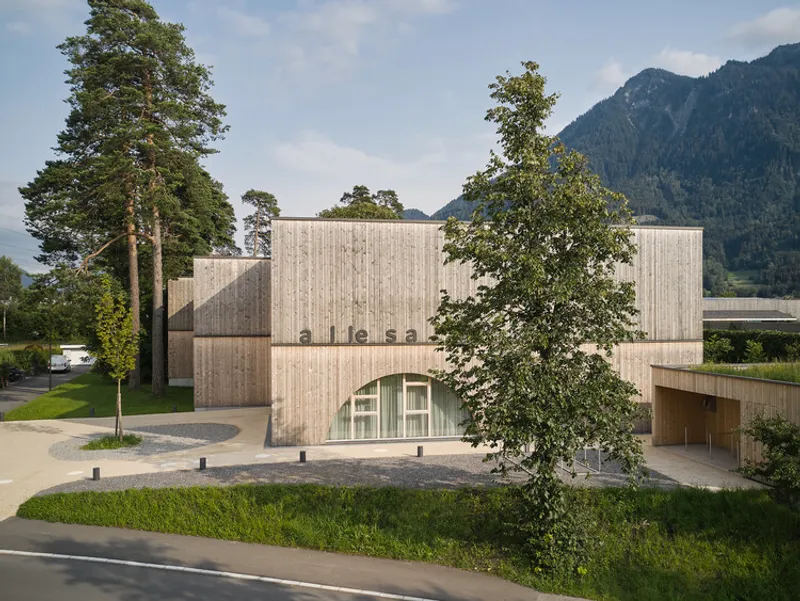
Tree Preservation: The divisions between volumes create opportunities for existing trees to be incorporated into the composition rather than removed. The building works around the mature maples and pines, particularly on the northern and eastern sides, allowing these established elements to remain part of the site's identity. The interplay between built form and natural growth creates a more complex, layered reading of the site.
Functional Organization: The four volumes correspond loosely to functional zones within the building, providing legibility to the organization and creating opportunities for each area to have its own identity and relationship to the outdoors.
Light and Ventilation: The recesses between volumes allow for additional window openings on what would otherwise be long, uninterrupted side walls. This improves natural light penetration and cross-ventilation throughout the building.
Material Expression: The Language of Wood
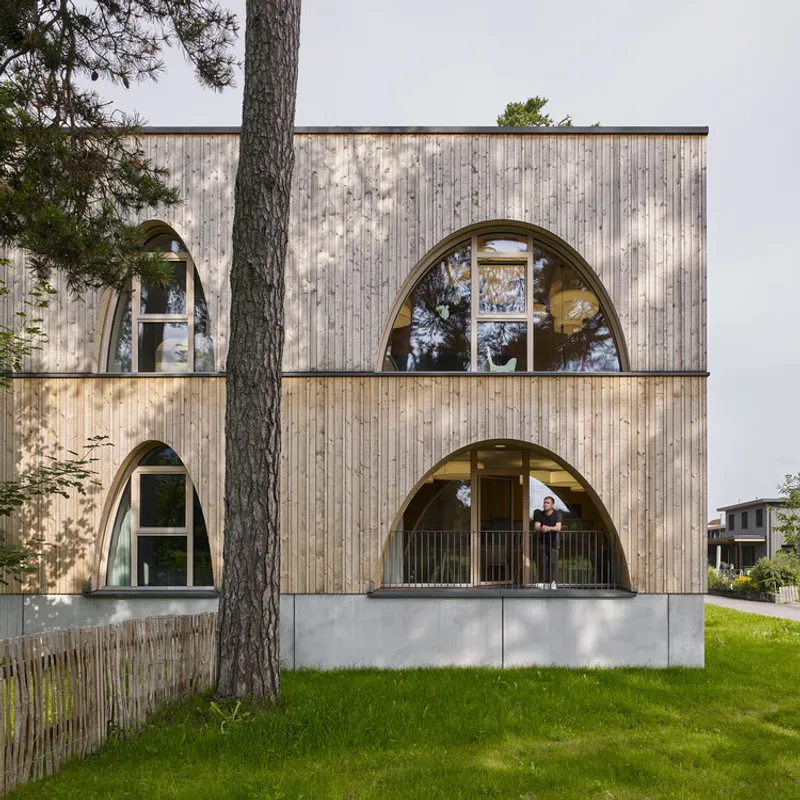
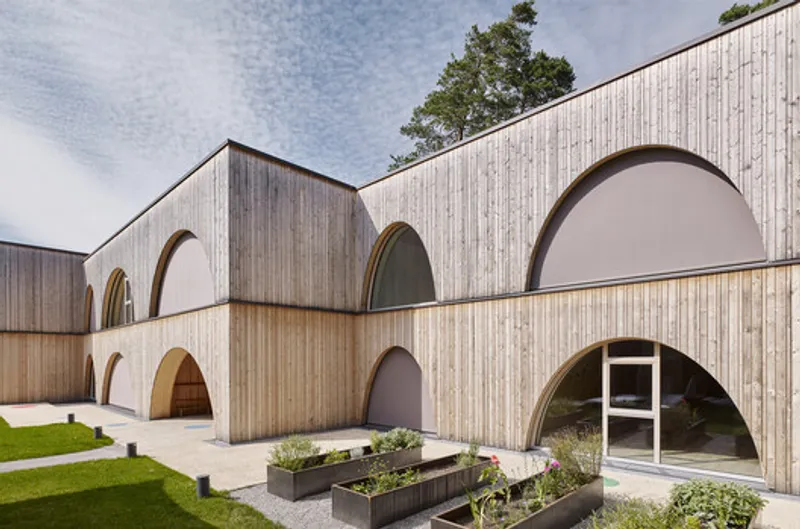
The most striking aspect of the Allesamt Familycenter's appearance is its comprehensive use of timber, both as structure and finish. The façade is clad in spruce—a locally abundant softwood that has been used in Alpine construction for centuries. At the time of the building's completion, the spruce cladding retained its fresh, golden tone—the wood "not yet greyed" as the architects note. Over time, weathering will transform this appearance, the wood silvering as it ages in a natural process that connects the building to traditional Alpine architecture.
The choice of unfinished, naturally weathering wood is significant. It rejects the impulse to freeze materials in their "new" state through chemical treatments or sealants. Instead, it embraces change, accepting that the building's appearance will evolve over time in response to sun, rain, and temperature fluctuations. This philosophy aligns well with the building's purpose—a place dedicated to growth, development, and change.
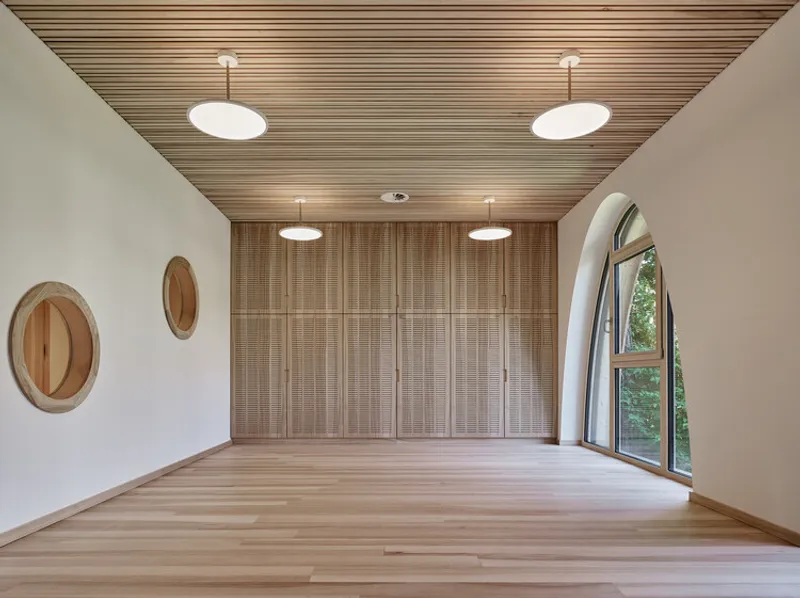
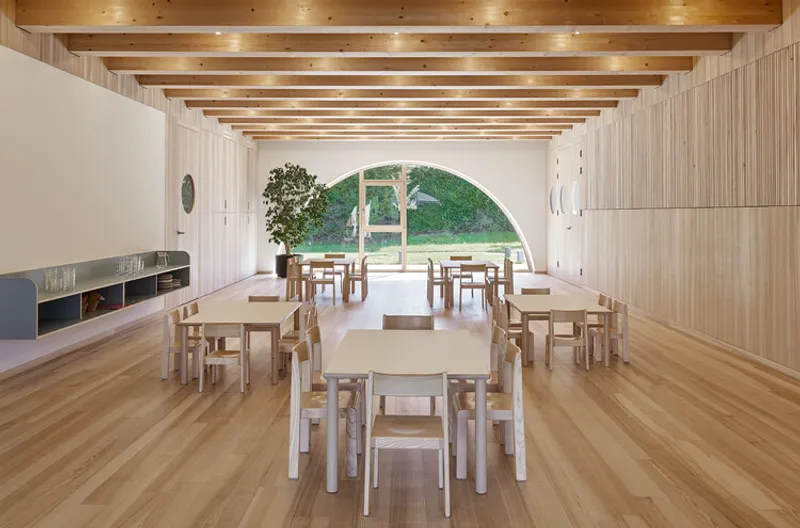
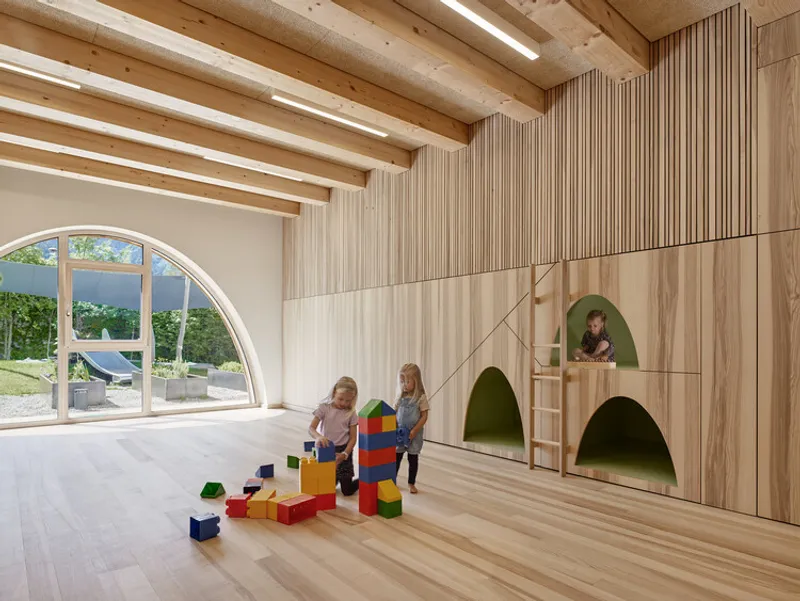
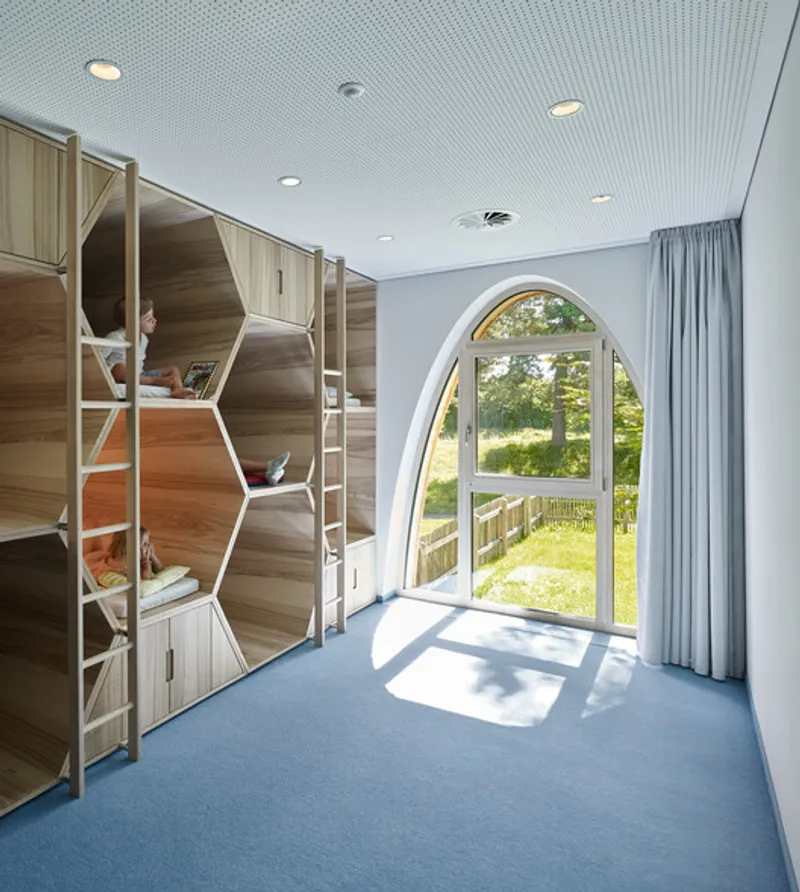
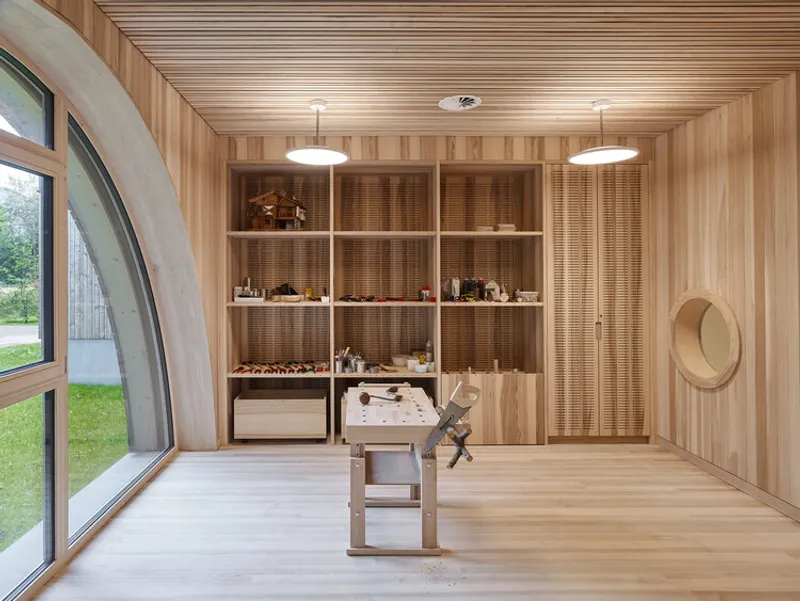
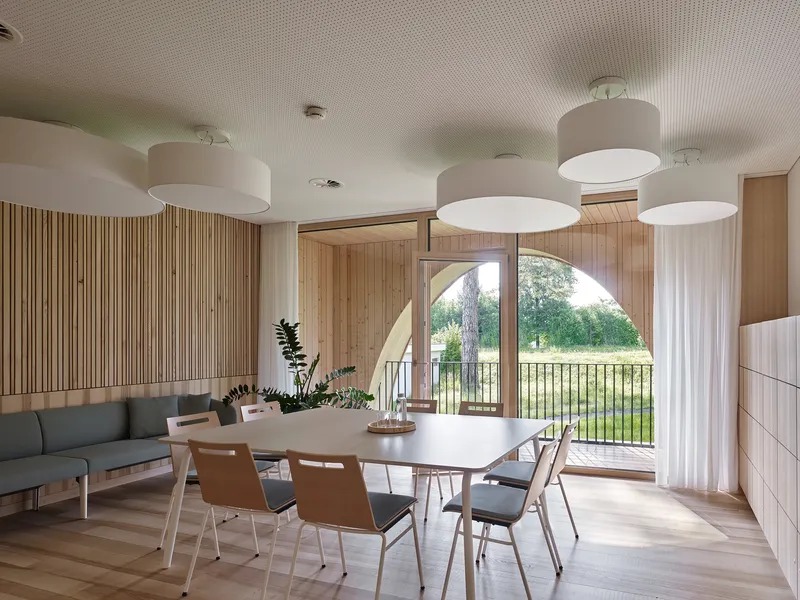
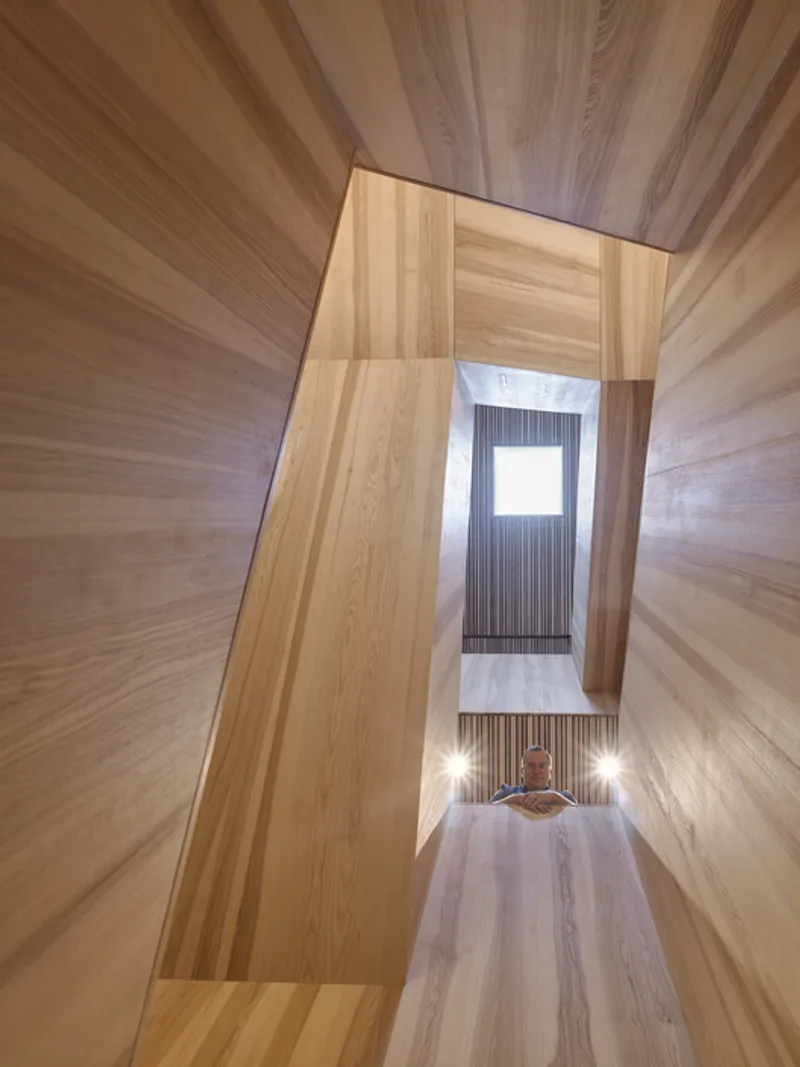
Beyond the façade, timber continues to dominate the material palette. The window frames are also spruce, creating continuity between wall and opening. Inside, ash wood—a harder, more durable species suitable for flooring and high-traffic applications—appears throughout: on floors, in wall paneling, and in built-in furniture. The consistent use of wood creates a warm, natural environment particularly appropriate for young children.
The underlying structure is timber frame construction—prefabricated wood panels forming walls and roof—sitting on a reinforced concrete basement that provides stability, houses mechanical systems, and protects against ground moisture.
Architectural Details: Windows and Recesses
Two distinctive formal elements characterize the Allesamt Familycenter's appearance: the arched windows and the deep recesses in the façade.
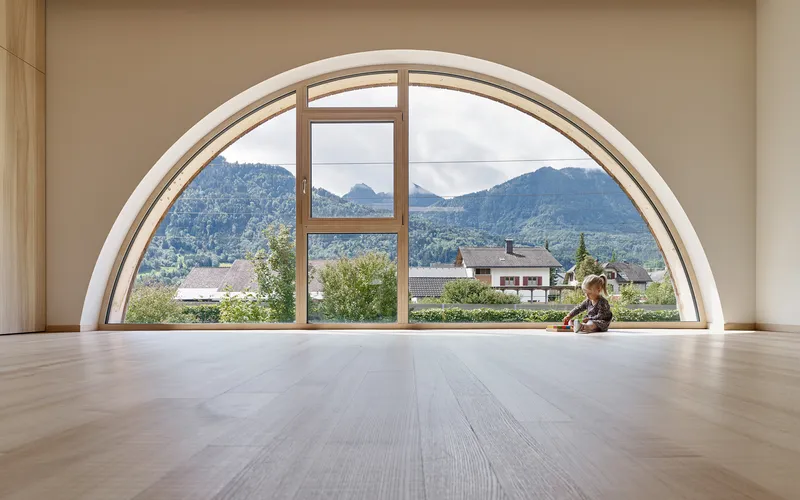
Arched Windows: These gently curved openings soften the building's geometry and create a more welcoming, approachable character than standard rectangular windows. The arches reference historical architecture while avoiding direct historicism—they feel both familiar and contemporary. For children, these shaped openings may read as friendlier, more animate than purely geometric forms.
Façade Recesses: Deep setbacks in the façade create protected outdoor spaces—covered areas where children can transition between interior and exterior, or play outside while sheltered from rain or intense sun. These recessed zones add depth and shadow to the elevation, preventing the façade from appearing flat or monotonous. They also create threshold spaces that mediate between the public realm and the more private interior.
Landscape Design: Creating a Journey for Children
The design of the outdoor spaces and the route from public sidewalk to building entrance received careful attention, recognizing that arrival and departure are important parts of the daily experience for children and families.
A key innovation is the wayfinding system created specifically for children. New light-colored paving defines the pedestrian route, distinguished from surrounding surfaces. Set into this paving are dots—circular markers placed at decreasing intervals that create a visual rhythm and sense of progression. These dots serve multiple purposes: they're playful and engaging for children, they provide clear direction, and their changing spacing creates a subtle acceleration effect as one approaches the building.
Importantly, this marked route extends "well beyond the property boundary," integrating the Allesamt Familycenter into the broader pedestrian network and making it clear that the building welcomes the community. The route passes bicycle parking facilities—supporting sustainable transportation and teaching children about alternatives to car-dependent mobility—before reaching the playground.
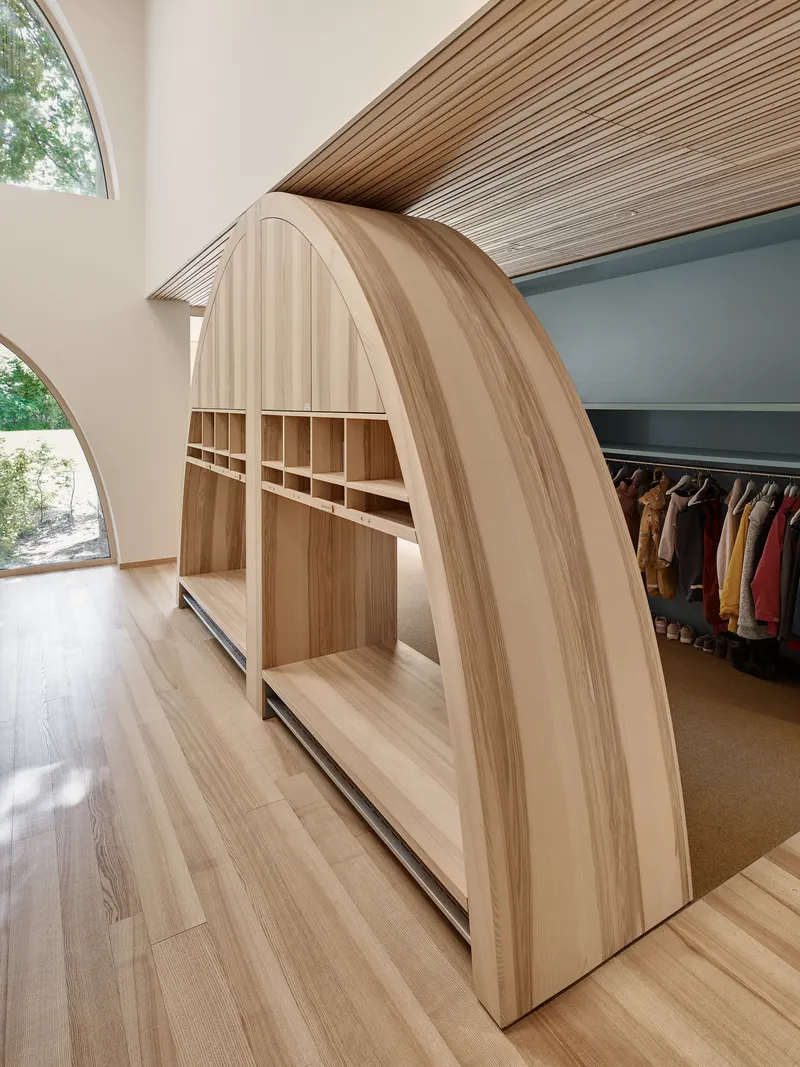
The playground itself acts as a transitional space between public approach and building entry. Children move through outdoor play space before entering their respective "houses" (the four volumes) via three separate entrances and cloakrooms. This sequence creates a gradual transition from public to semi-private to fully interior space, allowing children to adjust psychologically as they move through the sequence.
The preservation and integration of existing trees enriches the outdoor environment. Mature maples and pines provide shade, seasonal change (particularly the deciduous maples), habitat for birds and insects, and a connection to natural cycles that young children benefit from observing.
Organizational Concept: Challenging Single-Story Convention
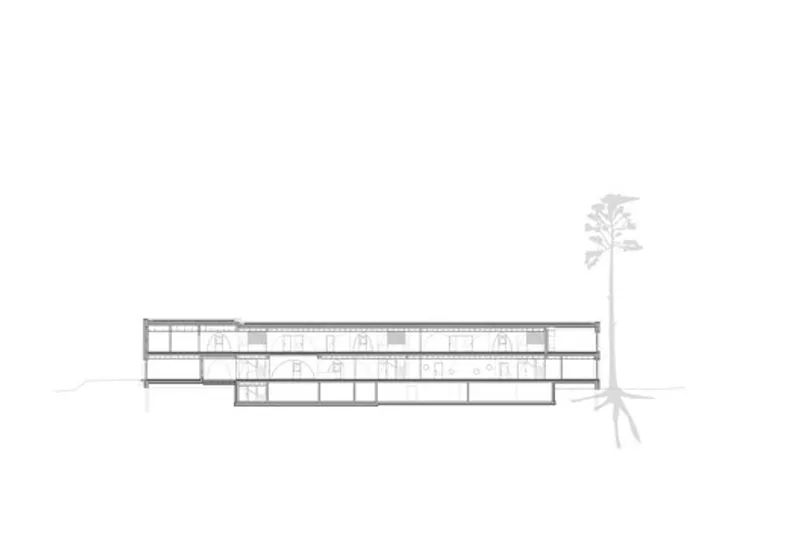
Perhaps the most significant programmatic decision was to locate the primary children's play and recreation areas on the first floor (second level in American terminology) rather than at ground level. This choice contradicts conventional wisdom in childcare facility design, which typically prioritizes single-story layouts for young children.
The architects and clients made this decision deliberately, based on several considerations:
Spatial Efficiency: A two-story building requires less ground coverage than a single-story building of equivalent area. This meant less site disturbance, preservation of more outdoor space, and better integration with the residential scale of surrounding buildings.
Educational Philosophy: The design team viewed the multi-story structure as a "spatial and educational asset" rather than a liability. Learning to navigate stairs is an important developmental skill. With appropriate safety measures (guardrails, supervision) and proper training, young children are quite capable of using stairs safely. The daily practice of ascending and descending becomes part of their physical education.
Functional Organization: Placing all themed rooms on one level creates opportunities for the specific educational philosophy employed at Allesamt. Rather than being assigned to fixed groups that remain in single rooms, children "can move freely on their level," choosing activities and spaces according to their interests and needs at any given time. This open, child-directed approach to learning requires all spaces to be readily accessible from one another—easier to achieve when they're on one level rather than distributed across ground and first floor.
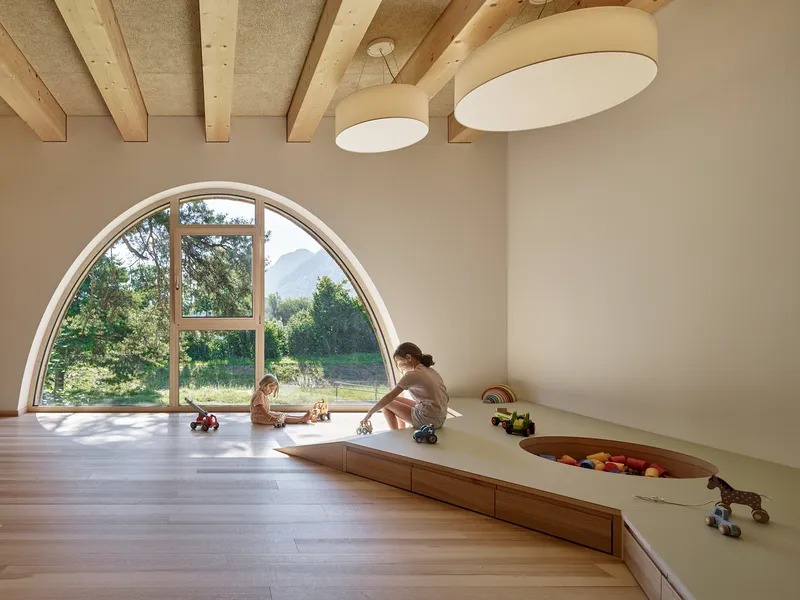
Environmental Quality: The first-floor location provides better views, more natural light (no trees blocking low windows), and potentially better air quality (elevated above ground-level dust and pollution). For children who spend many hours daily in these spaces, these environmental factors significantly impact wellbeing and development.
Ground Floor Program: Support Functions and Services
With the primary children's spaces elevated to the first floor, the ground level accommodates supporting functions and additional services:
Counseling Center: Located at the western end with its own dedicated entrance from the forecourt, this area houses Connexia (a social service provider) and municipal family support services. The separate entry allows families to access counseling without necessarily entering the childcare areas, providing appropriate privacy for sensitive conversations. This integration of childcare and family counseling in one building recognizes that supporting children often means supporting their entire family system.
Staff Facilities: The staff entrance and associated back-of-house functions connect to the counseling area, allowing personnel to arrive and prepare for the day without disrupting children's spaces.
Gusto (Dining and Cooking): A significant area dedicated to food preparation and communal dining. The name "Gusto" references the local Gurtis parcel, part of a creative naming scheme that connects rooms to the community's geography. Shared mealtimes are recognized as important social and educational moments.
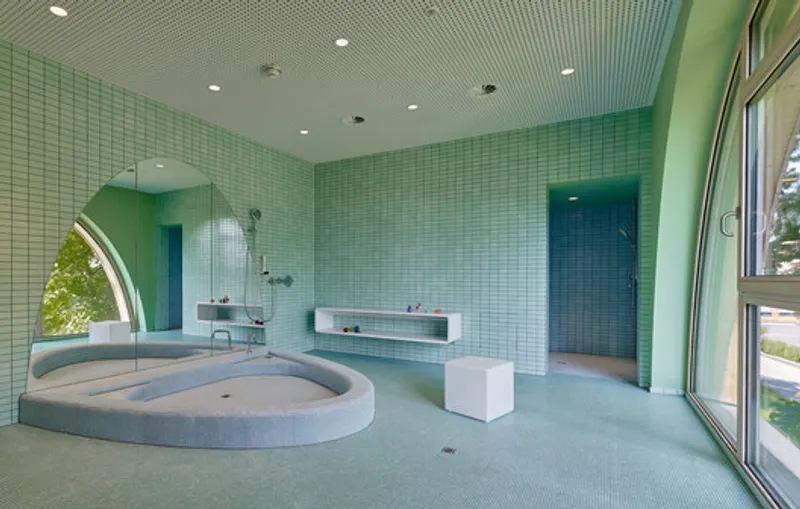
Toilets and Changing Facilities: Appropriately sized and equipped for young children, located for convenient access from the first-floor play areas via the internal stairs.
Workshop: A messy activities space where water, paint, clay, and other materials can be used without concern for damaging finishes. The ground-floor location allows direct access to outdoor areas for activities that transition between inside and outside.
Heia (Rest and Sleep Area): At the eastern end, this zone accommodates the youngest children's need for naps and quiet time. The name references the Heimat parcel. Separating sleeping areas from active play spaces allows different groups of children to operate on different schedules without conflict.
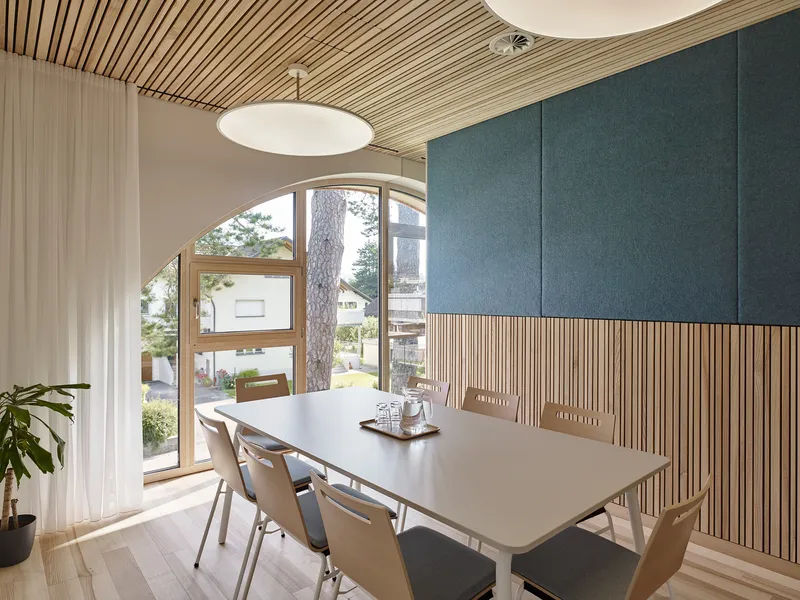
Staff Lounge: Recognizing that quality childcare depends on staff wellbeing, a dedicated break area provides space for educators to rest, eat, and prepare activities away from the children.
First Floor: Open Learning Environments
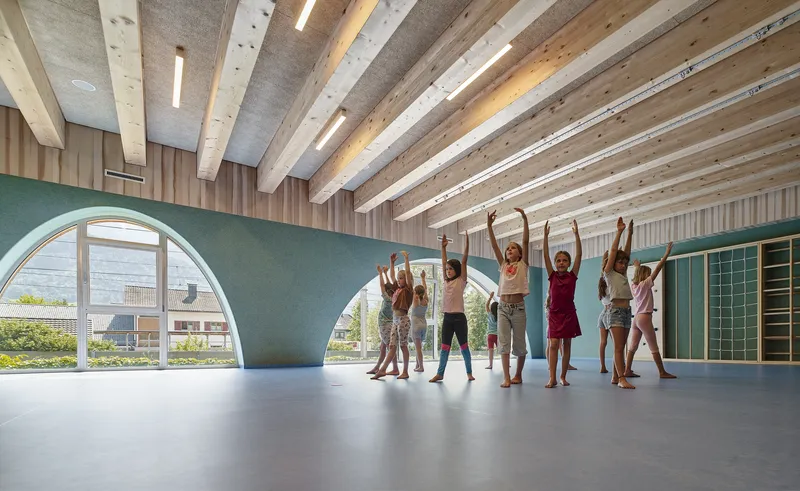
The first-floor layout embodies a progressive educational philosophy where children are not confined to fixed groups but can move freely among themed spaces according to their interests and developmental needs. This "open concept" approach requires careful spatial planning to create distinct zones that nonetheless flow together.
The themed rooms are named after local parcels, creating a connection between the children's learning environment and their broader community geography:
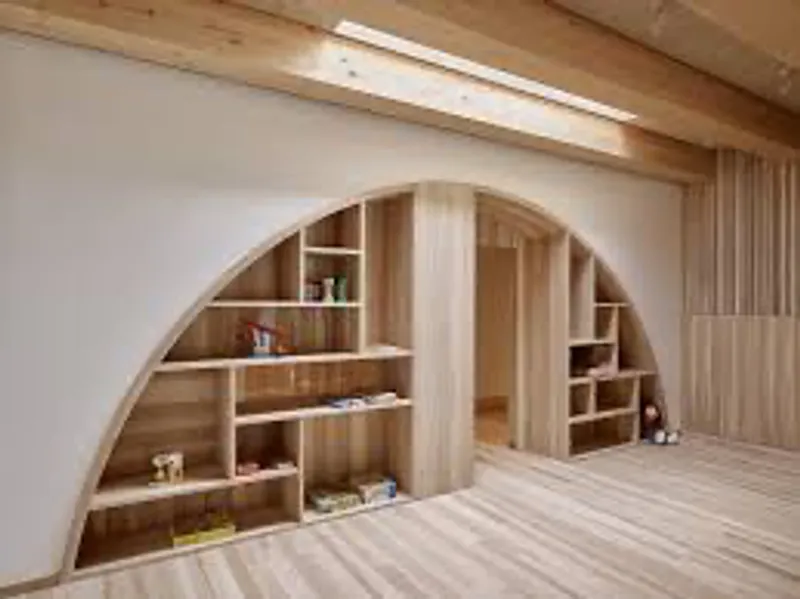
Bewegung (Movement): References the Beschling parcel. This space supports physical activity, gross motor skill development, and active play.
Gusto: Appears on both levels—cooking and dining experiences scaled appropriately for different age groups.
Heia: Rest and quiet spaces for children who need downtime away from group activities.
Additional specialized spaces support the curriculum: areas for art, construction play, imaginative play, reading, and other activities. The key is that children can see and move between these spaces, making choices about how to spend their time rather than following rigid schedules imposed by adults.
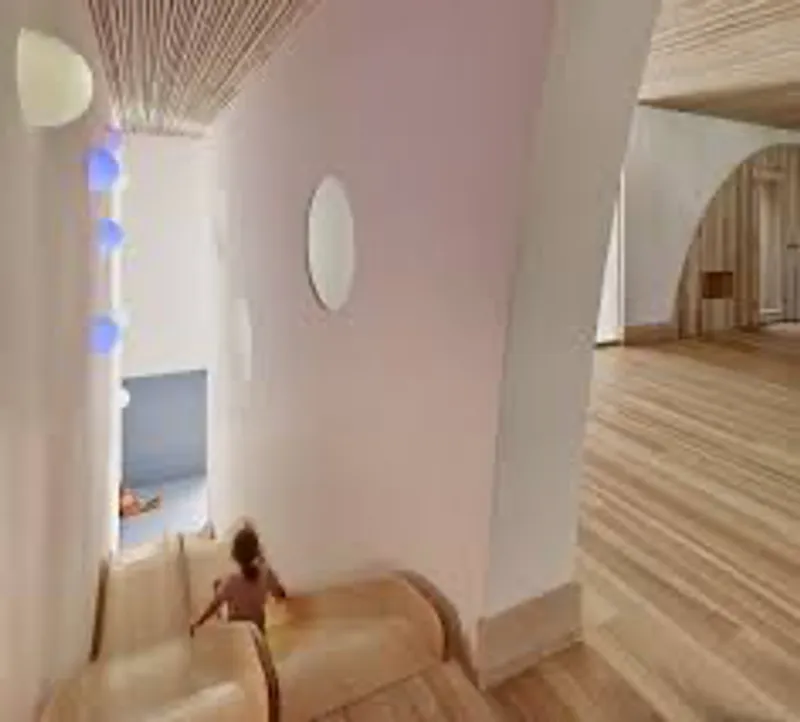
Large windows, including the distinctive arched openings, provide views to the outdoors, natural light, and visual connection to the landscape. The elevated position offers views over neighboring rooftops toward the mountains—connecting children to the larger Alpine landscape they inhabit.
The ash wood flooring, paneling, and built-in furniture create a consistent material language throughout the first floor. The warmth and tactile quality of wood provide sensory richness important for children's development. Built-in furniture—shelves, cubbies, benches, tables—maximizes space efficiency while creating a crafted, permanent quality distinct from the modular plastic furniture often found in institutional childcare settings.
Sustainability and Environmental Performance
The Allesamt Familycenter achieved an impressive 936 points out of a possible 1000 in the Municipal Building Certificate (KGA)—an Austrian rating system for sustainable construction. This exceptional score reflects comprehensive attention to environmental performance across multiple criteria:
Material Selection: Timber construction sequesters carbon rather than emitting it (as concrete and steel production do). Using locally sourced spruce and ash reduces transportation emissions and supports regional forestry economies.
Energy Efficiency: The timber frame structure with appropriate insulation minimizes heating energy demand—critical in the Alpine climate with cold winters. The compact two-story form reduces surface area relative to volume, improving thermal performance.
Natural Ventilation and Daylighting: Operable windows, cross-ventilation through the recesses between volumes, and generous glazing reduce dependence on mechanical systems for air quality and lighting.
Durability: Quality construction with durable materials ensures long service life, amortizing environmental impacts over decades.

Indoor Environmental Quality: Natural materials, good air quality, abundant daylight, and views to nature create healthy interior environments that support children's physical and psychological development.
The high KGA score validates the design team's commitment to environmental responsibility while demonstrating that sustainable design and functional excellence are complementary rather than competing goals.
Process: Collaboration as Method
The project text specifically notes "the exemplary cooperation between the representatives of the client, the users, and the architects." This is not merely polite acknowledgment but recognition that the building's success depended on genuine collaboration throughout the design and construction process.
Client Engagement: The municipality of Nenzing, as client, brought political support, funding, and accountability to the community. Their willingness to embrace innovative solutions—particularly the multi-story layout—was essential.
User Involvement: The staff who would actually operate the facility—educators, counselors, support personnel—participated in decision-making. Their practical knowledge of how children learn, how workflows operate, and what spatial qualities support their work informed countless design decisions. The educational philosophy of free movement among themed spaces, for example, emerged from this dialogue.
Architectural Vision: Christian Schmoelz Architekt brought design expertise, technical knowledge, and creative problem-solving to synthesize diverse requirements into a coherent architectural proposition.
The text notes that "functional, spatial, and design decisions were always made in close consultation." This integrated process—rather than the architect dictating solutions or the users dictating requirements—allowed each party's expertise to inform the outcome. The result is a building that works practically while achieving architectural quality, serves its users while contributing to its community, and solves immediate needs while embodying larger values.
Architectural Identity: Domestic Scale, Public Purpose
The Allesamt Familycenter achieves a delicate balance between institutional function and domestic character. It is clearly a public building—too large, too regular, too carefully composed to be mistaken for houses. Yet the four-part articulation, the residential-scale volumes, the wood cladding, the pitched roofs, and the arched windows all reference domestic architecture.
This ambiguity is appropriate and intentional. For young children, the facility should feel homelike—comfortable, safe, nurturing. Yet it also needs to function as a professional educational environment with appropriate scale, equipment, and organization. By occupying the space between house and institution, the architecture creates a "third place"—neither strictly home nor strictly school, but something hybrid that can serve both functions.
The visible timber construction also communicates values: connection to nature, regional building traditions, environmental responsibility, warmth, and craftsmanship. These are messages the community presumably wants to send about how it cares for its youngest members.
Impact and Implications: A Model for Community Infrastructure
The Allesamt Familycenter suggests alternative approaches to social infrastructure that may have relevance beyond Nenzing:
Integration Over Separation: Combining childcare and family counseling services creates opportunities for early intervention, comprehensive support, and destigmatization of mental health services. When seeking advice and support is normalized as part of childcare, families may be more willing to engage before problems become crises.
Challenging Conventions: The multi-story layout demonstrates that carefully considered departures from standard practice can yield benefits. Not every childcare facility needs to be single-story; the decision should depend on educational philosophy, site constraints, and specific circumstances.
Material Consistency: The comprehensive use of timber—not just as accent but as primary material—creates distinctive identity while supporting environmental goals and regional economy.
Process Matters: The collaborative design process, with genuine participation from end users, yields buildings that work better and embody shared values more fully.
Architecture as Pedagogy: The building itself teaches—about climbing stairs, about navigating space, about natural materials, about seasonal change visible through the windows, about community geography through the naming system. Physical environment shapes learning whether we acknowledge it or not; intentional design amplifies positive influences.
All the Photographs are works of Marc Lins, Cornelia Hefel



Popular Articles
Popular articles from the community


Hill & Cross Opera: Sculptural Opera House Architecture Shaped by Tallinn’s Landscape and Identity
Hill & Cross Opera reimagines opera house architecture in Tallinn through its sculptural hill, civic plaza, glass wave and a luminous cross.

Co-Life: Senior Housing Design That Reconnects Older Adults With the City
Co-Life reimagines senior housing design through healing gardens, shared streets, workshops, and a sustainable community across generations.

The Ocean Hive: Sustainable Architecture for a Self-Sufficient Civilization at Sea
The Ocean Hive imagines sustainable architecture at sea, where modular habitats, algae, wave power and ocean waste sustain a growing colony.

The Earth Pod: 3D Printed Homes for Resilient Refugee Communities
The Earth Pod reimagines refugee housing through 3D printed homes made from clay, combining resilience, self-sufficiency, and rapid shelter.


Similar Reads
You might also enjoy these articles


Hodi-Mandai Geram
Project Function: Preservation and revitalization of the Intangible heritage and socio-spatial identity of the Hodi by Housing, Cultural Memory Center, Sacred Grove, landscape, local tourism economy


Olio Towers: A Mid-Rise for Performers That Fuses Housing, Rehearsal, and Stage
Located blocks from Houston's Theater District, this modular tower stacks living units around a central performance atrium.

Oasis: Modular Green Housing Carved into Dhaka's Urban Fabric
A shortlisted Plugin Housing entry reclaims unauthorized settlements in Dhaka with stepped concrete volumes, green roofs, and ventilation-driven design.

Black Hole: A Floating Megastructure for the Post-Physical Era
Emiliano Mazzarotto envisions a spherical, self-scaling arena where e-sports, digital hotels, and holographic stadiums replace traditional public space.

Explore Educational Building Competitions
Discover active competitions in this discipline



Challenge to design public laboratory


Challenge to reimagine the Iron Throne


Photograph architecture without architects


Illustrate the lost glory of Angkor Wat - Render Challenge
Comments (0)
Please login or sign up to add comments
No comments yet. Be the first to comment!