

How the environment design can improve the lives of those living with Dementia?
Architecture for Dementia
Dementia is a disease that mainly affects the elderly. However, it is not a normal part of ageing. In fact, the risk of developing the disease increases with older age. The World Health Organization (2017) predicts that 5-8% of the general population aged 60 and over will develop dementia at some point. Alzheimer is the most common type of dementia and memory loss is one of the main symptoms.
What does architecture have to do with Dementia?
Zeisel (2010), founder of The Hearthstone Institute & The I’m Still Here Foundation, mentions how important it is to see the person besides the illness and employ as many non-pharmacological treatments as pharmaceutical ones. As incredible as it seems, architects and designers can take action into creating a better life for those people. The physical environment is increasingly being recognized as an important aid in the care of people living with dementia. Since dementia affects orientation and memory, a suitable design can, for example, help them to better navigate the space and to be more independent, maintaining their abilities for a longer time.
Many studies have been made to find evidence on which aspects of the environment design should be taken into consideration when designing dementia-friendly spaces. Among the findings, there is a range of aspects that goes from project development to interior design.
While starting to design an environment the layout should avoid dead-end long corridors because dementia affects orientation and people with dementia tend to wander around a place. This can also be part of the project, making wander as pleasant and safe as possible. Signs are of great importance and should be as clear as possible, facilitating way-finding. Minimalist signs are preferred among most designers, but they are not recommended since they can be hard to understand or even to be noticed.
Simple design actions can make a huge difference in the lives of those with dementia. For example, adding some contrast to important furniture is already beneficial to their daily lives. People with dementia tend to forget what they were about to do. So, when an object is highlighted in the environment, we most likely see and recognize its importance and usage.
There are types of materials and surfaces that should be avoided. Something which seems obvious for most people can be confusing for those suffering from dementia. Mirrors, glasses, patterns, glossy floors, are examples of those which should be avoided or adapted.
Unfortunately, dementia still has a diagnosis of exclusion and in many situations, people with dementia are seen as invalid. This stigma needs to end, and society should start to better understand the disease and the patients.
“My diagnosis doesn’t define who I am! They stopped seeing me long before I stop seeing me.” – said a man living with dementia during a webinar. Dementia does not happen all of sudden, it is a continuous process. It can take up to years until a person needs support daily. Still, according to Zeisel (2010), it is understandable that dementia shaves memories of a lifetime and it can also affect the sense of identity. However, it does not mean that they should not be treated as human beings. They should be appreciated for their capabilities as well as their losses.
When designing spaces for people with dementia it is important to understand the symptoms and challenges generated by the disease and how it affects the individual and their interaction with the physical environment. It is essential to be aware of the limitations and issues of the user to create and develop spaces where they feel emotionally and physically safe. A “Good design for dementia is good design for all” (Waller & Masterson, 2015).
REFERENCES
Waller, S., & Masterson, A. (2015). HOSPITAL INFRASTRUCTURE Designing dementia-friendly hospital environments. Future Hospital Journal, 2(1), 63–71.
World Health Organization. (2017). Global action plan on the public health response to dementia.
Zeisel, J. (2010). I’m Still Here: Creating a better life for a loved one living with Alzheimer’s (Kindle). Brown Book Group.
Thumbnail photo by Edu Carvalho from Pexels



Popular Articles
Popular articles from the community


Co-Life: Senior Housing Design That Reconnects Older Adults With the City
Co-Life reimagines senior housing design through healing gardens, shared streets, workshops, and a sustainable community across generations.

Play: Fragments of Their World
Familiar architecture becomes modular playground design, creating safe spaces where displaced children can learn, connect, imagine and play.

Hill & Cross Opera: Sculptural Opera House Architecture Shaped by Tallinn’s Landscape and Identity
Hill & Cross Opera reimagines opera house architecture in Tallinn through its sculptural hill, civic plaza, glass wave and a luminous cross.

The Earth Pod: 3D Printed Homes for Resilient Refugee Communities
The Earth Pod reimagines refugee housing through 3D printed homes made from clay, combining resilience, self-sufficiency, and rapid shelter.


Similar Reads
You might also enjoy these articles

Day and Night Park: A Time-Based Urban Newsstand in Beijing
A temporary urban newsstand in Beijing blending travel, light, and reading through poetic colors, compact form, and community-focused design.

Modernist Patio Renovation in El Masnou, Barcelona by Oliver Segura Arquitectura + Cebrià Arquitectura
Modernist patio renovation blending tradition and innovation with a movable pool, leveled floors, and Catalan materials in El Masnou.

Alto Residencial Coop: Cooperative Housing Development in Santiago de Compostela by Carbajo Barrios Arquitectos
A linear cooperative housing complex blending white volumes and perforated metal façades, enhancing community living, natural light, privacy, and urban integration.
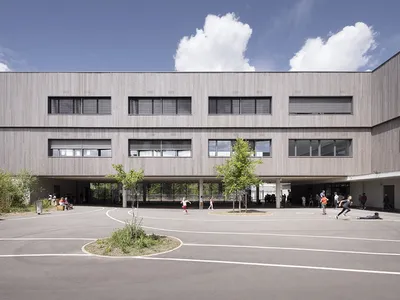
Vil Genis School by BPA ARCHITECTURE – Massy, France
Vil Genis School in Massy, France, features sustainable design, south-facing classrooms, community integration, accessible spaces, and modern educational architecture.


Explore Ageing-Well Design Competitions
Discover active competitions in this discipline




Challenge to reimagine the Iron Throne


Photograph architecture without architects


Illustrate the lost glory of Angkor Wat - Render Challenge


Design challenge to reuse E-waste
Comments (0)
Please login or sign up to add comments
No comments yet. Be the first to comment!