
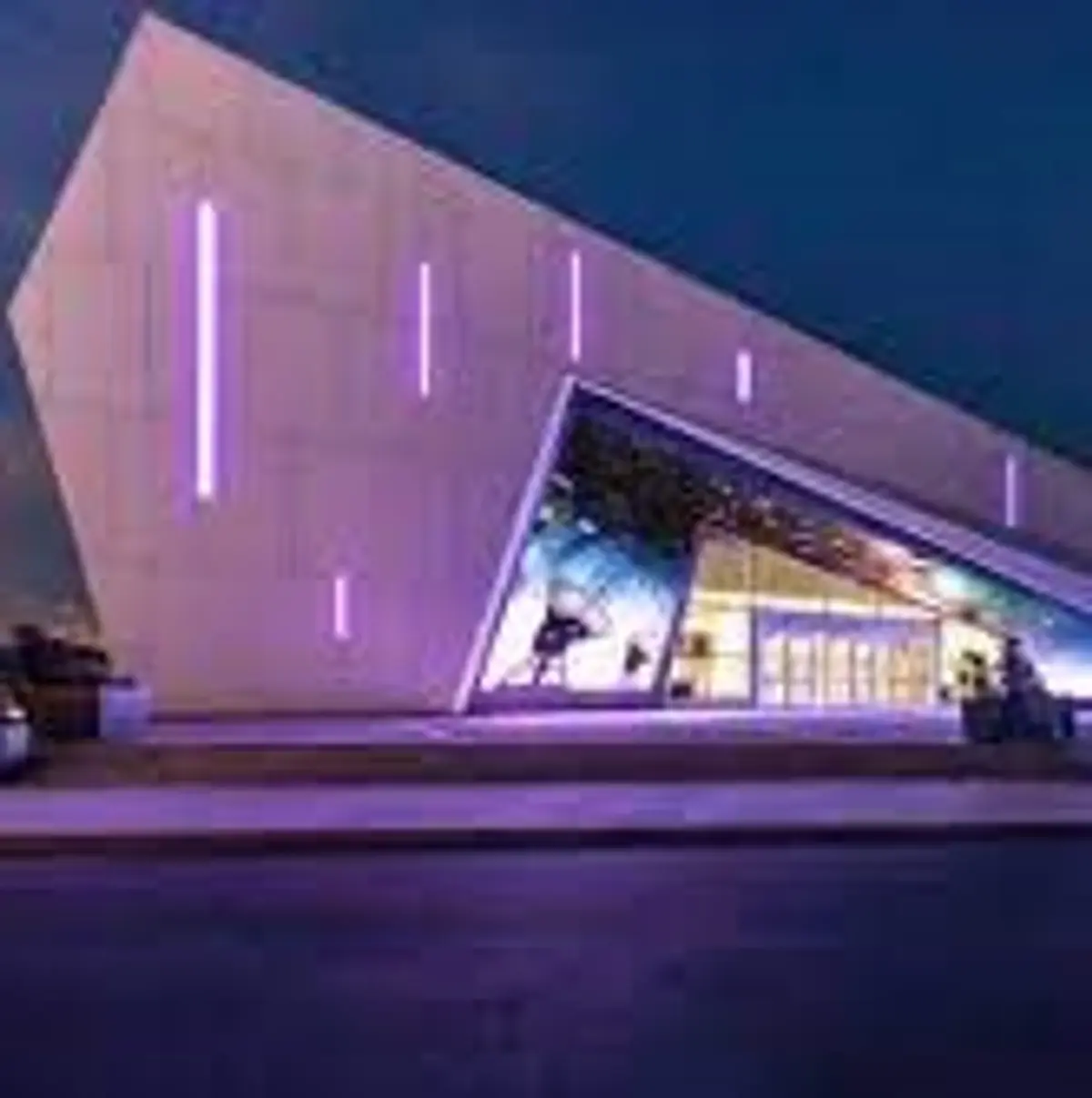
Brutality
● What was the concept behind the project?

For us as designers, brutalism is a style associated with a pure structural concrete, huge structural possibilities and a body strongly limited by glazing. The main assumption of the project was to enter and adapt the building to the shape of the plot. Each curvature corresponds to the angles that define the plot. We believe that the building cannot be a solid accidentally stuck to the plot, but the result of the analyzes and the urban composition. Lengthening the outlining lines and their duplication created an urban composition showing the outline of the block.
● What was the intent behind the organization of elements across various levels (Architectural, Site, Urban)?
The task we were faced with was to thoroughly familiarize ourselves with the style of brutalism and adjusting the functions of the designed kindergarten and nursery to it.
That means, objects associated with the use of appropriate colors, materials, lighting, creating cozy places that encourage the exploitation of the object, also by the youngest recipients. However, the style that has been imposed, in its general assumptions, slightly opposes it. Therefore, our task was to find a consensus that would allow us to create an object that would be consistent.
● How many iterations were tried to arrive at the final outcome?
Designing began with looking for the appropriate form, while remembering to allocate the designed object. The building, which is a kindergarten, requires proper lighting of the classrooms and integration of all functions as well as adjusting the character of the building to meet the needs of children. At the stage of creating the concept, we thought that the final shape of the building should result directly from the surroundings. Our project assumed two overlapping cuboids, turned by a specific angle, resulting from the angle of the plot. However, to demonstrate the concrete structure and show the brutalist style, we found that the front of the building would guide through the overhang of the top cuboid, inspired by the bricks so loved by children. The upper cuboid, surrounding the internal body, has been designed so that its side walls in the form of openings allow natural light to enter the internal body, which is completely glazed. This allows for solving the problem of natural lighting and maintaining the brutalist character of concrete.
● Which methods of design investigation?
While focusing on the style and features provided in preschool facilities, we focused a lot of attention on the elements surrounding the buildings. We have designed an environment that includes a terrace and a place for the audience to be used during various events and cultural events. We also applied green roofs to the project to introduce an ecological thread, extremely important in contemporary design.
● How was the program condensed into final?
We wanted the facility to stand out due to its architecture. The shape of the building, blending it into the surroundings and introducing the right color causes the desire to get to know and explore the object.
● What / How were the materials chosen?
The main material is raw concrete and the introduction of one color. In our case, it is yellow. According to scientists, this color puts children in a good mood and helps to develop their minds. In addition to these issues, adding color diversifies the interior, gives a unique look and atmosphere, and also serves as an element leading users to the interior of the building. Our goal was also the willingness to connect the exterior with the interior.
● How was a specific objective attempted to be met?
The rawness of concrete, varied with color, sets the path, guides and encourages visitors to enter. The whole layout develops the plot completely and fits unobtrusively into its shape.

Popular Articles
Popular articles from the community


David Macias Steps a Doorless Stone and Plaster House Down a Tropical Colombian Hillside
In the humid hills of Colombia, Threshold House replaces the front door with an open void and terraces its 850 m² down the slope instead of fighting it.

Juan García Correa, John González and Claudia Rueda Sink a Circular Amphitheater into a Manizales Engineering Building
On the La Nubia campus in Manizales, Colombia, the S1 Building folds labs and offices into a hillside of ramped lawns that double as a campus route.

U.GA Architects Wraps an Oval Rooftop Pool in Curved Board-Formed Concrete on Busan's Jeollidan-gil
In Busan's Jeonpo-dong, a 454 m² mixed-use block stacks a neighborhood facility, guest rooms and an oval rooftop pool inside spiraling concrete walls.

David Ortega Stacks a Two-Story Mexico City Penthouse Around a Steel Stair and a Pergola-Shaded Roof Terrace
In Colonia Roma, a 300 m² penthouse uses oak joinery, a planted steel stair and a slatted roof pergola to make a new-build apartment feel like a house.

Similar Reads
You might also enjoy these articles


Aquadapt: An Underwater Habitat That Rewrites Its Rooms by the Hour
Curved modules ring the seabed while one shell shifts from breakfast room to cinema, farm and football pitch as residents' needs change.

Play: Fragments of Their World: Remembered Architecture Rebuilt as a Modular Playground for Refugee Camps
Tom Gardner abstracts domes, arches and towers from the homelands of displaced families into a kit of child-scaled play parts for camp settlements.
REBIRTH: A Circular Settlement Where Afghan Widows and Their Children Rebuild Life Together
A shortlisted Resile entry turns the circle into a protective ring of timber and brick, gathering homes, classrooms and gardens around a shared landscape.
The Main Dream: A Recycled Plastic Kit That Lets Refugee Children Build Their Own Playground
Thirty-centimetre interlocking cubes that connect on three axes turn play into construction, letting children author the spaces they occupy.

Explore Dystopian Architecture Competitions
Discover active competitions in this discipline


Challenge to imagine architecture inspired by fiction

Challenge to reimagine the Iron Throne

Photograph architecture without architects

Illustrate the lost glory of Angkor Wat - Render Challenge
Comments (0)
Please login or sign up to add comments
No comments yet. Be the first to comment!