
Caoba House by PAE + Rubén Gómez Gañán – Tropical Retreat in Anapoima, Colombia
Caoba House in Anapoima, Colombia blends tropical architecture, natural materials, and hillside design to create a serene, sustainable retreat.


A Tropical Retreat Blending Architecture and Nature
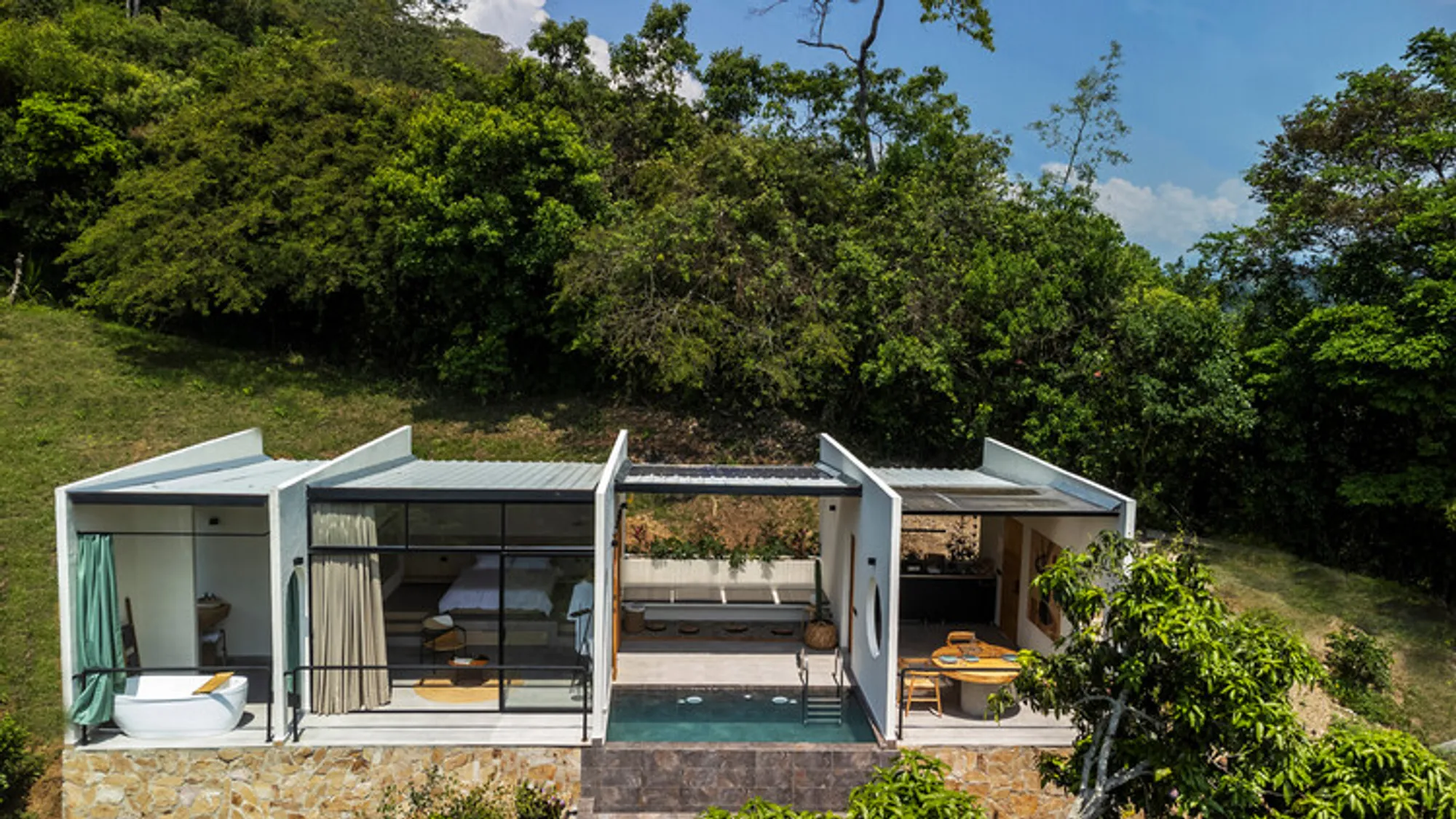
Caoba House, designed by PAE and Rubén Gómez Gañán, is a stunning residential project located on a lush tropical hillside in Anapoima, Colombia. Positioned at 900 meters above sea level and surrounded by decades-old mango trees, the home is envisioned as a peaceful retreat—a sanctuary for relaxation, reflection, and deeper interaction with the natural environment.

The design philosophy of Casa Caoba lies in blurring the boundaries between built architecture and the surrounding ecosystem, fostering an intimate coexistence between humans and the vibrant tropical landscape.
Context and Site Integration
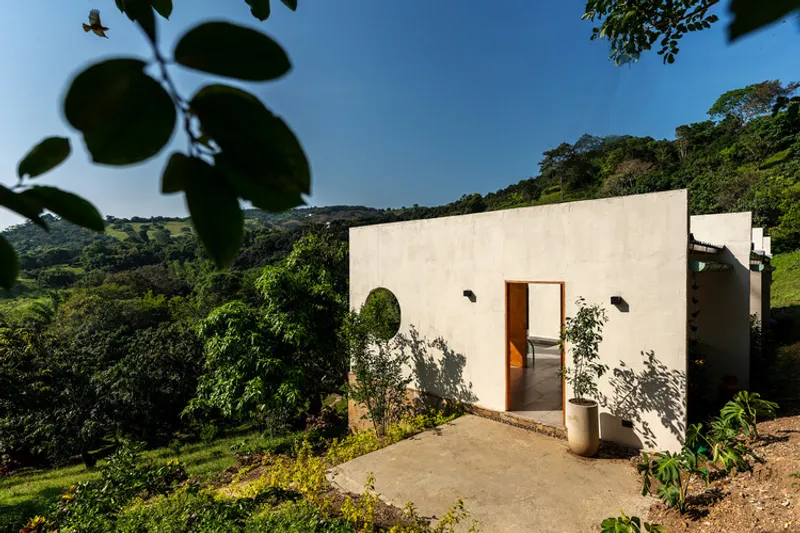
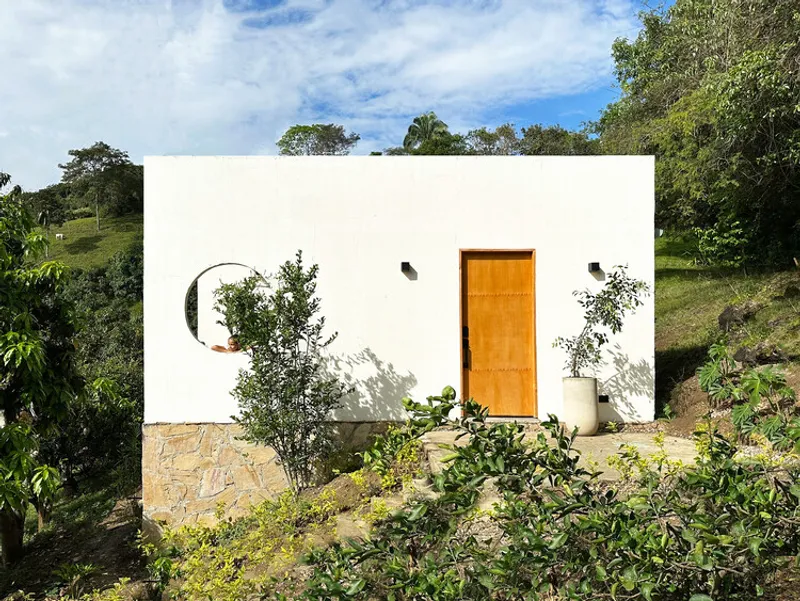
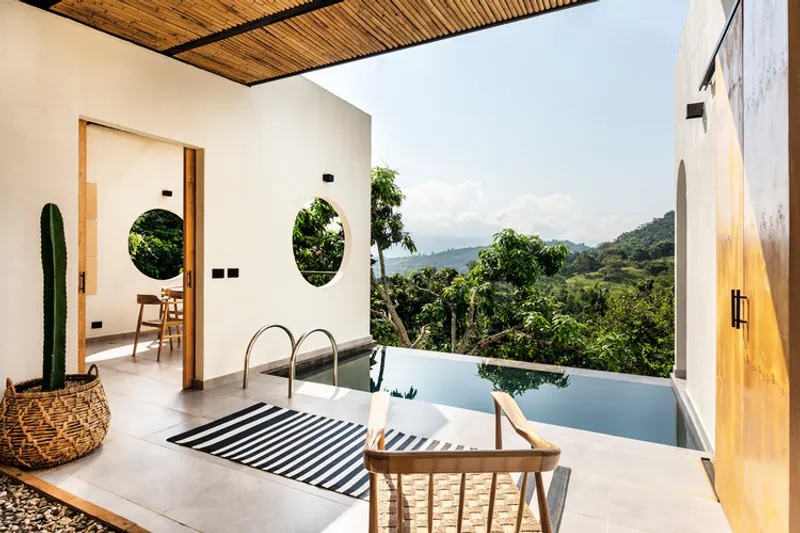
Set on a steep hillside terrain, the house is carefully adapted to its topography through a robust stone base that anchors the structure to the site. From this base, five parallel walls rise and extend outward, organizing the domestic modules into a linear spatial sequence.
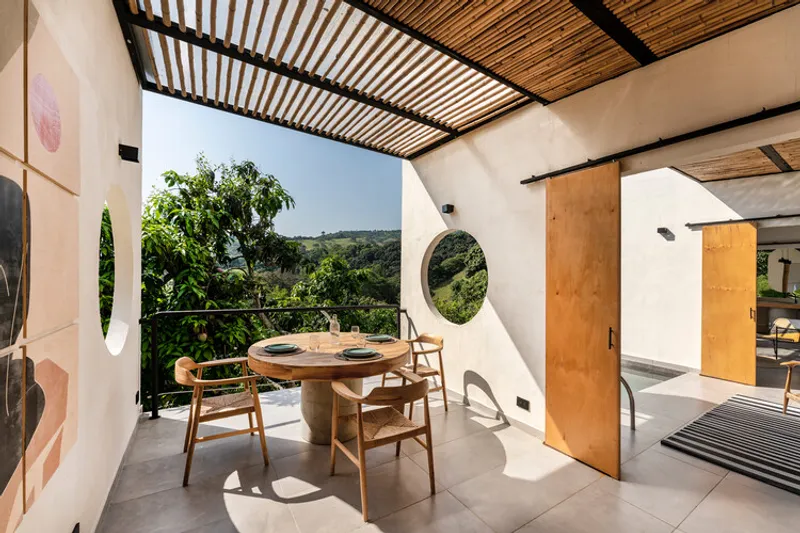
These walls not only frame panoramic views of the Andean landscape but also enhance cross-ventilation, creating comfortable microclimates in a region where daytime temperatures often exceed 30°C.
Design and Spatial Experience
The architecture is guided by an approach that dissolves the line between indoors and outdoors. Longitudinal walls are minimized while strategic openings in the transverse walls establish direct connections to vegetation, sunlight, and airflow.
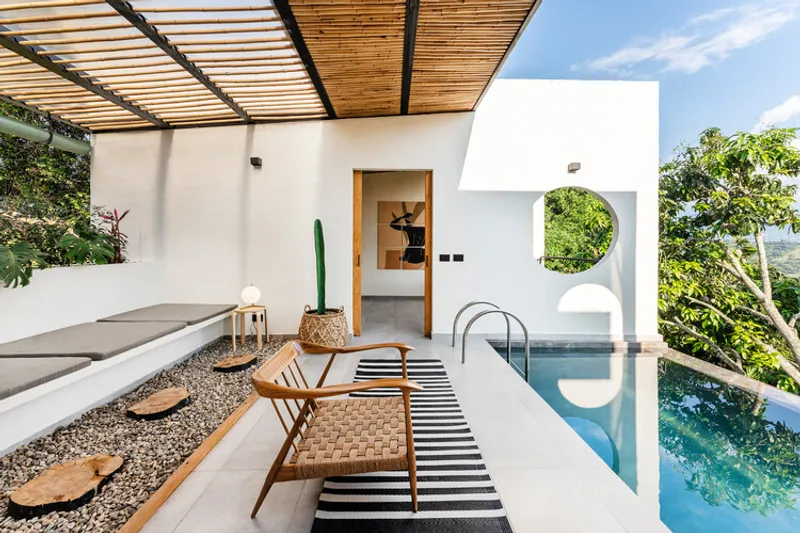
The central module of Caoba House is dedicated to reflection and reconnection with nature. The southern façade is left open to capture sunlight throughout the day, while the northern façade integrates native plants, reinforcing the building’s role as a mediator between architecture and landscape.
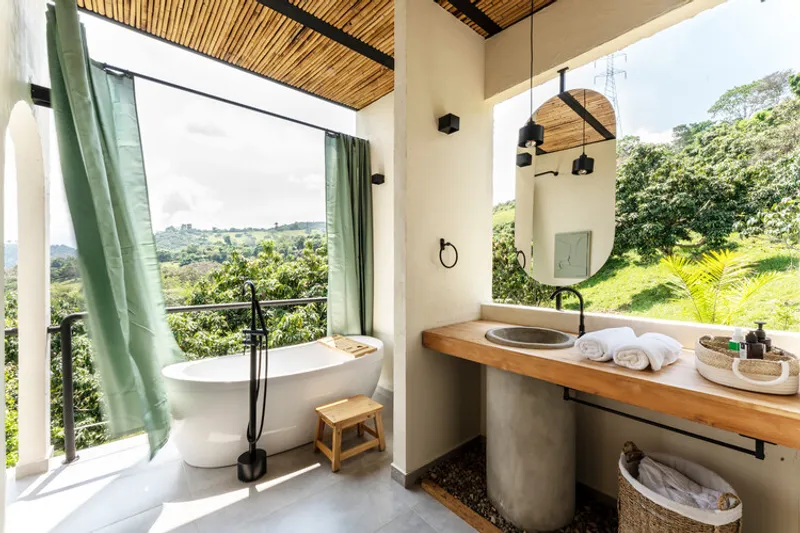

Inside, the design is minimal yet warm, using natural textures and earthy materials to create harmony with its surroundings.
Materiality and Local Craftsmanship
Caoba House embraces locally sourced, honest materials, highlighting regional construction traditions. The ceiling is lined with bamboo slats, bringing warmth and rhythm to the interiors. Pine wood carpentry and teak furniture, crafted using local techniques, contrast beautifully with the ruggedness of stone and ceramic elements at the base.


This careful material selection ensures not only sustainability but also a strong cultural identity, anchoring the house to its Colombian context.
Architecture as a Mediator
More than a residential project, Caoba House embodies a philosophy of architecture as a mediator between humans and the tropical environment. Instead of interpreting space as merely full or empty, the house acts as a platform for negotiation, where every opening and passage creates opportunities for interaction with both human and more-than-human species.


This design approach transforms Casa Caoba into an ecological dialogue—a place where architecture respects, adapts to, and thrives within the biodiversity of its tropical setting.
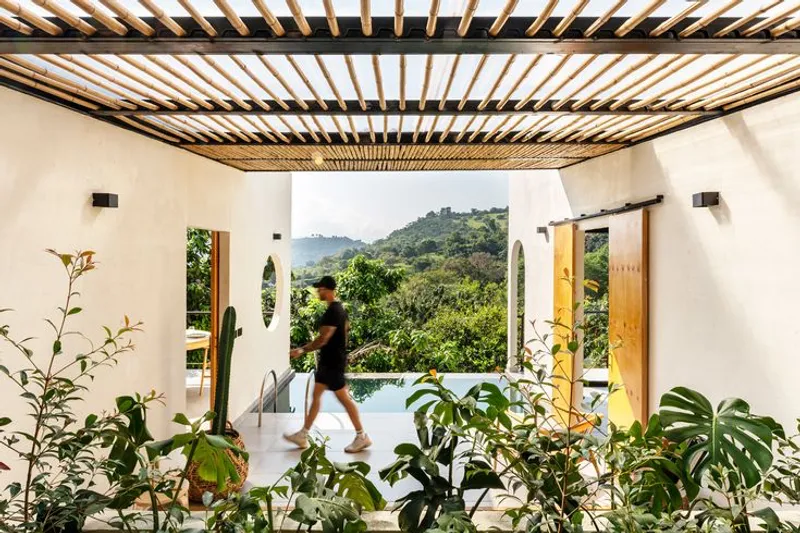

All the photographs are works of Mateo Pérez Correa




Popular Articles
Popular articles from the community


The Ocean Hive: Sustainable Architecture for a Self-Sufficient Civilization at Sea
The Ocean Hive imagines sustainable architecture at sea, where modular habitats, algae, wave power and ocean waste sustain a growing colony.

Co-Life: Senior Housing Design That Reconnects Older Adults With the City
Co-Life reimagines senior housing design through healing gardens, shared streets, workshops, and a sustainable community across generations.

EW PARK: Sustainable Architecture Reimagines the Future of Urban Parking
EW PARK reimagines city parking as a modular wooden tower combining automation, solar energy, electric mobility, and adaptable urban design.

Conexión: Biophilic Design Reimagines High-Rise Living in Hong Kong
Conexión reimagines high-rise living in Hong Kong through biophilic design, green facades, shared spaces, daylight, water and nature within.


Similar Reads
You might also enjoy these articles


Hodi-Mandai Geram
Project Function: Preservation and revitalization of the Intangible heritage and socio-spatial identity of the Hodi by Housing, Cultural Memory Center, Sacred Grove, landscape, local tourism economy


Olio Towers: A Mid-Rise for Performers That Fuses Housing, Rehearsal, and Stage
Located blocks from Houston's Theater District, this modular tower stacks living units around a central performance atrium.

Oasis: Modular Green Housing Carved into Dhaka's Urban Fabric
A shortlisted Plugin Housing entry reclaims unauthorized settlements in Dhaka with stepped concrete volumes, green roofs, and ventilation-driven design.

Black Hole: A Floating Megastructure for the Post-Physical Era
Emiliano Mazzarotto envisions a spherical, self-scaling arena where e-sports, digital hotels, and holographic stadiums replace traditional public space.


Explore Architecture Competitions
Discover active competitions in this discipline



Challenge to reimagine the Iron Throne


Photograph architecture without architects


Illustrate the lost glory of Angkor Wat - Render Challenge


Design challenge to reuse E-waste
Comments (0)
Please login or sign up to add comments
No comments yet. Be the first to comment!