Cloud Workspace: A Futuristic Skyscraper for Air Mobility
Vertical mobility meets modular design in this futuristic skyscraper designed for the age of aerial urban transport.


As cities continue to densify and urban populations soar, the architectural response must evolve to address the mounting demand for vertical space and integrated transport. In this context, futuristic skyscraper architecture emerges not merely as a design trend but as a necessity for sustainable, efficient, and connected urban futures. The "Cloud Workspace," an innovative design by T-Construction, exemplifies this transformation by marrying cutting-edge mobility infrastructure with high-performance architectural planning.
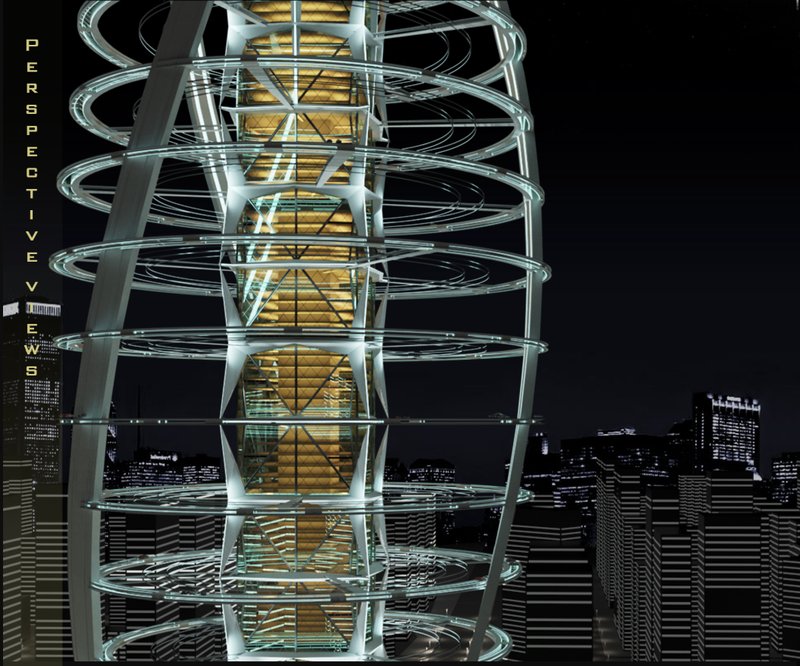
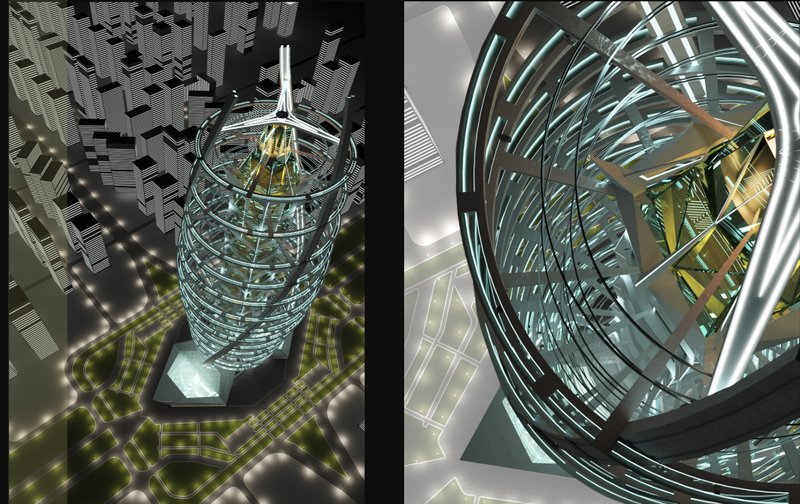
Cloud Workspace is conceptualized as a "Work and Fly" tower — a multifunctional vertical hub that blends office environments with aviation access. This new typology introduces circular air parking decks that spiral around the structure, enabling vertical takeoff and landing vehicles to dock at various levels. This approach not only supports aerial commuting but reimagines the skyscraper as a node within a wider network of air mobility, reshaping how people move through and between cities.
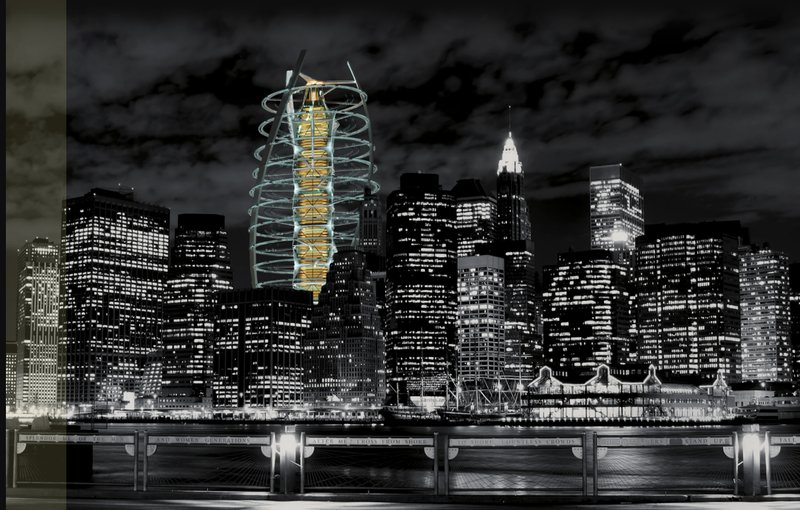
The building spans 47 floors, rising to a helipad-equipped crown that facilitates private and commercial air travel. Internally, the tower features modular layouts optimized for adaptive reuse, collaboration spaces, and high-capacity communication cores. These interior systems are designed to streamline vertical movement and interaction, with lines of communication integrated throughout the spatial matrix.
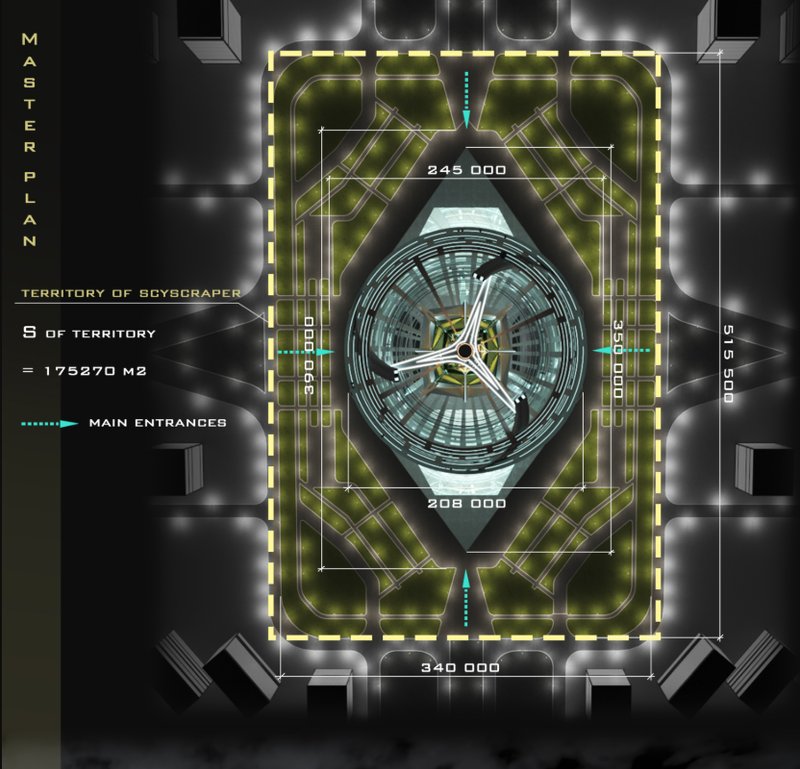
Spanning a site area of over 175,000 square meters, the project's master plan incorporates pedestrian zones, access roads, and landscape corridors that harmonize with the building’s circular geometry. This integration ensures that the structure remains porous and accessible, promoting walkability while maintaining aerial logistics efficiency. The design is rooted in ecological sensitivity, incorporating green zones and infrastructure for energy efficiency and carbon neutrality.
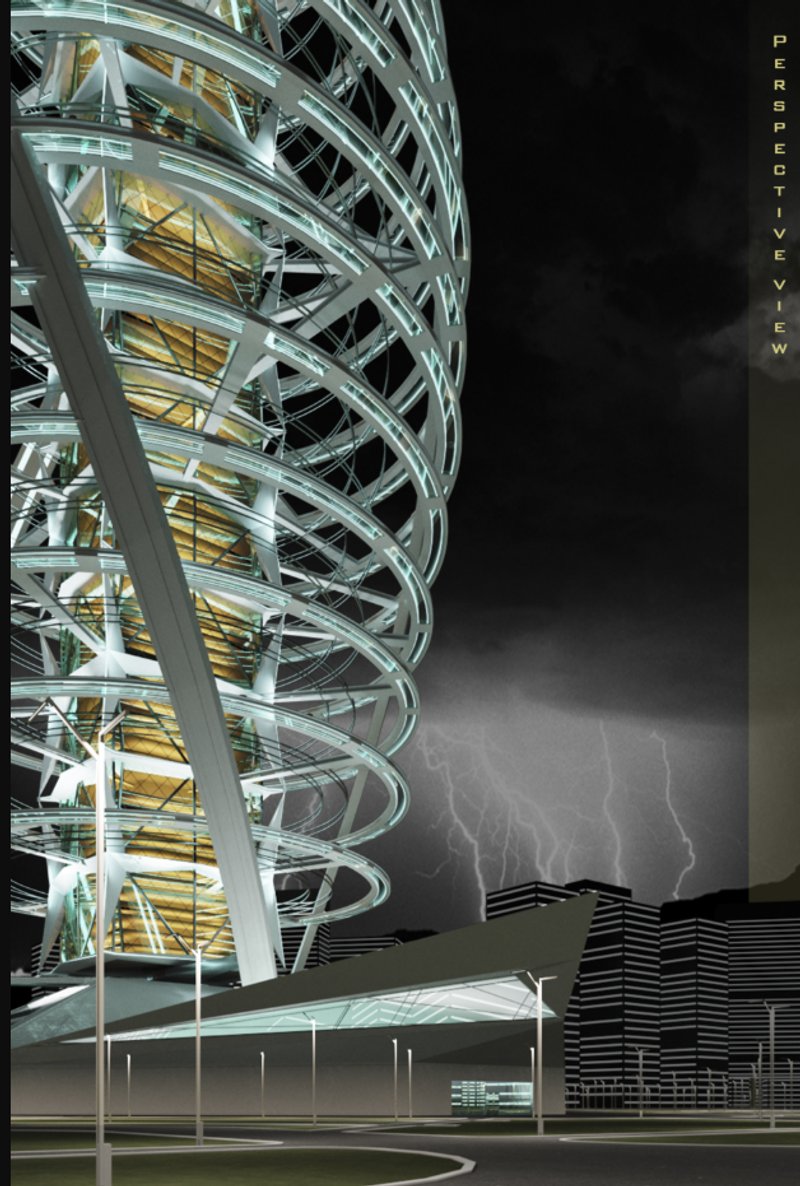
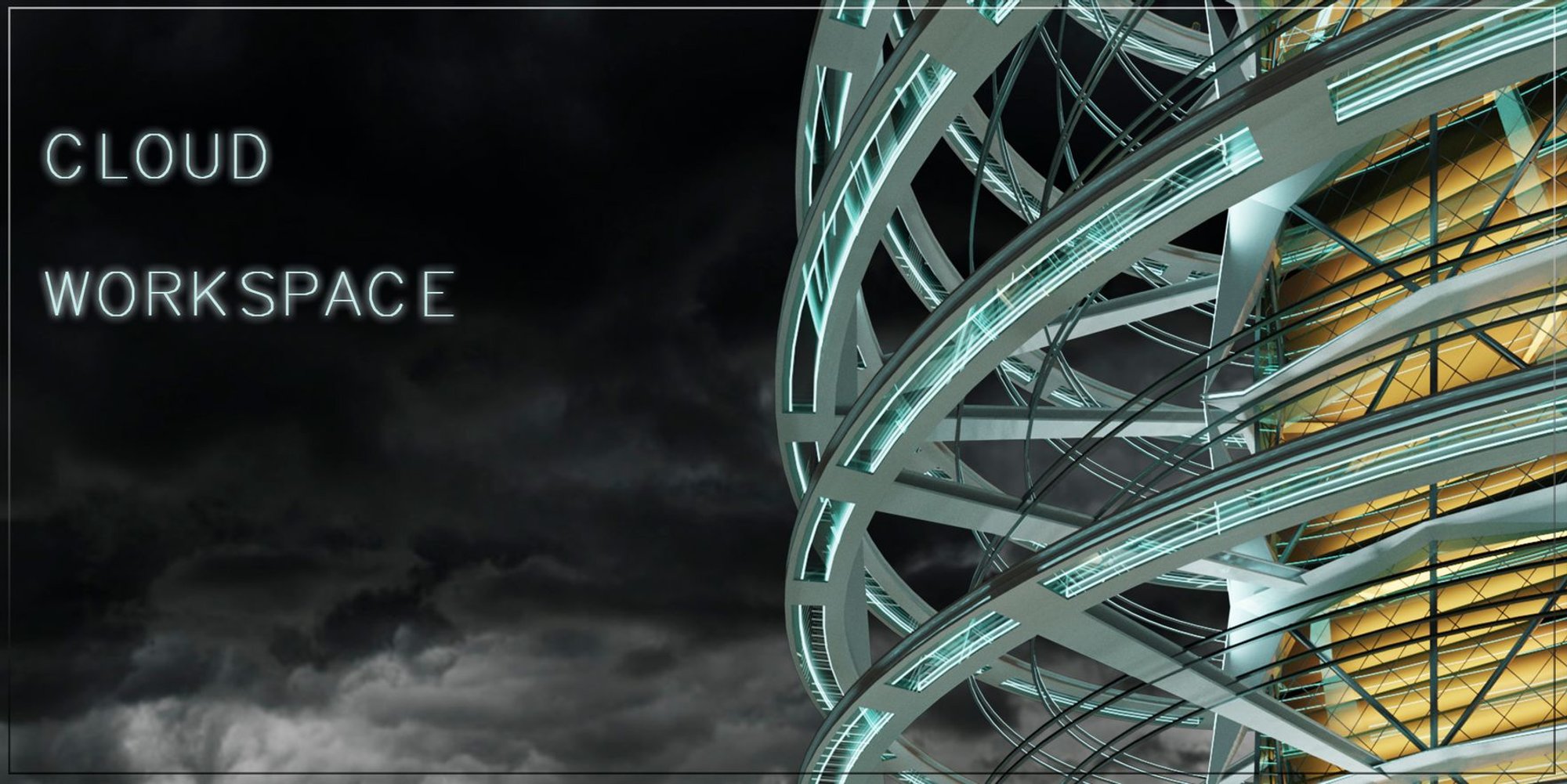
The tower’s exterior features a luminous, kinetic facade system that acts as both an architectural statement and a high-performance envelope. Dynamic lighting schemes illuminate the city skyline, transforming the tower into a visual icon by night. Meanwhile, precision-engineered facade elements manage wind loads, daylight, and thermal performance — illustrating the capacity of futuristic skyscraper architecture to balance aesthetics with technical demands.
Viewed from the city below or from an airborne approach, Cloud Workspace is not just a building but a symbol of architectural evolution. It represents a paradigm shift in how vertical infrastructure can serve as both workspace and transportation hub, ready to accommodate drones, flying cars, and other airborne technologies that define tomorrow’s smart cities.
Project by: T-ConstructionShortlisted Entry: Hybrid Futures '19 - Work x Fly