Contemporary Store Architecture for Children: A Case Study of the Garimpê Expansion
The article explores the design of the Garimpê store expansion, highlighting contemporary architecture for children's retail spaces.


Contemporary Store Architecture for Children
The world of retail architecture is evolving, with contemporary store designs increasingly reflecting the needs of specific audiences. In particular, store architecture for children is seeing a transformation as it moves away from traditional models and embraces playful, functional, and educational elements. This approach is exemplified by the Garimpê store expansion in Curitiba, Brazil, designed by architects Kenji Okabaiasse and Takah arquitetura. The project highlights the growing trend in contemporary store architecture that seeks to create immersive environments where children and families can engage with products in creative ways.
Garimpê: A Unique Concept for a Children’s Store
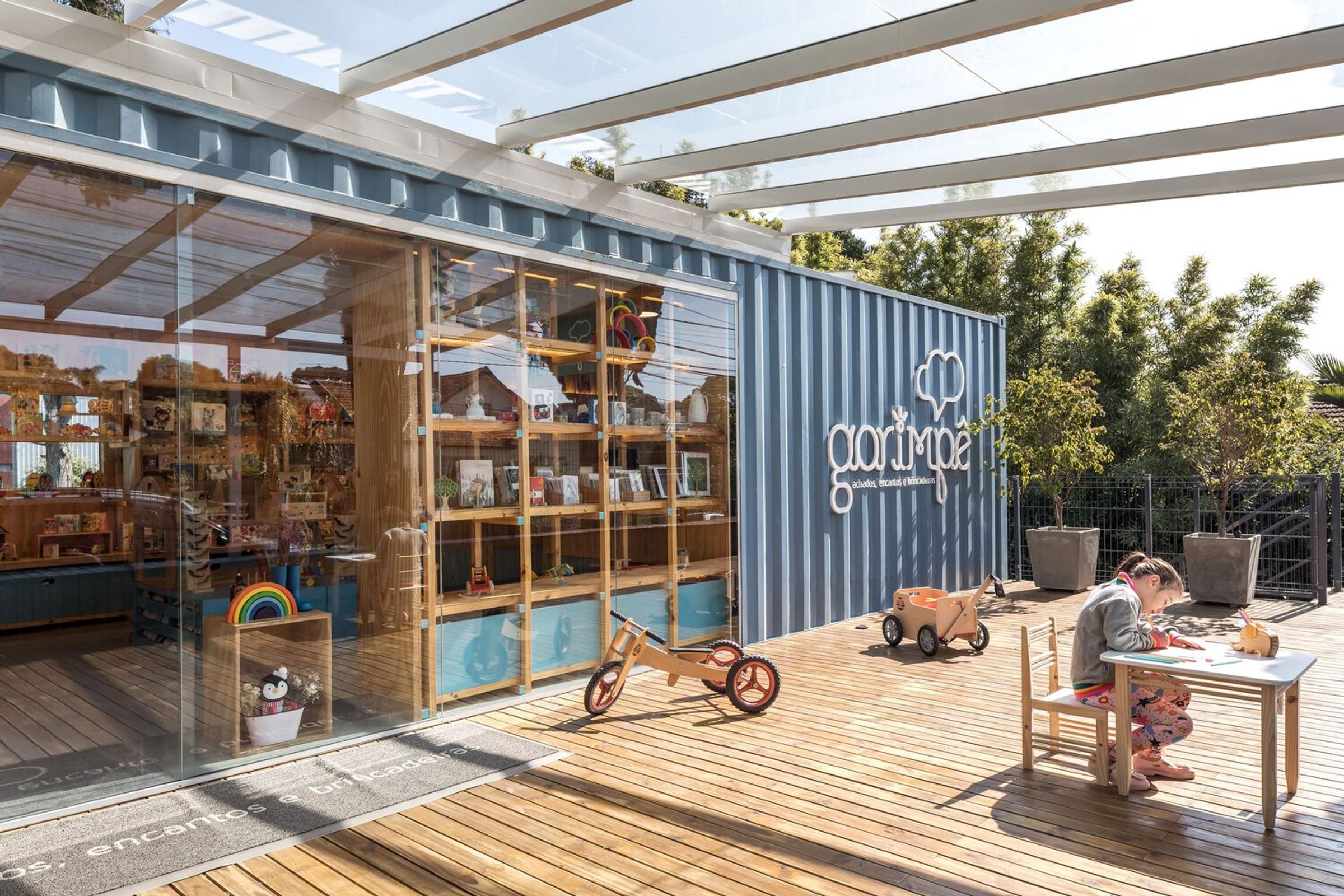
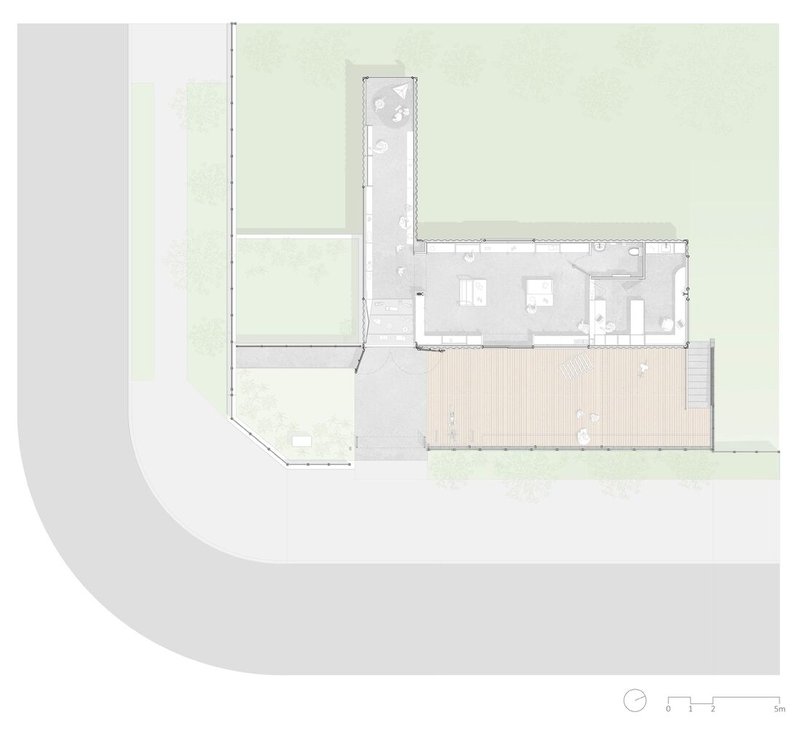
Garimpê is a concept store dedicated to products that stimulate children’s creativity and development. Located on a corner lot in Curitiba, the store initially operated from a small container, which soon became inadequate due to the growing sales and demand for more space. The challenge for the architects was to expand the store without losing its unique charm and functionality.
The expansion was designed with a dual purpose: to enhance the customer’s connection with the natural landscape and to establish the store as a visible urban showcase. This required careful thought about how to integrate the new space while maintaining the identity of the original store.
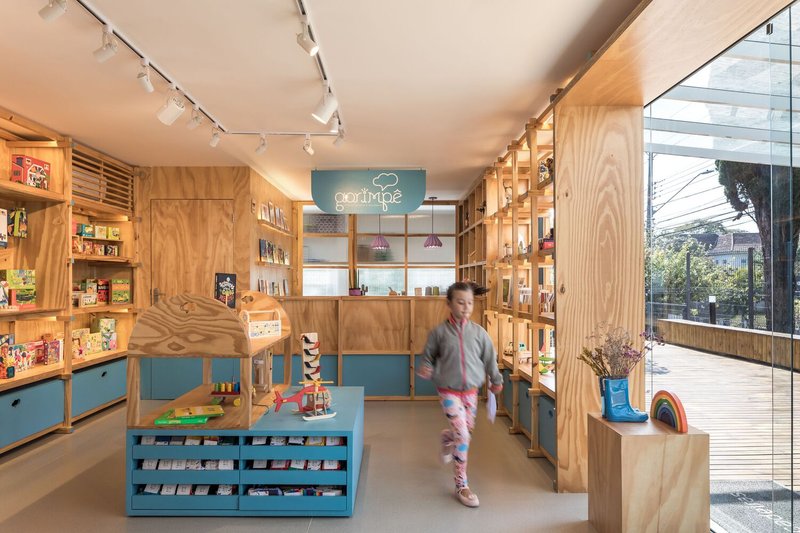
The Role of Architecture in Child-Centric Retail Spaces
In designing spaces for children, architecture plays a crucial role in shaping experiences. The Garimpê expansion introduces key architectural strategies that cater to both the physical and emotional needs of young customers and their families. A central theme in the design is the integration of the external landscape with the internal space, which creates a seamless flow from the street to the store.
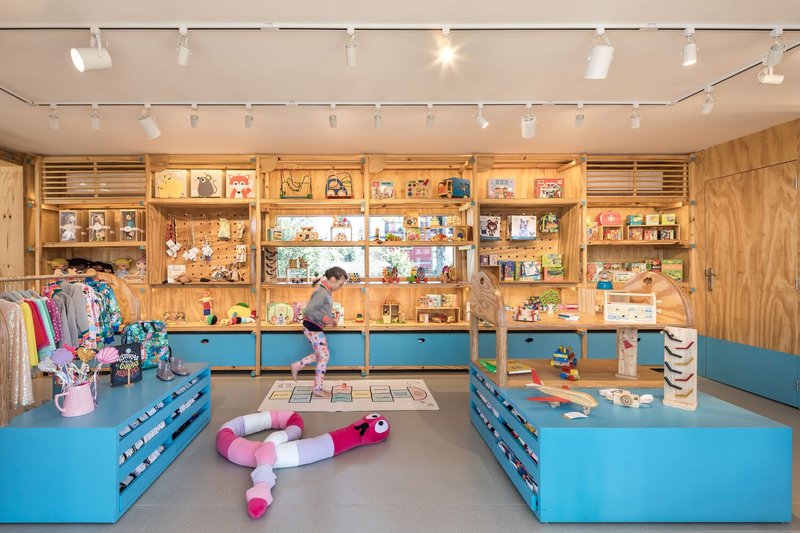
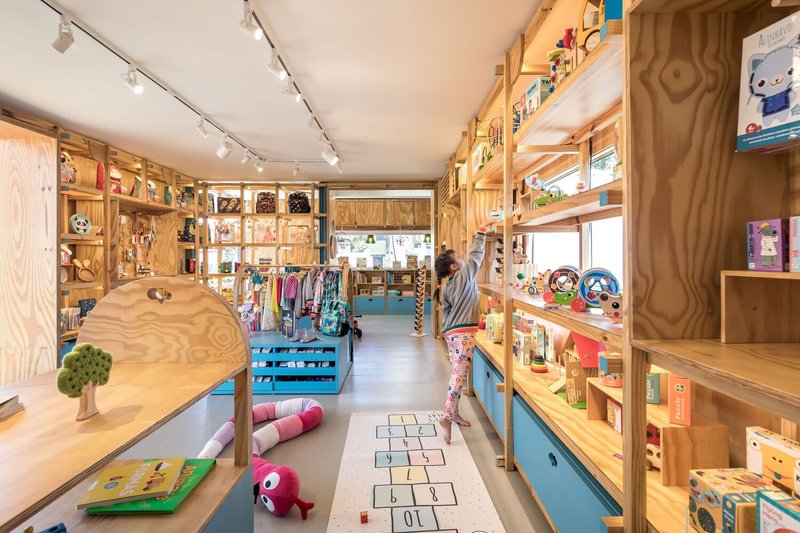
The Importance of a Welcoming Entrance
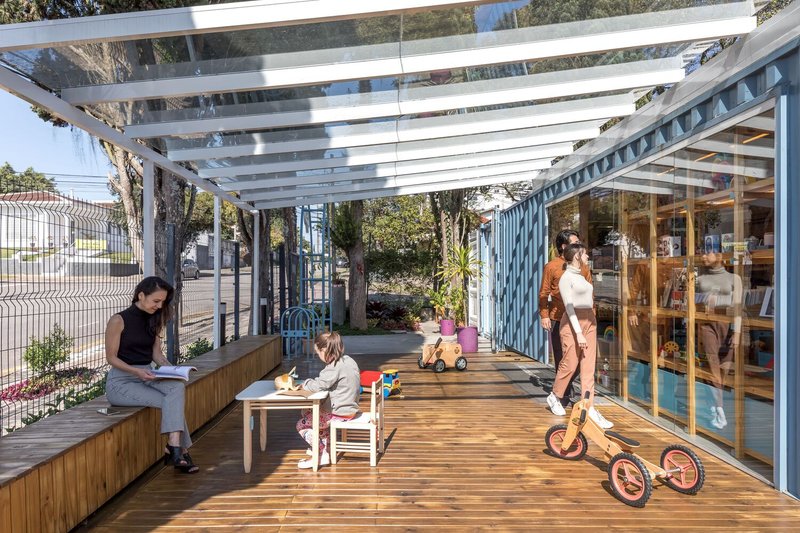
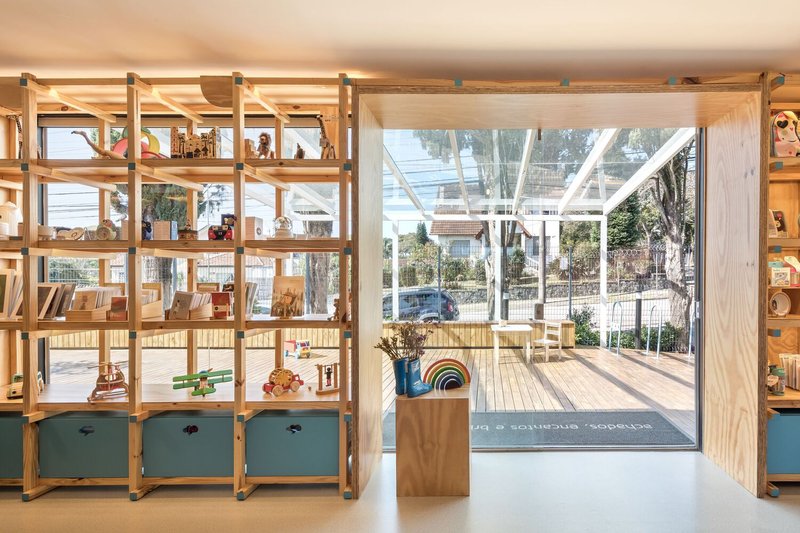
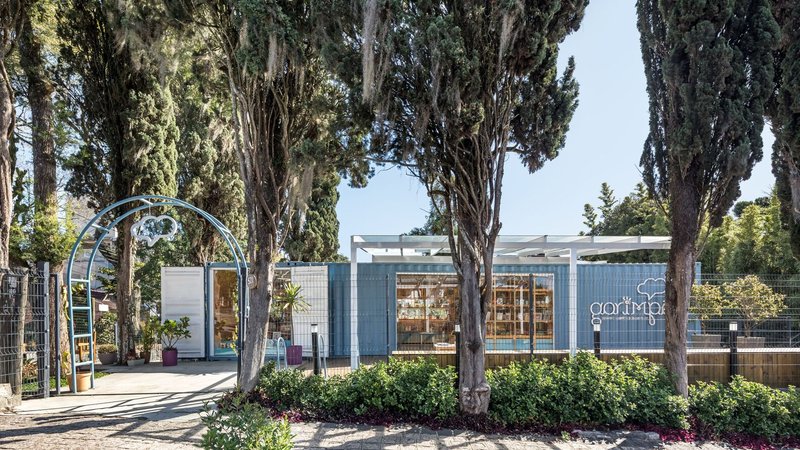
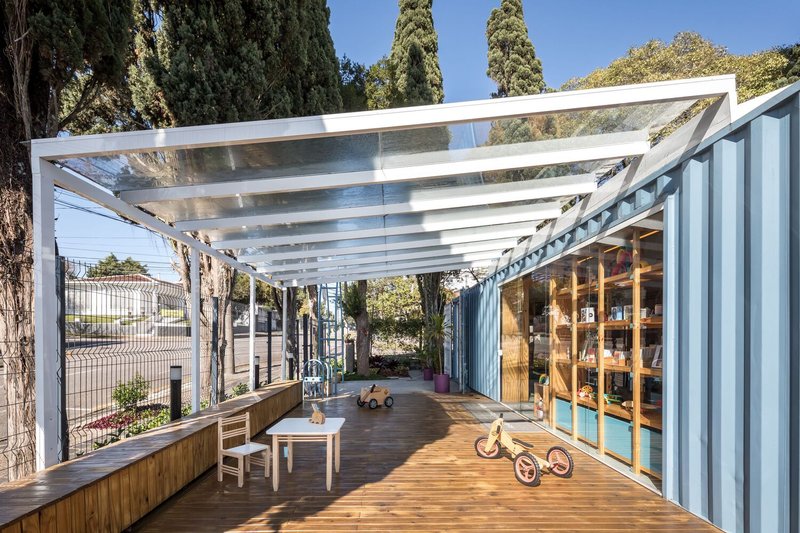
The architects aimed to create a gentle transition between the external environment and the store’s interior. Upon arrival, visitors are greeted by a portal that sets the tone for what lies ahead. The entrance is followed by a wooden deck and a glass roof, which not only provide shelter but also establish a welcoming atmosphere. This thoughtful entrance design highlights the role of child-friendly architecture in creating inviting spaces that feel safe, yet exciting.
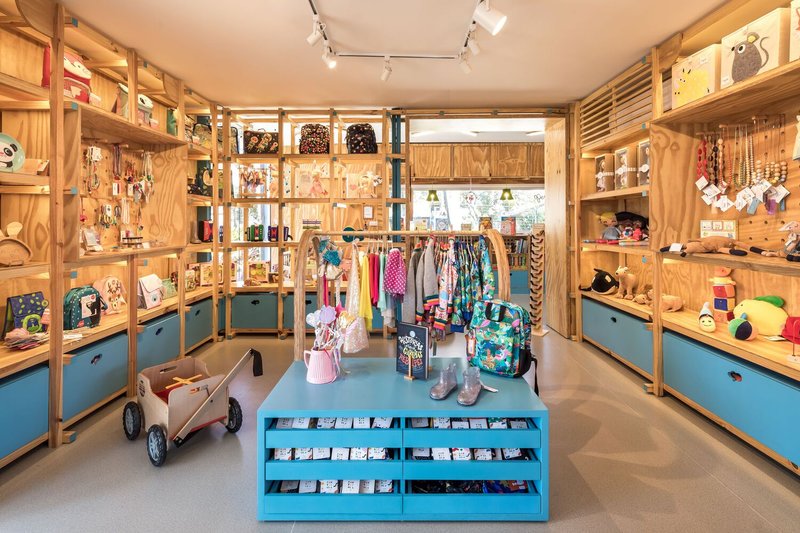
Key Design Elements in the Garimpê Store Expansion
The Connection of Old and New Spaces
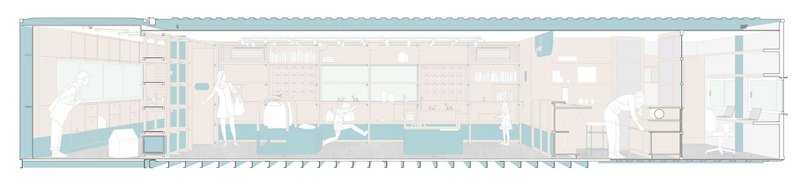
One of the major design challenges was how to expand the store while preserving the integrity of the original container-based structure. The solution was to integrate two new containers with the pre-existing one. The architects carefully maintained the store’s original external identity, ensuring that the new expansion complemented the existing architecture.
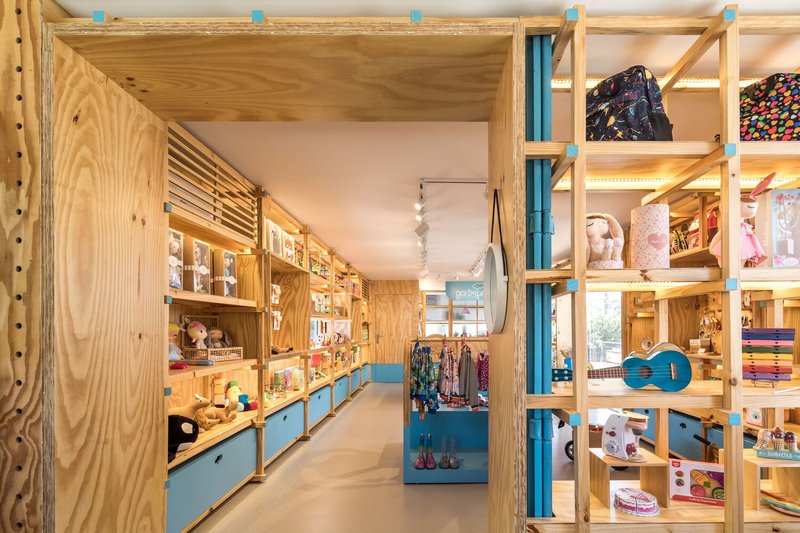
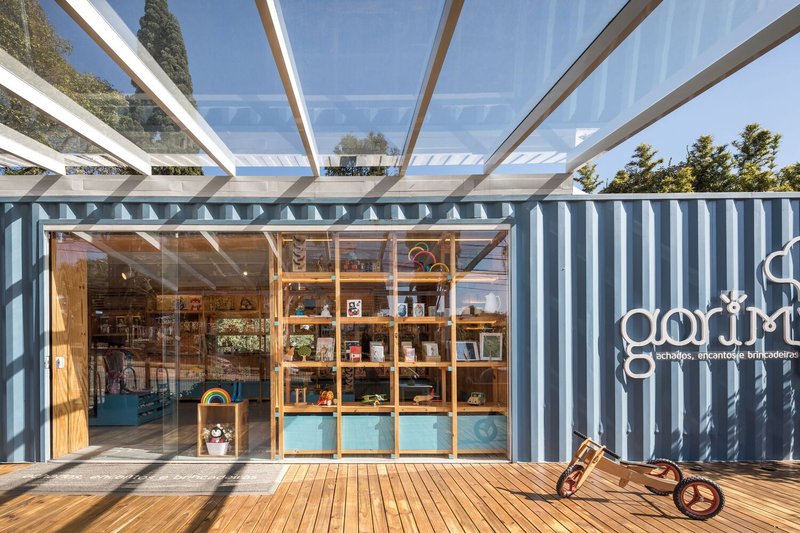
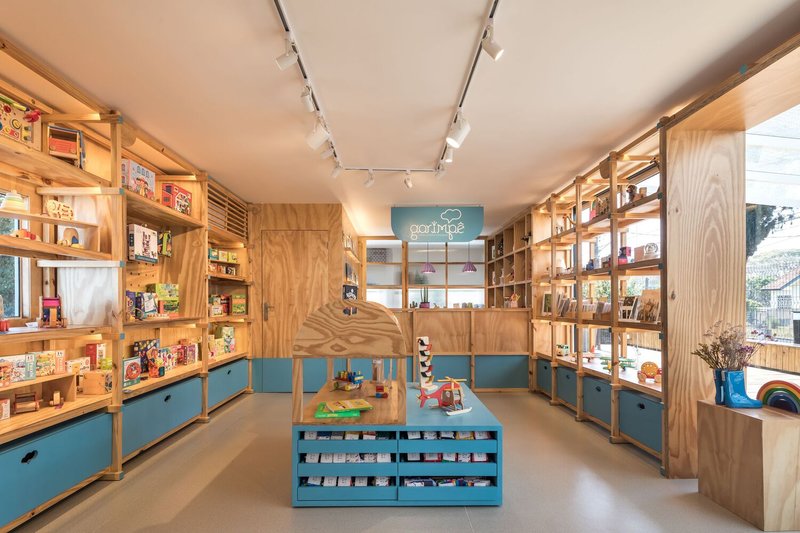
Wooden bars, a key material in the store's design, serve as a spatial element that ties the new and old areas together. These wooden bars, organized along three orthogonal axes, provide a clear structural definition while allowing for flexibility in the exhibition areas. This balance between form and function is a hallmark of contemporary store architecture.
The Role of Materials in Creating a Child-Centric Atmosphere
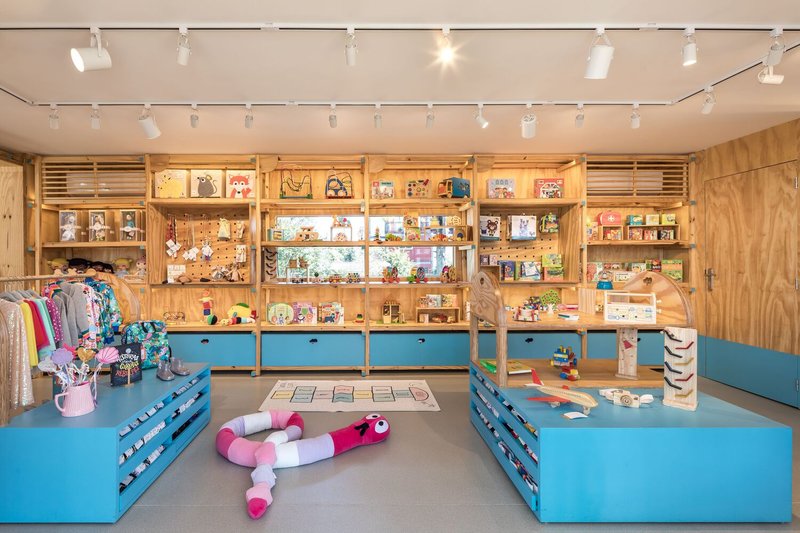
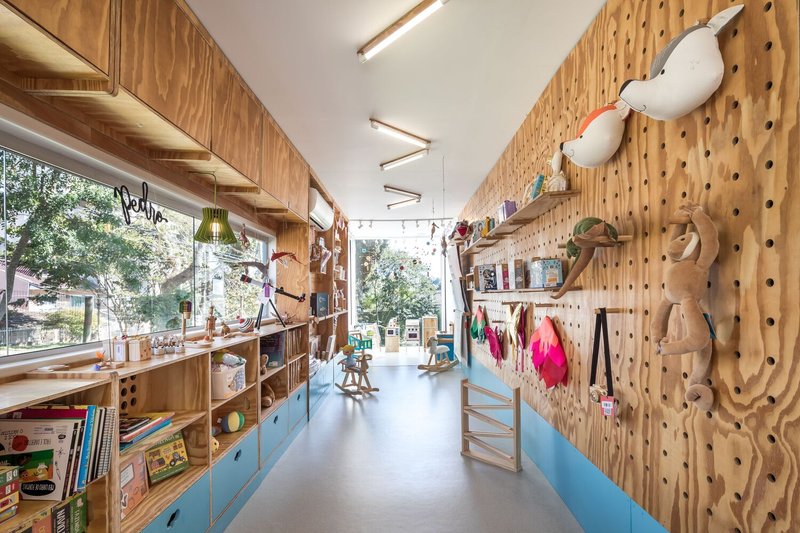
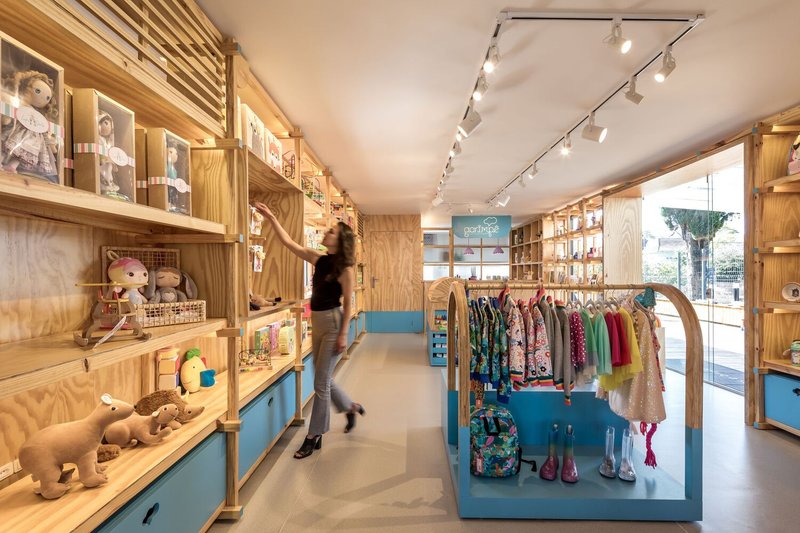
The choice of materials plays a vital role in shaping the mood of the store. The primary material used in the expansion is marine plywood, chosen for its durability and aesthetic appeal. The addition of blue accents creates a visual connection to the brand’s identity and also resonates with the scale of children, making the space feel both familiar and playful.
The architects also employed a neutral-toned floor to allow the wood and blue accents to stand out, creating a visually appealing environment that highlights the store’s unique character. This careful material selection demonstrates how contemporary store architecture for children goes beyond just functionality—it creates a sensory experience that encourages creativity and learning.
The Flexibility of the Space: Workshops, Exhibitions, and Events
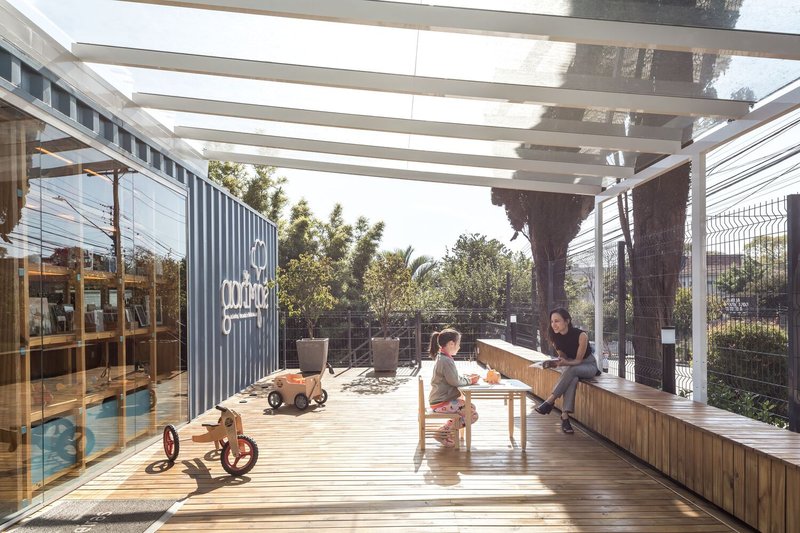
A significant aspect of the Garimpê store expansion is its versatility. The addition of the wooden deck allows the store to host workshops, events, and exhibitions. This open space, surrounded by the store’s natural garden, offers children and families an opportunity to engage with the products in different ways. The ability to host such activities further enhances the store’s role as a hub for creativity and development, blending retail with education.
Creating Immersive Customer Experiences in Store Design
The Garimpê expansion is a prime example of how contemporary store architecture can create a unique and immersive experience for both children and adults. By prioritizing the customer journey, from the welcoming entrance to the carefully designed interior spaces, the architects have created an environment that fosters creativity, play, and learning.
Through this expansion, Garimpê not only meets the practical needs of a growing business but also aligns with the values of its brand, offering a space where children can explore and interact with products that help them develop their skills. This approach exemplifies the growing trend in store architecture for children, which seeks to combine functionality, education, and aesthetic appeal in ways that resonate with young customers.
The Future of Child-Focused Store Design
As the Garimpê store expansion shows, contemporary store architecture for children is more than just about aesthetics or retail—it's about creating spaces that encourage learning, growth, and creativity. By designing with the needs of children in mind, architects are redefining how retail environments can support developmental and emotional growth, while also serving as dynamic places for community engagement.
For architects and designers working in the realm of child-focused spaces, Garimpê offers valuable lessons in creating environments that are not only functional but also engaging and enriching for the next generation of shoppers.
All photographs are work of Eduardo Macarios