DFB Campus by kadawittfeldarchitektur: A Modern Sports and Training Hub in Frankfurt
The DFB Campus in Frankfurt by kadawittfeldarchitektur unites sports, administration, and innovation in a modern, nature-integrated architectural landmark.


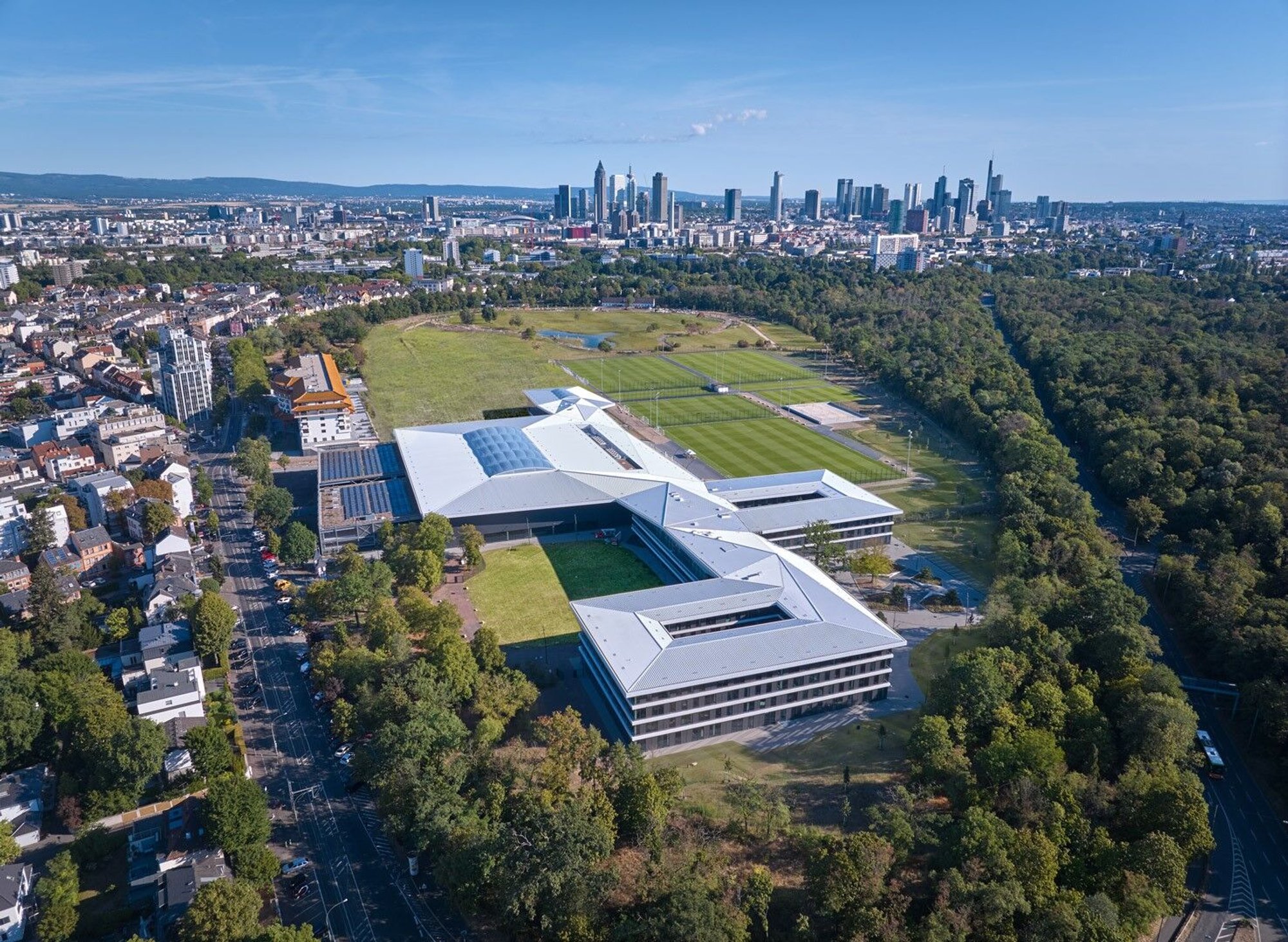
The DFB Campus, designed by kadawittfeldarchitektur, is a groundbreaking sports and administrative complex located in Frankfurt am Main, Germany. Completed in 2022, the 57,000 m² campus serves as the headquarters and training hub for the German Football Association (DFB), merging athletic performance, administration, and innovation under one visionary architectural concept.
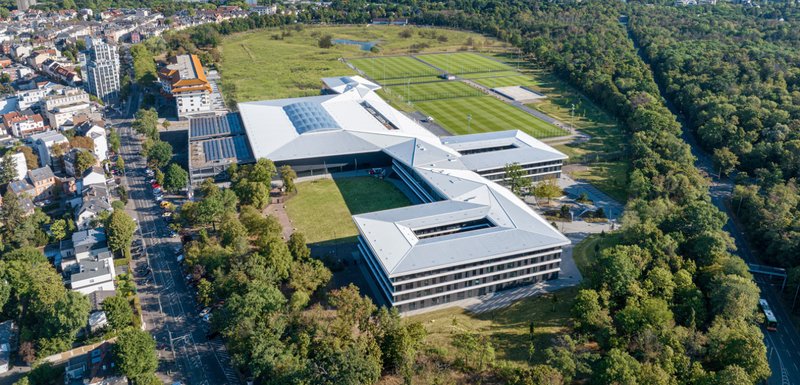
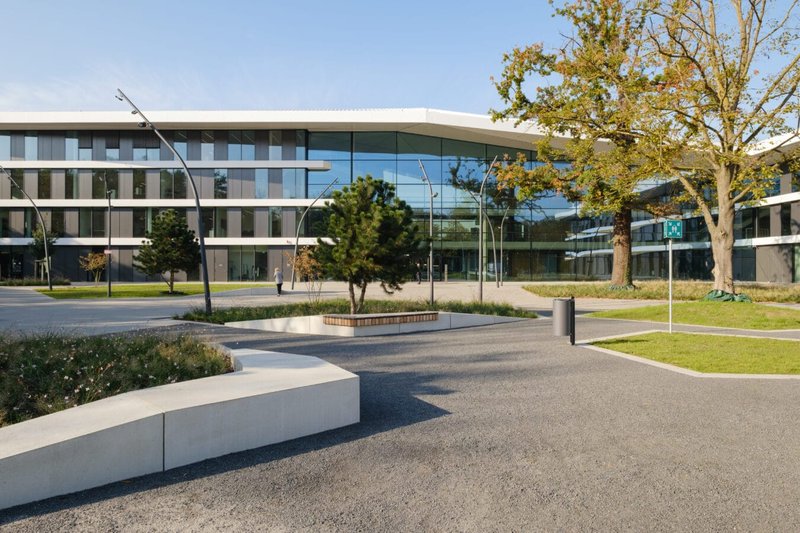
Nestled in Frankfurt’s city forest, on the site of a former racecourse, the DFB Campus creates a unique balance between built space and nature. This location allows for both seclusion and connection, ensuring that athletes, coaches, and staff can focus on training while remaining close to the city’s vibrant life.
Architectural Concept: A Campus Like a City
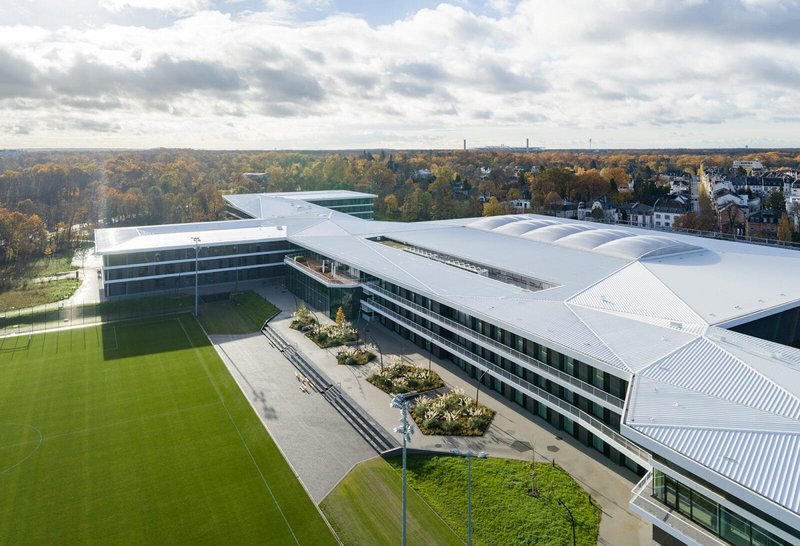
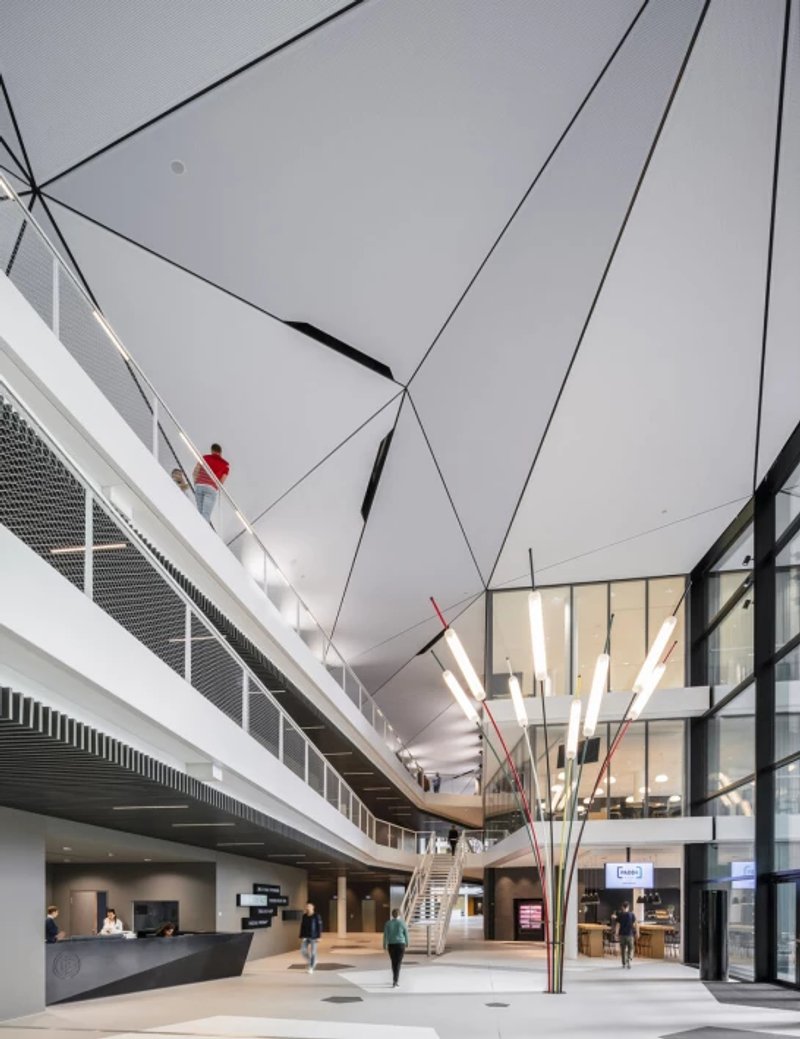
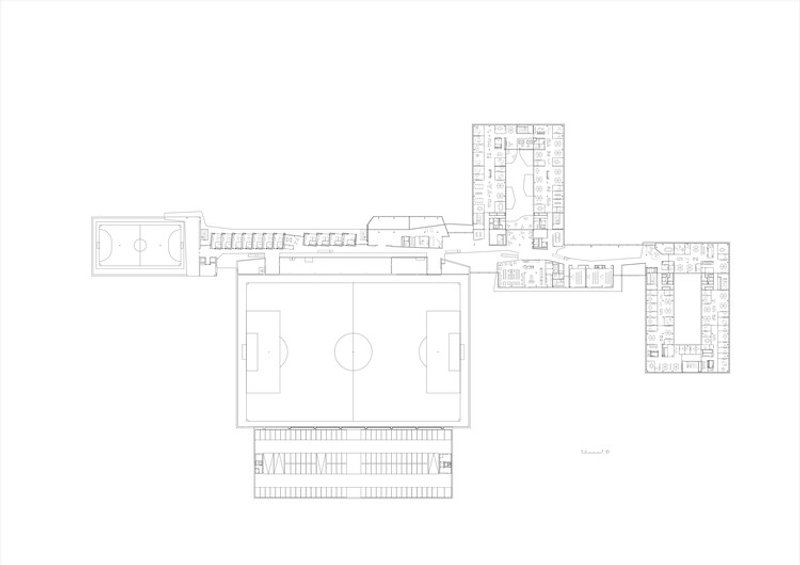
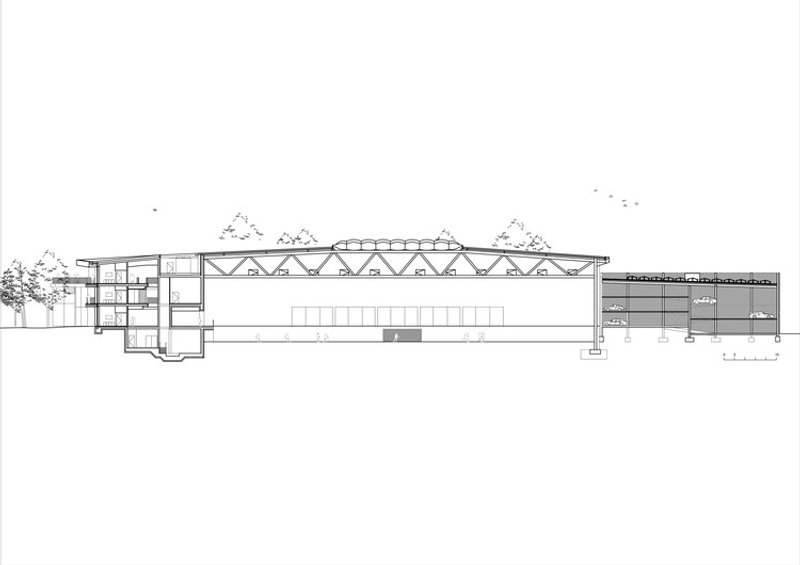
The design reimagines a sports campus as a city, with interconnected functions and communal spaces beneath a unifying long-span roof. Rather than separating facilities, the architects organized the program around a central sports boulevard—a north-south axis that links administrative offices, press areas, conference zones, athletes’ accommodations, training fields, and sports facilities.
This boulevard is more than just a circulation route—it acts as a social and communication hub, encouraging spontaneous interactions, visual connections with football pitches, and easy orientation across the campus.
Integration of Sports and Environment
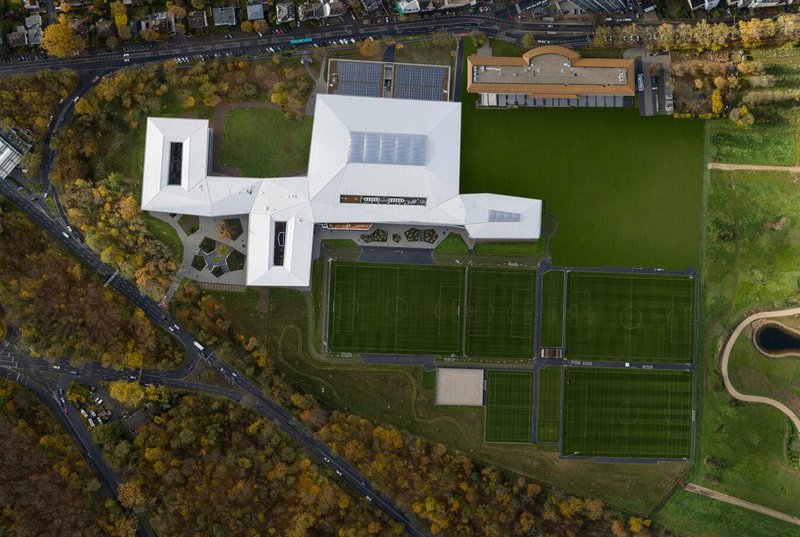
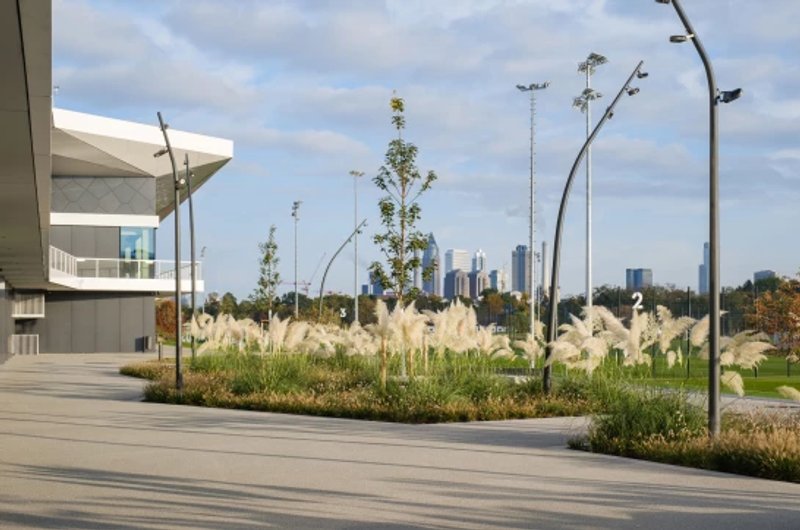
One of the core ideas behind the DFB Campus design is its integration with nature. Situated within a green clearing, the building leverages its natural surroundings for protection, tranquility, and inspiration. Athletes benefit from a highly focused environment, while the architecture promotes a sense of openness and fluidity between indoor and outdoor spaces.
The playing fields themselves form an integral part of the architectural composition, ensuring football remains at the heart of the project. Carefully designed visual links and spatial connections reinforce the campus identity and strengthen the feeling of community.
Functional Diversity: Administration Meets Performance
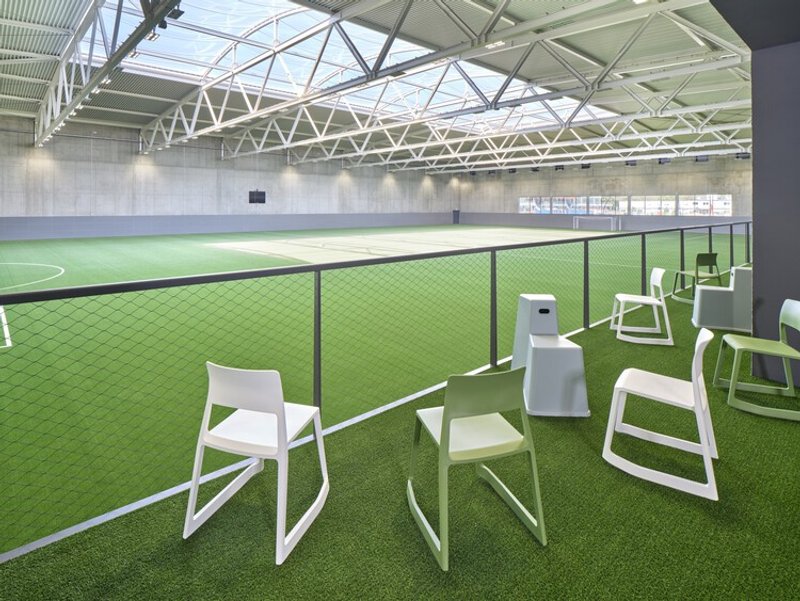
The campus seamlessly combines representative functions with athletic facilities. The southern section houses administration, press, and visitor areas—complete with meeting rooms, a fan shop, and access via Kennedyallee. Meanwhile, the northern section is dedicated to athletes, with accommodation, training rooms, an indoor football arena, multi-purpose halls, and sports science labs.
This spatial strategy ensures that work, training, and leisure coexist in proximity, reducing distances and encouraging collaboration. From seminar rooms overlooking pitches to lounge areas connecting players with nature, the design fosters both concentration and casual exchange.
Interior Design: United in Diversity
The interior design concept follows the motto “United in Diversity.” The architecture employs:
- Warm tones and refined finishes in administrative areas.
- Dynamic colors and textures in sports zones.
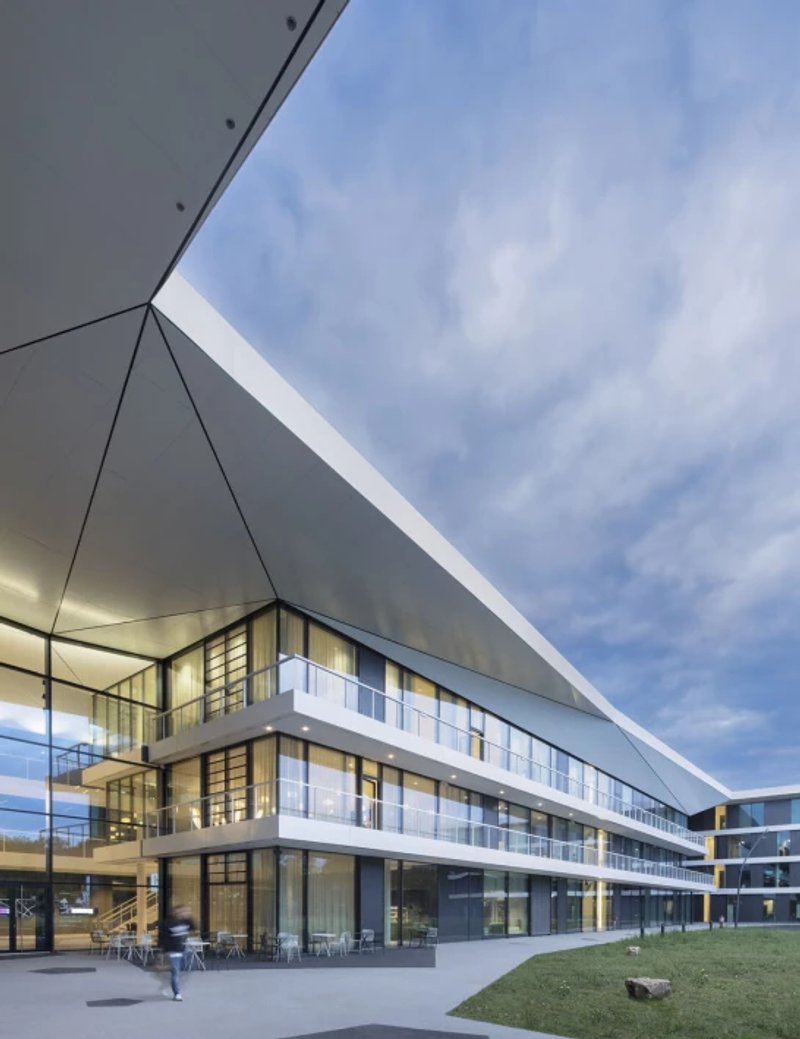
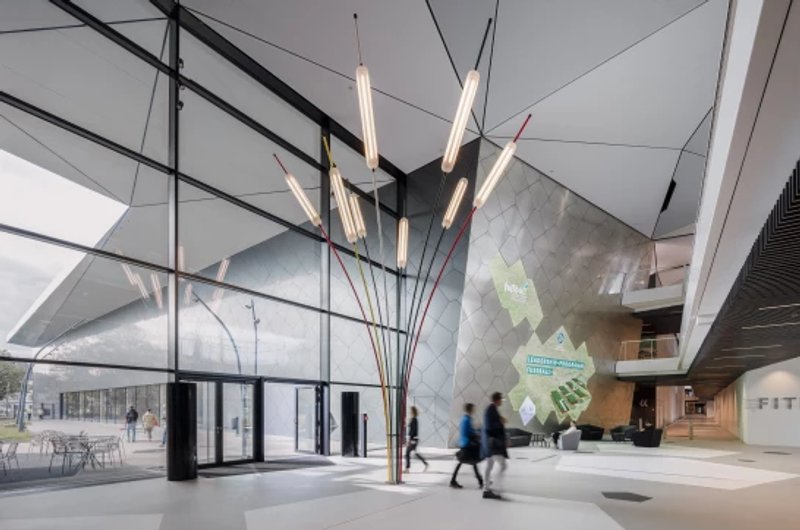
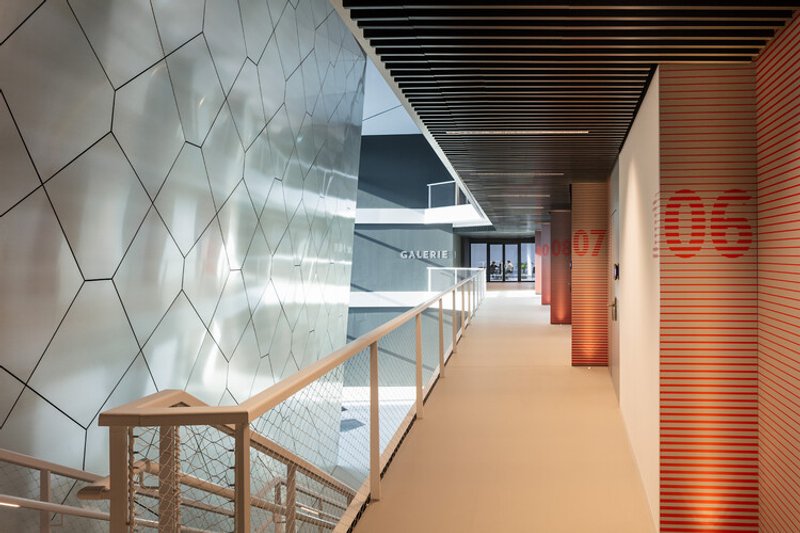
- Uniform flooring and folded roof geometry that unites all areas under one architectural rhythm.
Oblique walls, perforated roof panels, and flowing transitions between spaces create an atmosphere where work, play, science, and community coexist.
A Collaborative and Innovative Hub
Workshops with stakeholders helped shape a campus that meets the needs of modern sports training and organizational culture. The DFB Campus supports different modes of work—private offices, team zones, and large open spaces for collaboration. Retreat areas and flexible lounges provide balance, encouraging creativity, innovation, and efficiency.
For athletes, the campus offers accommodation, recreation areas, and proximity to training facilities, making it a complete ecosystem for elite sports development.
Conclusion
The DFB Campus by kadawittfeldarchitektur is not just a headquarters—it is a living sports city where football, architecture, and nature come together. With its forward-thinking design, multifunctional spaces, and integration of training and administration, the project reflects the future of sports campuses worldwide.
All the photographs are works of G.Esch, Eduardo Perez, Nikolai Benner