Earth-Integrated Library Design: Library in the Earth by Hiroshi Nakamura & NAP
An exploration of Hiroshi Nakamura & NAP's earth-integrated Library in the Earth, blending architecture, sustainability, and community.


Earth-integrated architecture harmonizes with nature, offering sustainable and innovative designs that seamlessly blend with their surroundings. Hiroshi Nakamura & NAP’s Library in the Earth is a stunning example of this approach, nestled within the lush agricultural landscape of Kisarazu, Japan.
This library is not merely a building—it is a philosophy brought to life. It celebrates the connection between the earth, human creativity, and sustainable living while serving as a tranquil retreat for the farming community.
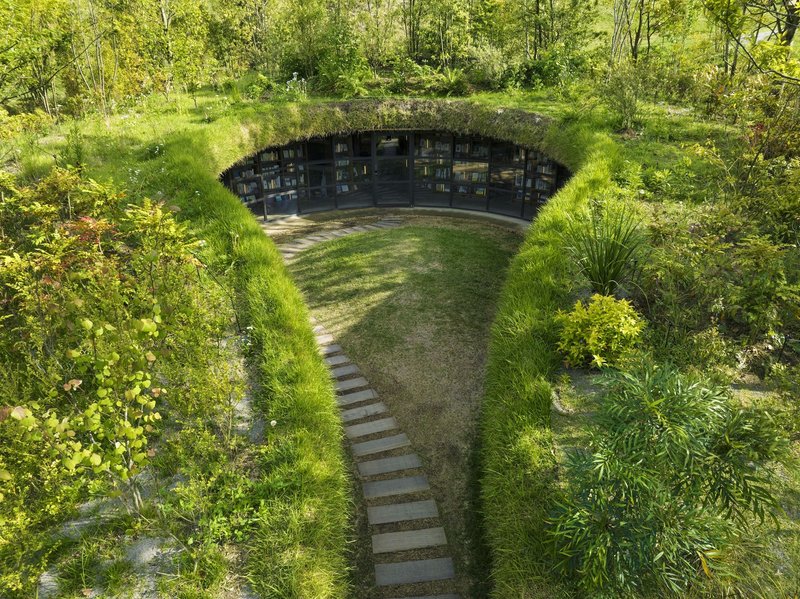
Project Overview: Library in the Earth
Location and Purpose
- Location: KURKKU FIELDS, Kisarazu, Japan
- Architects: Hiroshi Nakamura & NAP
- Year of Completion: 2022
- Size: 113 m²
This unique library was designed as a sanctuary for farmers to engage in intellectual growth and relaxation. By offering a serene space for reading during rainy days and farming on sunny ones, the library blends the rhythms of nature with human needs.
Design Philosophy: A Harmony Between Earth and Architecture
Restoring Natural Balance
The project aims to restore a valley degraded by construction debris, transforming it into a fertile, biodiverse environment. The architecture avoids disturbing the cultivated soil, preserving its ecological significance.
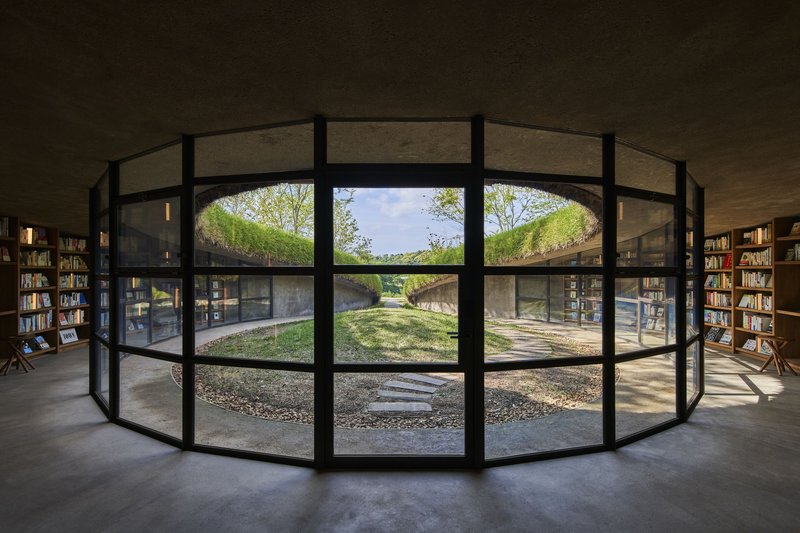
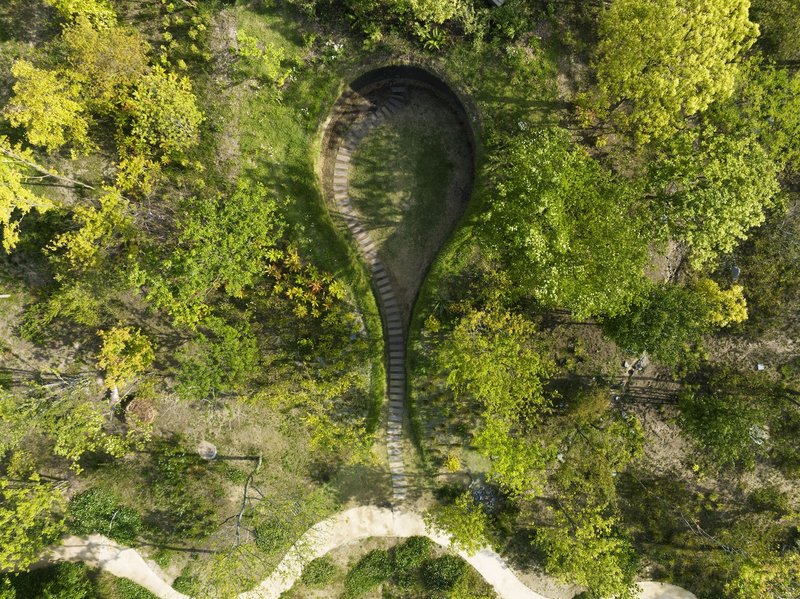
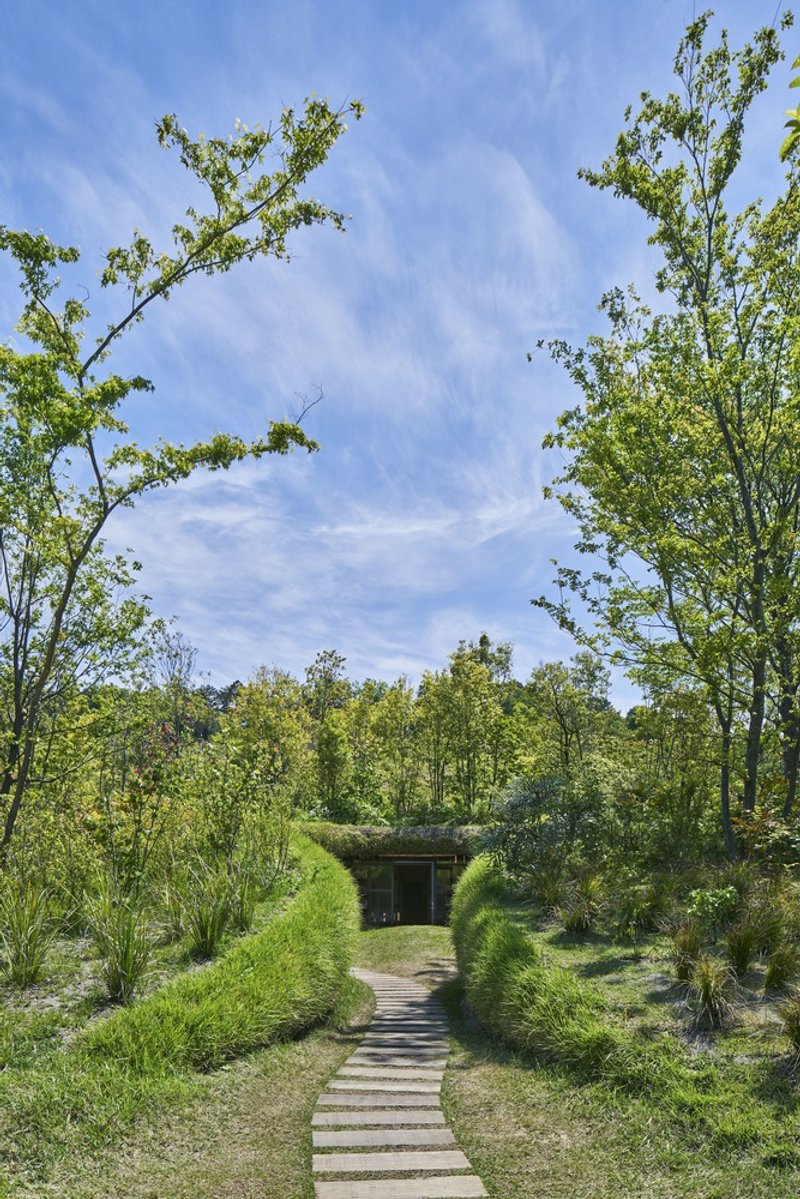
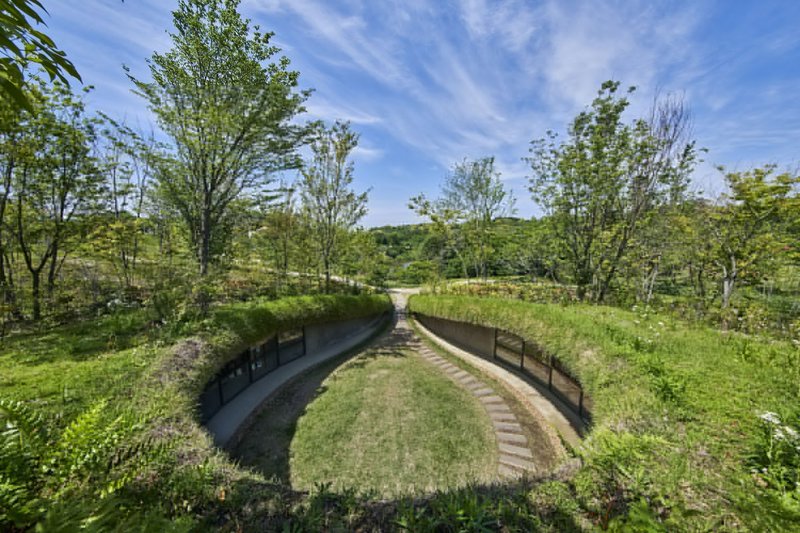
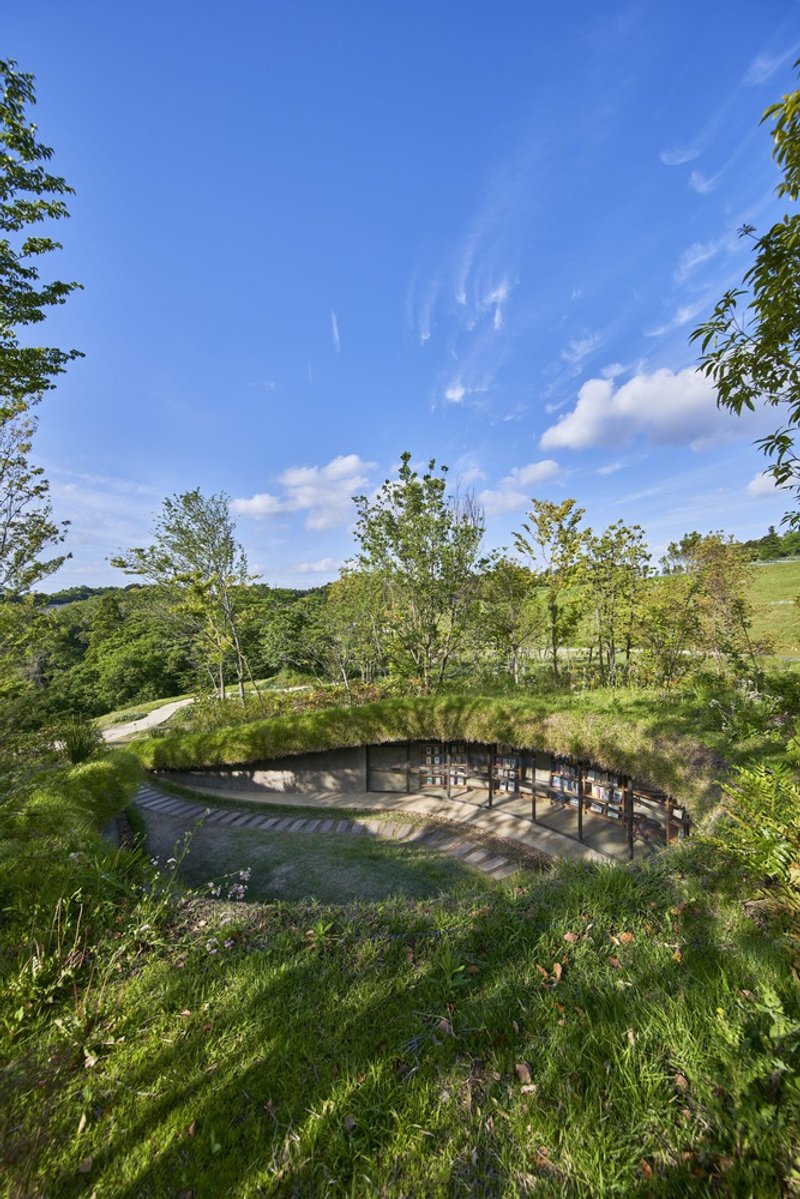
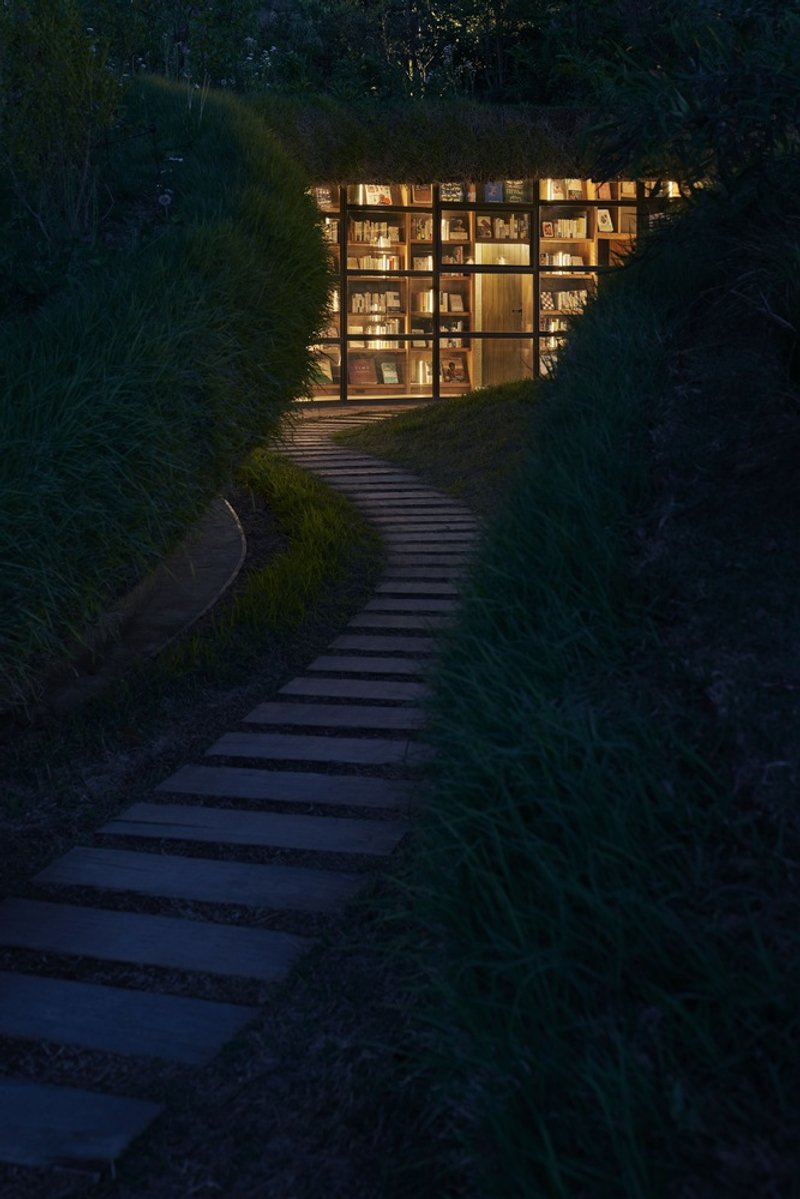
The library takes on a "cleft in the earth" design, resembling a water droplet from above, symbolizing nature's nurturing embrace. This approach aligns with the local community's reverence for the land and its resources, particularly the nearby "Mother Pond."
Architectural Features of Library in the Earth
1. Subterranean Integration
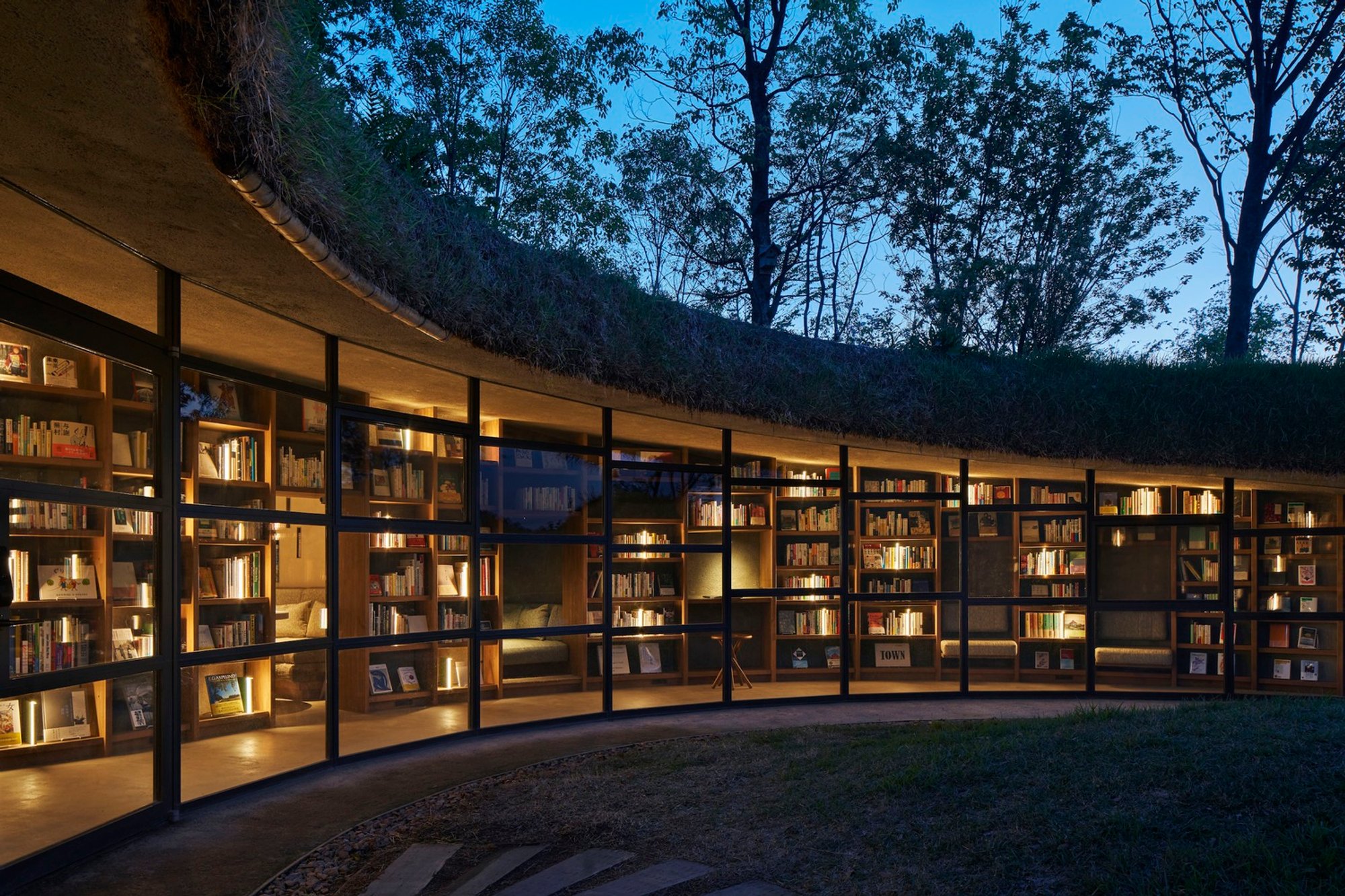
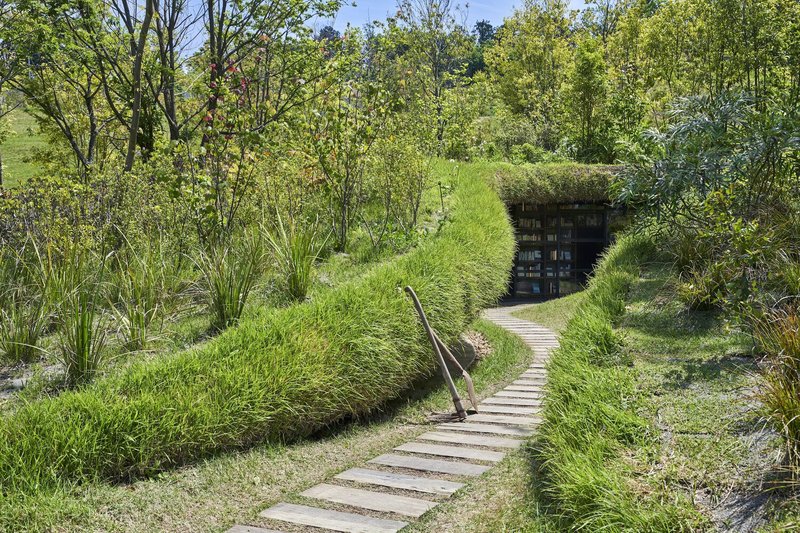
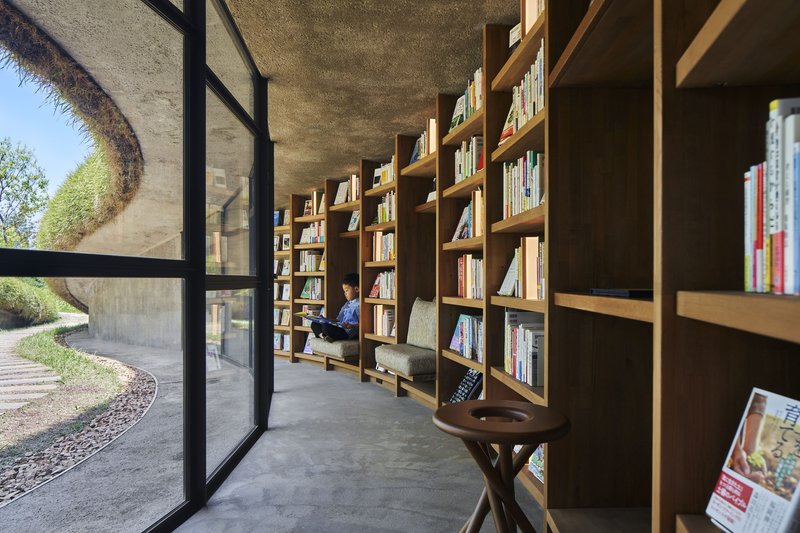
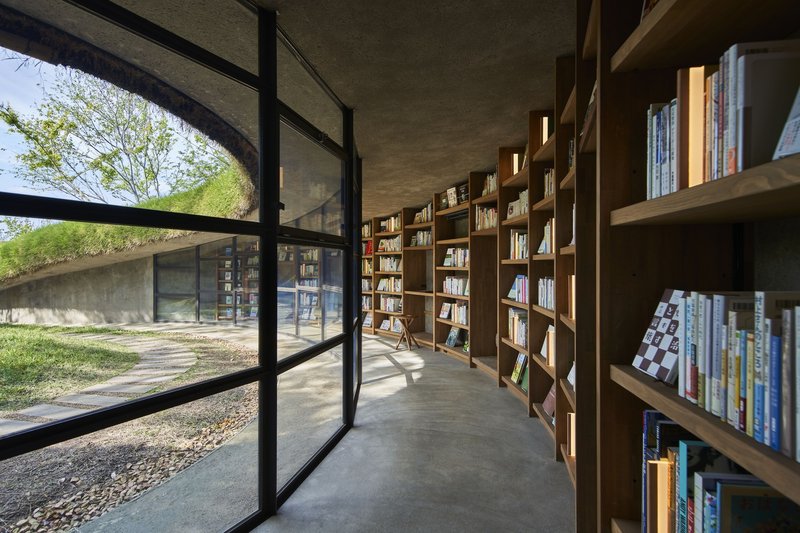
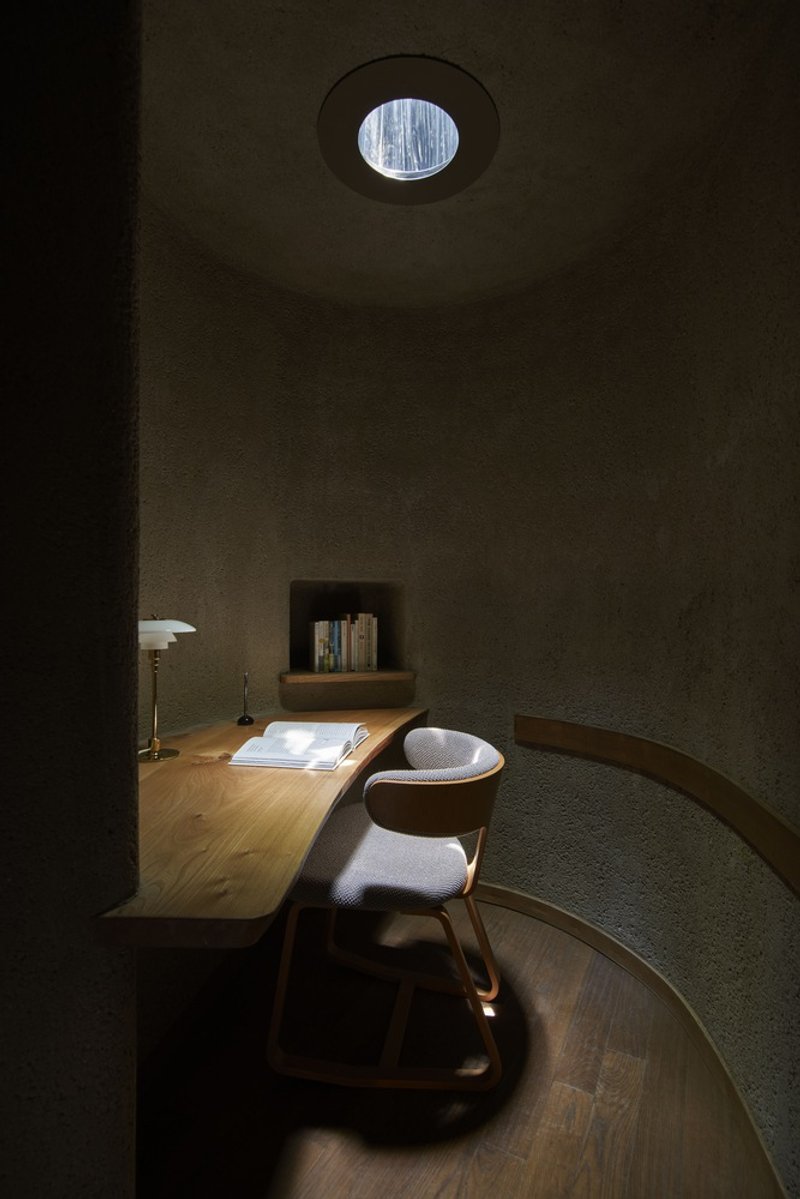
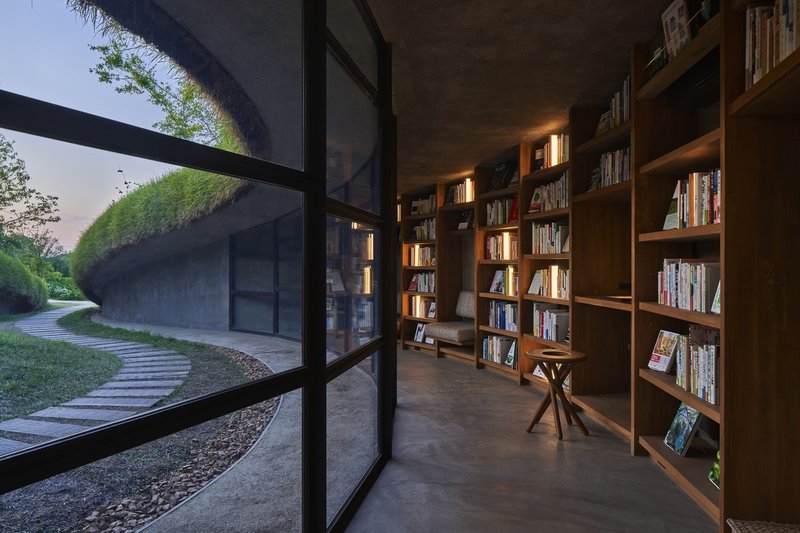
The library is designed to sit humbly beneath the soil, allowing the natural ecosystem to flourish above it. The earthen finish of the interior seamlessly connects the floor, walls, and ceiling, creating a cocoon-like atmosphere.
2. Cantilevered Concrete Structure
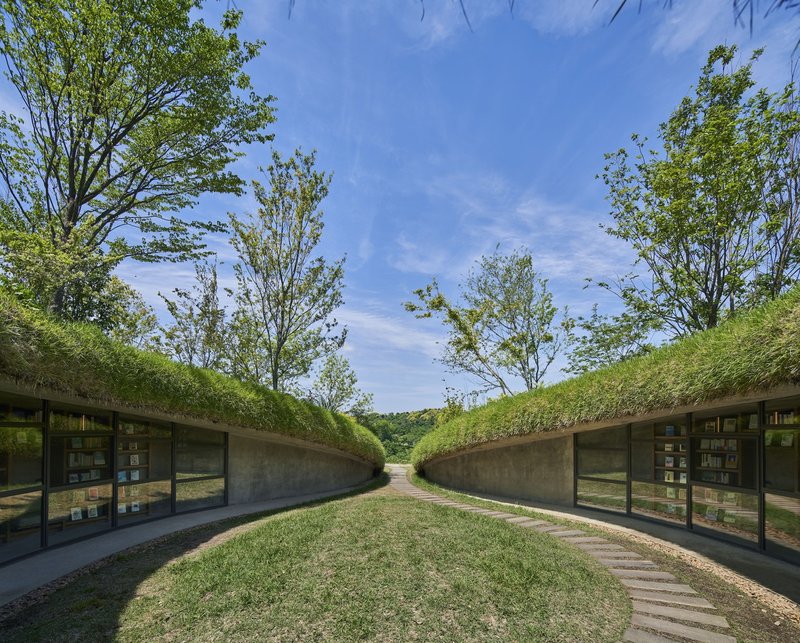
Eliminating beams and columns, the architects employed cantilevered concrete slabs supported by outer retaining walls. This innovative design ensures structural stability while preserving the library's organic aesthetic.
3. Living Roof and Water Management
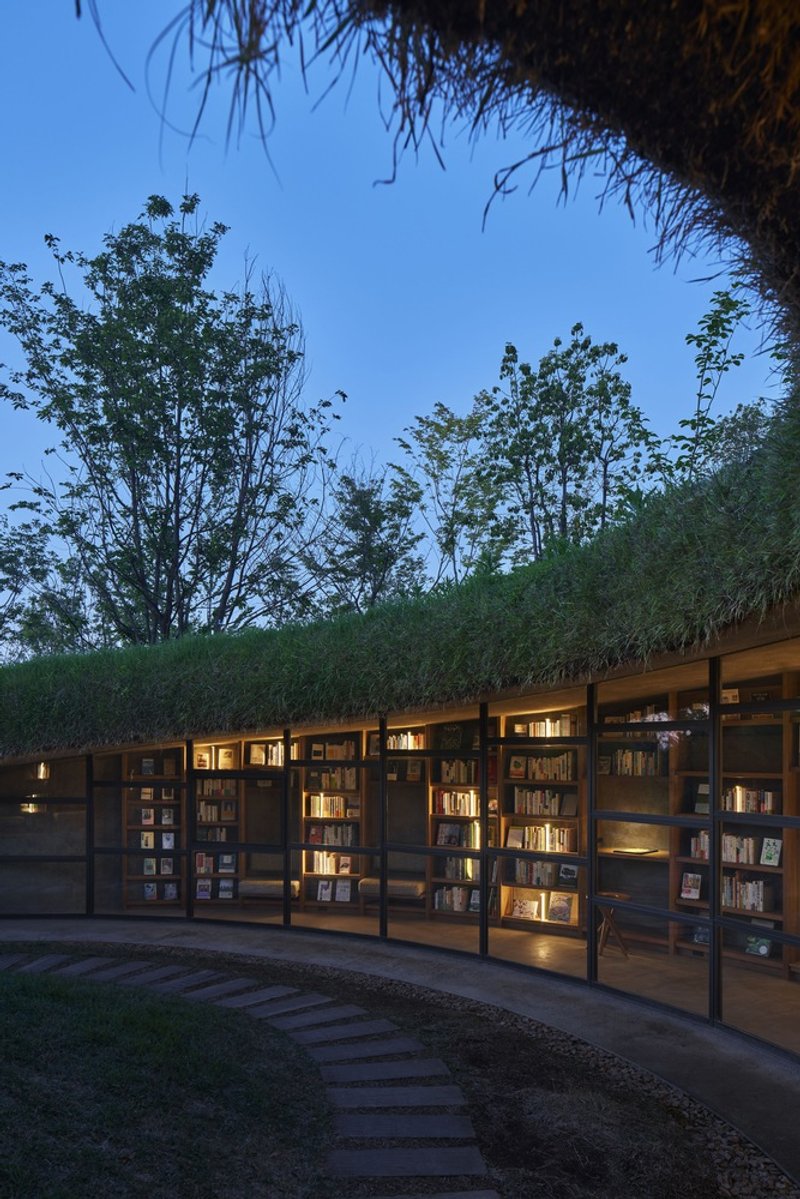
A lawn extends to the library’s vertical edges, with lush greenery hanging down. This feature adjusts irrigation and water retention, making the structure self-sufficient and climate-responsive.
Interior Design: A Womb-Like Sanctuary
Bookshelves as Structural and Aesthetic Elements
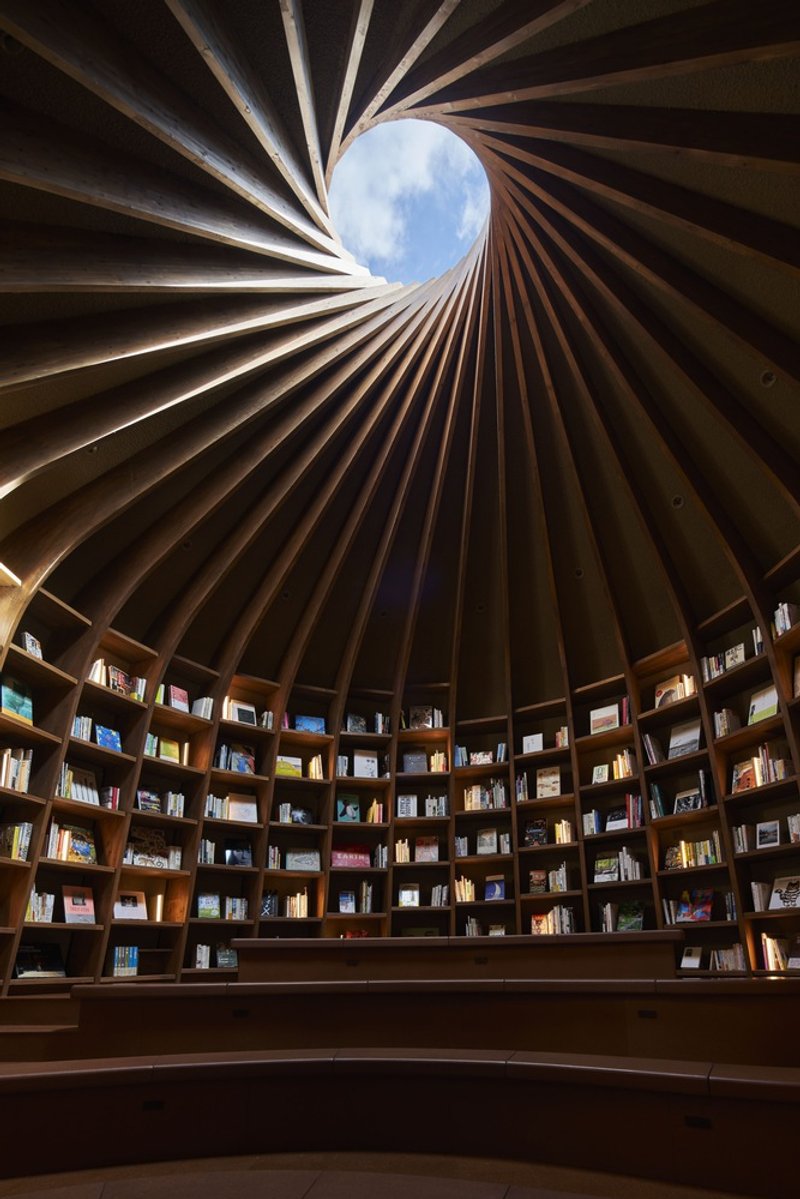
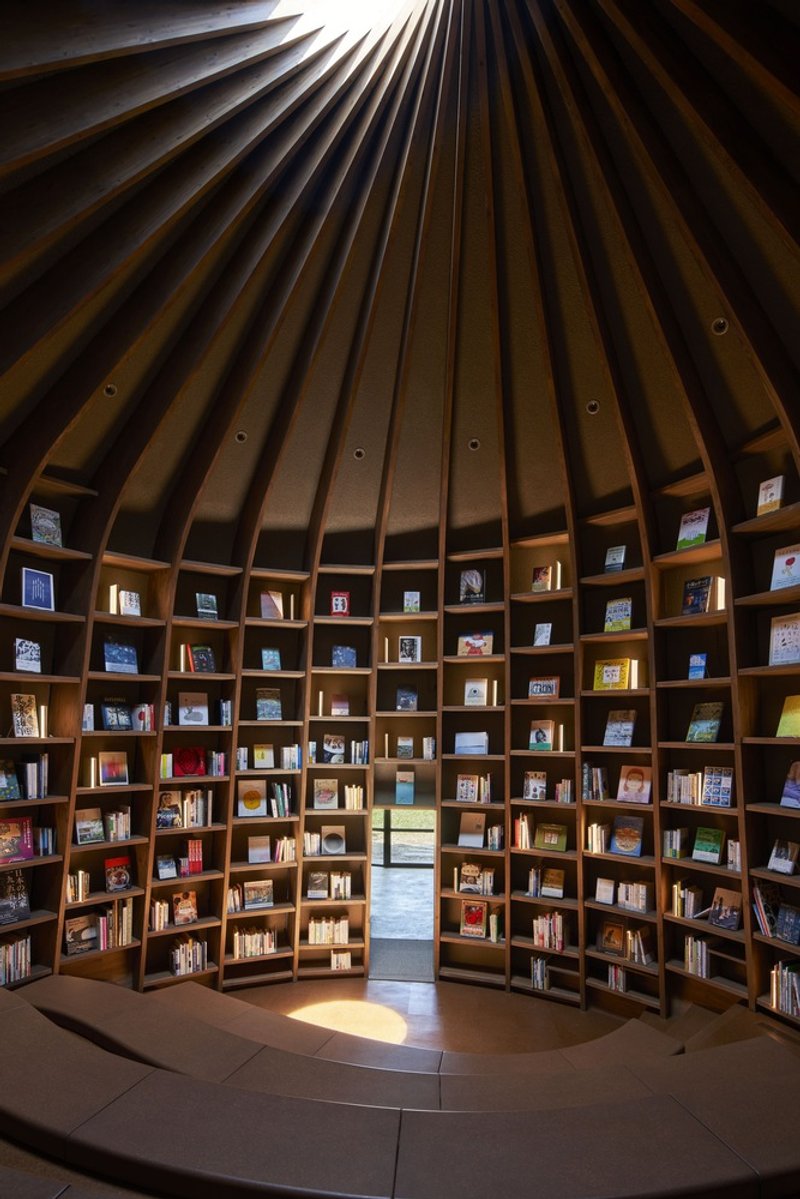
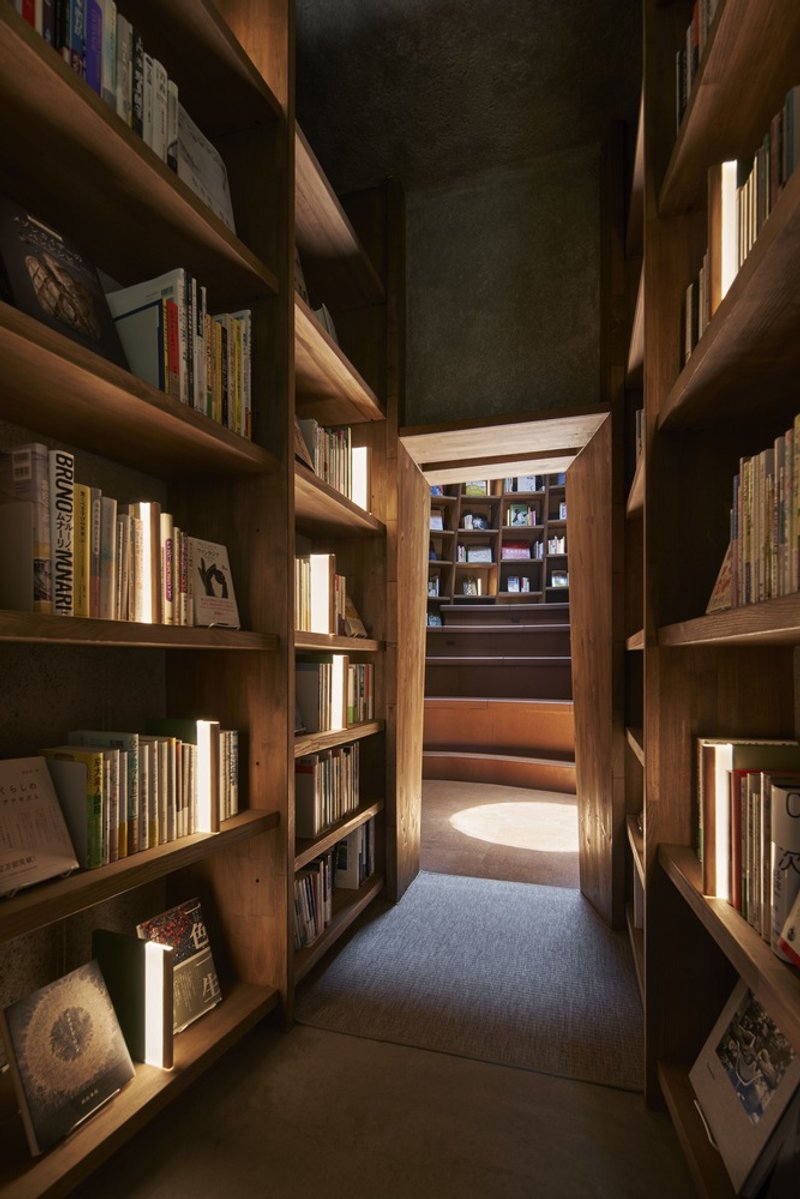
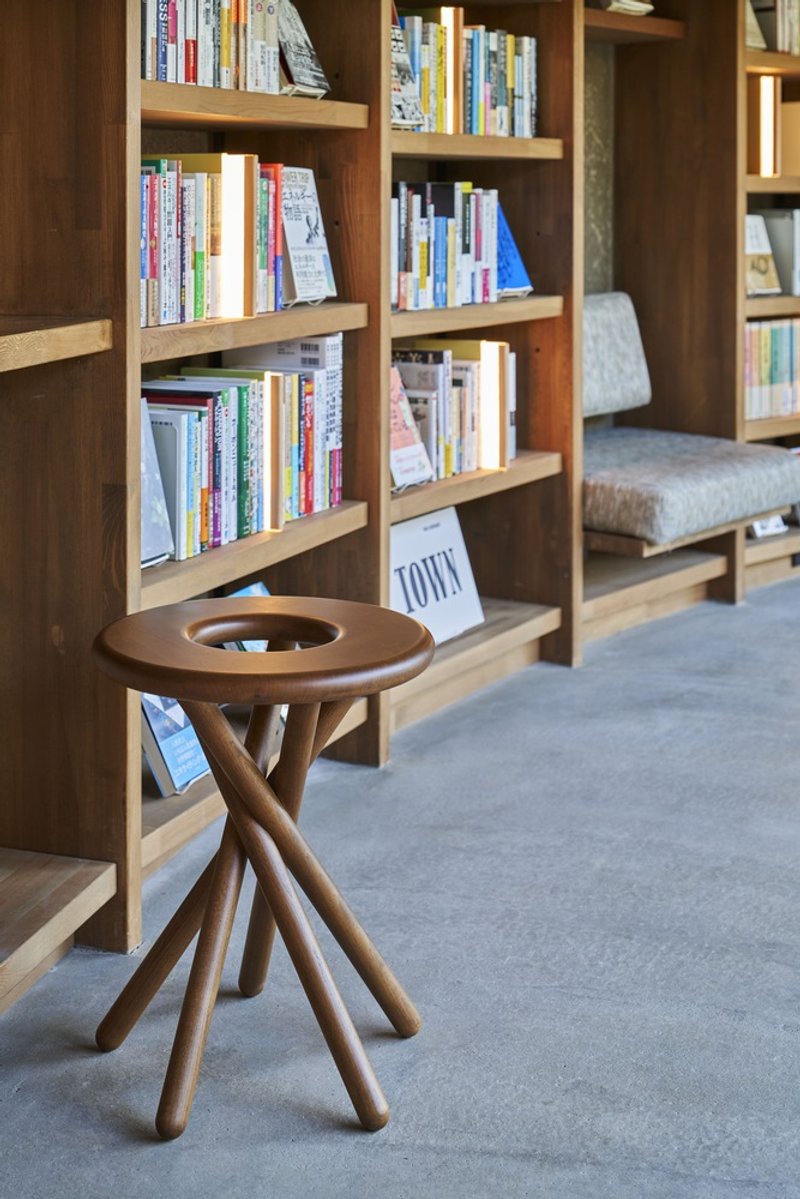
The library’s bookshelves do more than store books—they shape the space. Thin, 40mm vertical frames extend overhead, creating a reciprocal structural system that supports the space.
Storytelling Hall
At the heart of the library lies a storytelling hall, designed with stepped seating surrounded by bookshelves. This space fosters community interaction, reminiscent of an intimate amphitheater.
Child-Friendly Spaces
With varying ceiling heights dictated by the natural slope of the ground, the library features hidden nooks and crannies, creating playful spaces for children to explore and enjoy.
Sustainability and Community Impact
Ecological Restoration
By reclaiming degraded land and revitalizing it into a lush valley, the library exemplifies sustainable architecture. It integrates with its environment rather than dominating it.
Social Connection
The design embodies the philosophy of mutual support, with its reciprocal structural system symbolizing the interconnectedness of individuals within a community.
Educational Value
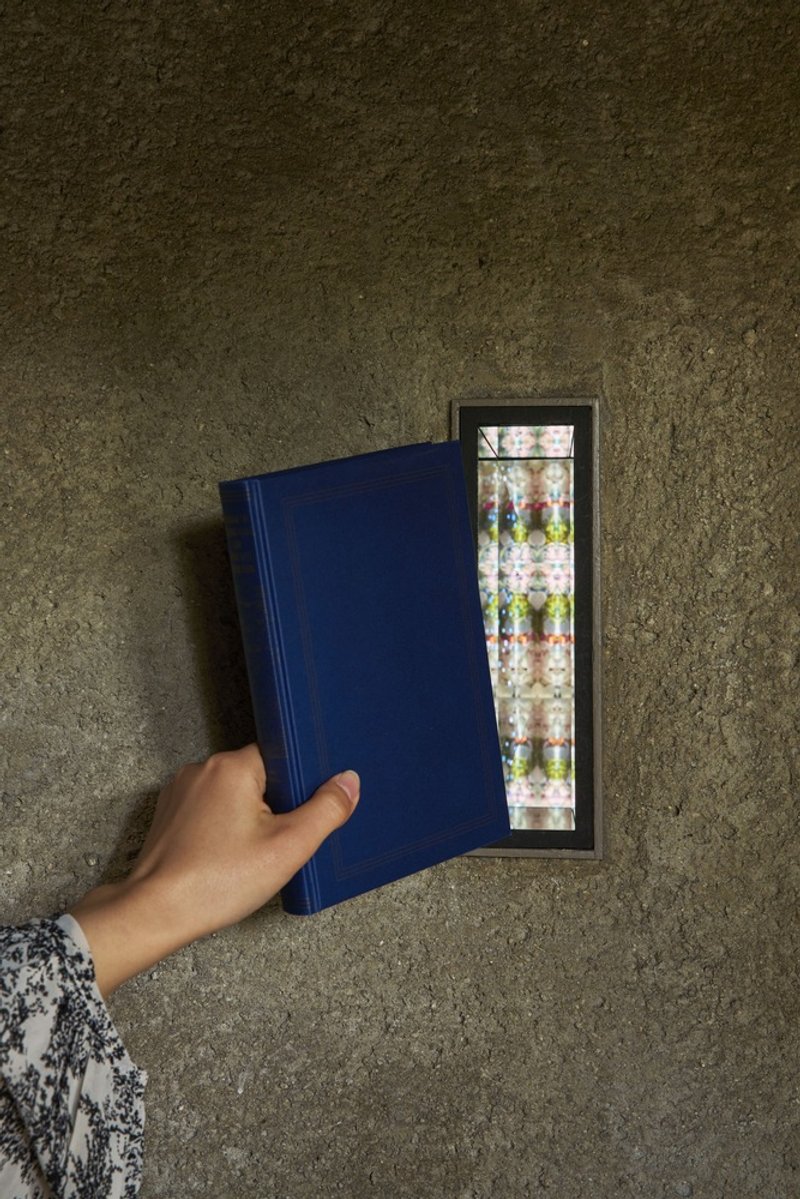
The library houses a diverse collection of books contributed by local farm workers, fostering knowledge-sharing and cultural enrichment.
The Symbolism of Light and Space
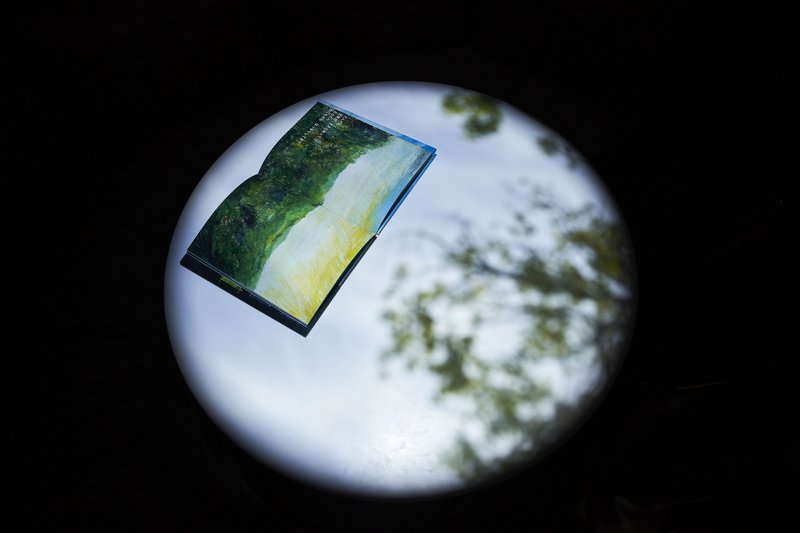
At the center of the library, a top light filters natural light into the space, symbolizing the connection between earth and sky. This design element underscores the agricultural community’s reliance on natural cycles and their unity with the environment.
A Library That Thinks of the Earth
The Library in the Earth by Hiroshi Nakamura & NAP redefines what a library can be. By integrating architecture with nature, it creates a space that is as inspiring as it is functional. This earth-integrated library is not just a building but a beacon of sustainable design and community connection.
The project serves as a model for future architectural endeavors, proving that harmonious coexistence with nature is both achievable and profoundly rewarding.
All photographs are work of Koji Fujii / TOREAL