Exploring Korean Street Food Restaurant Design: CHINGU by WORC
Discover how CHINGU blends Korean street food culture with Mexican design, creating a vibrant, immersive dining and architectural experience.


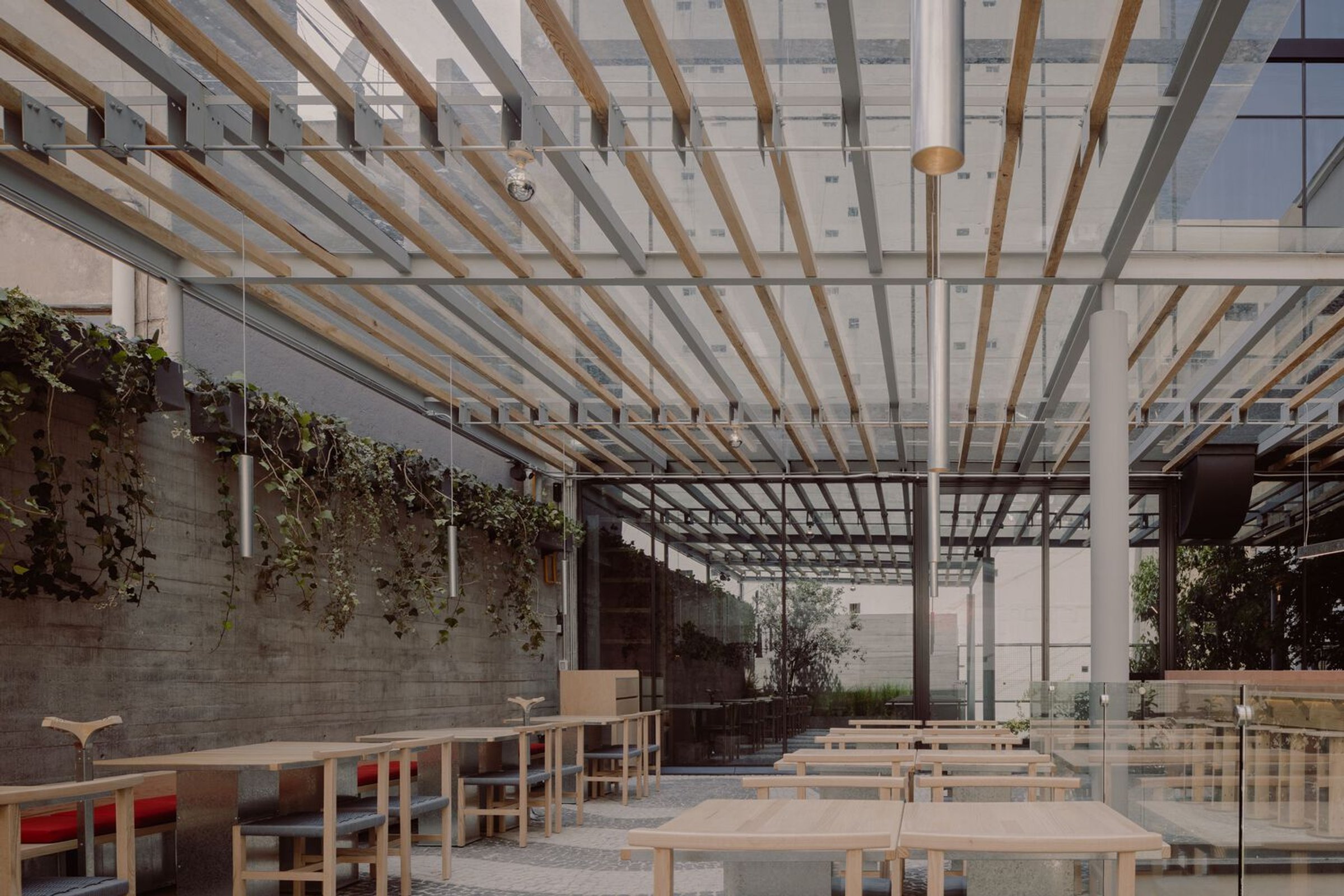
The CHINGU Restaurant in Mexico City is a prime example of how architecture and design can bring cultural experiences to life. Designed by the Mexican architectural firm WORC, this project skillfully combines the vibrant aesthetics of Seoul's street food scene with the local context of Mexico’s Condesa neighborhood. The result is an immersive space that stands as a beacon for Korean street food culture in the heart of Mexico.
A Conceptual Fusion of Cultures
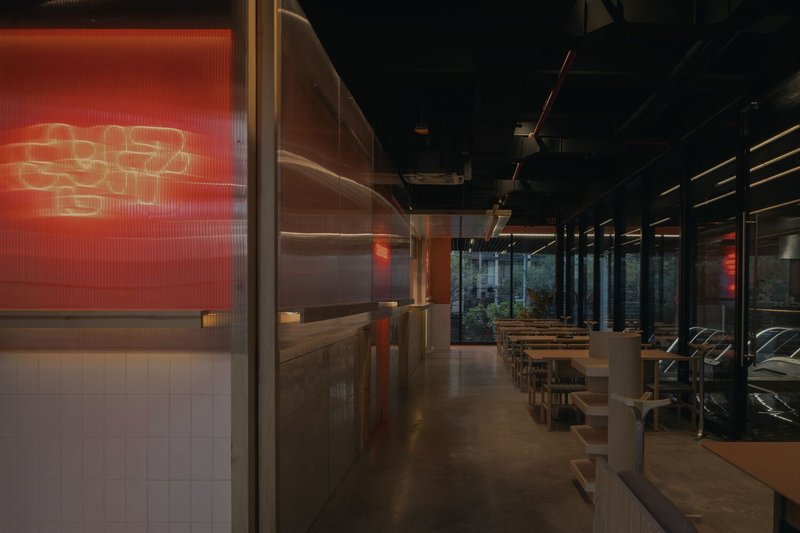
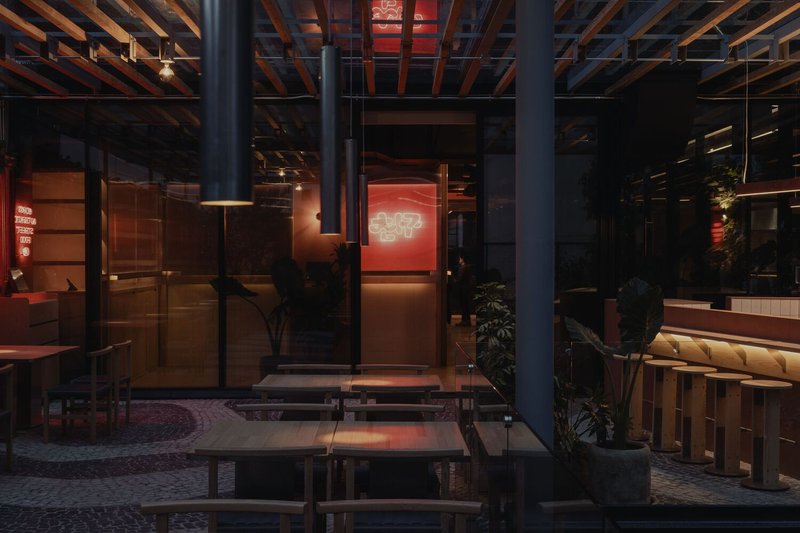
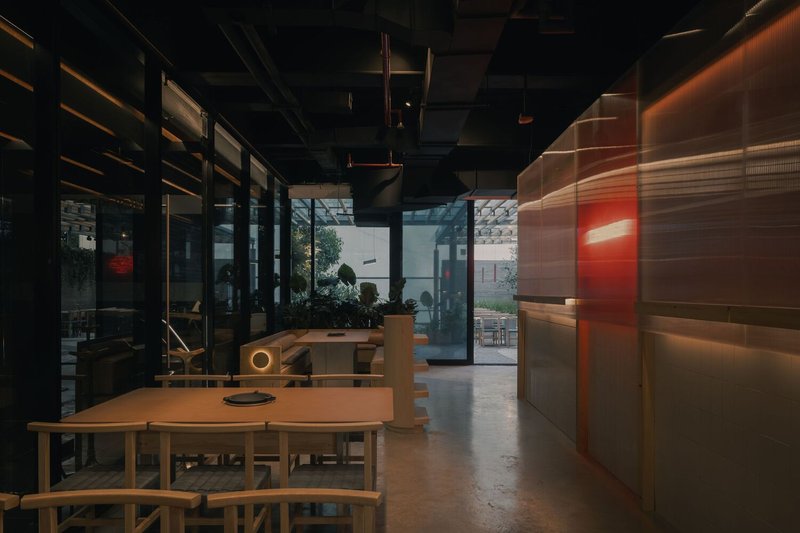
CHINGU's design reflects its core concept: recreating the authentic flavors and ambiance of Seoul’s street food while seamlessly blending with the Mexican architectural vernacular. This duality is established from the moment visitors step inside. A bright red neon sign that reads "KDMX AUTHENTIC STREET FOOD" welcomes diners, setting the tone for an exciting cultural fusion.
Materials That Tell a Story
Material selection plays a pivotal role in capturing the essence of both Korean and Mexican influences. The design emphasizes neutral tones with vibrant accents, creating an understated yet dynamic environment. Here are the key materials used:
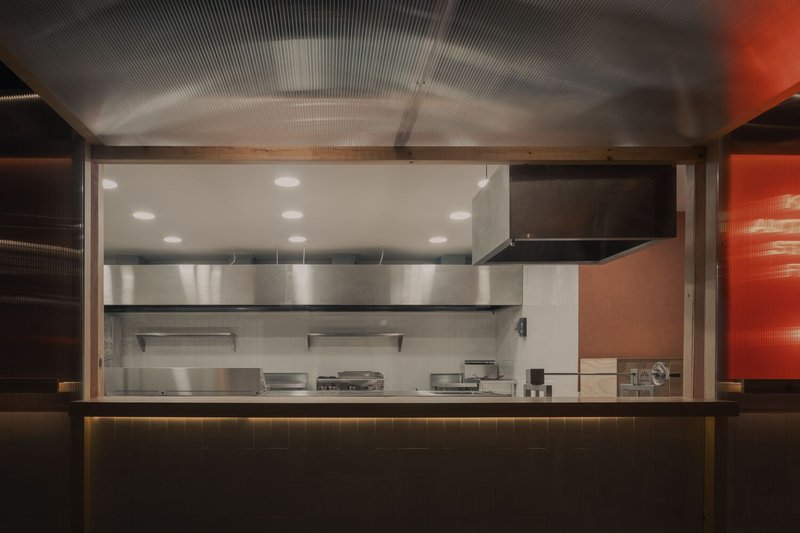
- Stainless Steel: Predominantly featured in the kitchen and furniture, stainless steel reflects the practicality and sleek aesthetic often seen in modern Korean interiors.
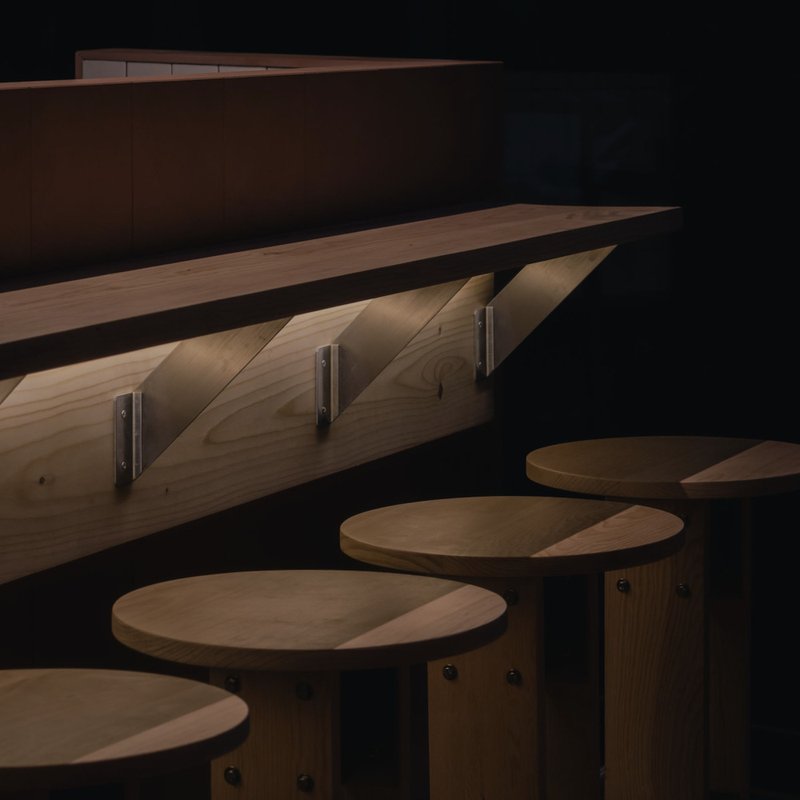
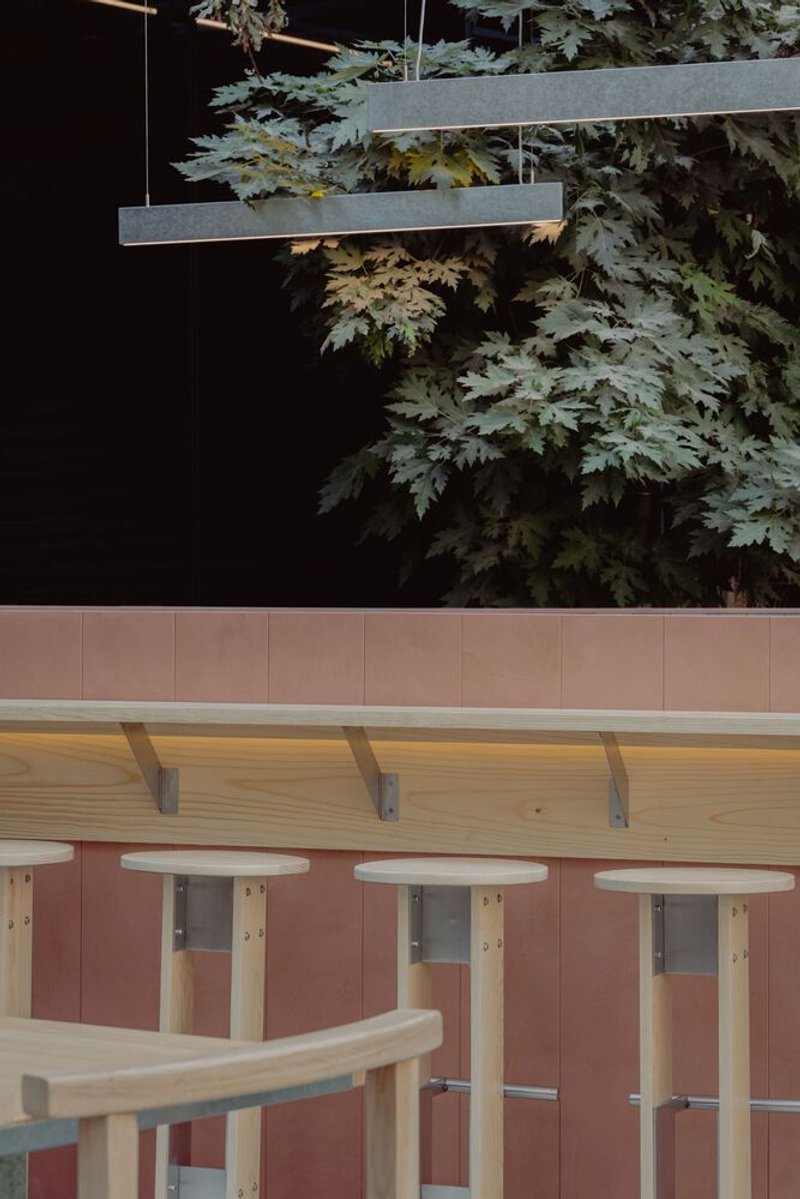
- Pine Wood Accents: Introduced in chairs, benches, and tables, these elements add warmth and connect the space to the traditional Mexican preference for natural textures.
- Polished Concrete: The flooring choice enhances the minimalist look while offering durability.
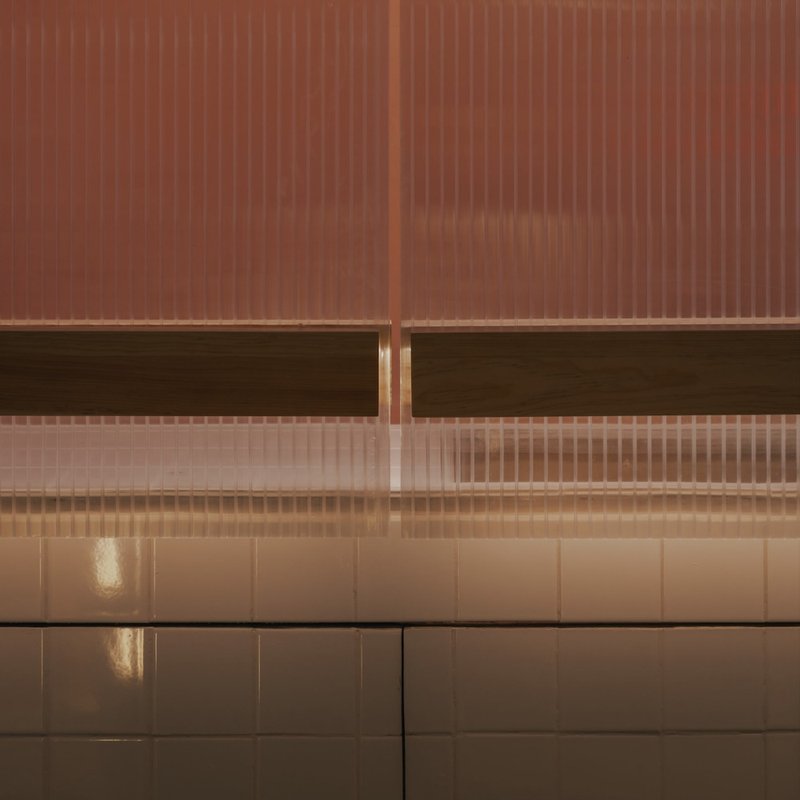
- White Tiles: Used for the bar, these tiles subtly bounce light, making the space feel intimate and welcoming.
Design Highlights
The Layout
CHINGU features a well-thought-out spatial organization that encourages social dining, a hallmark of both Korean and Mexican cultures. Key elements include:
- Long Tables: Encourage communal dining experiences.
- Open Kitchen: Allows diners to watch the preparation of Korean street food, connecting them to the culinary process.
- Partition Walls: Made of glass and translucent materials, these create a sense of openness while maintaining privacy.
Terrace Integration
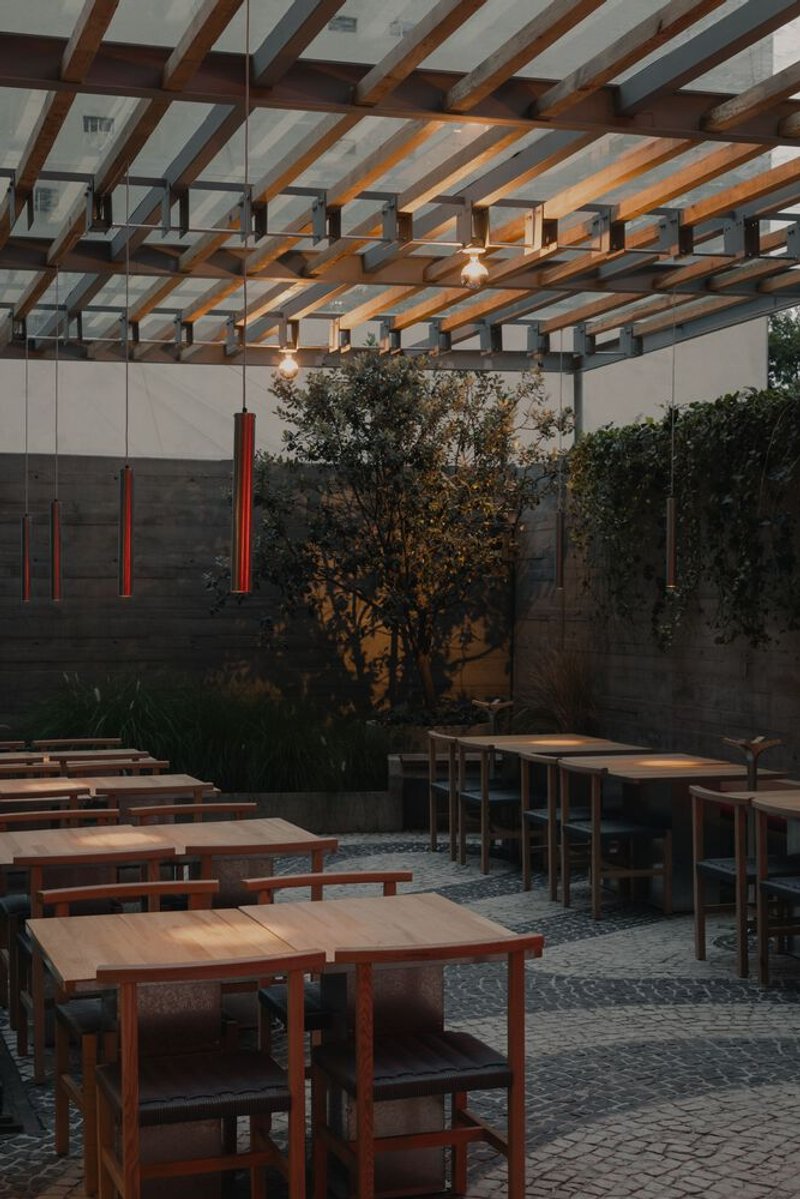
The terrace stands out as a hybrid space designed to blend the openness of outdoor dining with the coziness of an indoor setting. It includes:
- Hanging Planters: Sliding along a concrete wall, they add greenery and a sense of life.
- Steel Pergola: Incorporates hanging lights that emit red neon tones, tying the terrace design back to the restaurant’s vibrant core aesthetic.
Why Lighting Is Key in Korean Street Food Restaurant Design
Lighting plays a crucial role in CHINGU's ambiance, aligning with both functional and aesthetic goals:
- Neon Lights: The red neon signage and lamps provide a lively yet intimate atmosphere reminiscent of Seoul’s bustling street food alleys.
- Reflective Surfaces: Materials like polished concrete and stainless steel amplify light, creating a sense of depth and energy within the space.
Overcoming Design Challenges
The project presented a unique challenge: merging the contemporary aesthetics of Seoul with the traditional Mexican context. WORC addressed this by:
- Carefully balancing materials to represent both cultures.
- Using minimalist design principles while incorporating bold, culturally significant elements like neon signage and wood accents.
Key Takeaways for Korean Street Food Restaurant Design
CHINGU offers valuable lessons for architects and designers aiming to create culturally inspired restaurant spaces:
- Material Selection Matters: Choose materials that are practical yet evocative of the culture being represented.
- Lighting Defines Ambiance: Use lighting to replicate the vibrancy of street food environments.
- Balance Between Cultures: Seamlessly integrate local and foreign influences to create a unique and inviting space.
The CHINGU Restaurant in Mexico City exemplifies the best in Korean street food restaurant design, proving that cultural fusion can elevate architectural and culinary experiences. By combining Seoul's street food energy with the warmth of Mexican design elements, WORC has crafted a space that invites diners to explore, share, and immerse themselves in an unforgettable cultural journey.
All Photographs are work ofZaickz Moz