Futurra: Redefining Sustainable Architecture Through Urban Farming
Blurring boundaries between city and agriculture, Futurra envisions a sustainable architecture model that redefines urban farming for the future.


In the evolving dialogue of sustainable architecture, urban farming architecture has emerged as a transformative concept. "Futurra"—a People's Choice Award entry of the Urban Meal Mine competition by Henry, Minhui Lee, and Lim Puisan—takes this vision forward. The project reimagines how cities can integrate farming, architecture, and community engagement into a cohesive and resilient urban system.
Reconnecting Land, Architecture, and People
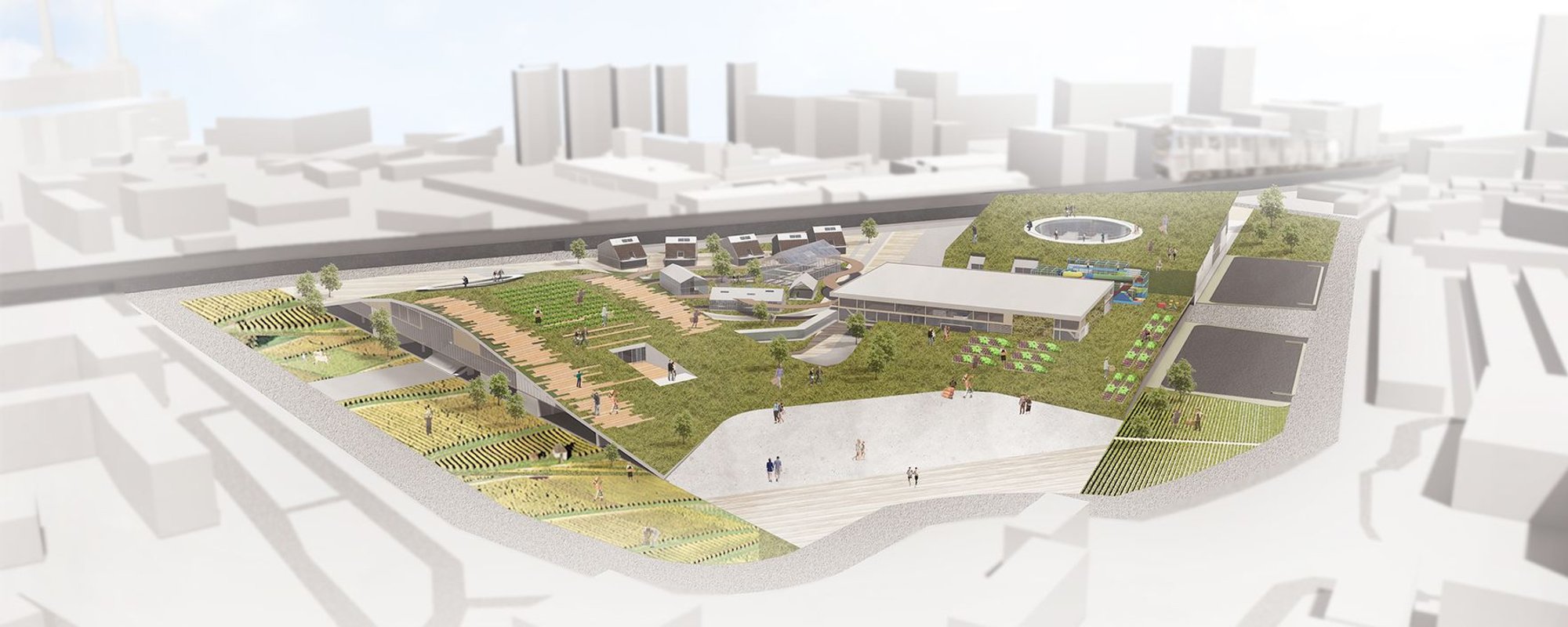
Futurra challenges the traditional divide between agricultural landscapes and built environments. Instead of treating farming as an activity confined to the rural, the project weaves agriculture directly into the city fabric. By doing so, it nurtures new relationships between farmers, consumers, and the built environment, transforming the way food is grown, distributed, and experienced.
This approach makes Futurra more than just a physical space—it becomes a living framework where architecture fosters both ecological resilience and social sustainability.
Architecture as an Ecosystem
At its core, Futurra is not simply a marketplace or urban farmland. It is designed as a multi-functional ecosystem where:
- Information exchange happens through educational workshops and interactive communal spaces.
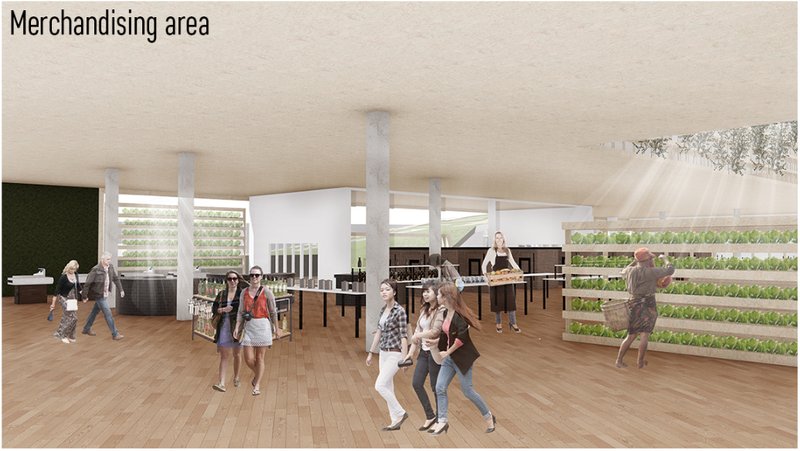
- Public engagement is fostered in markets and edible gardens that invite participation.
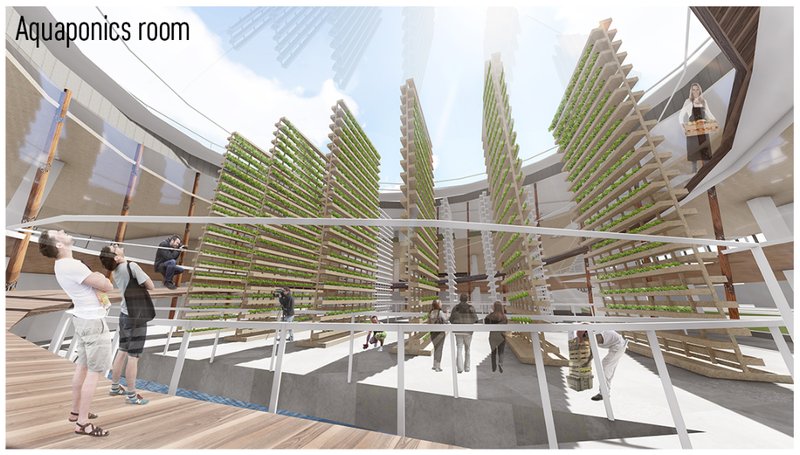
- Sustainable farming practices such as aquaponics and aeroponics are integrated seamlessly within the building.
Through this model, architecture becomes a medium for cultivating environmental awareness, bridging urban lifestyles with natural cycles.
A Journey Through Time: From Tradition to Innovation
The project also acknowledges the cultural and historical trajectory of agriculture:
- Ancient Farming Practices: Rooted in communal and survival-based cultivation.
- Agricultural Revolution: Mass production leading to both food abundance and waste.
- Communal Gardens of the 20th Century: Local responses to industrialized food systems.
- Urban Farming of Today: A modern reinvention that places food production at the heart of sustainable architecture.
By situating itself in this continuum, Futurra creates a new agricultural paradigm that is neither nostalgic nor purely futuristic—it is a balanced synthesis.
Spatial Strategy and Program Design
Futurra’s architecture is designed to serve diverse community needs. Its core features include:
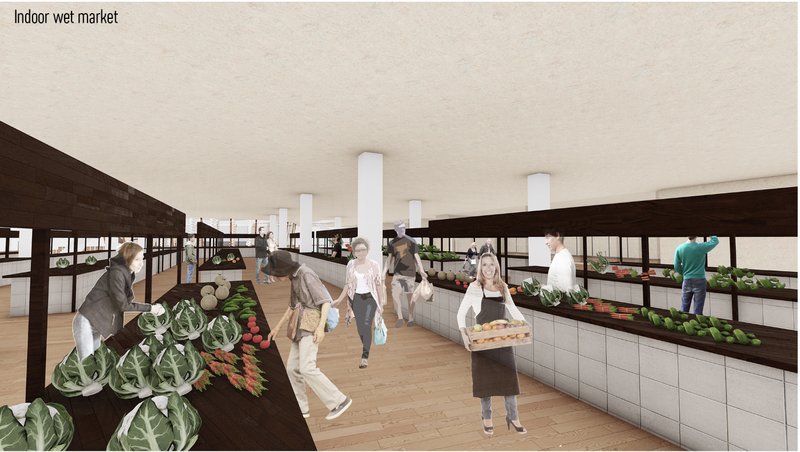
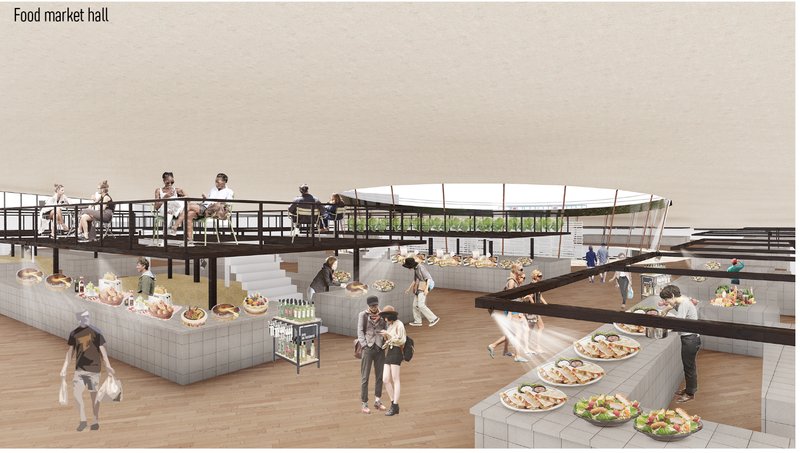
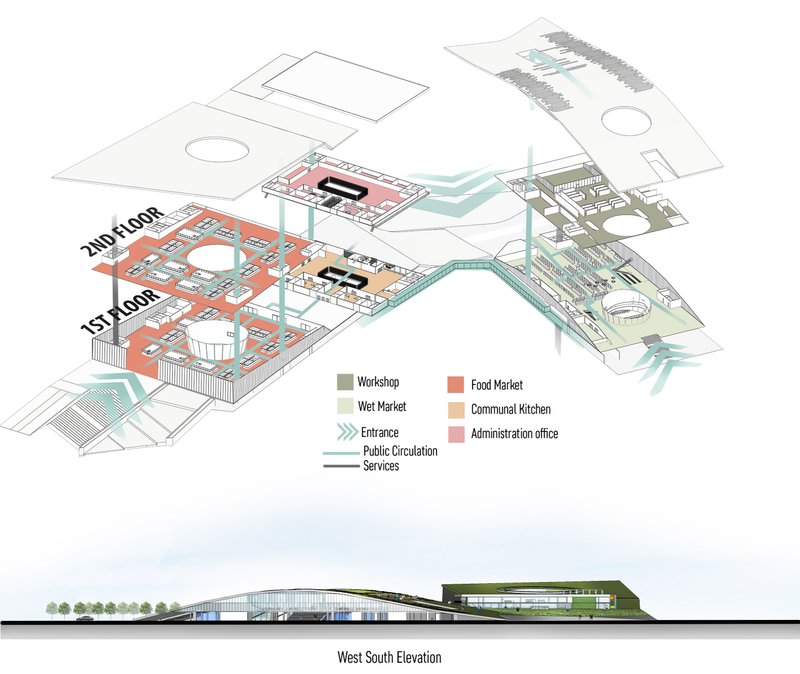
- Food Market Hall & Wet Market: Spaces where local produce is showcased and exchanged.
- Workshops & Communal Kitchens: Platforms for education, shared cooking, and cultural exchange.
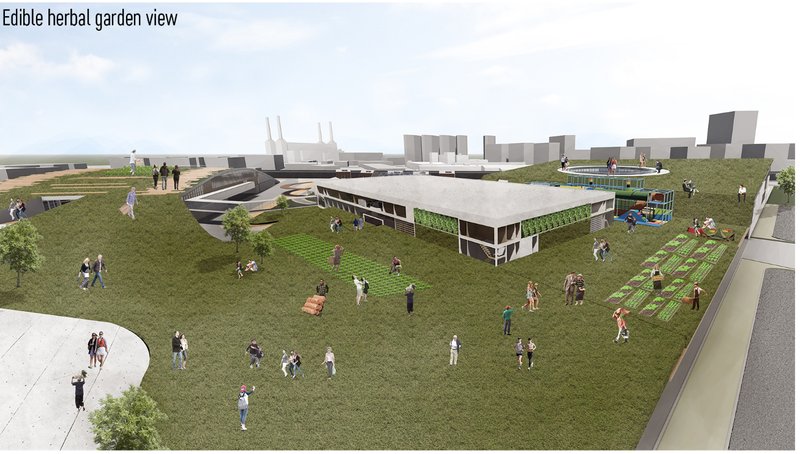
- Edible Herbal Gardens & Aquaponics Farming Centre: Interactive spaces merging science, technology, and ecology.
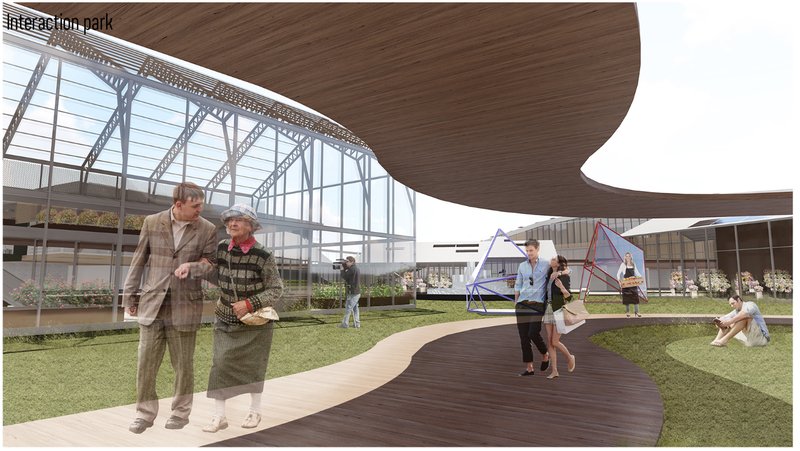
- Public Green Spaces: Accessible urban landscapes for recreation and collective experiences.
The architectural design ensures fluid connections between built structures and farmland, reflecting the natural grain of the site while maximizing opportunities for interaction.
Sustainable Building Systems
Futurra employs advanced green architecture strategies to enhance resilience:
- Facade Systems: Designed for optimized daylight exposure and seasonal plant growth.
- Aeroponic Irrigation: Reducing water consumption while maximizing yield.
- Mechanical and Biological Filters: Supporting aquaponics systems for food production.
- Energy Efficiency: Achieved through strategic orientation and eco-friendly construction.
These innovations make Futurra an adaptive model for climate-responsive design, capable of addressing the urban food crisis while lowering environmental impact.
Social Impact and Community Integration
Beyond ecological sustainability, Futurra emphasizes social cohesion. It creates spaces where people learn, share, and grow together—redefining the marketplace as a hub of cultural and ecological exchange. By bringing food production closer to citizens, it promotes healthier lifestyles, food literacy, and a stronger sense of belonging.
Futurra exemplifies the future of urban farming architecture by integrating agriculture, sustainability, and community within a single architectural framework. As cities face challenges of climate change, food security, and social fragmentation, projects like Futurra point towards resilient, people-centered solutions.
With its holistic vision, Futurra stands not just as an architectural project but as a blueprint for sustainable urban living—where farming and architecture grow together for a more resilient tomorrow.