Grentschel School Extension by ahaa: A Harmonious Educational Landscape in Lyss, Switzerland
Grentschel School Extension by ahaa harmonizes with the landscape, featuring flexible learning spaces, concrete façades, and daylight-filled interiors in Switzerland.


The Grentschel School Extension by ahaa architects in Lyss, Switzerland, redefines educational architecture through a sensitive dialogue between landscape, community, and adaptable learning spaces. Completed in 2021, the 3,500-square-meter extension expands the existing campus while respecting the natural rhythm of its surroundings — particularly the gentle flow of the Grentschel stream, which subtly organizes the layout of the entire complex.
Context and Site Integration
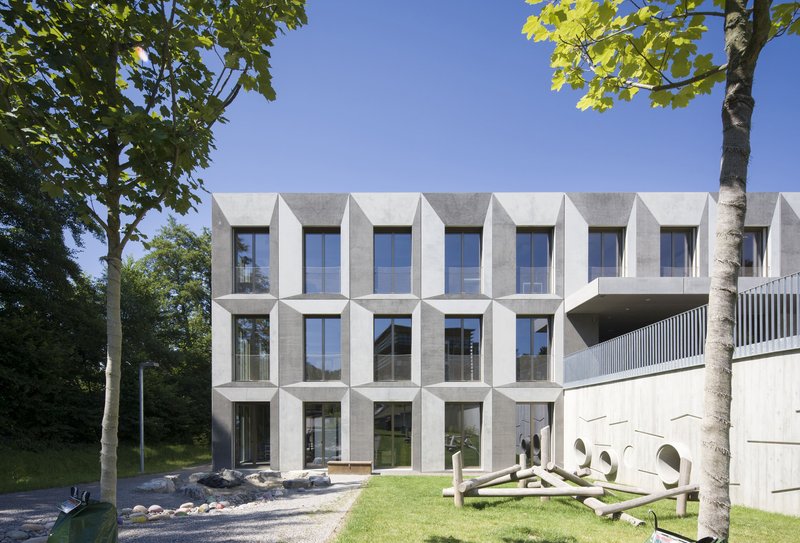
At first glance, the school buildings appear to be scattered freely across the valley floor. Yet, the project reveals a carefully orchestrated spatial order. Each building volume aligns itself with the course of the stream, creating a composition that feels both natural and intentional. This relationship between architecture and landscape establishes a fluid outdoor environment, where open spaces foster connection and movement across the campus.
ahaa’s design philosophy embraces this topographical logic, using it to guide the placement of new structures. The result is an ensemble of buildings that blend harmoniously with the existing school facilities while forming a new, cohesive educational identity.
Program and Spatial Organization
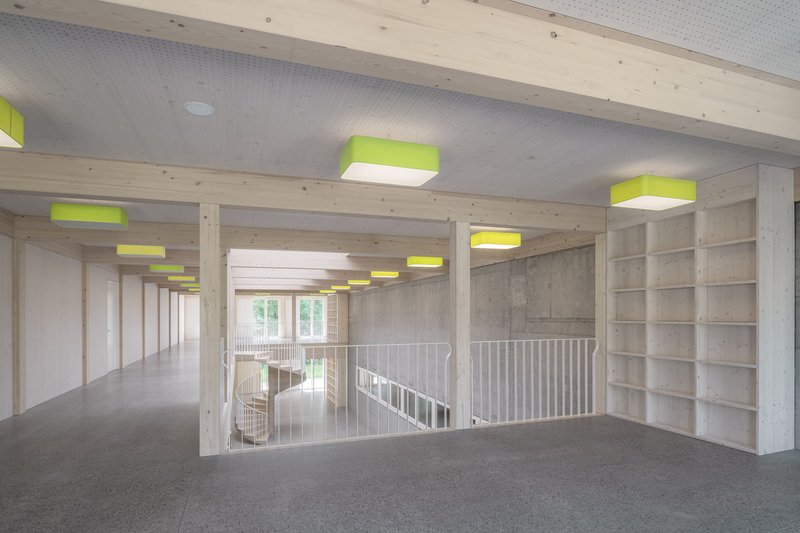
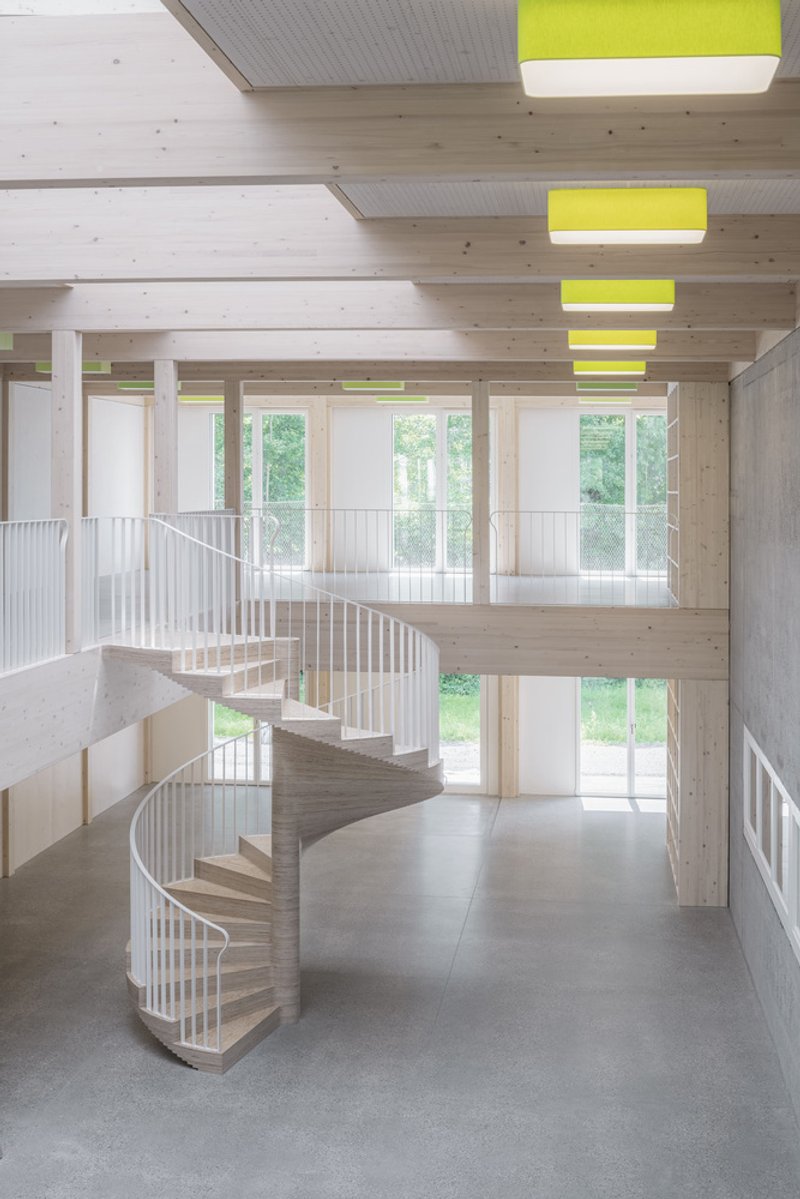
The extension consists of two new volumes that cater to different functions within the school. At the heart of the campus lies a two-story central building, which accommodates communal spaces used by all students — including an assembly hall, library, and day school facilities.
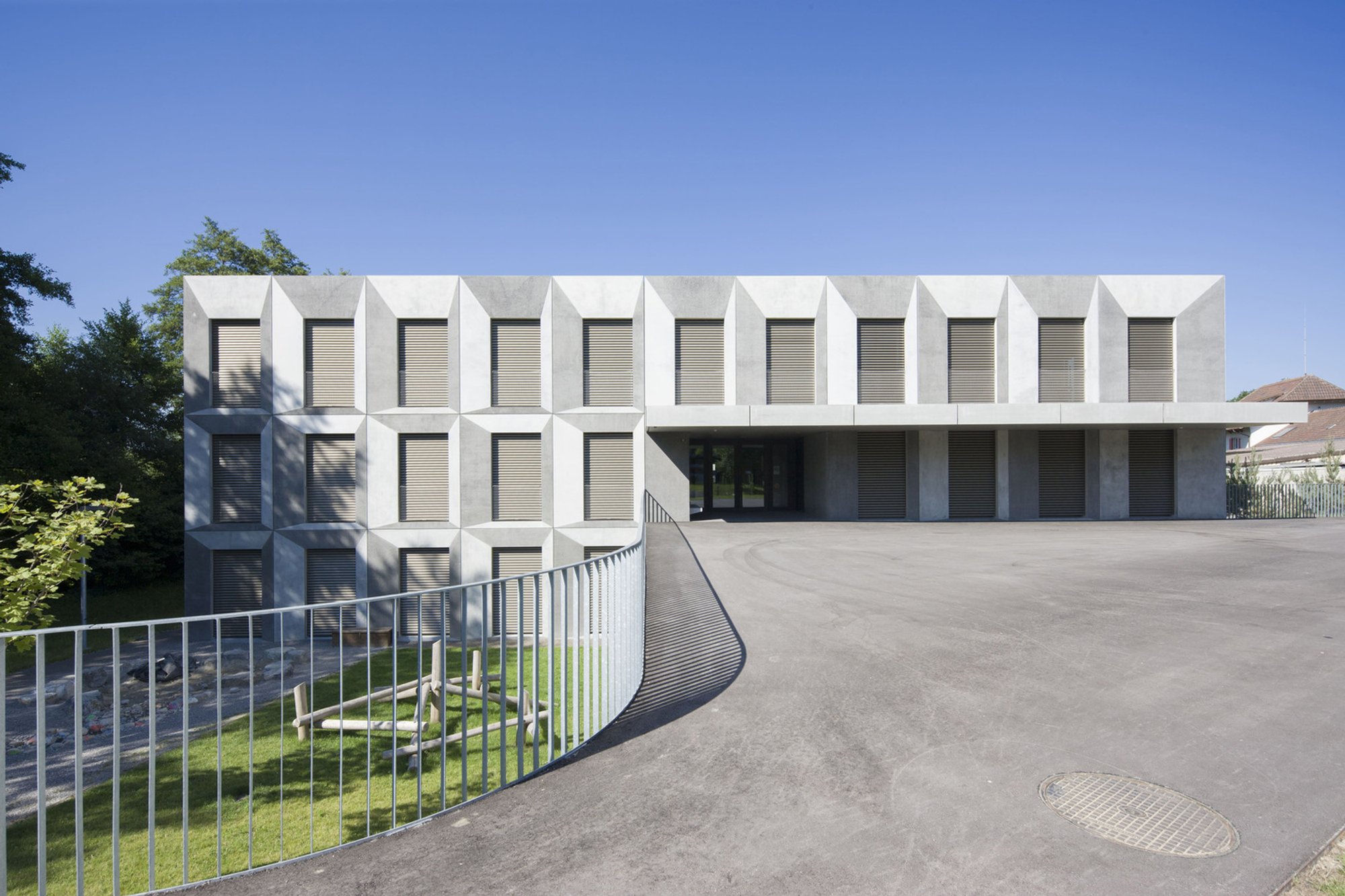
To the east, a three-story school building houses classrooms for various age groups, from kindergarten to primary and remedial education. This division of spaces supports a clear functional organization while promoting social interaction and flexibility.
Flexible and Future-Oriented Design
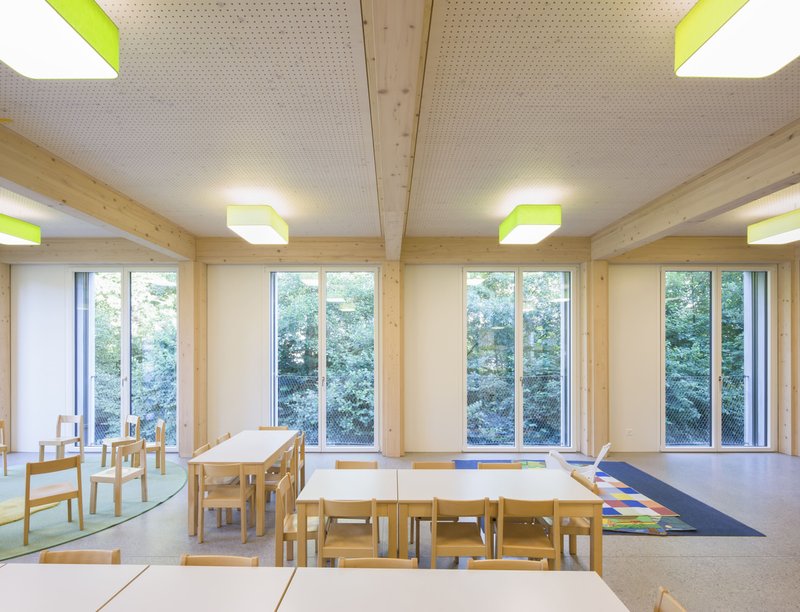
Recognizing that educational needs evolve rapidly, ahaa designed a structural framework that allows the internal layout to adapt over time. The didactic use of rooms is intentionally interchangeable, ensuring the spaces remain relevant as pedagogical approaches shift.
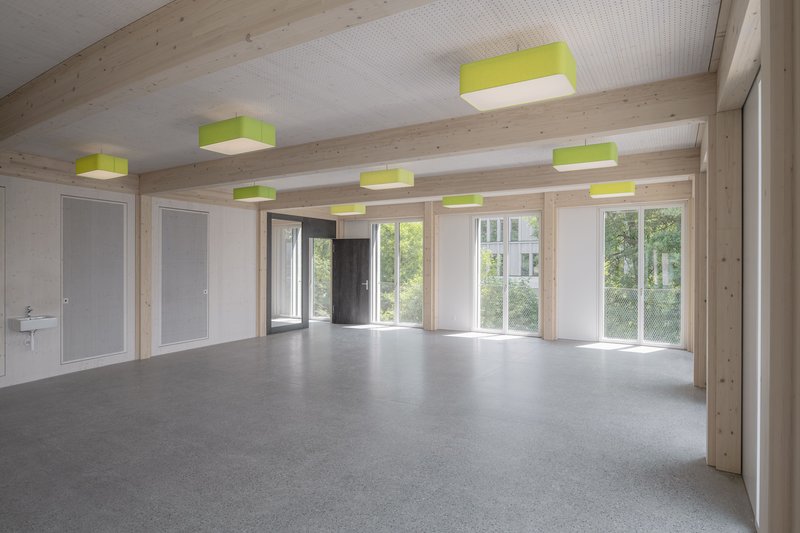
Each classroom — whether for young children or older students — shares identical proportions and dimensions, fostering equality in spatial quality. Large, floor-to-ceiling windows on two sides bring in abundant natural light and visually extend the interiors into the green landscape, encouraging a continuous relationship between learning and nature.
Materiality and Architectural Expression
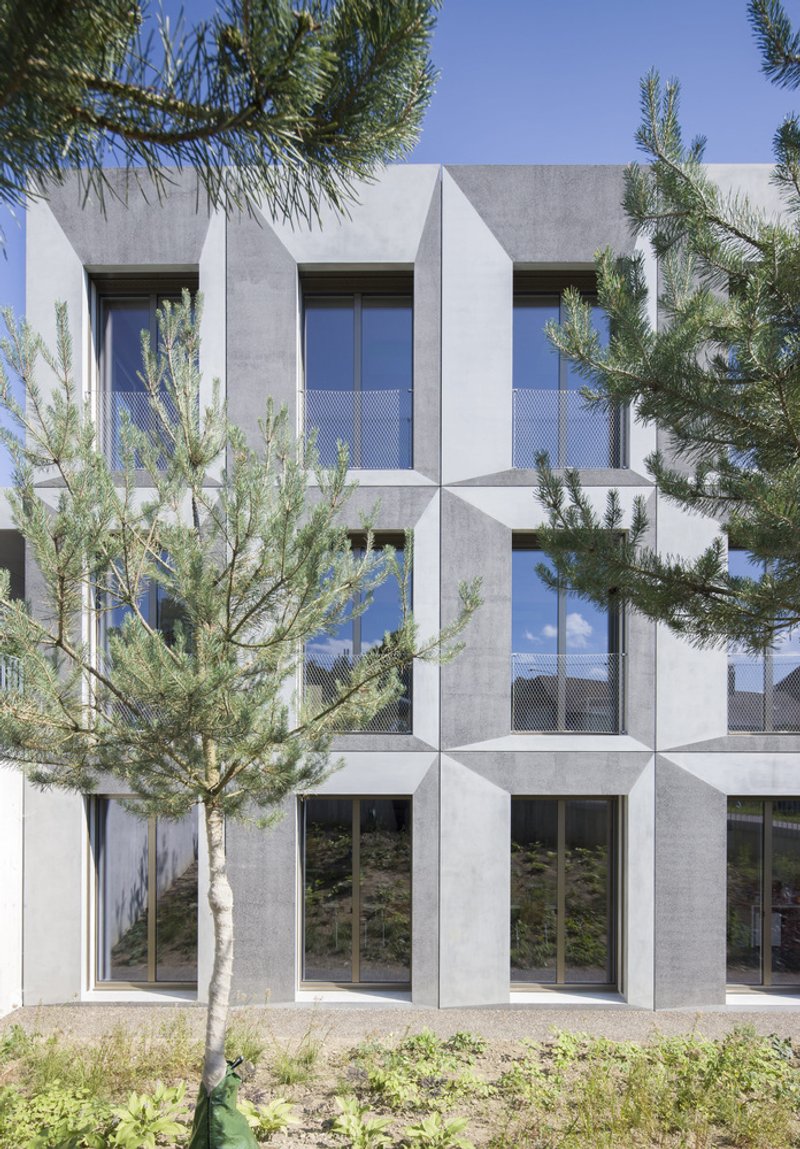
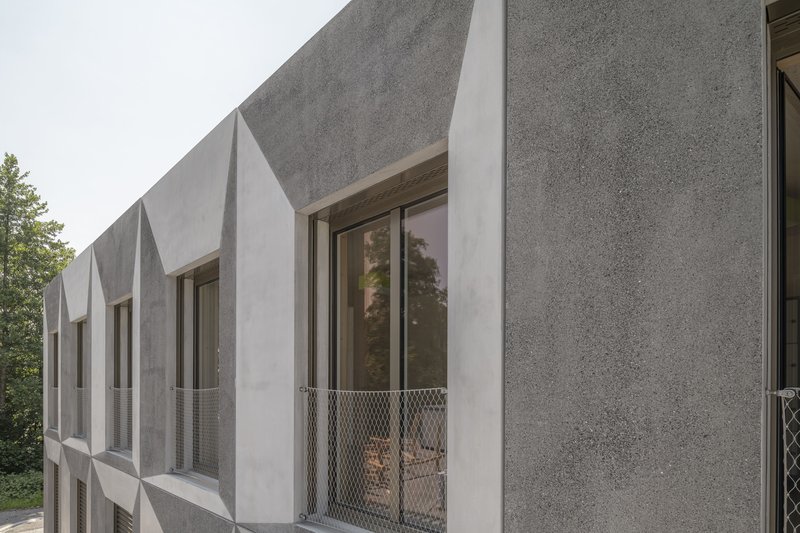
The façade design exemplifies rational simplicity infused with subtle elegance. Constructed in concrete, the exterior is repetitive and rectilinear, emphasizing order and rhythm. However, alternating smooth and sandblasted surfaces introduce a playful variation, creating a dynamic trompe-l'œil effect that suggests depth and texture without physical complexity.
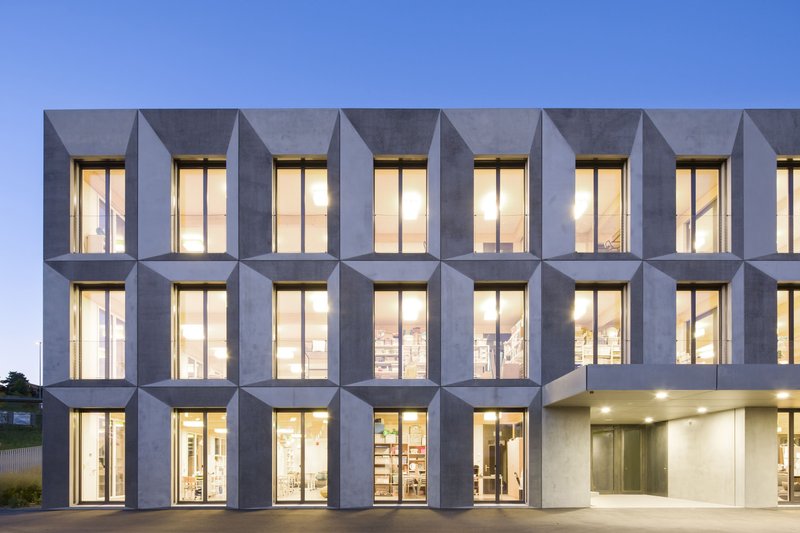
This nuanced surface treatment imbues the buildings with a refined, classical character that contrasts beautifully with the untamed landscape of the Grentschel stream. The interplay of light, shadow, and texture brings a quiet vibrancy to the architecture — a visual dialogue between restraint and freedom.
Light, Warmth, and Interior Character
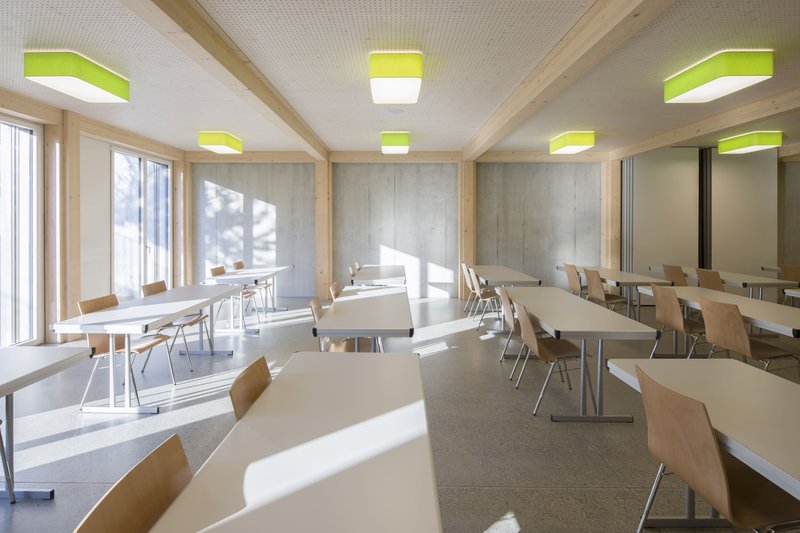
Inside, the palette shifts to warm wood tones and exposed concrete, achieving a calm and tactile atmosphere conducive to learning. Natural light filters through generous windows, animating the spaces throughout the day. The interiors balance durability with comfort, offering students and teachers a serene and inspiring setting.
By pairing robust materials with transparency and openness, ahaa creates an environment that nurtures curiosity, collaboration, and well-being — qualities essential to contemporary education.
The Grentschel School Extension stands as a testament to ahaa’s thoughtful approach to context-sensitive educational design. It seamlessly integrates architecture, landscape, and flexibility, ensuring the campus can evolve alongside the community it serves. More than a functional addition, the project reimagines how learning spaces can connect students with their surroundings, fostering both academic and emotional growth.