Huawei Unveils New Water Factory
Innovative Water Treatment Solutions at Huawei's Facility
 Image: © MVRDV
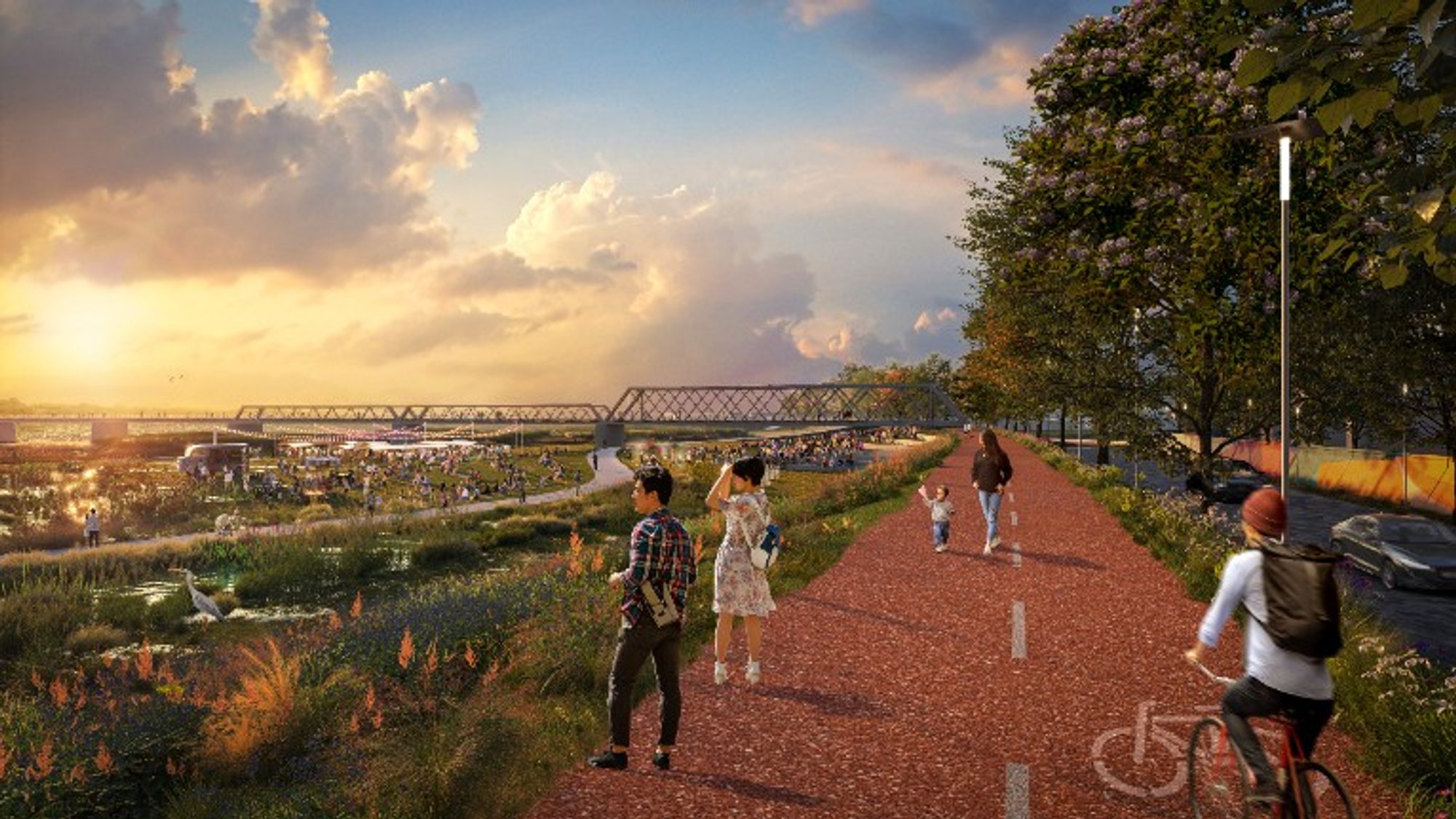
The Taiwan Ministry of Economic Affairs has chosen MVRDV's Hoowave Water Factory as the winning design for a large-scale redevelopment of Huawei's Beigang and Anqingzhen waterways. This proposal combines a strategic master plan and a landscape design to modernize the town's waterway network, moving away from a purely mono-functional approach that controls and directs water. Instead, the town will soon have a system that captures and stores water for use, while also giving space to the river, nature, and urban life. The master plan aims to improve the quantity and quality of the town's available water, as well as integrate mobility networks such as cycle paths, cultural amenities, and ecological systems to create new connections between Huawei, its citizens, nature, and the river.
 Image: © MVRDV
Located on the Beigang River, Huawei is an inland town of around 70,000 people that developed in the early 19th century around its sugar factory. Although the sugar factory still operates, a connected alcohol factory was closed in the 1970s and has become overgrown with tropical vegetation. Today, the factory grounds, along with a dike built to protect the town from the river's floods, form a significant barrier between Huawei and the Beigang River. The town also suffers from water pollution resulting from its urban and agricultural growth and is unprepared for the more extreme floods and droughts that will come as a result of climate change.
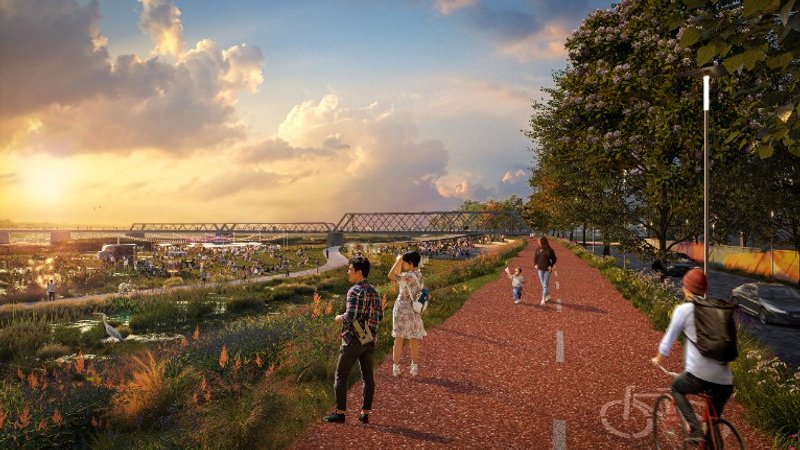 Image: © MVRDV
The new Huawei water system is being designed with five key goals in mind: resilience, ecology, connectivity, cultural relevance, and feasibility, with completion projected for as early as 2026. The plan includes the implementation of localized, natural water buffers throughout the city, with a focus on utilizing larger, publicly owned properties such as schools for easy implementation. Additionally, the Anqingzhen Channel, an irrigation canal running through the town that has become polluted and odorous, will be purified and restored to its natural state. This will also open up disused portions of the factory and create a central parking area in the town. By restoring the Anqingzhen Channel, it will once again become a focal point for leisure activities.
“By combining aquatic interventions with mobility and cultural attractions, we open the embankments of the river and canal to the town”, says MVRDV founding partner Winy Maas. “Water buffers reduce runoff and help to increase biodiversity and to keep up with climate changes. Our design offers accessibility to leisure spaces and cultural places, generating a more meaningful connection between people and nature… a wonderful resilience.”
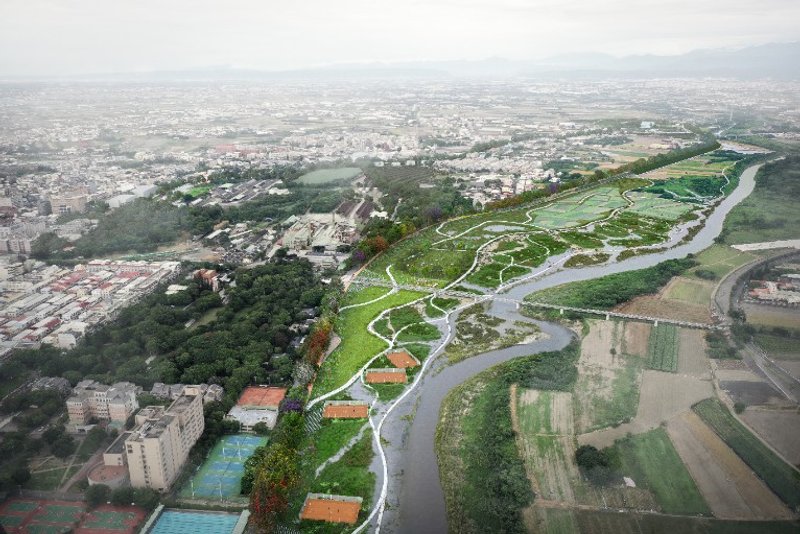 Image: © MVRDV
The Beigang River Park project aims to revitalize the area south of the town's core by transforming the dike into an accessible urban space. The design connects the area to the waterside, creating new opportunities for activities such as viewing platforms and sports fields. The different sections of the park are designed to complement the surrounding town districts while also considering the potential for flooding at various distances from the river. Additionally, three new cycle routes have been added, utilizing the newly accessible dike as the main path. These include a 2.7-kilometre loop around the boundary of a sugar factory, a 6.4-kilometre loop along the dike and along the riverbank, and an 8.4-kilometre loop connecting the town centre to the Pinghe Flood Detention Pond in the east.
 Image: © MVRDV
The Hoowave Water Factory places equal importance on both water quality and health, as well as culture and economy. By upgrading infrastructure and promoting healthy ecological systems, and incorporating cultural amenities, the company aims to enhance the beauty of the river landscape, connecting the city with nature in a mutually beneficial way.
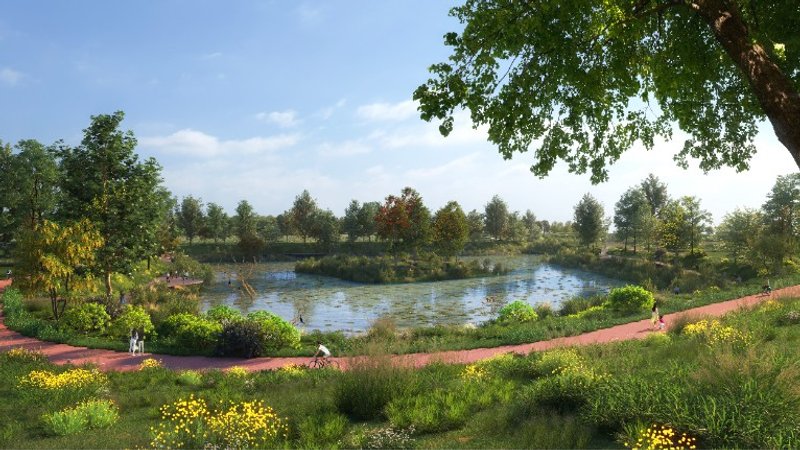 Image: © MVRDV