

IN BETWEEN
We always live in between

Historically the field of architecture has been dominated by two of the extreme. One side encouraging the individuality and customization, which every site, type, building, and project has its own circumstances that effects its formation, on the other side a standardization is a need due to urbanization, lack of lands, high prices. Architecture seems entrenched between customization and standardization.
AN OPPORTUNITY TO OVERLAP!
Rather than choosing one over other (IN BETWEEN) creates the opportunity to have both, modularity that achieves standardization, and customization achieved through organization.
WHAT IS CUSTOM ABOUT (IN BETWEEN)!
any student housing project requires from us to create a special environment for these students to enhance a unique experience encourage them, motivate them, provide safe and high-quality spaces.
When you are far away from home, you feel the alienation, you feel alone, lost, and instable. You will always try to turn off these bad feelings inside you! try to replace it to opposite feelings just to keep going.
You walk through your ALIENATION MAZE, but you need to PAUSE to recharge your soul by some sense of belonging ... You live IN BETWEEN, between two opposites…
BUT! HOME IS NOT A PLACE … HOME IS A FEELING!
A feeling that grow inside you by connecting, sharing, interacting with others , family and friends , so being forced to leave home for any reason is a challenge that you will always try to pass by SOCIALIZING with others especially who are living in the same circumstances that you live in, you simply need to find an alternative home.
IN BETWEEN represent this scenario, physically and psychologically. HOW?
Creating a maze which simulate the instability that the student basically feels, but at the same time creating a pauses through it that allow the social interaction between all students which make the journey more fun and less alien and helps students to find the sense of belonging that they search for it .
The Site
The type of the site is an urban land (campus ) Located in University of Jordan ( Amman-Jordan) a dense urban context , at the middle dense green lands, the choice of the site was based on the high security the
university offer and as well as the providing the daily services student’s needs, (university library, university restaurants, book shops, Atm, booths …) .
SUSTAINABLE SHOULD BE IN ALL ASPECTS!
achieving the pillars of sustainability:
- Environmental sustainability.
- the upper roofs of the containers were used for reducing energy
- prefabricated recycled concrete has been used for the structure
- the interior is isolated with spray foam then lined with bamboo plywood.
In Feasibility:
- Economical sustainability : - The container will provide it, less construction time, labor, and material. Will create an affordable house for these student . In Spaces and activities:
- Social sustainability: Establishing a socially active spaces in which residents can gather, share their skills and time, bridge the gap between each other.
Quality of living
CONTAINER ARRANGMENT WAS BASED ON DIFFERENT PARAMTETERS INCLUDING using the maximum space possible to minimize cost, as well as the quality of space.
Containers were arranged:
- Around the court to make sure that the maximum possible number of rooms is exposed to the court, the court which acting as the heart of the project and the center social space, by this arrangement and choice of wide window viewing the court we offer the students opportunity to socialize once they enter their rooms and then by viewing it from inside out through the windows.
- Horizontally containing all students room at the same level this provide a feeling of equality to enhance social interaction
Replicability
For the future expansion, through replicate the composition and connect it through the bridge, this will create a bigger environment, more social spaces to explore, and bigger chance to socialize.
In between can be replicated across different conditions and places, we created an inner environment that can be replicated an any condition and still has the same quality of life in it. How?
1- The views are concentrated inside rather than outside.
2- The court is the central place that holds the composition together rather than outside element
3- The activity is inherited in the containers by exploiting their roofs.
4- Environmental design strategies were used in the structure and materials.
Affordability
The arrangement of containers considered the affordability by arranging 4 single rooms in 3 containers with 21 square meter space each room has a (king bedroom, kitchenette, closet, desk, W.C, dining area …) As well as 3 single rooms in 2 containers with 19 square meter space with the same facilities.
By occupying 13 rooms for student in 10 containers out of 15, the rest of containers are for services and utilities. Any container of the rest 5 can be replaced to become a student room in future expansion.
Resulting 18 rooms in 15 containers at full capacity.


Popular Articles
Popular articles from the community


Riyadh For All: Intergenerational Urban Design for Active Aging in Rabat
Riyadh For All reimagines urban design in Rabat with intergenerational co-living, adaptive courtyards, and Moroccan cultural exchange today.

Lunar Spiral: Space Architecture Shaped by the Mathematics of the Universe
Lunar Spiral reimagines space architecture through Fibonacci geometry, lunar regolith, levitating habitats, and self-sustaining Moon living.

The Ocean Hive: Sustainable Architecture for a Self-Sufficient Civilization at Sea
The Ocean Hive imagines sustainable architecture at sea, where modular habitats, algae, wave power and ocean waste sustain a growing colony.

Hill & Cross Opera: Sculptural Opera House Architecture Shaped by Tallinn’s Landscape and Identity
Hill & Cross Opera reimagines opera house architecture in Tallinn through its sculptural hill, civic plaza, glass wave and a luminous cross.

Similar Reads
You might also enjoy these articles

Day and Night Park: A Time-Based Urban Newsstand in Beijing
A temporary urban newsstand in Beijing blending travel, light, and reading through poetic colors, compact form, and community-focused design.

Modernist Patio Renovation in El Masnou, Barcelona by Oliver Segura Arquitectura + Cebrià Arquitectura
Modernist patio renovation blending tradition and innovation with a movable pool, leveled floors, and Catalan materials in El Masnou.

Alto Residencial Coop: Cooperative Housing Development in Santiago de Compostela by Carbajo Barrios Arquitectos
A linear cooperative housing complex blending white volumes and perforated metal façades, enhancing community living, natural light, privacy, and urban integration.
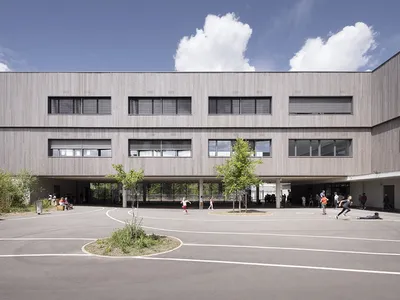
Vil Genis School by BPA ARCHITECTURE – Massy, France
Vil Genis School in Massy, France, features sustainable design, south-facing classrooms, community integration, accessible spaces, and modern educational architecture.

Explore Sustainable Urban Design Competitions
Discover active competitions in this discipline




Challenge to reimagine the Iron Throne


Photograph architecture without architects


Illustrate the lost glory of Angkor Wat - Render Challenge


Design challenge to reuse E-waste
Comments (0)
Please login or sign up to add comments
No comments yet. Be the first to comment!