Intergenerational Architecture: A Multi-functional Space for Emotional and Cultural Exchange
A space for emotional connection and creative exchange—uniting generations through intergenerational architecture and shared arts.


In a world marked by generational gaps, the importance of intergenerational architecture is rapidly rising. The Runner-up entry of the Huddle competition by Azade Taebi and Yasaman Roshani "Link" presents a compelling response to this need by proposing a multi-functional social complex designed to create meaningful emotional and social bonds between the elderly and the youth.
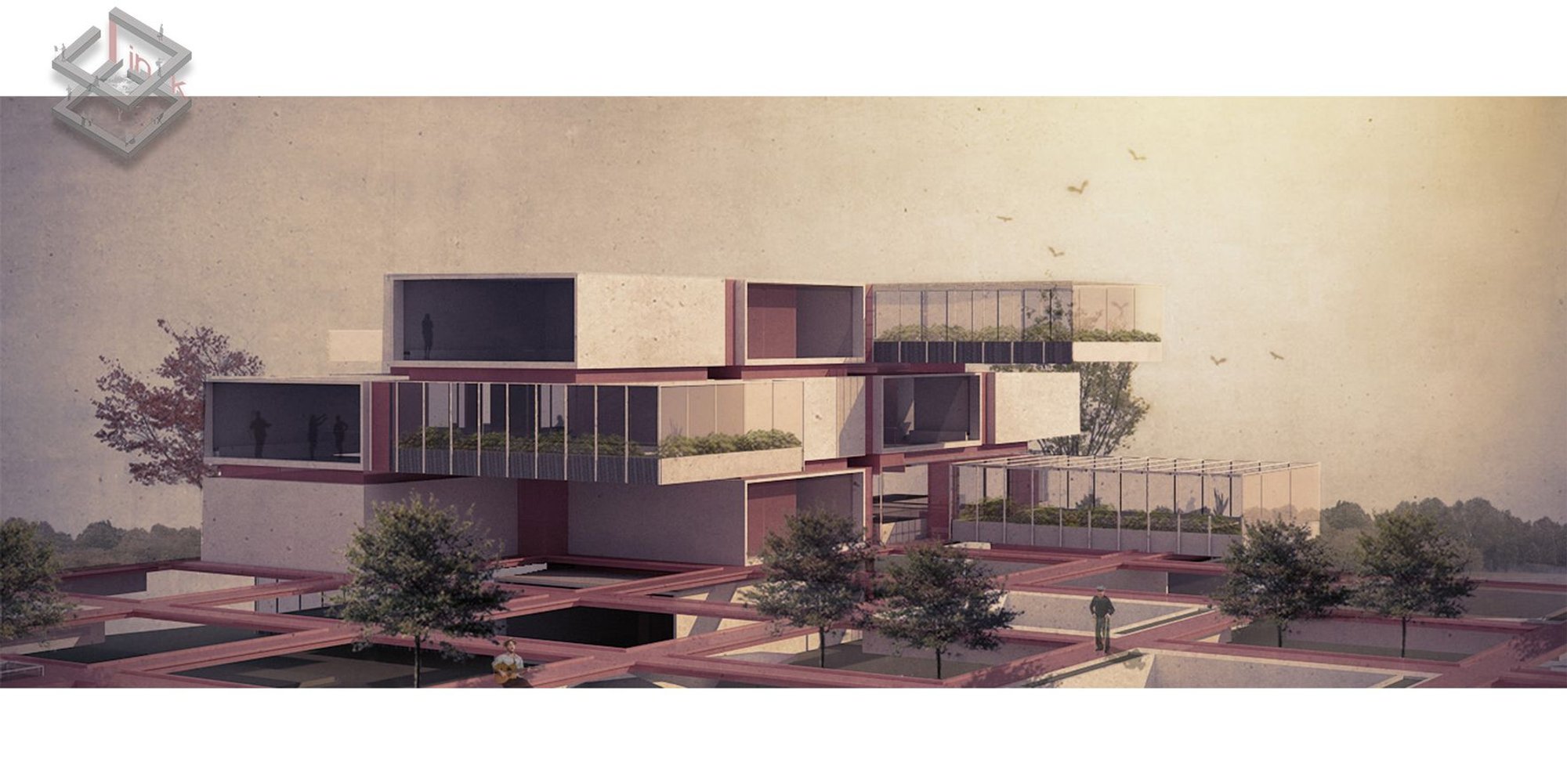
The design concept is rooted in the symbolism of cubes. The main structure represents society as a large cube made up of smaller and larger sub-cubes, symbolizing individuals of different age groups. The younger population is represented by smaller cubes, while the elderly are depicted through larger ones, suggesting their experience and foundational presence within society. Through this geometric metaphor, the project emphasizes that shared interests and common experiences can bridge generational divides.
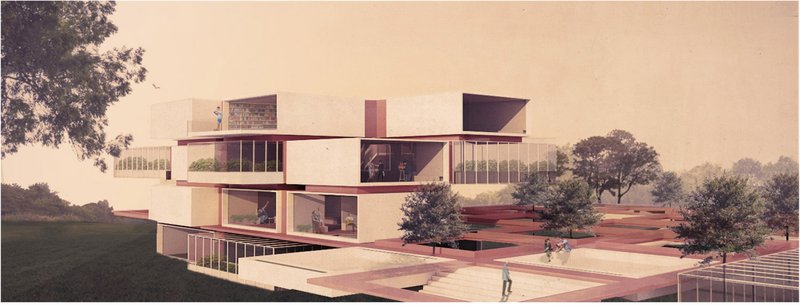
At the heart of the design lies the goal of creating a social and emotional link among people. Drawing inspiration from shared passions—such as music, art, and storytelling—the architects imagine a place where an elderly musician and a young performer can find resonance, understanding, and mutual growth. This emotional infrastructure is what turns the building from a simple structure into a dynamic space of connection.
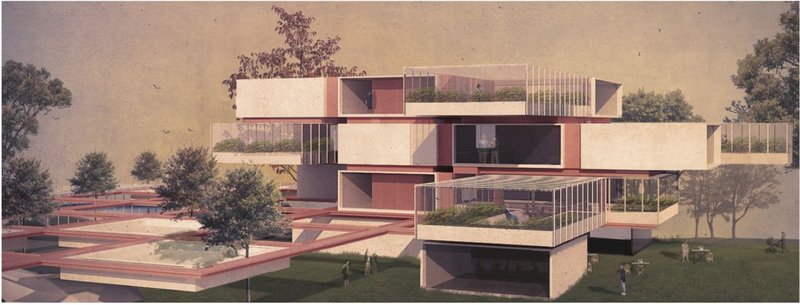
The design incorporates seven cubes, each symbolizing a form of artistic and intellectual expression: Architecture, Sculpture, Painting, Literature, Music, Performing Arts, and Film. These cubes are constructed with transparent concrete and glass to allow horizontal and vertical visual communication, encouraging interactions between people across floors and spaces.
Color and materiality play a pivotal role. Orange roofs inject warmth and visual guidance, particularly for individuals with low vision. Floors are painted in distinct tones, adding clarity and vibrancy. Flower boxes and greenery are integrated within each cube, connecting occupants with nature and fostering an inviting ambiance. Transparent walls ensure visibility, inclusivity, and openness.
Beyond the arts, the complex also includes cubes inspired by nature, such as greenhouse units encouraging interaction and reflection on topics like economics, maritime history, and mechanics. These spaces are designed to spark conversations and shared experiences, cultivating a community grounded in collective wisdom.
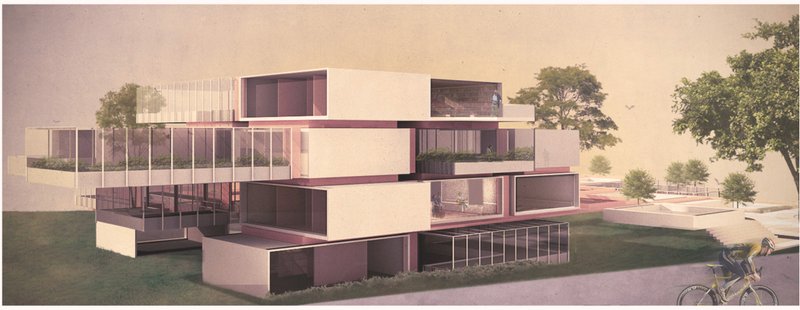
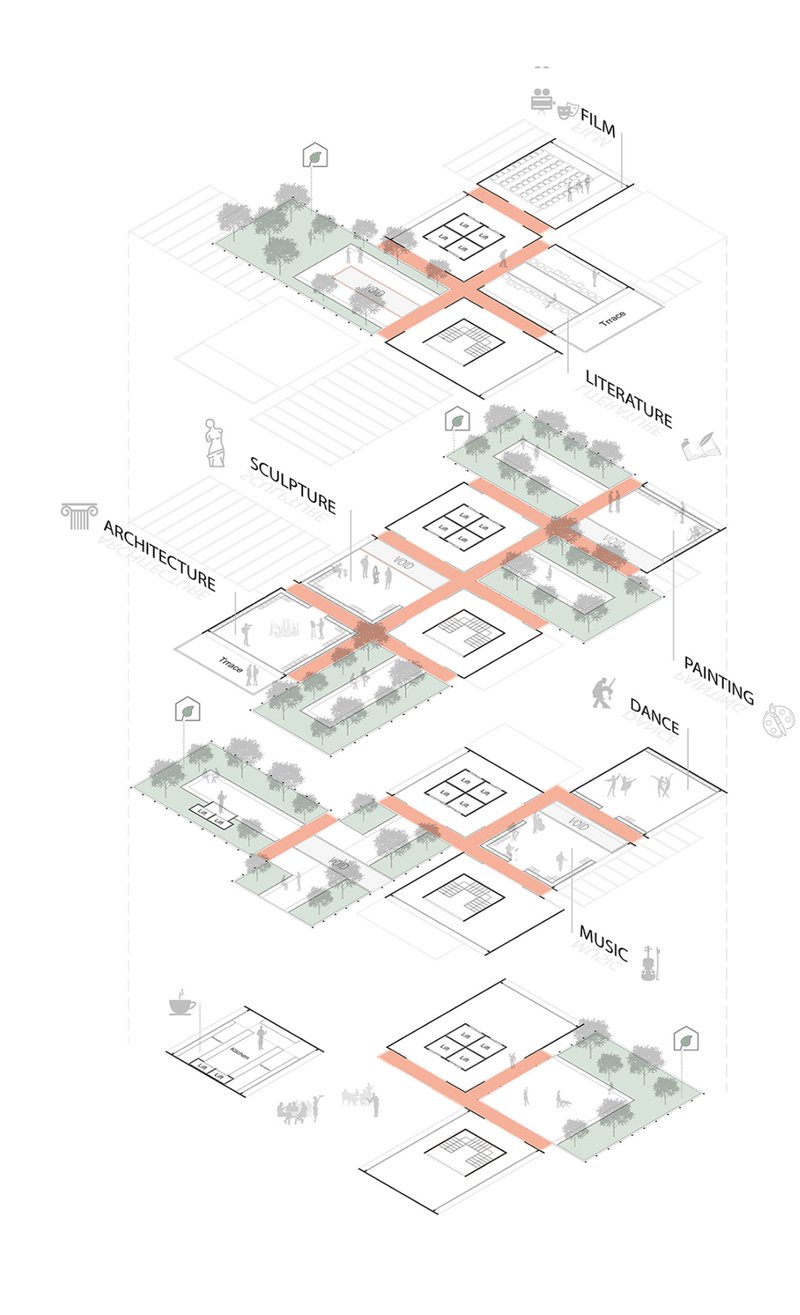
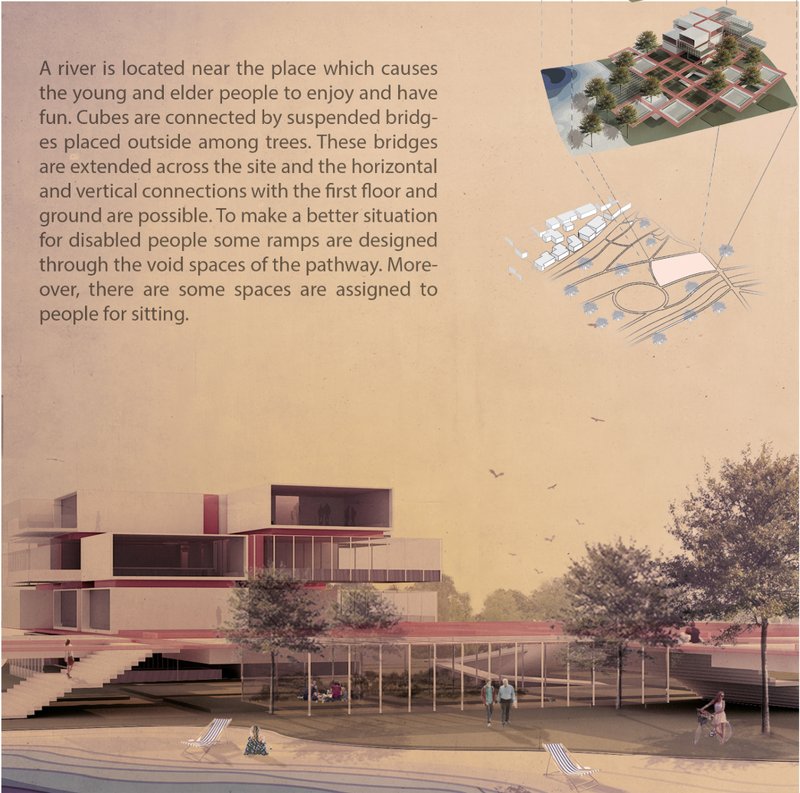
Accessibility is a core component of the design. Ramps and pathways ensure that individuals with disabilities, including those in wheelchairs, can move freely and participate equally. Folding seats further enhance the flexibility of use, allowing spaces to transform into exhibition areas or galleries.
The layout extends beyond the building envelope. Suspended bridges link cubes across a lush park landscape, creating vertical and horizontal circulation through treetops and nature. A river adjacent to the site adds another layer of interactivity, offering opportunities for leisure, rest, and informal exchange.
Ultimately, this project is not just a building—it is a social ecosystem. By embracing the principles of intergenerational architecture, Azade Taebi and Yasaman Roshani have envisioned a place where artists, politicians, astronauts, students, and seniors can gather, engage, and thrive. The design invites all members of society to share, connect, and co-create a more empathetic future through architecture.
Project by: Azade Taebi and Yasaman Roshani
Recognition: Runner-up entry, Huddle Competition