
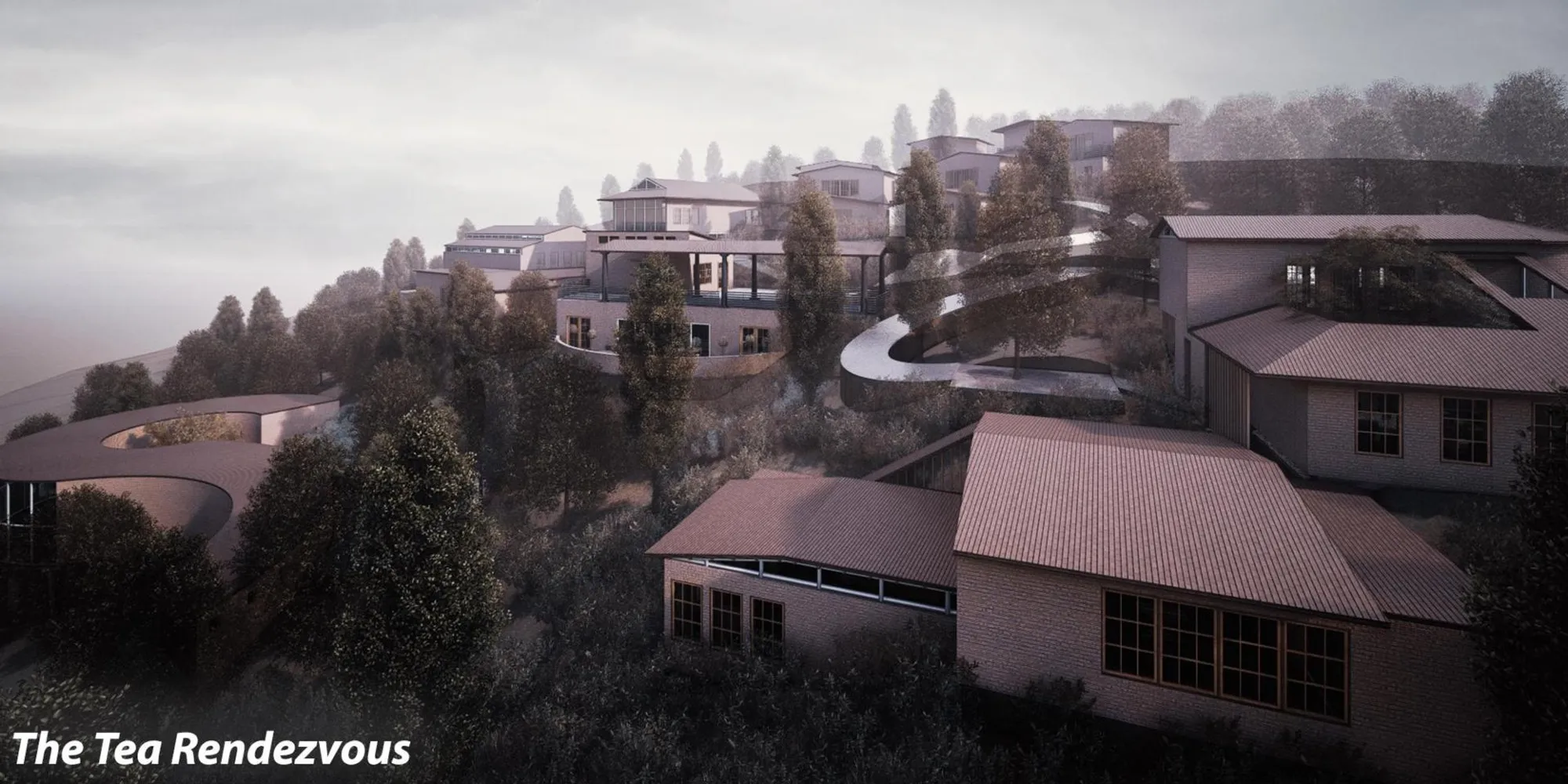
Into the tea haven: Exotic tea-center designs in Ooty for tea enthusiasts.
‘Teaven’ - Landscape design competition - Result story


Tea is an ancient drink dating back to the 3rd Century AD, originally used as medicine in Southwest China. The Chinese held a monopoly of tea, but by the 17th Century, it became popular in Britain that furthered its production in their colonies, like India. Today, tea is a widely consumed drink around the globe, next to the water.
How did anyone stumble upon the concept of tea is debatable, but now we have a product with an array of versions. Tea can be made of leaves of Assam or China variety, by making an infusion of it. Herbal tea is a popular variant, made from herbs, drink flowers, and other natural ingredients to deliver profiles of sweet, nutty, floral, or grassy.
Adopted by many countries over the years, there are traditions and cultural appropriations that one must think of while brewing a simple cup of tea, as they are indicative of logical and scientific techniques behind the type of tea. The practice and art of tea making have become a part of daily life and culture for many communities, but its social role is more intricate than what is known.
How is tea culture manifest in an endemic society?
As tea production became commercialized, its reach spread throughout the world, and many cultures elevated it to cater to social events. Tea ceremonies are traditional rituals in China and Japan, while tea parties are part of daily life in the United Kingdom, Turkey, India, and so on.
Tea is a caffeinated drink with stimulating properties, making it a favored trend. It was picked up by commercial establishments to provide public access in refined settings. The aesthetic of the tea-drinking surrounding is as important as the art and interaction in tea culture.
With this ideal, tea houses or tea rooms emerged that served tea and other refreshments. They are often extensions of hotels and their function varies with country culture. But these establishments are primarily social centers for interaction and communication, much like coffeehouses.
The experience of tea is often interpreted in a formal manner, but its potential as a social center can be explored in natural and informal settings. Instead of artificial quarters, a need to consume tea in a more natural state is gaining traction.
Brief: Challenge was to design a tea center around tea fields that offers the experience of both native and exotic types of famous tea traditions and flavors, must be delivered in this single setting.
It will have a manufacturing wing accessible to the public. The facility is to be built around the narrative of tea, its history, evolution, and branches over the world. Spatial organization is key as the center will encompass functions of distinct natures under one roof. The facility must be accessible and relevant in the site context.
The aim was to accommodate all the traditions and cultural appropriations into a huge facility for a wholesome tea experience. The context of the site is sensitive and sustainable strategies must be employed so that no harm is inflicted on site.
The intrusion level of people in the factory spaces must be moderated so as to not disrupt the tea production process. Comfort and convenience must be achieved in design while providing an unadulterated insight into the world of tea.
The jury for the competition consisted of esteemed designers, professionals, and academicians from around the world. The Lead Jurors for the competitions were as follows:
Vimal Patel, Principal Architect, unseen architects, Ahmedabad, India
Some of the Best competition projects are as follows:
Winning Project: The Tea Rendezvous
By: Vrinda Wadhawan & Saakshar Makhija
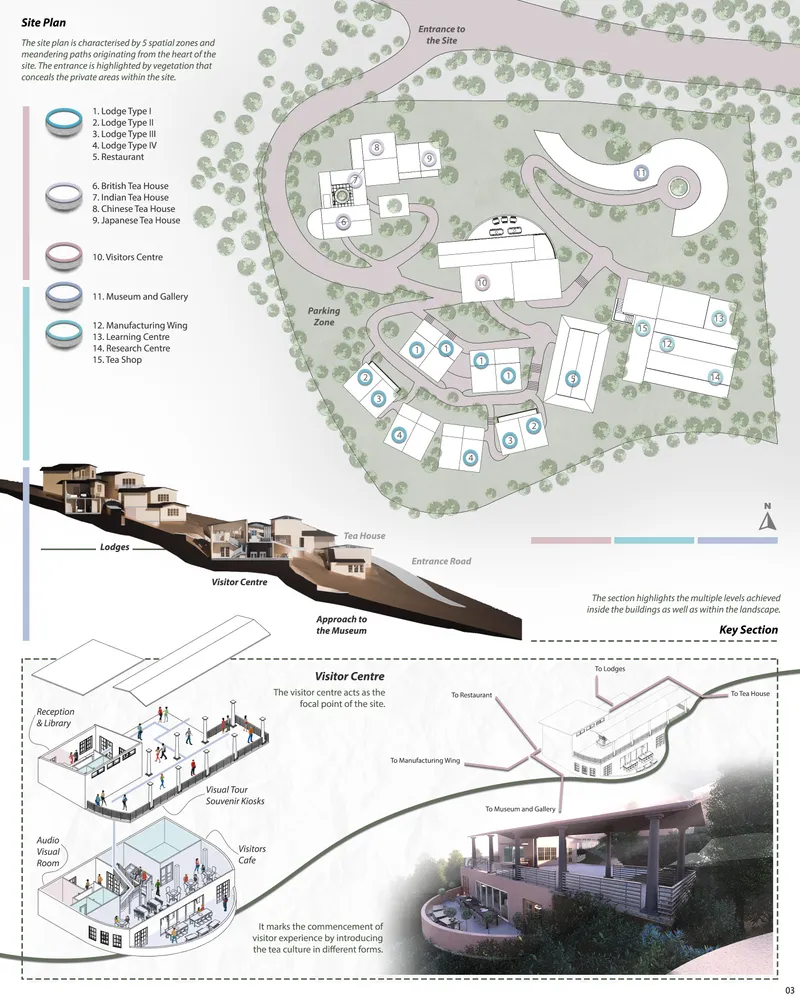
Fig: 1 Site Plan and Key section
Description: A campus that encapsulates visitor experience through a wholesome and sustainable design proposal. The site immerses the visitor into an experiential learning concept across the multiple spaces spanned over different functional zones.
-----------------------
People’s Choice: SLASH
By: Aybüke Çırpan & Muhammed Enes Aktaş
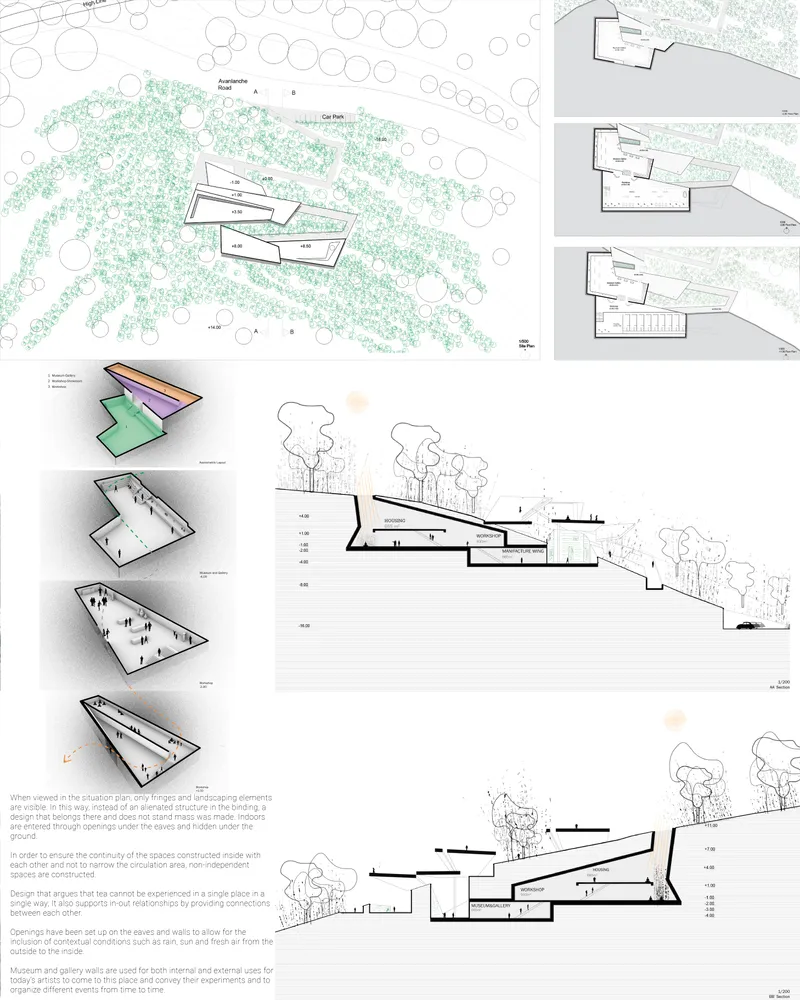
Fig: 2 Site and Section Plan
Description: The design started by combining programs and spaces to break down the perception of a modern tea place with limitations and ancient rituals. It is also aimed to include landscape and tea in the spaces and to maintain their interaction with people. The interior spaces are located underground with suitable conditions. It references the context for TEA JUNGLE.
----------------------
Editor’s Choice: CRV - Tea Experience Center
By: Simge ozkan & Bilge Nur Çalışkan
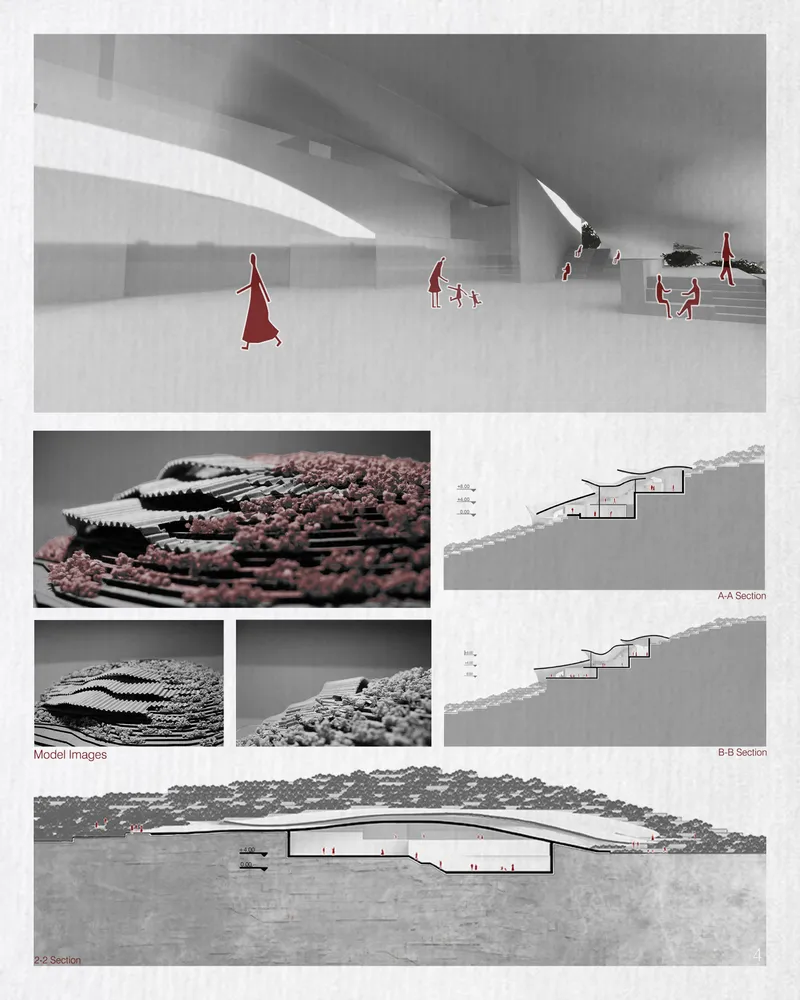
Fig: 3 Model images and Section Plan
Description: This project has tried to create a space that is in a flow with the tea fields. It has been chosen bamboo which is sustainable and easily accessible local material. Thus, the spatial setup that integrates with nature has been completed.

Follow us on social media: Facebook | Instagram | LinkedIn | Twitter | Youtube
References (3)




Popular Articles
Popular articles from the community


The Ocean Hive: Sustainable Architecture for a Self-Sufficient Civilization at Sea
The Ocean Hive imagines sustainable architecture at sea, where modular habitats, algae, wave power and ocean waste sustain a growing colony.

Hill & Cross Opera: Sculptural Opera House Architecture Shaped by Tallinn’s Landscape and Identity
Hill & Cross Opera reimagines opera house architecture in Tallinn through its sculptural hill, civic plaza, glass wave and a luminous cross.

Co-life: Sustainable Architecture for Age-Friendly Community Living
Co-life reimagines sustainable architecture for seniors through courtyards, rammed earth, shared gardens, and spaces designed for belonging.

Lunar Spiral: Space Architecture Shaped by the Mathematics of the Universe
Lunar Spiral reimagines space architecture through Fibonacci geometry, lunar regolith, levitating habitats, and self-sustaining Moon living.

Similar Reads
You might also enjoy these articles
Lunar Spiral: Space Architecture Shaped by the Mathematics of the Universe
Lunar Spiral reimagines space architecture through Fibonacci geometry, lunar regolith, levitating habitats, and self-sustaining Moon living.
The Main Dream: Modular Architecture for Play, Learning, and Community
A modular playground turns recycled plastic into adaptable spaces where refugee children can play, build, learn, and reconnect.

Play: Fragments of Their World
Familiar architecture becomes modular playground design, creating safe spaces where displaced children can learn, connect, imagine and play.

Wadi Rum Observatory: Desert Architecture Designed for the Night Sky
Wadi Rum Observatory turns desert architecture into a quiet instrument for astronomy, hiding research spaces under Jordan's starlit terrain.


Comments (0)
Please login or sign up to add comments
No comments yet. Be the first to comment!