
ITCS-Arena: A Visionary Leap in Cyber Architecture for the Future of e-Sports
A futuristic hub for digital competitions, the ITCS-Arena redefines cyber architecture through modularity, immersion, and adaptability.

Designed by Kate Tsvetnik and shortlisted in The Digital Colosseum 2020, the ITCS-Arena is not merely a venue for e-sports but a pioneering example of cyber architecture. It presents a futuristic complex where modular planning, digital integration, and spatial flexibility converge to accommodate the rapid evolution of gaming and technological communication.
A Modular Urban Network for Cyber Competitions
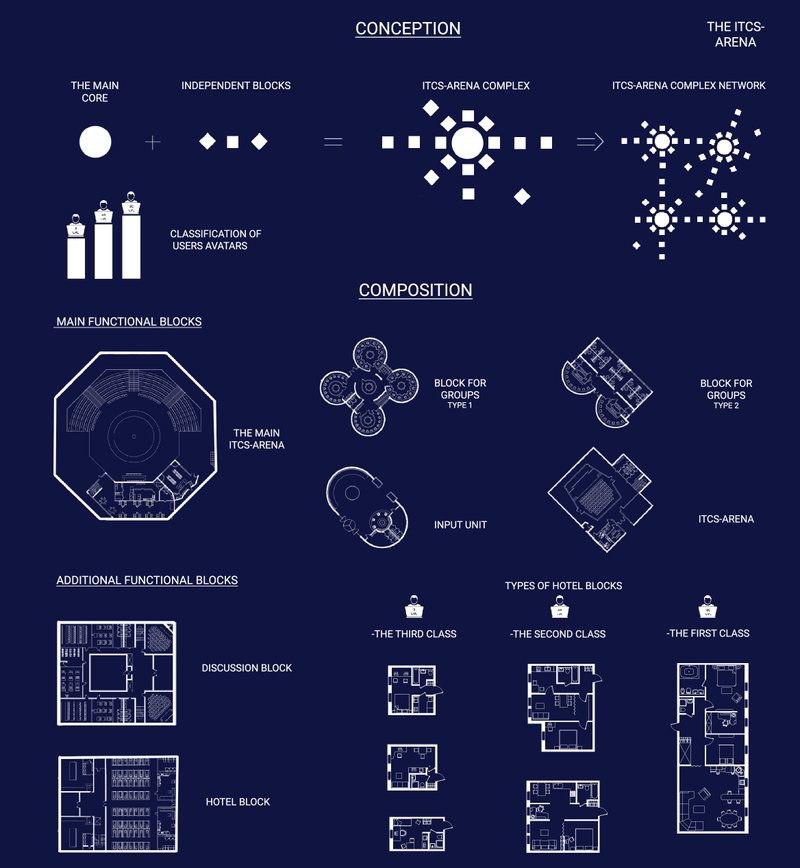
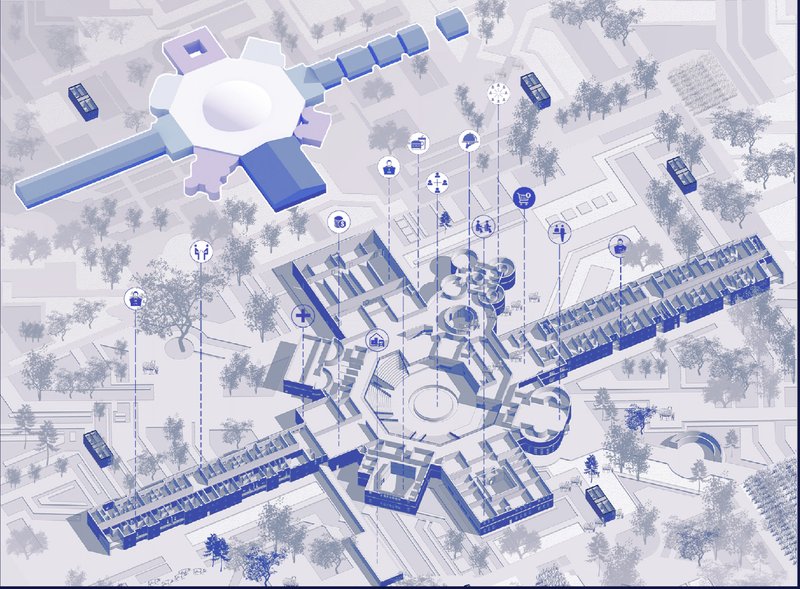
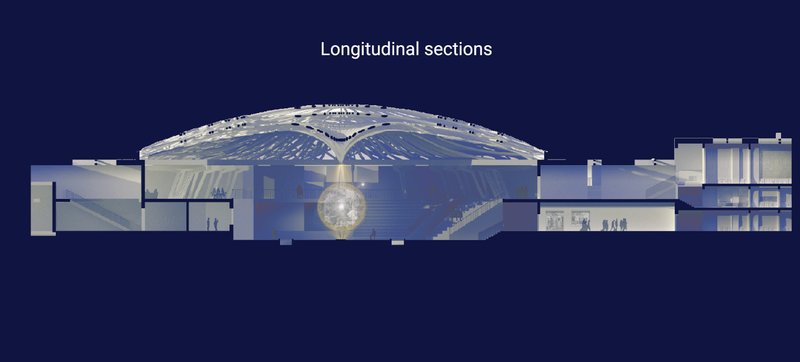
At its core, the ITCS-Arena consists of two main spatial entities: a central arena for live e-sports events with up to 2,000 spectators, and a series of modular units that support digital interaction, accommodation, and thematic events. The architectural logic follows a hub-and-spoke model: a central core surrounded by interchangeable blocks, which can be freely rearranged to suit various contexts and programs.
Thanks to its modular cyber architecture, this arena can adapt to any environment—dense urban centers, empty fields, or deserts—without sacrificing performance. It forms part of a scalable network of digital colosseums, each autonomously powered and AI-managed, capable of hosting virtual and augmented reality experiences, holographic shows, and collaborative tournaments.
A Fully Immersive Experience
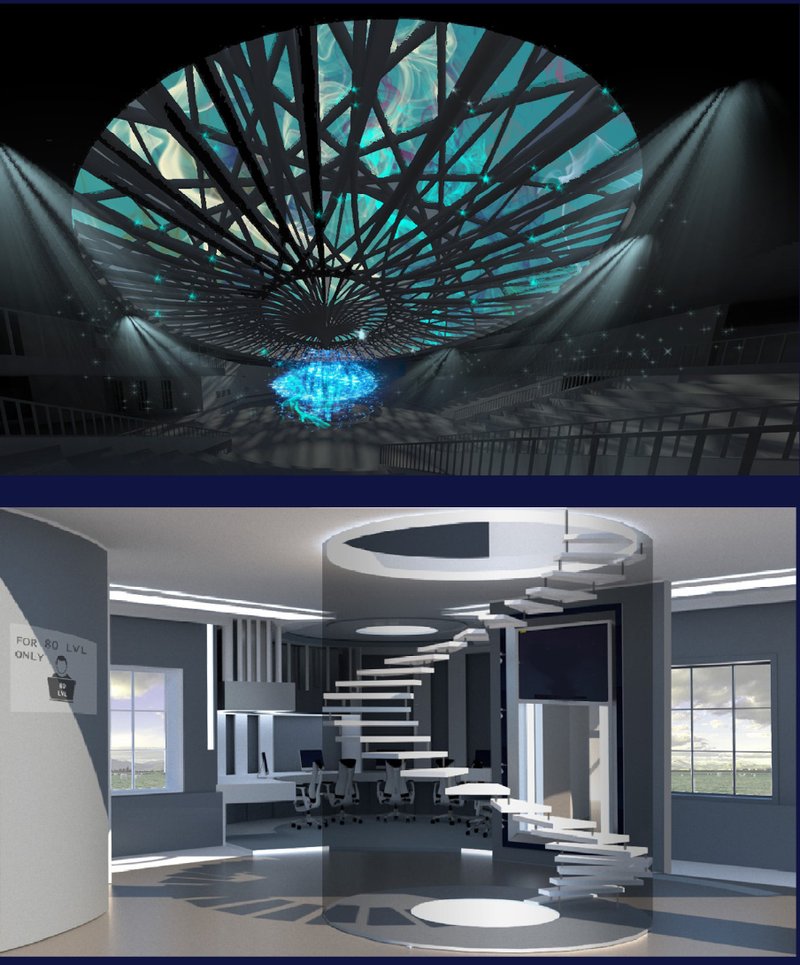
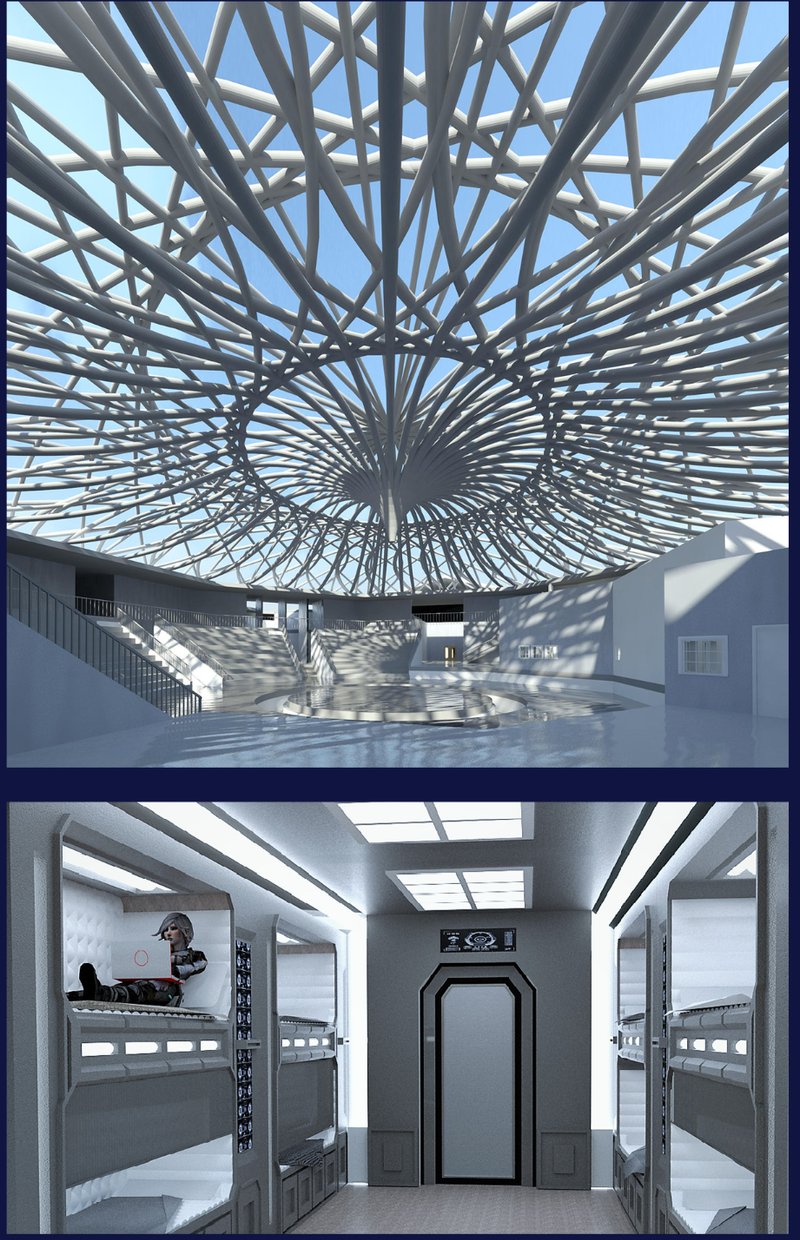
Spatially, the project goes beyond traditional architecture. From circular corridors to spatially immersive interiors, every block is designed to transport users into a high-tech realm. The arena includes:
- Discussion Blocks for thematic conversations and breakout activities
- Hotel Blocks offering tiered accommodation (First, Second, and Third Class)
- Group Pods designed for co-gaming sessions
- Input Units for avatar creation and system registration
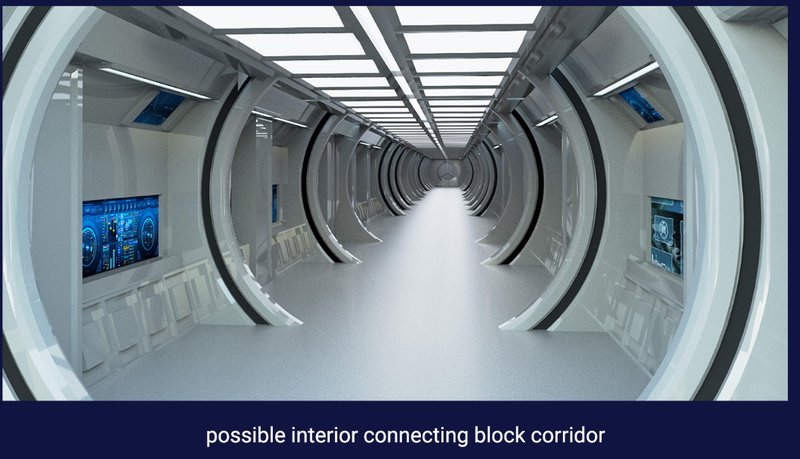
The spaces are unified through a network of corridors that resemble science fiction environments, enabling an immersive experience from the moment a visitor enters the complex.
Designed for the Digital Generation
The ITCS-Arena isn’t static. It evolves. Thanks to AI integration, spatial modules adapt dynamically to the type of event. Whether it’s an international tournament, indie gaming fest, or VR exhibition, the complex reconfigures itself in real-time. This adaptive cyber architecture ensures long-term relevance in a rapidly shifting digital culture.
Visitors are categorized via avatars into service tiers, unlocking various amenities and viewing privileges based on their virtual ratings. Notably, it blurs the line between spectator and participant by encouraging interaction with the system’s augmented infrastructure.
Reimagining Architecture for a Post-2050 World
As e-sports transition from niche entertainment to mainstream culture, the ITCS-Arena stands at the forefront of spatial innovation. With the rise of asynchronous global communication and VR-native interactions, traditional stadiums no longer suffice. The ITCS-Arena proposes a new typology of architecture that lives in both physical and digital realms.
With its ability to transform into interconnected cyber cities, the ITCS-Arena is more than a building—it is a living platform, designed to respond to emerging technologies, social patterns, and future forms of collective presence.
Project by: Kate Tsvetnik
Shortlisted Entry: The Digital Colosseum 2020




Popular Articles
Popular articles from the community

Fifth NRE Jazz Club – De Bever Architecten: Eindhoven’s Revitalized Cultural Hub
Historic gas factory transformed into Fifth NRE Jazz Club blending modern sustainability, jazz culture, dining, and heritage architecture seamlessly.

Alton Cliff House: A Harmonious Retreat by f2a Architecture in Lake Country, Canada
Alton Cliff House blends corten steel, prefabrication, and sustainable design, creating a luxurious, energy-efficient retreat perched on Canadian cliffs.

Atelier Macri Concept Store Interior Design by CASE-REAL
Atelier Macri store features a "ko" counter, walnut wood details, cork displays, blending retail, gallery, and seamless customer experiences.


The Ken Roberts Memorial Delineation Competition (Krob)
As the most senior architectural drawing competition currently in operation anywhere in the world, it draws hundreds of entries each year, awarding the very best submissions in a series of medium-based categories.


Similar Reads
You might also enjoy these articles

Free Architecture Competitions You Can Enter Right Now
No entry fees, real prizes. Here are the best free architecture competitions open for submissions in 2026.

Top 15 Architecture Competitions to Enter in 2026
From student-friendly idea competitions to prestigious international awards, here are the best architecture competitions open for entries in 2026. Updated regularly.

DIY & Engineering in Computational Design : Enter the BeeGraphy Design Awards
Showcase Your Creativity with Computational Design and Open Source Projects
Innovative Design Solutions: Award-Winning Projects from Recent Architecture Competitions
Exploring award-winning architectural projects shaping the future of design, sustainability, and community.


Explore Interior Design Competitions
Discover active competitions in this discipline




The Global Benchmark for Architecture Dissertation Awards


Challenge to design luxury tourism on rails

VR headsets Storefront design competition


Designing a staircase for a client
Comments (0)
Please login or sign up to add comments
No comments yet. Be the first to comment!